 Traveling is fun, but arriving at your destination with dry, itchy, red skin has to be the worst part. Everyone has their own take on how to keep your skin soft and supple despite the high altitudes, but now add in face masks (which are already wreaking havoc on our skin), and it feels like great skin on an airplane is really out of reach.
According to Dr. Liia Ramachandra, Pharm.D., Ph.D., serial entrepreneur, healthcare executive, and the founder and CEO of EpiLynx, a gluten-free skin care and cosmetics brand, you don’t need to accept that your skin will inevitably dry out or break out. “There are few things harder on your skin than air travel,” Ramachandra explains. “When you combine the stress of flying with the harsh conditions in the cabin and the new protocols required by COVID-19, you end up with the worst possible scenario for keeping your skin clean and healthy. Still, it is possible to arrive at your destination with glowing skin if you counterbalance the negative effects of air travel with a few proactive measures.”
 ABM: Always Be Moisturizing
“Whether you are traveling or not, redness, breakouts, and acne can result from wearing the masks that have become a regular part of our lives due to the COVID-19 pandemic. In fact, masks can be so irritating to our skin that the breakouts they cause have come to be known as ‘maskne’,” Ramachandra shares. Here is why it is so important to always moisturize before putting on a face mask.
“Acne is most often the result of clogged pores. The oil, bacteria, and dead skin cells that are normally on your skin build up even more when you are wearing a mask. The result is blocked pores and acne outbreaks,” says Ramachandra. “Acne and redness can also be triggered by the humidity that your mask traps close to your skin.” Additionally, Ramachandra notes that people with sensitive skin or eczema might notice more skin irritation due to the pressure from wearing a face mask.
Ramachandra recommends applying a light, non-oily moisturizer and wearing a clean, new mask. Check local guidelines for the best masks to wear to stop the spread of COVID-19 variants (which currently are more in favor of N95s than cloth masks), but if you are wearing a cloth mask, be sure to check the type of fabric. “Cotton masks typically are lighter and more breathable, making them better at preventing acne,” explains Ramachandra. Synthetic fibers like rayon and polyester masks “make it easier for humidity to be trapped close to your skin,” which can result in more skin irritation and breakouts.
When it comes to picking a moisturizer, you want one that hydrates and supports the skin barrier. Avoid heavy moisturizers (like one that you might use on your hands or feet) and find one that’s best for your skin type. If you have very dry skin, you may want to look for one with antioxidants to promote cell renewal and hydration that lasts for hours. If you have very oily skin, an oil-free moisturizer is your best bet to leave your skin supple.
Keep Your Skin in Mind Every Step of the Journey
 Preflight
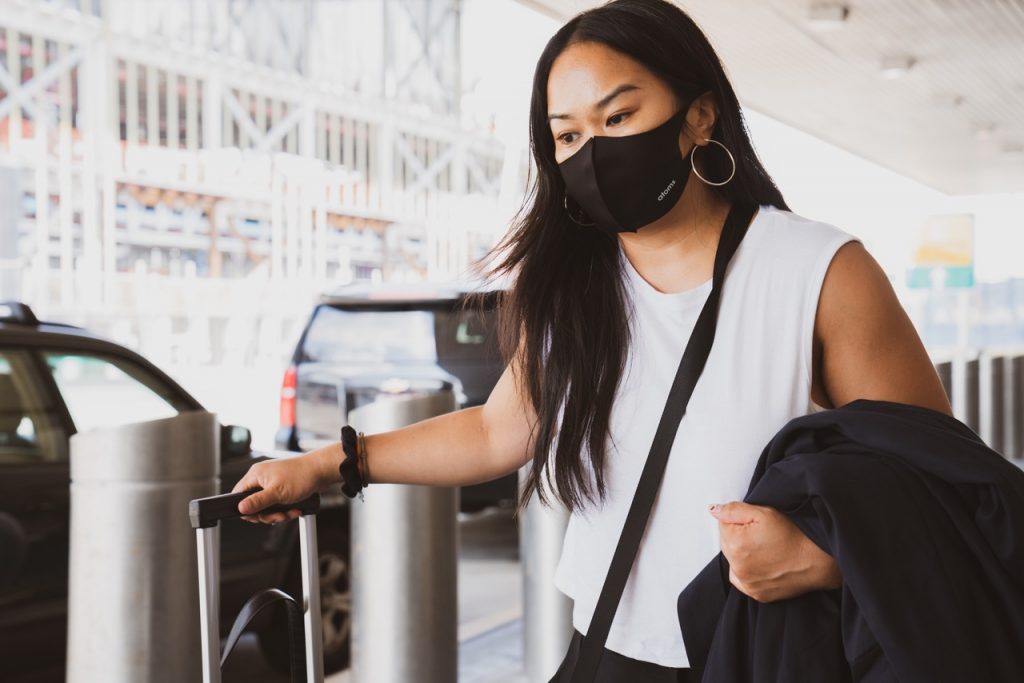
Before you board a plane to take off, Ramachandra recommends moisturizing. “Aircraft cabins are designed to remove humidity from the air,” Ramachandra states. “Your skin is most comfortable when humidity is between 40 and 70 percent. In an airplane’s pressurized cabin, the humidity drops to 20 percent. Your skin needs your help to have the right amount of moisture.”
Additionally, Ramachandra warns that it’s best not to put on any makeup“before the flight that could contribute to clogging your pores. Traveling without foundation or makeup powder on your face will make it much easier for your pores to breathe.”
 Inflight
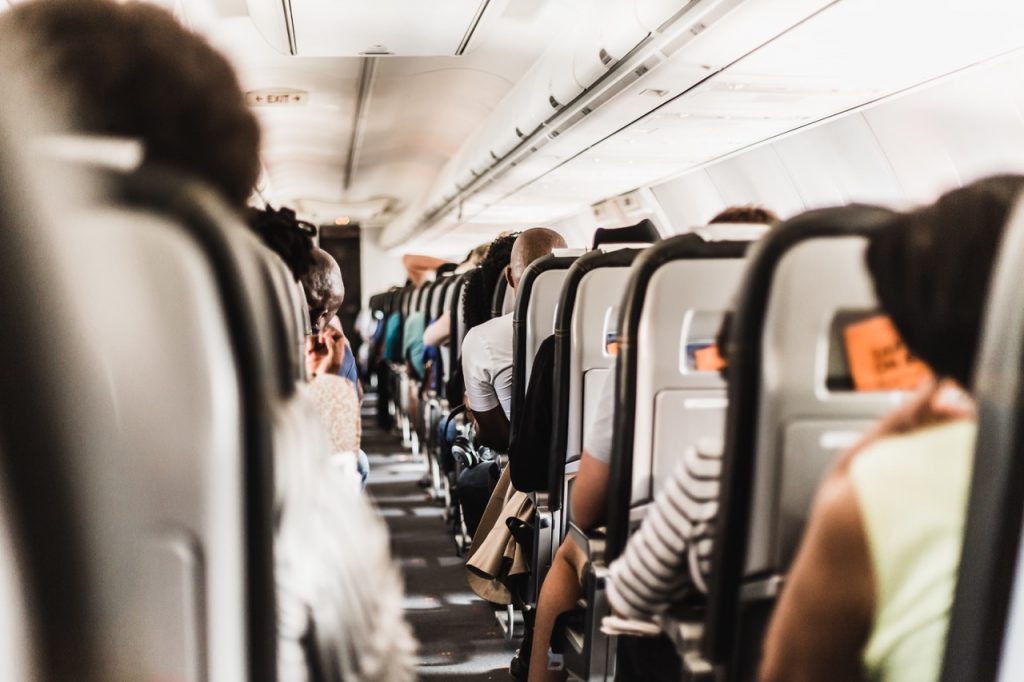
“During the flight, try to minimize the number of times that you remove and reapply your mask. You might periodically try to wipe your face clean with a damp cloth and pat it dry to remove any dirt or moisture from your skin, but other than that, try to keep it in place as much as possible,” explains Ramachandra.
 Postflight
Ramachandra also recommends removing your mask to let your skin breathe as much as possible as soon as you get a chance. She also suggests you wash your face and moisturize your complexion again.
“You should also pay attention to the climate in the location where you have landed,” advises Ramachandra. “If it is different from where you departed, you may need to adjust your skincare routine. For example, if you are traveling to a humid climate, you should be using very light moisturizers that will not clog your pores. If your destination is dry and cold, start using very hydrating and heavier moisturizers.”

All images courtesy of unsplash.com
Reduce Your Stress
By now, it’s been well established that stress affects nearly everything, from our ability to lose weight to our chance of catching some good Z’s. However, keeping stress levels low also plays a key part in keeping your skin at its best.
“[Stress] prompts your body to release hormones that increase oil production in your skin glands,” explains Ramachandra. “That means a greater chance of clogged pores. Help your skin by doing whatever you can to ease the stress that is common to air travel.”
While it may be impossible to be stress-free when flying, Ramachandra understands that between the schedules, check-in lines, and terminals, you need to navigate (and don’t get me started on packing) that you’re bound to feel a little tense. However, Ramachandra says it’s best to pack things to help you be as calm and relaxed as possible. “I suggest getting a great book to read during the flight or packing your air-pods so you can watch a great movie or listen to some great music, a great meditation, or an audio book. Remind yourself that the flight is just a few hours and focus your thoughts on the destination ahead.”
While there may be no 100% guaranteed formula to ensure your complexion is at its peak when 38,000 feet in the air, takin these steps will help you look best. Want to take it one step further? Try one of TikTok’s best hacks to hide a half sheet face mask, such as 111Skin Maskne Protection Biocellulose Mask Box, under your protective face mask for clearer, supple skin after landing.
—Janine Silver


