Fashion Reverie Exclusive Interview: Pat Cleveland’s “Dancing with the Muses”

Image courtesy of Atria Books

Image courtesy of Atria Books

What defines a fashion legend?  In 2016 that is hard to describe, particularly when so many talentless or untried personalities define their own attributes. In 2016 you can define yourself as a great designer without selling a lot of clothes or having any market proliferation. You can be a supermodel even though you have never had a major ad campaign or walked in any major designer’s show.

Well, none of those things are true of Pat Cleveland. Behind her tiny, high-pitched voice and gone-to-heaven-in-a-soft-light eyes is a steely fashion warrior that has not only survived the peripatetic, whimsical, non-forgiving world of fashion, but has triumphed on her own terms.  And her first are far too many to name.

After five decades in the industry, Pat Cleveland is still kicking up her heels and making merry like Christmas. Cleveland’s new biography “Walking with the Muses” details all the fun, frivolity, joy, tenaciousness, and above all the craft and art of Pat Cleveland.

Just in time for New York Fashion Week: The Shows spring 2017 Fashion Reverie is proud to publish this interview with Supemodel Pat Cleveland as she elaborated about the first three decades of her phenomenal life as it is so brilliantly expressed in “Walking with the Muses.”

Image courtesy of arogunde.com

Image courtesy of arogunde.com

Fashion Reverie: Why this book at this time in your life?

Pat Cleveland: Things happen in your life where you need a moment to reflect. We are always rushing around so much and then you realize you need time to think about the people who have been in you life. Some are no longer here, and some might not be here much longer. And you want to send them a love message.

I have been telling people for years I was going to write a book. I moved back to the US to take care of my mother who was ailing and while I was with my mother in South Jersey I took out my old dairies and scrapbooks. I dived in intending to write about all the people that were in my head. I wanted to write about the people that I love and all the good times we had together.

FR: Your life has been a series of unexpected triumphs and successes, which you detail so beautifully in the book. That said; what has been the most unplanned, unexpected part of your modeling career?

Pat Cleveland: The most unexpected part of my life is all the wonderful people that came into my life and how they brought me joy and surprises. I stepped into the path of fashion because I grew up surrounded by artists. Because I was in that world, I wanted to live my life in a beautiful way. So, I was open to the surprises and the unexpected things that can happen in fashion.

When these creative, artistic people came into my life I was open to them and very curious about what they were doing, and maybe I was useful to them, as well. Remember, I was originally a student of fashion design, so I was exposed to illustrators, other designers, and fashion photographers. And I was interested in how people could live off of their art. That is really a gift to be able to live off of what you love.

FR: You changed the way models walked in the early 70s. At that time were you aware that you were redefining runway walks? And how did you come up with your signature walk?

Pat Cleveland: Well, if you can walk, you can dance. When you hear that music, everything comes to life and you just go with the flow. I came into the fashion industry when the funky R&B music influences ruled the airways, and everyone loved the sound of that music. The music was about being young and feeling good, and I was young and feeling good so I went out and performed. I felt that no one would complain because everyone loved R&B music and that time was about being an individual.  So, I just went out there and slayed the audience. And it was infectious because everything was a joyous celebration.

I had no idea I was doing anything special on the runway or changing anything. Everybody, especially Stephen Burrows, told me to go out there and just do it!! You know, black models walk a certain way because they have that rhythm and soul. I was expressing what was in my soul. Also, I had to stand out and make it because I was solely supporting myself. There was no time for fear; I had to survive so I just did it!! I was the designers’ flagpole, and I had plenty of flags to fly.

Pat_ClevelandFR: You were one of the breakout models of color, and you’ve had an unusually long modeling career. How did all these cultural confluences come together that put you in the center of it all?

Pat Cleveland: Timing has a lot to do with everything. Someone saw something in me that they wanted to use to make everything happen. I came along with this big cultural shift in music and the time was ripe for everything coming out and blossoming. It was like a butterfly coming out of a cocoon.

First, there was the 60s and the hippy, flower children and after that the disco era; and it was my time to sparkle and shine. I think I was lucky because Stephen Burrows put me in his shows modeling to the music of James Brown. Who could ask for anything better?

However, it wasn’t just me; it was a very interesting time with models like Marissa Berenson and editors in the mold of Diana Vreeland, designers like Giorgio di Sant’ Angelo, and illustrators like Antonio Lopez who all influenced me. And I was a part of all that, and they made me a part of what they thought was beautiful.

FR: How did you meet Stephen Burrows?

Pat Cleveland: I was over at Vogue with Carrie Donovan and she was talking with Stephen Burrows on the phone and she said, “Oh, I am going to send you a model.” Anyway, somehow they got my show card mixed up with Norma Jean Darden. So, I went over to meet Stephen Burrows and there he was behind this big door like the Wizard of Oz. He was sketching so beautifully, using all these bold colors and he turned me and said,” you’re not Norma Jean; well, just try this on.” After I tried the garment on, Burrows said to me,” oh, you look just like the sketches.”

Stephen Burrows had all these lovely people around him. It was like a rainbow; everybody was so unique and different. I put these colorful clothes on and we went to Central Park with Renaud White and photographer Charles Tracy and we were photographed for Vogue. We represented the new generation of colorful people. I had already been featured in Vogue as a new young emerging designer when I was in high school. But, when I met Stephen Burrows he was already making everything so beautifully that was in my head, so fashion design went out the window and modeling became my mode of expression.

FR: You have stated that Vogue editor-in-chief Diana Vreeland gave you that magic carpet ride. Could you elaborate on that?

Pat Cleveland: Diana Vreeland was an amazing person because she knew everything about fashion. A lot the people that were friends of my godmother Henriette Metcalf—who you will read about in the book—were also friends of Diana Vreeland.  When I met Diana Vreeland, I danced into her office like a ballerina, and there she was sitting, looking like this great cockatoo. She had a very particular beauty that most people would not understand. She was really something to look at.

Diana Vreeland said to me, putting her hands on my shoulders, “you must stand like a tree, with your feet rooted to the ground.” After that initial meeting, Diana would have me come over to Vogue’s offices and try on clothes day end and day out. I really believe the reason she was interested in me was because of Vogue’s main fashion illustrator at the time, Maning Obregon, who was very sophisticated and European in taste and vision, really liked me. Obregon thought I was the girl version of Juan Fernandez who was the muse of Salvador Dali. Obregon adored Juan Fernandez.

FR: Even though Diana Vreeland and so many of the photographers associated with Vogue in the late 60s and early 70s liked you, you were not put on the cover of Vogue at that time, why?

Pat Cleveland: It just was not possible to get an American Vogue cover for a black model in the late 60s and early 70s. That didn’t happen until Beverly Johnson in 1974. (Grace Mirabella replaced Diana Vreeland as editor-in-chief in 1971.) I represented something that they didn’t really know anything about. Harper’s Bazaar understood, but Vogue was the American girl next door. And that girl was blond.

It just couldn’t happen at that time, even though I was shooting with Richard Avedon and Irving Penn. I didn’t fit the image of what high society in American was used to seeing. Avedon even said to me that he really wanted to use me for covers, but that Vogue and its advertisers wouldn’t understand. It was heartbreaking for me to work with all these great photographers and then have the opportunities fall through my fingers because my country was not ready for me. The great fashion illustrator Antonio Lopez invited me to come with him to Paris and I jumped at the opportunity because I was weary of all the roadblocks.

I got a lot of good vibrations from people in Paris. I was a friend to Antonio Lopez, Juan Ramos, Yves Saint Laurent, and Karl Lagerfeld. Their careers were still in the beginning stages and they had not become legends, yet. Even though I had worn Yves Saint Laurent clothes in 1966 in the Ebony Fashion Fair show—Yves Saint Laurent loved Eunice Johnson, founder of Ebony Fashion Fair—I didn’t get to work with him until later. At the time Karl Lagerfeld was working with Chloe.

Everyone in Paris was fascinated with me because of I knew the bad boys or rebels of American culture, Andy Warhol, Jack Nicholson, and Warren Beatty. Being anti-establishment was very much in vogue in Europe in the early 70s. If an artist was too accessible and gave too many interviews it was seen as selling out. Artists were only supposed to be accessible to the demimonde. Remember, at that time there was only radio and a little television. There wasn’t the Internet and social media where you can document every aspect of your life.

Collages837FR: You happened to do both print and runway at a time where there was a sharp separation between those genres. Why did you bridge the divide, so to speak, between print and runway?

Pat Cleveland: Back in those days if you did runway shows many people would frown on you because you were only as a coat hanger. The models that got covers and photo editorials were treated like royalty and celebrities.

But, I did both because I was asked and that was my job. I loved working with the designers and just doing photo shoots could be boring. Also, I loved working with other models at fashion shows and hearing and engaging in all the gossip. I did one and then I did the other, and I didn’t tell anybody.

And then I also performed in a Broadway musical with, at the time, the love of my life, Sterling St. Jacques. And I didn’t tell anyone in the fashion industry I had taken on this new venture. It was considered embarrassing to be in Vogue and then you went and sang and danced on Broadway. I was only getting $300 a week, but I considered it having to be heaven performing on the Great White Way.

And I was also sharing this experience with my great dancing partner from Studio 54, Sterling St. Jacques. We blended so magically; we were a dream come true for each other.

FR: It is reported that the movie “Mahogany” was based on your life and that you coached Diana Ross in “Mahogany.” Could you elaborate more about “Mahogany”?

Pat Cleveland: My life and the character in “Mahogany” shared some similarities. And you know Diana Ross’ character in the movie wanted to be a fashion designer but first became an international fashion model.  That is also my story.

Anthony Perkins, who I knew because I was a good friend of his wife, the fashion photographer Barry Berenson, told me that there were elements of my life in the actual “Mahogany” script. It was Anthony Perkins who contacted while I was in Rome working with Valentino to come over to the set and coach Diana Ross on her runway walk. When I initially met Diana Ross at her hotel in Rome, she was very kind and engaging. But, the next day when I went to the set to work with her, things were very different.

Diana Ross was under a lot of pressure with “Mahogany.” She accused me of acting like a diva and holding up production. You see, I was in the opening Kabuki fashion model montage of the film.  But I understood that she was working so hard. So much of the film rested on her performance. So, after being on the set of “Mahogany” and seeing Diana Ross work so hard under such pressure I realized I did not want to be an actress.  You know fashion is very hard work, but it is also very glamorous. And it fits me like a glove.

Images courtesy of vogueitalia.it and elle.com, respectively

Images courtesy of vogueitalia.it and elle.com, respectively

FR: Your book “Walking with the Muses” stops around 1983. Why did you stop your story there?

Pat Cleveland: Well, you have to stop at some point. I mean how much Coca Cola can you get in a small bottle. I had to leave out stories and characters in this book and it broke my heart. People kept asking me if they were in the book, but the publishers thought it was best if some things were left out.  They wanted me to talk about my Hollywood lovers and working with famous designers. Truthfully, the people that are dearest to me and influenced me most are not famous. And unfortunately at lot of important people in my life were left out. This is my first book and I just couldn’t include and tell everything.

Essentially, we are all looking for love and somebody to love. And in the 80s I found someone to love [Pat Cleveland married Paul van Ravenstein in 1982] who loved me back. So, that is where I ended the book.

FR: So is finding love what you want readers to get from “Walking with the Muses”?

Pat Cleveland: Yes, find love and find some people you can have a nice time with as you go along.

Images courtesy of numerouno.com and elle.com, respectively

Images courtesy of numerouno.com and elle.com, respectively

FR: What’s next for you?

Pat Cleveland: Believe it or not, I have a song out on I-Tunes entitled “Tonight Josephine” and you can get it in either the dance version and/or the original version. I have a lot of little of things coming up and I try to infuse each new project with a part of myself. I am still writing plays and having a good time. I always prayed, “God give me something I can do that doesn’t hurt.” And modeling and working in fashion didn’t hurt.

Pat Cleveland is in her fifth decade in the fashion industry. She is married to former model, photographer Paul van Ravenstein and has two children, top model Anna Cleveland and yoga instructor Noel van Ravenstein.

“Dancing with the Muses” is published by Atria Books, a division of Simon and Schuster.

—William S. Gooch


Fashion Reverie Exclusive Interview: Supreme Publicity’s James Murray


Shirt: 3.1 Phillip Lim (@31philliplim) Watch: Versace (@versace_official) Bracelets: Shanghai Tang (@shanghaitang) Hair Design: Frankie Salati (@frankayy24) Glam Squad (@glamsquad) Shu Uemura (@shuuemura) MUA: Glam Squad (@glamsquad) Photographer: Pierre Von Harper

Shirt: 3.1 Phillip Lim (@31philliplim)
Watch: Versace (@versace_official)
Bracelets: Shanghai Tang (@shanghaitang)
Hair Design: Frankie Salati (@frankayy24) Glam Squad (@glamsquad) Shu Uemura (@shuuemura)
MUA: Glam Squad (@glamsquad)
Photographer: Pierre Von Harper

New York Fashion Week can be celebratory, evocative, aspirational and awe-inspiring. It can also be chaotic, stressful and exhausting, particularly if you are an industry professional with lots of shows on your daily calendar. Still, every season all the hard work makes sense when you discover that new talent or are inspired by an exquisite collection that puts all the pieces together beautifully.

With New York Fashion Week: The Shows spring 2017 just a week away, Fashion Reverie sat down with James Murray, President of Supreme Publicity, and spoke with him about the exegesis of his burgeoning fashion PR firm and his projections for Supreme Publicity’s  clients for the upcoming season. Never one to mince words, James Murray candidly detailed the challenges and triumphs of Supreme Publicity, and why he is so good at what he does!!

Fashion Reverie: How did Supreme Publicity come into being?

James Murray: My background is in luxury. That said; I did fashion public relations for Seventh House PR for about a year and before I was with Seventh House PR I was with Gucci and Versace. Being that I have been in public relations for luxury houses and brands for some time I always had this plan to help newer, smaller luxury brands move forward. Unfortunately, a lot of these smaller luxury brands don’t have the resources to properly present their product to a wider audience. And, far too many of them fall through the cracks, so to speak, because they lack the resources and proper direction and strategy.

When I launched Supreme Publicity I wanted the agency to be different from any other fashion PR agency in New York City. I wanted to bring the latest and the greatest to the forefront of fashion. I started with one client and three months later I had seven clients.

Supreme_Publicity_jpg

FR: How long has Supreme Publicity been on the scene?

James Murray: Supreme Publicity launched in April 2015. So, we are about eighteen months old.

FR: How is Supreme Publicity different from other fashion PR firms in New York City?

James Murray: We are different in a lot of ways. We look at the individual needs of each client and come up with a specific strategy for each client that fit their individual needs. Most fashion PR firms fall into a pattern of treating their fashion clients the same with very little customization. Supreme Publicity realizes that each client has different goals and projections, so we cater to that.

Keeping Supreme Publicity as a boutique agency gives us the opportunity to give our clients the attention they really need. We also help our clients with everything from sales to consulting to even suggestions on what they should be focusing on from one collection and season to the next based on what their clients or potential audiences want. In fact, I would define Supreme Publicity as a brand-building factory.

FR: How are you helping brands that are not well known achieve market recognition in an environment that is oversaturated with so many brands?

James Murray: One of the challenges that we sometimes encounter with our clients is helping them find that balance between their vision and market viability. Sometimes we have clients that have collections that are couture but not necessarily retail friendly or marketable. So, our vision is to consult with clients from the very beginning and bring to them information we have acquired from trend and market forecasters and help them bring to market a fashion line that has its own distinct design aesthetic, but also has retail value.

Within a short amount of time we have developed a reputation of having clients that have garments that are very editorial. Some of the top fashion publications come to us looking to feature those garments in their print and online editorials. We want to continue to be able to provide that service to Vogue, Harper’s Bazaar, Marie Claire and other publications. At the same time, we want those clothes to be accessible to consumers. We spend a lot of time assisting our clients in finding that delicate balance and finding the right promotional strategy.

Malan Breton menswear spring 2017 images courtesy of fashionreverie.com/KenJones

Malan Breton menswear spring 2017 images courtesy of fashionreverie.com/KenJones

FR: Who are some of the new clients you’ve recently acquired for the spring 2017 season?

James Murray:  We recently signed Malan Breton who has been in the industry for over a decade. Malan is at a point in his career where his brand has a lot of licensing opportunities. Supreme Publicity is focusing on giving his brand more market viability.

We also recently signed Pritch London, a sexy innovative brand from London, which is now tapping into US markets. Their clothes are more contemporary and mainstream with separates that every woman would want; great crop tops, leather jackets, and slacks. Their price points range from $150 to more expensive items that are a part of their bespoke line. Their ready-to-wear line is at a higher-end price point but very well made and fashion forward.

Just Drew, designed by Andrew Warren, an up-and-coming NYC socialite who is connected to all the high society girls, is a new acquisition. The line is very young, fresh and modern. His design aesthetic is meant for making everyone feels like an “It” girl whether you live in NYC, Beverly Hills, or Kentucky. The line is about bringing the young socialite girl from major international fashion capitals and making that aesthetic available to everyone.

Sterling King is a luxury jewelry line. We signed her about five weeks ago and Supreme Publicity has already done desk sides with Vogue and WWD with the brand. The jewelry is unlike anything on the market right now. The jewelry is very wearable but highly creative with lots of standout pieces.

Images courtesy of DAMNsel

“Pussy Pouch” images courtesy of DAMNsel

FR: And your older clients.

James Murray:  We have had DAMNsel since our inception. They were very successful with the “Pussy Pouch,” which has been worn by a host of celebrities. The theme of their new collection is college campus rape cases. DAMNsel designs to challenge society and cause reflection.  It is controversial in a political sense while still being high fashion.  It is made to evoke conversation and create a stir.

We continue to represent Ev Bessar who has a raw, edgy aesthetic. Her debut collection was launched for fall 2016 and she was named by the New York Times as one of the new, young designers on the rise for New York Fashion Week.

Rinat Brodach has been with us for about five months. We dressed Twilda Swinton in her garments. She has recently been featured in British Vogue and pulled by Patty Wilson. She is getting a lot of traction in the market.

Images courtesy of Sterling King

Images courtesy of Sterling King

FR: How do you acquire clients?

James Murray:  I do get referrals on a weekly basis. But I am very selective with who I bring on. I have to really believe in a product and see market value in the brand in order to represent them. That said; most of the clients I have brought on I scouted using my own process. Supreme Publicity wants clients that have something special to say and have that “It” factor.

FR: What reward is there in getting your clients’ clothes on celebrities?

James Murray: A celebrity placement is one of the top-tier placements you can get for a brand. Media is so fueled with celebrities that product placement with celebrities is extremely important. That said; not every brand works for every celebrity, so at Supreme Publicity we target certain celebrities for our clients.  We are very careful which celebrities appear in our client’s garments.

When we placed the “Pussy Pouch” on Beyonce, that placement became very lucrative for DAMNsel. The images were everywhere and on the video went viral.

FR: How important is product placement in print and online publications, as well as film, television and music videos?

James Murray:  Product placement is really important. Product placement works best in online publications like vogue.com, style.com, and others. When you can get a product placement on a site like vogue.com we can link to the designer’s e-commerce site and we can potentially get all of the audience from vogue.com. When a brand is more established, product placement in television and film is really great, but it doesn’t work that well for new, emerging brands.

Rinat Brodach images courtesy of Supreme Publicity

Rinat Brodach images courtesy of Supreme Publicity

FR: Can you give us a little preview for New York Fashion Week: The Shows (NYFWS) spring 2017?

James Murray:  One of our biggest shows will be with Rinat Brodach, who is based out of New York. It is a highly anticipated show, totally out of the box. She is one of our most innovative designers when it comes to construction and silhouette.

We are presenting Malan Breton in New York and London for spring 2017, as well as a presentation in New York for Just Drew.

We are also trying to change the typical fashion presentation. Many of the presentations during Fashion Week are just dull and listless. Supreme Publicity wants to change that. We want to make these presentations more of an exciting event.

FR: What process are you using to produce these shows for NYFWS?

James Murray: Some of our brands are launching in New York City for the first time during NYFWS. We have some accessories brands that are collaborating with clothing brands launching during NYFWS.  We are not producing the typical presentation that most industry professional experience during Fashion Week. That has been done before ad nauseum.  We are working with some very interesting brands that have unique and intricate visions and Supreme Publicity wants to give industry professionals an experience.

When we coordinating and planning shows for our brands we don’t release the date and time of the shows until IMG and the CFDA release the fashion calendar for that particular season. We want to make sure that our clients are perfectly situated on the fashion calendar so that they get the most amount of press.

Ev Bessar fall 2016 images courtesy of Supreme Publicity

Ev Bessar fall 2016 images courtesy of Supreme Publicity

FR: Many new brands prefer a runway show to a static presentation because it seems more glamorous. However, sometimes a presentation works better for a new brand than a runway show. How do convince a new brand which mode of presentation works best for them?

James Murray:  Because of the hype around a runway show, young designers tend to lean to that mode of expression; however, presentations are more ideal for a new brand because presentations give editors and stylists more extended time to see the collection as opposed to a runway show that lasts about 11 minutes.

It is very important for a new brand to showcase their design aesthetic and the clothes in the collection. Too often new brands get caught up in the scene or they hype of a runway show that often times is not valuable to the brand.  A presentation that could lasts up to two hours gives editors, stylists and industry professionals an opportunity to develop a one-on-one relationship with the clothing. With a presentation, industry professional can really begin to understand the DNA of the brand and have more of an experience. We also want give people as much time with the clothes as possible.

Just Drew fall 2016 images courtesy of fashionstyle.com

Just Drew fall 2016 images courtesy of fashionstyle.com

FR: How do you decide which industry professionals to invite to your clients’ shows/ presentations during NYFWS?

James Murray:  I get thousands of requests for invites to my clients’ shows. Supreme Publicity has a binder with notes on all the publications, print and online, that request invites. Three weeks before Fashion Week we send out the invites. We are very aware of  the show crashers  and the folks we want to just be a part of the scene but bring nothing to my clients. For the most part, they are denied access.

Additionally, we are only work with bloggers that have a huge following and are on a certain level. That said; Supreme Publicity only invites editors, stylists, VIPs and industry professionals that have a certain sophistication. We like a good mix of industry professionals and we like to work with people that we have worked with before. It is a very targeted process. Ninety percent of my job is putting my clients in front of the right people.

I know fashion PR firms that open their clients’ shows to the general public and it turns into a party, which can be celebratory and fun; however, at Supreme Publicity we are more focused on press and market recognition for our clients than entertaining the general public.

I have seen lots of club kids at fashion shows just kind of hanging out. If that works for that particular brand, so be it, but it not what Supreme Publicity is about!!

FR: What is your five-year projection for Supreme Publicity?

James Murray: One of our goals is to expand to Los Angeles and other fashion capitals.  Celebrities are so important to the fashion industry now, so having a presence in LA is essential.

We still want to remain a boutique agency. Supreme Publicity is not interested in acquiring 50 clients. You really cannot do your best work when you have so many clients. And for us, the client is our raison d’etre!!

For more information on Supreme Publicity, go to supremepublicity.com.

—William S. Gooch


New York Fashion Week: The Shows Spring 2017 Pre-coverage

Image courtesy of covetedition.com

Image courtesy of covetedition.com

Are Fashion Weeks still relevant? With the retail market in decline—Macy’s is closing 100 stores in 2017—, a stagnating luxury market, the explosion of e-commerce, a lack of consumer confidence, many fashion pundits continue to question if Fashion Weeks, as we know them to be, still has a place in the ever-evolving, peripatetic fashion industry.

Last season the CFDA brought in the Boston Consulting Group to assist in developing a strategy to revamp New York Fashion Week. The verdict is still out, but it is quite obvious that something needs to change.

Separating the menswear collections from the women’s wear collections has been a step in the right direction. But, it’s not enough. Many designers are adapting the “See Now, Buy Now” business model. Mara Hoffman and Monique L’huillier were some of the first American designers to adopt this business model.  And for spring 2017 Tommy Hilfiger is having a “See Now, Buy Now” event.

Image courtesy of wsj.com

Image courtesy of wsj.com

Whatever the results of these new business and strategies, Fashion Reverie is always primed to bring its loyal audience all the news and excitement from NYFWS. Remember, we take you from the front lines of fashion to the front row. And this season, in spite of inequities in the market, promises to be exciting and provocative. In addition to coverage and pre-coverage of the spring 2017 shows, Fashion Reverie will bring its viewers some surprises, and back after a long absence is our “Dippity Don’ts” feature, highlighting all the hilarious and very bad street fashion of the spring 2017 season.

There are a host of brands making their NYFW: The Shows debut for the spring 2017 season. The list includes Anniesa Hasibuan, Artistix, Fashion Istanbul, Lisa N. Hoang, Olivine Gabbro, Irina Vitjaz, Lanyu, KYBOE, Nancy Vuu, Namilia, Oday Shakar, Risd Apparel, Toutiao X Acfn, and Yulia Magdych. And this season marks the return of Michael Costello, Band of Outsiders, Project Runway, and Byron Lars to the fashion calendar.

Image courtesy of inquisitr.com

Image courtesy of inquisitr.com

New York Fashion Week: The Shows spring 2017 runs from September 8, 2016 to September 15, 2016.

—Staff


Fashion Reverie Campaign Feature: Tatras Fall/Winter 2016/17

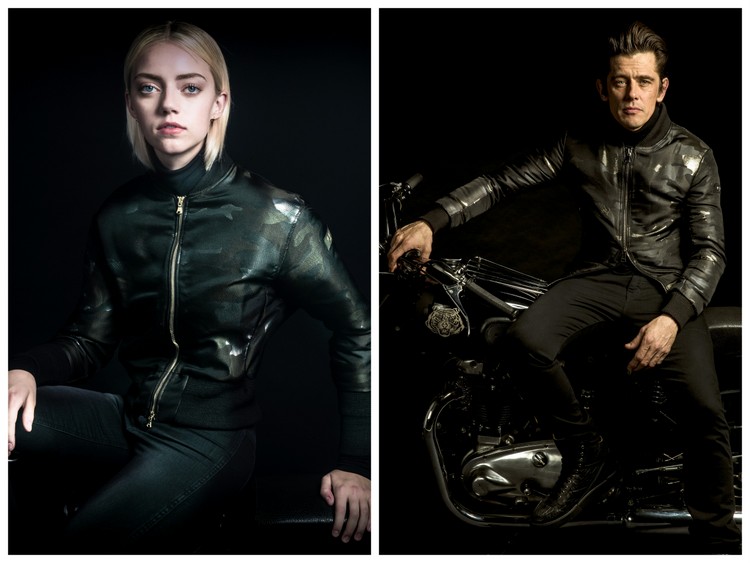
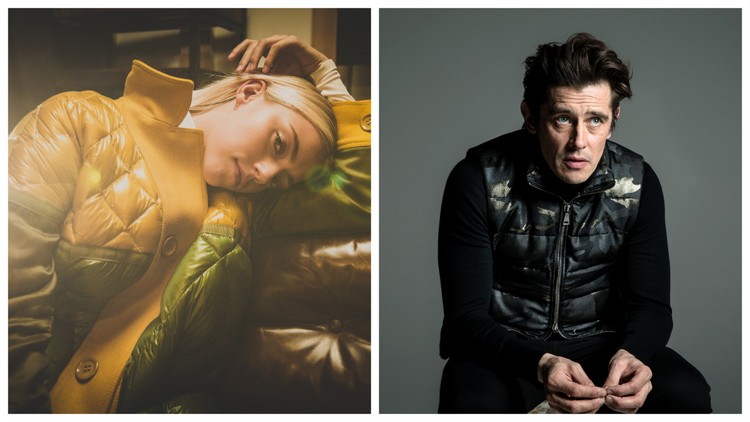
Collages825No matter how incredible looking that very special sweater or great pair of slacks is, if your outerwear is lackluster, a shabby, uninteresting coat can dull the garments underneath. TATRAS, a leader since 2000 in high-end down jackets and coats understands that the clean lines of Japanese style, the excellence of Italian workmanships and fabrics, and the technical production of the Polish goose combined produces the kind of outerwear that the modern consumer pines for.

Founder Masanaka Sakao takes all these elements and translates them into TATRAS’ fall/winter 2016/17 advertising campaign which is all about the fine yarns of Nishijin, prized fabric made in the province of Kyoto and used for centuries in the kimonos of emperors. For the male consumer, TATRAS’ fall/winter 2016/2017 campaigns pays tribute to the staple items in a man’s wardrobe. Think down jackets, vests and blazes all infused with TATRAS’ refinement and modern sensibility. For fall 2016 the TATRAS guy is curious and adventurous, a globetrotter of sorts who takes great pride in how he looks, never sacrificing style for comfort. One could call the TATRAS man an urban dandy that in this modern climate is not a bad thing.

Images courtesy of C&M Media

Images courtesy of C&M Media

And for the ladies TATRAS’ fall/spring 2016/17 collection is all about simplicity meeting elegance and sophistication. The restrained volume aesthetic of this collection lends to the brand’s emphasis on comfort and lends itself to the classic Japanese kimono. This silhouette is juxtaposed against with some slimmer silhouettes that conjure up images of 19th century silhouettes of cinched-in waist evidenced in corsets and the ‘Gibson Girl’ look. The elegant palette of colors is characterized by sober harmony. Black and pale gray alternate with navy blue and smoke grey and even purple and saffron.

Top model Pyper America Smith, sister of male supermodel Lucky Blue Smith, and supermodel Werner Schreyer fronts TARTRAS’ fall/winter 2016/17 campaign.

—Staff


Fashion Reverie’s 2016 Olympians with Style

Gone are the days when athletes were only recognized for their athletic prowess, or only looked forward to their image on a Wheaties box after Olympic glory. Athletes have transitioned into major actors, politicians and even fashion designers—well that’s debatable.

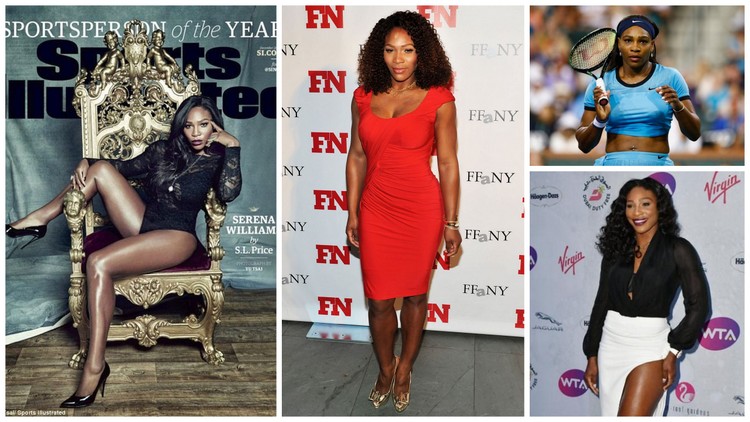
Consider Schwarzenegger, Terry Crews, Dwayne Johnson, Jason Stratham, Cathy Rigby, and others. Vera Wang was a nationally ranked figure skater before she delved into fashion. 2008 All-Around Olympic Gymnast Nastia Liukin produced the tween  line ‘Supergirl,’ for  JC Pennys; Olympic figure skater Johnny Weir has designed a women’s collection for eDresseMe.com; Oklahoma City Thunder basketball player Russell Westbrook has collaborated on an athleisure and accessories collection with Barneys, and Serena Williams’ collection Serena Williams for HSN consistently sells out.

With the Rio Olympics just a few days away, Fashion Reverie has assembled 2016 Olympic athletes who are not only formidable competitors but also have a great fashion sense.

Collages801You cannot create an Olympic style list without beginning with Serena Williams. As one of the most recognizable and adored athletes of the Rio Olympics, the 22-grand slam champion is expected two win gold again in the singles competition and in doubles with her sister Venus Williams. Whether Serena is showing athletic prowess on the hard courts or flaunting her hourglass, curvy figure on red carpets, Serena Williams reigns supreme in the worlds of sport, fashion, and celebrity, having had several Vogue covers and counting Anna Wintour as a personal friend.

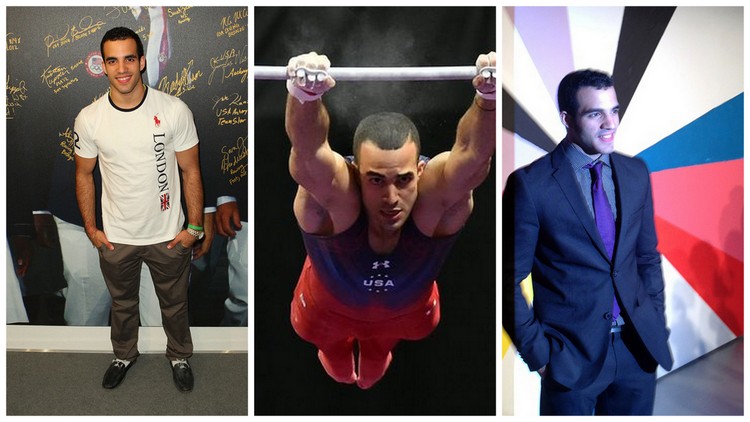
Collages806It is the second time around for Cuban American gymnast Danell Leyva. Though he was originally designated to being a replacement athlete to the 2016 Olympic American gymnastic team, after John Orozco’s injury Leyva gets to compete again. This 2012 Olympic Gymnastic All-Around bronze medalist gives good face and body on the horizontal bars and on red carpets!!

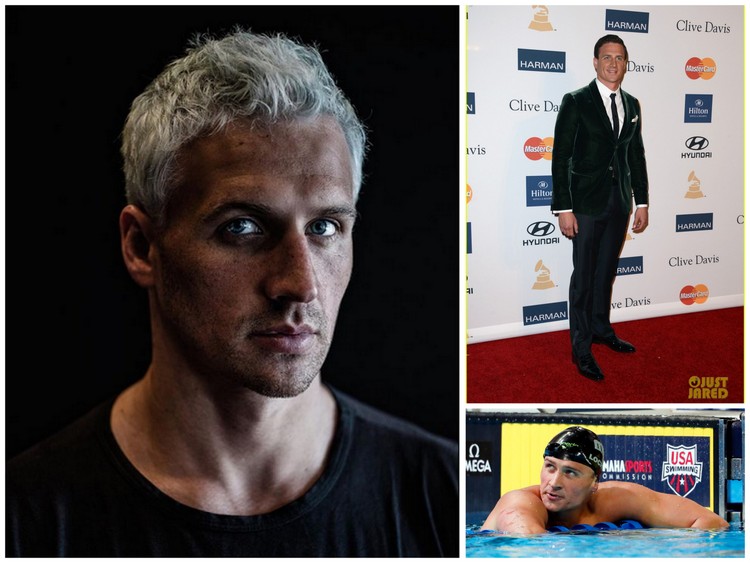
Collages800Speaking of repeat competitors; the Rio Olympics is Olympic swimmer Ryan Lochte’s fourth appearance. With boy-next-door good looks, Lochte’s has recently gone platinum silver, giving him a fashion edge that goes beyond his typical All-American good looks persona. Lochte has had campaigns and endorsement with Ralph Lauren and Speedo and has appeared on the cover of Vogue.

Downloads257

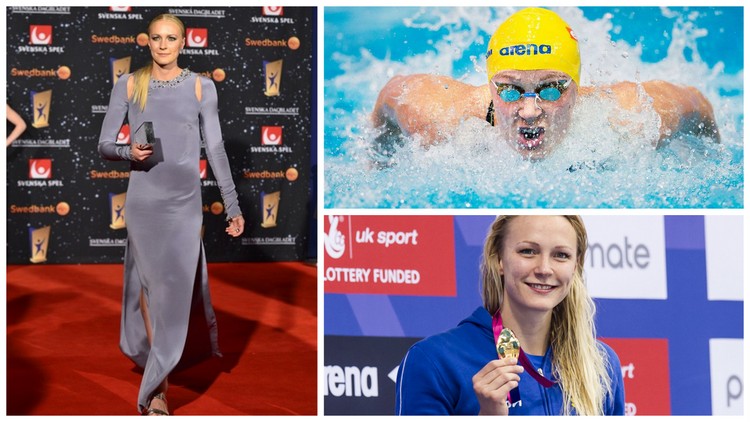
Sweden’s Sarah Sjostrom is one of the swimmers to beat in Rio. This 6`1 blonde beauty looks great in the pool and on the red carpet. Her personal style always shines through. Rio will be her third Olympics.

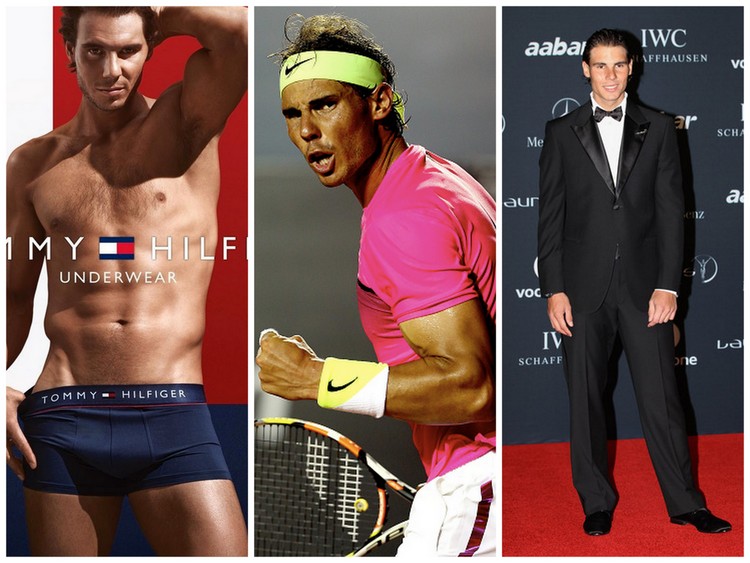
Collages802When it comes to men’s tennis, Rafael Nadal—when he is healthy—is always in the mix. With Roger Federer out with an injury, tennis fans are looking forward to a possible head-to-head match between “Rafa” and 2012 Olympic gold medalist Andy Murray or Novak Djokovic. This 14-time Grand Slam winner has great style and can count campaigns with Tommy Hilfiger to his credit and in 2009 became the face of Lanvin’s L’Homme Sport cologne. Additionally, Rafa was the face of Emporio Armani’s spring 2011 underwear and Armani Jeans campaigns.

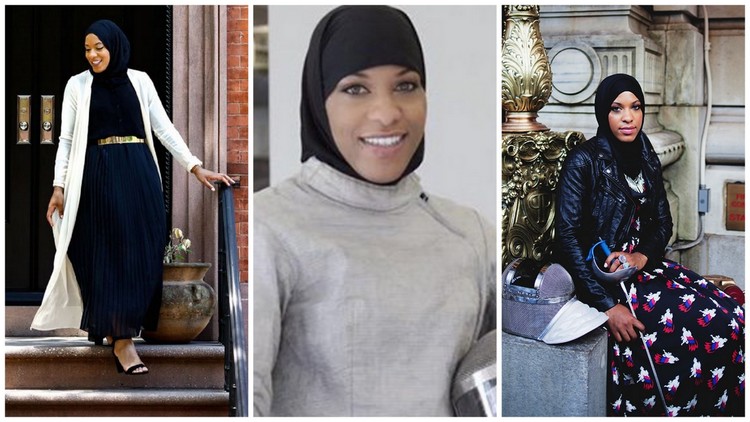
Collages807As Bob Dylan would say “ the times are a changin.” And American fencer Ibtihaj Muhammad is at the center of change. Ibtihaj Muhammad will be the first American to compete in the Olympics in a hijab. Ibtihaj Muhammad proves that you can be true to your faith and still be beautiful which is evidenced in her style and exquisitely beautiful face.

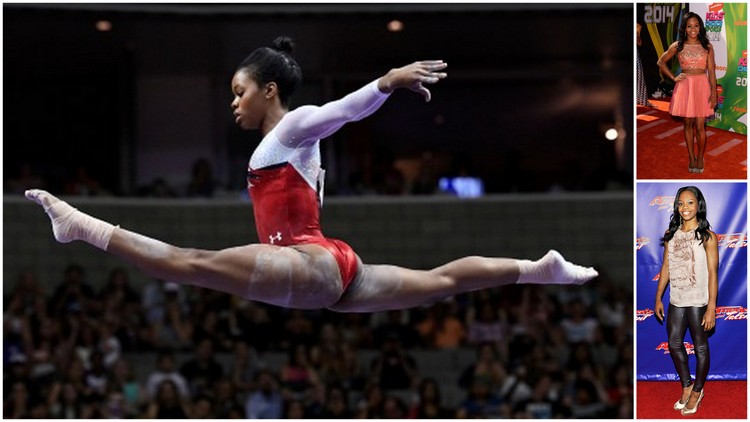
Collages805No Rio Olympics  style lists would be complete without including 2012 Olympic All-Around Gymnastic Champion Gabby Douglas. Gabby is back in the fray at another Olympics, hoping to get some more gold medals to add to her stash from 2012. That said; the three-time world champion Simone Biles in her way. Whatever the results, you cannot ignore Gabby’s girlish charm evidenced in covers for Essence magazine and red carpet appearances.

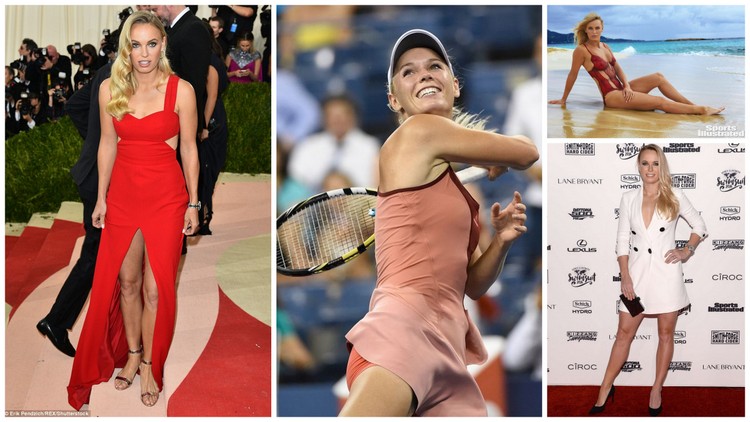
2016_Olympians_with_StyleOne of the most fashionable athletes in Rio will be Denmark’s tennis sensation Caroline Wozniacki. The former No. 1 WTA player has been featured in 2015 Sports Illustrated Swimsuit Issue—she stuns in a swimsuit. Wozniacki has her own sportswear line.

—Staff

Fashion Reverie Interview Exclusive: Michael Gross Unveils in “Focus”

Image courtesy of Atria Books

Image courtesy of Atria Books

What makes a great read? More specifically, what makes a good fashion book? Even though many feel that fashion journalism is mostly about images, there is also great content that can illuminate, educate, and charm the reader.

Michael Gross, in his new book “Focus: The Secret, Sexy, Sometimes Sordid World of Fashion Photographers” has done both. The Golden Age of Fashion Photography is an era that wistful fashion pundits pine, reminisce, celebrate, and mourn for. In “Focus” Michael Gross does all that—well maybe, not mourn—and so much more. “Focus” artfully details how it all came to be, with images and content that stimulates the imagination, facilitating that rare synthesis of craft meets passion meets creativity, the true birthplace of all great art.

In his own words, “If a picture is work a thousand words, and Dovima with Elephants more than a million dollars, then “Focus” hopes to fix fashion photography’s moment, frame it, and display it, so others may recall the years when light, lenses, emulsion, lissome women, and the latest looks combined with envy and ego, ambition and avarice, lucre and lust, to make magic.”

And magic he does make!!  Shortly after the release of “Focus,” Fashion Reverie was honored to interview Michael Gross about his seminal work about the Golden Age of Fashion Photography.

Fashion Reverie: Why this book about fashion photographers?

Michael Gross: The reason to write this book at this time only became clearer as I was writing the book. For thirty years I had been not just someone covering fashion photographers but a fan and a collector of fashion photography. What became clearer as I was writing the book was that an era of fashion photography had ended. And a new era was beginning. There was clearly a beginning, middle, and an end and that was a good reason to write this book.You also want to write a book while there are people still alive who can talk about that era.

Fortunately, I had interviewed many fashion photographers over the past 20 years, so I had that under my belt, so to speak. Still, by the time I got around to writing this book many had died like Bert Stern and Bob Richardson. I found some of the interviews with those photographers in my archives. There are a lot of photographers from the 1940s and 1950s who are now in their late 70s and 80s. Not only is an era passing, or has passed, many of the witnesses to that era are no longer here. So, if you want to write a book like this, you have to get on with it!!

Focus_01

Melvin Sokolsky self-Image courtesy of Melvin Sokolsky

FR: You believe that the golden age of fashion photography has passed. That said; do you feel there is a large audience for this book and was your approach different to attract a younger audience?

Michael Gross: First of all what I write is expose/history.  We live in a time that has devalued history and truth to its detriment.  Look what is going on in the streets now. It looks like 1968 all over again and some of the same forces are at work.

As far as an audience goes, one hopes that a younger reader will come to understand that the superficial moments of the present are all well and good, but it’s nice to know how we got here. The publishing world is in crisis, the fashion industry is in crisis, the retail business is in crisis, the media is in crisis, and the only thing that seems to be thriving is instant gratification and the here today, gone tomorrow of social media. But, I think social media is such a young thing that it has yet to fully understand itself.  And people who are engaged in it don’t understand themselves any more than any one who got on a boat in the 17th century Europe on route to America really understood where they were going and the implications around that or people who crossed the Great Plains in a Conestoga Wagon. You do things and only later do you figure out what things mean. I do believe that everything is a continuum. And in “Focus,” I document what got us to the place we are right now!!

FR: By understanding how we got here, can you predict the next great fashion photographers?

Michael Gross: The most interesting fashion photography of the moment is someone who is shooting a picture with an I-Phone or Galaxy Smart phone and posting it to Instagram. Now, possibly, one of those people will emerge as the next Richard Avedon, Steven Meisel or Bruce Weber. I do think the person with the camera phone is part of a line that goes all the way back to the invention of photography.

Richard Avedon working with a Rolleiflex was a very far cry from Alfred Stiglitz taking some of the first great photographs, and yet they were engaged in the same medium. People in the book like Melvin Sokolsky who wails against Photoshop and digital photography while also acknowledging that it is the most important thing going on today. The tools change, but what hasn’t changed is the fact that individual vision is the necessary component of greatness.

Committee does not make great fashion photography; it is not made my marketers; it is not made by focus groups, and it is not even made by 30 people standing on a digital photography set. One person wielding a camera makes great fashion photography. And part of the problem with what has been going on in the last five to ten years is how little individual vision is actually breaking through the digital clutter.

That said; the traditional gatekeepers are losing their power and have lost their nerve, so to speak. If magazines are simply dancing to the tunes of advertisers, they are not really going to give us fashion photography, because great fashion photography challenges the eye. Advertisers are not interested in challenging the eye; they are interested in reaching into your pocket. And to a great extent that is currently what is wrong with fashion.

Fashion has been bifurcated into the attention-getting runway piece that nobody wears and the mass-market commodity that everyone is wearing. So, that hurts designers, hurts brands, and that ultimately hurts the industry. Yet, because LVMH and the Kerings of the world care only about advertising dollars, you would think this stuff actually matters. But it doesn’t because it has no relationship to people’s lives. Only a tiny fraction of people give a s**t what is coming down a runway in Paris, Milan or New York.

Fashion advertising is incredibly important to newspapers and magazines. Without it, most publications would shutter. Publications need the advertising dollars from fashion advertising … and they are acutely aware of what is keeping them in business. However, this huge push toward advertising dollars keeps publications, especially fashion publications, from doing their job.

FR: Your book “Model” was a huge success because you exposed the inside workings and the salacious side of the fashion industry. Was your approach in “Focus” different?

Michael Gross: In “Model” I tried to be encyclopedic which was probably a mistake. Instead of telling a good story, “Model” tried to be too many things. The difference with “Focus” is I tried to be more focused and tell a good story. The way I decided who would be a part of the story and who would not be a part of the story was who created the genre, who changed the genre, and who lived the life of the genre. There are those who lived quiet lives in “Focus,” and there are lives garishly lived in “Focus.” And I wasn’t going to lie or withhold what I learned.

There are some great moments in this book, like when Bill King is on his death bed dying from AIDS and says to one of his friend, “maybe if I hadn’t been so crazy, I wouldn’t be dying,” and his friend responded, “if you hadn’t been so crazy, you wouldn’t be Bill King.” And I think that sums up the question of salaciousness better than anything … we are looking at the lives of artists and sometimes artists’ lives are uneven and complicated.

Image courtesy of Atria Books/Adrian Panaro

Richard Avedon image courtesy of Atria Books/Adrian Panaro

FR: That said; with your process and your different approach in “Focus,” how did you narrow your choice of photographers because as I understand it, not everyone was available or open to being in the book?

Michael Gross: There was the accessibility of the photographers. Could I report around the people that couldn’t or wouldn’t speak to me? What were their access points? And finally it came down to which photographers interested me personally.

I use the example of Richard Avedon versus Irving Penn. They both created the modern fashion photographic conversation. Penn got out of the industry much earlier, he disdained it and was vocal about disdaining it, and he didn’t live the life of the modern fashion photographer. His son was not interested in his father being in the book and didn’t return phone calls. I also had a personal preference for Avedon’s photography. There was a whole list of criteria that sealed the deal of what was included in the book.

I had planned to vaguely organize the book by each decade and a small coterie of photographers that defined that decade. In the 70s I wanted the chapter to be about the French grab shot photographers. And in the 80s I knew it had to be about Bruce Weber because Weber was the most important photographer of that decade. And yet there was Bill King straddling the 70s and the 80s. He had a career of remarkable importance and the fact that he has been forgotten is tragic. He has been forgotten in large part because his family has kept his archives out of public domain because they could not accept who he was—a man who had drug problems and died of AIDS. Bill King’s legacy kind of demanded to be a part of the book.

I originally thought I would organize the 60s around British photographer David Bailey who changed the conversation and lived the life and whose work I have an affinity for. However, at the beginning of this process some friends told me I had to include Bert Stern …  I knew of Bert Stern’s celebrity photography. I later learned that Stern was a very important fashion photographer in the 60s and the reason most people don’t remember him that way is because of Stern’s later excesses. Stern destroyed his career and most people only remember his photos of Marilyn Monroe. The Marilyn Monroe photos overwhelm the fact that Stern was one of the great fashion photographers of the 1960s. So, I had to include Stern as a main character in this book.

Images of Bert Stern and Marilyn Monroe courtesy of flickr.com

Images of Bert Stern and Marilyn Monroe courtesy of flickr.com

FR: Fashion photographers became pop culture royalty in their own right, what cultural influences helped promote that?

Michael Gross: As important as Richard Avedon and Irving Penn were to the fashion industry, they plied their trade in a world where fashion was an elite preoccupation and not a mass-market phenomenon. Fashion starts to become a mass-market preoccupation in the 1960s. Fashion photographers like Terrence Donovan, Brian Duffy, and David Bailey became a part of swinging London, and became glamorous characters of which David Bailey was a huge part and helped push that cultural shift.

Bailey was Jean Shrimpton’s and Penelope Tree’s boyfriend, and later married Catherine Deneuve. Bailey is living the life of a pop star and rubbing shoulders with pop stars … with his rise to fame, he had access to celebrities and pop music stars. Remember, the celebrity portraits are perks that come as a result of being a great fashion photographer.

The British film “Blowup” also influenced this rise to pop star status. This 1966 film by Michelangelo Antonioni is about the glamorization of the heterosexual photographer. “Blowup” glorified the photographers getting the girls. The movie was a sensation and influenced a whole generation of photographers, particularly the group of photographers I call “the French Mob.”

As a counterpoint to the happy, snap photos of some photographers influenced by “Blowup,” Alexander Lieberman at Vogue started publishing photos that were twisted, eerie, evocative, obsessive, and even kinky. That was the photography of Helmut Newton and Deborah Turbeville. These kinds of photographs were the first photographs to go into museums. And at that point of museum inclusion, the dream of Avedon and Penn to be accepted as artists came into reality.

Images of Mike Reinhardt, Janice Dickinson, Gilles Bensimon, and Pierre Houles, Carnegie Hall courtesy of Mike Reinhardt/Atria Books

Images of Mike Reinhardt, Janice Dickinson, Gilles Bensimon, and Pierre Houles, Carnegie Hall courtesy of Mike Reinhardt/Atria Books

FR: How does the iconic Diana Vreeland fit into the mélange of influential forces that helped elevate the fashion photographer?

Michael Gross: Diana Vreeland was an elitist; she came from an elite world, and she was a Park Avenue jetsetter. She brought things to an elite preoccupation that had never been brought before. She brought wit, humor, grotesque vision, imagination, elegance, and extravagance on a level that no one had ever seen. She was a unique personality with a unique point of view. She took something that was already extravagant, but dull, and made it vivid.

Diana Vreeland appalled some of the fashion elites. She seemed to be an exaggerated version of what elites were, and in a way that was her charm. The problem is Vreeland became obsolete. There was a recession in the early 70s, the economy had tanked, the fashion business was in the toilet and by the early 70s; something had to change.

You asked me whether Vreeland was a seminal personality? I would say Alexander Lieberman was that seminal personality at Vogue. You had the rivalry between Lieberman at Vogue and Alexey Brodovitch at Harper’s Bazaar. When Lieberman poached Vreeland from Brodovitch and took her to Vogue, it was Lieberman who had to eventually fire Vreeland when she was no longer connecting to what women wanted. Suddenly, you no longer had women solely as objects of desire and consumers of expensive clothes. It was the very beginning of self-empowerment and women wanting it all. All of the sexual liberation of the 60s met the empowerment of the 70s and the feminism of that time changed what magazines needed to be for this newly empowered woman.  Vreeland was no longer the person to helm Vogue. Vogue went from a circulation of 400,00 to 1.5 million under Grace Mirabella, proving that Lieberman was right by replacing Vreeland.

The era that we are in now is an era of fashion as a democratic medium. That is not what Vreeland was about. What is fascinating is the kind of entertainment that Vreeland championed now has been embraced by the world. That shows the evolution of concept and that Vreeland was perhaps ahead of her time.

FR: After “Model,” you started writing about real estate, why that departure and what brought you back to fashion?

Michael Gross: Writing about real estate was an accident. I wrote a book call “My Generation: The History of the Baby Boom” that was a failure. Luckily, Ralph Lauren contacted me and wanted me to write his autobiography.  We ended up parting ways and I wrote and unauthorized biography of Ralph Lauren; however, that got me back in fashion.  But it also got me thinking about the American aristocracy because Ralph Lauren was trying to translate the clothes of the modern European aristocracy for a contemporary American aristocratic palette. So, I started thinking about the real American elite. And I was looking for the right vehicle that facilitated me telling the evolution of the American elite.

In looking for that vehicle, I stumbled upon the building 740 Park. (740 Park Avenue is the address of a luxury cooperative built in 1929. Some of the world’s wealthiest people have lived at 740 Park Avenue. “740 Park” is also a book by Michael Gross.) In the course of writing “740 Park,” I became fascinated with luxury real estate. I had stumbled into a great subject area. And for the next 10 years I wrote books about luxury real estate.

The pivot back to fashion relates to the Ralph Lauren book. Because a friend of mine had been asked to write an authorized book about Richard Avedon, just when I was thinking about my next book. I later learned that this friend had abandoned the project because the Avedon Foundation was trying to control everything—I always thought Avedon was a great character and it was actually Avedon who inspired me to write “Model.”  As I was talking with my literary agent, we came up with the idea that because “Model” was such a successful book, I should just turn the camera around. In that lunch conversation, “Focus” was borne.

FR: New York Fashion Week: Men’s spring 2017 just ended. Could you explain how Bruce Weber put American men’s fashion on the map?

Michael Gross: Bruce Weber caused the fashion industry to look at men traditionally the way fashion looked at women. It was epochal; it was a perception-changing event. Weber channeled something that was ready to burst out.

Men’s fashion had never been a subject of much interest. Romeo Gigli said to me be back in the early 1980s that men’s fashion was “wide lapels, thin labels or two or three buttons on your suit.” Weber threw all the gender rules out the window and he it did in a way that was appealing. He put men on a pedestal; he put women in men’s underwear; he had a sense of humor, and he saw that gender was fluid.

If you examine photos from his early career, he made men sexy and an object of yearning the way women had always been. Bruce Weber is the fashion photographer leading the culture in seeing gender as non-binary and fluid and that is evidenced in the Barney’s campaign where he used transgender models. By creating images that caused people to have an emotional understanding that a man interested in fashion didn’t have to be homosexual, Bruce Weber gave us the metrosexual. I think there is a direct line that leads from Bruce Weber to Caitlyn Jenner on the cover of Vanity Fair.

He also made a new category for the fashion industry with his celebration of men and men without gender-assigned roles and sexual constraints. After 40 years in the industry, Bruce is still making images that matter and only a handful of photographers can say that.

FR: With the rise of social media, what is the current state of fashion photography?

Michael Gross: Professional fashion photography is in a very weird place right now because the digital tools overwhelm the genre. Fashion photography has almost ceased to be photography; it seems to be mostly digital-assisted illustration. That is not the same medium as the one invented in the 19th century.

Social media puts the power of photography in the hands of everyone. We are at the first page of a new book about photography in the 21st century and no one knows how things are going to evolve because we are really very much in the beginning.  Unlike “Focus,” the book has not been written yet.


Michael Gross image courtesy of hamptonsmagazine.com

Michael Gross image courtesy of hamptonsmagazine.com

“Focus: The Secret, Sexy, Sometimes Sordid Lives of Fashion Photographers” is published by Atria Books, a division of Simon and Schuster. For more information, go to simonandschuster.com and mgross.com.

—William S. Gooch


Nautica Spring 2017 Backstage

It’s been over thirty years since Roxanne Lowitt popularized the backstage images of some of the fashion industry’s most iconic runway shows. Before Lowitt revealed on the backstage goings on, it was all about the runway images. But when Roxanne Lowitt put her own special spin on backstage, the backstage reveal has almost become just as important as the catwalk. After all, the runway images rarely vary from one media outlet to the next, but backstage photography can reveal a world that is distinctive to each show.

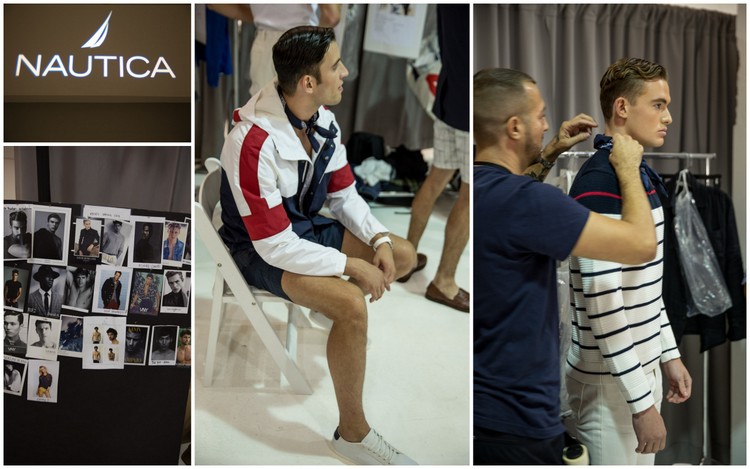
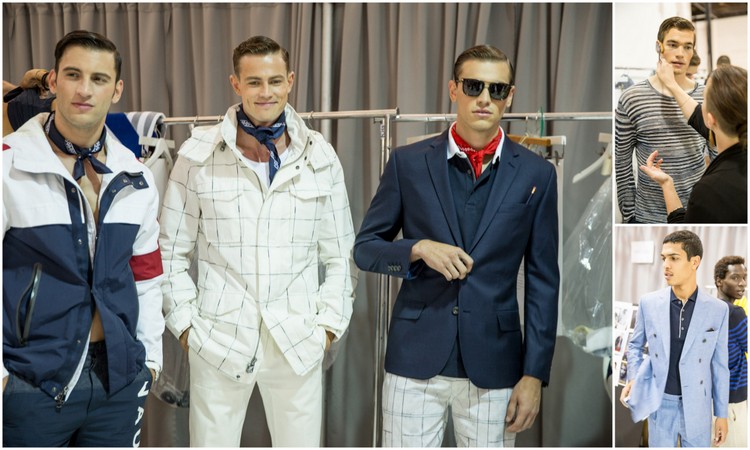
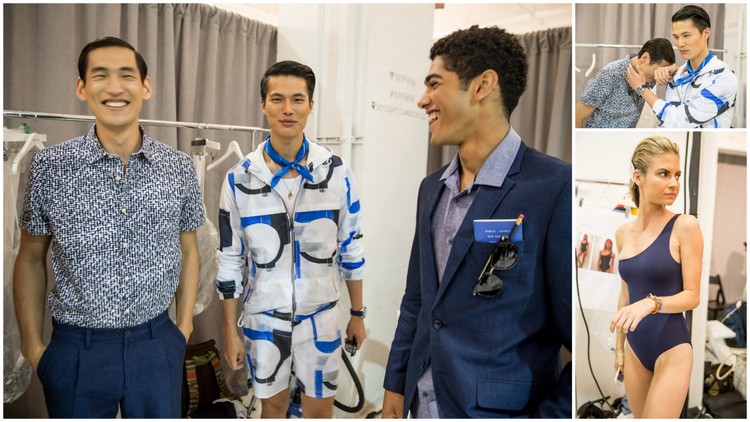
That said; Fashion Reverie was fortunate to get our photographer Ken Jones backstage at Nautica’s spring 2017.  Remember, a photo can be worth a thousand words and in Ken Jones’s case his Nautica spring 2017 backstage images are editorial gold!!

Nautica_Spring_2017_backstage

 What a perfect life, waiting backstage at the Nautica spring 2017 show dressed head to toe in Nautica!!


Collages776

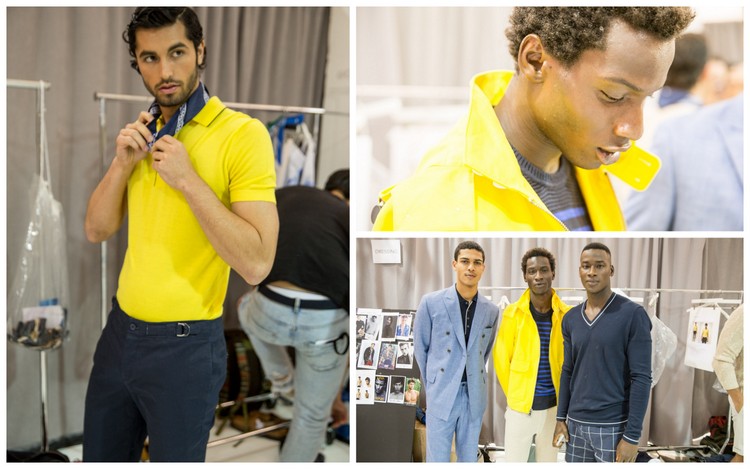
Is there a major menswear show that Supermodel Adonis Bosso is not in? I think not!!


Collages777

These models know they look good. And, they are right!!


Collages778

Backstage images courtesy of fashionreverie.com/Ken Jones

A model’s life is not easy, but these Nautica models seem to be happy and having a good time. And wouldn’t you with such a delicious female model in tow? Of course, you would!!

Fashion Feature: New York Fashion Week: Men’s Spring 2017 Sketches

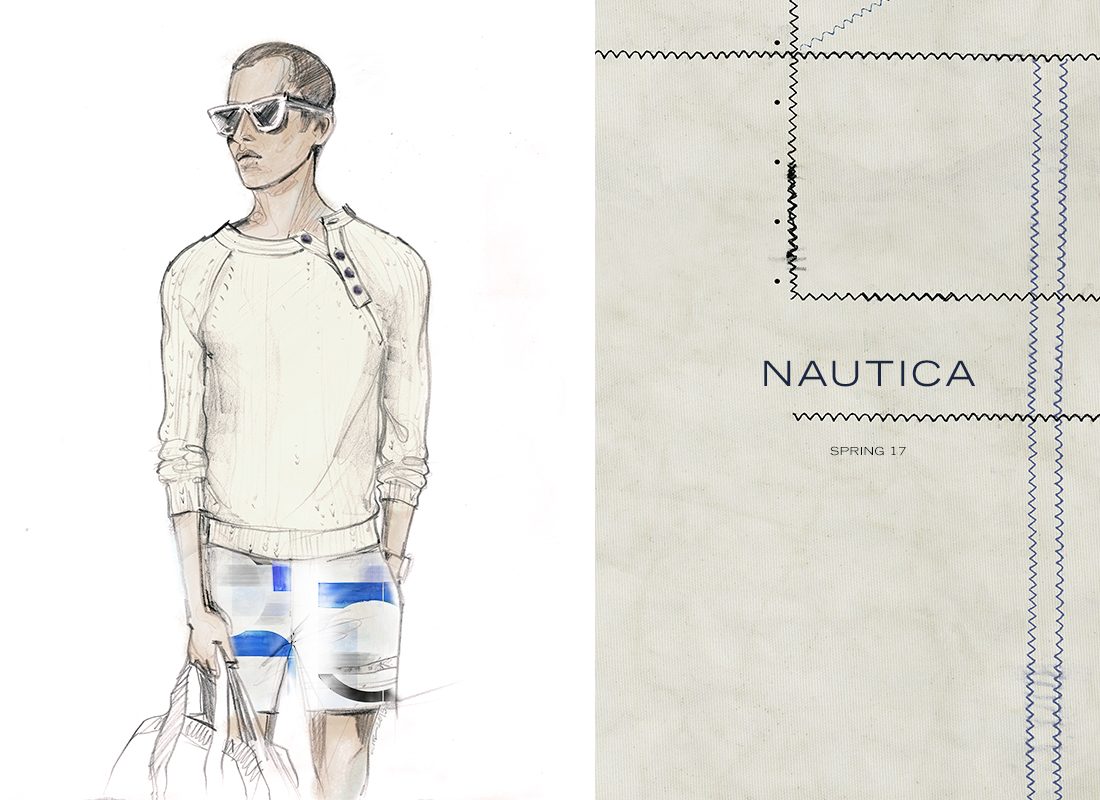
Image courtesy of Nautica

Image courtesy of Nautica

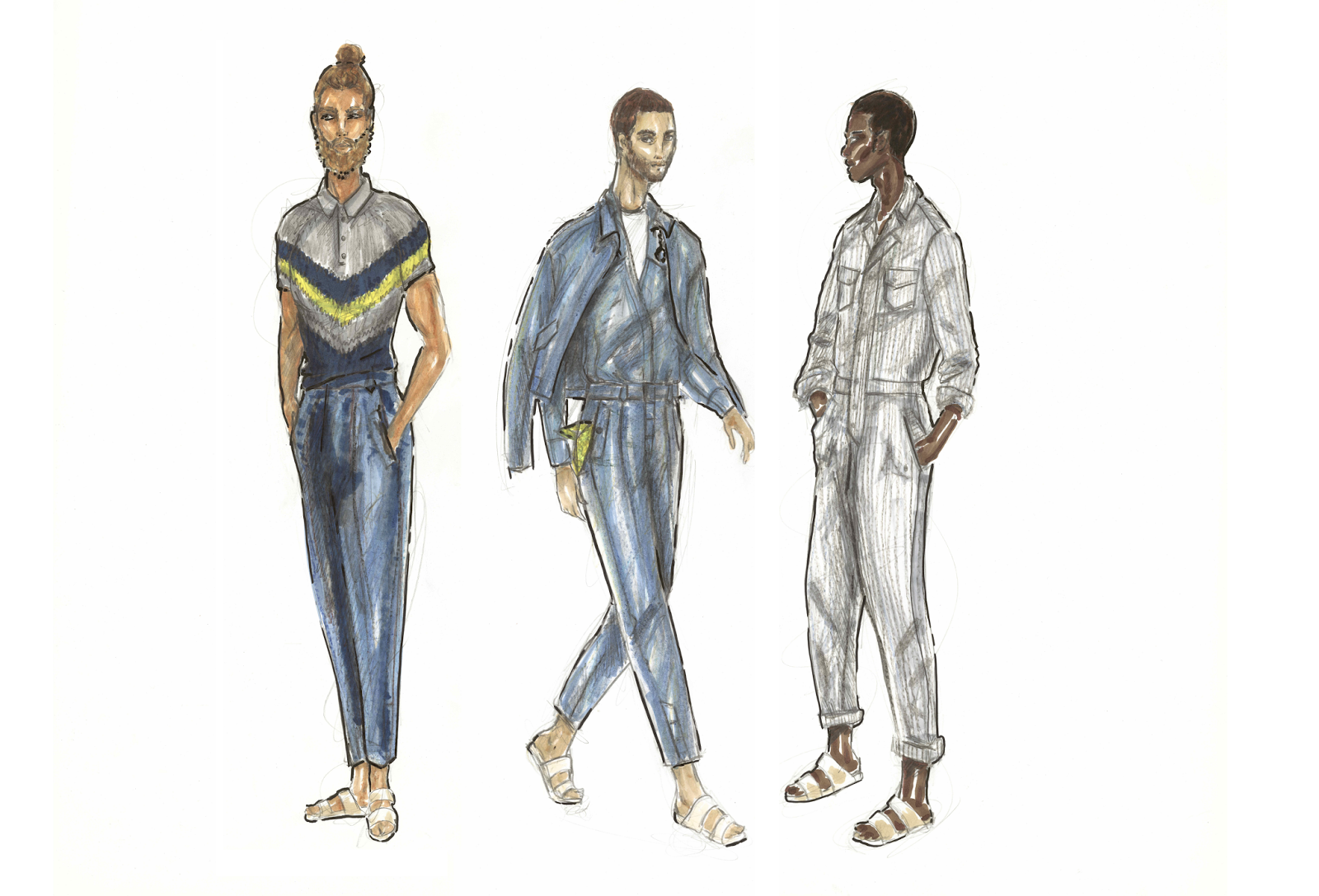
Do fashion designers and creative directors of fashion brands still sketch? In an era where technology and innovation is moving and evolving all industries very quickly to better modes of production many fashion pundits ask if sketching has outlived its time.

Many fashion designers and industry professions would contend that sketching collections as a process tool is not antiquated. When designers put pen to paper, or in some cases stylo pen to I-Pad, fantasy and creativity takes flight. And Fashion Reverie, true to form, has the sketches from three design teams that proves sketching is still a relevant and necessary tool.

Nautica is one of the most sought-after shows during New York Fashion Week: Men’s (NYFWM). For their spring 2017 collection, the tailored traveler inspired Nautica’s design director Steve McSween. McSween has been the vice president of menswear global design since 2014 with his first collection debuting for spring 2016. And since his ascendency Nautica menswear reach, scope and design aesthetic has been directed to a menswear appeal that incorporates a more global arch.

Image courtesy of Brett Johnson

Image courtesy of Brett Johnson

“The texture of colours in the still heat of the Arizona desert inspired this season’s journey,” explained Brett Johnson of his spring 2017 collection. In his second season at NYFWM, Brett Johnson, scion of BET founder Bob Johnson seeks to expand his design aesthetic to include more bold color and a more varied masculine silhouette. While his debut collection at NYFWM was well attended and well received, Johnson is now looking to push his brand’s DNA beyond the urban aesthetic seen in previous collections.

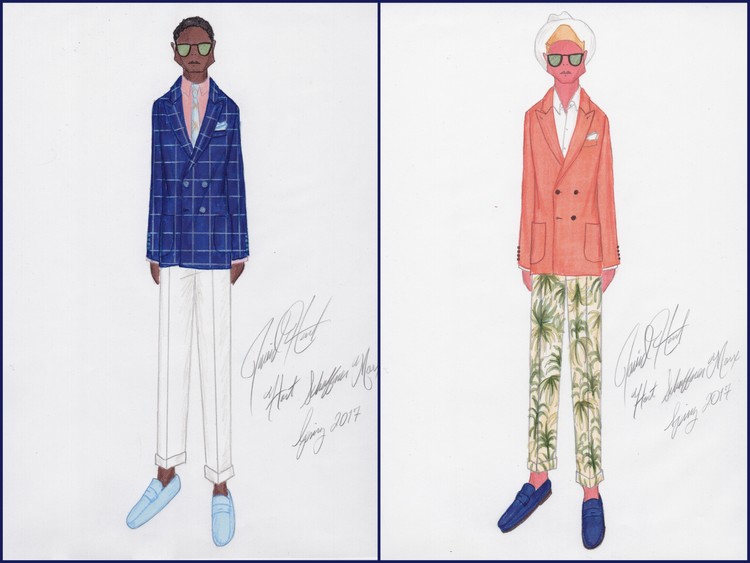
Images courtesy of David Hart

Images courtesy of David Hart

David Hart is a fashionisto’s favorite during NYFWM. From collections that were inspired by Miami nightlife of the 50s and 60s to New York City jazz clubs, for spring 2017 Hart collaborates with Hart Shaffner Marx , as well as produces his eponymous line for spring 2017. “The Spring ’17 collection for David Hart x Hart Schaffner Marx is inspired by the iconic environmental photography of Slim Aarons.  From palm prints to colored linens, the collection is reminiscent of escapes to the Maldives, Mustique, Palm Beach, and Provence in the 1960s,” details David Hart.

—Staff


NYFW: Men’s Spring 2017 Pre-Coverage

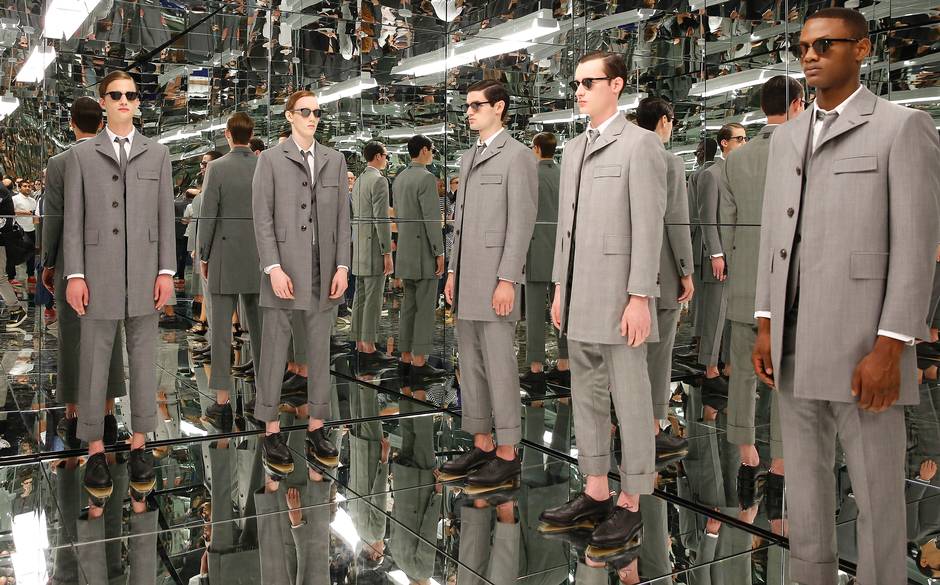
Image of Thom Browne spring 2016 courtesy of malcolmthomas.us

Image of Thom Browne spring 2016 courtesy of malcolmthomas.us

Has men’s fashion week as a separate entity from New York Fashion Week: Women’s (NYFWW) enjoyed a successful run? Well, you know what the old adage says, “three time’s the charm.” If that is true, New York Fashion Week: Men’s (NYFWM) in its third season should expect a very prosperous and exciting spring 2017 season.

With new menswear designers being added every season, most fashion pundits would agree that the CFDA was on the right track separating NYFWM from NYFWW. And some of the original men’s designers—Parke and Ronen, John Varvatos, Perry Ellis, Nautica, Robert Geller, Timo Weiland, Ricardo Seco, just to name a few—have not bolted, but continue to show their menswear collections. Additionally, the venue, Skylight Clarkson, showcasing NYFWM is spacious and aptly suited for all the collections shown this season.

For spring 2017 there will be lots of new faces, from Andy Hilfiger, Matama, Landlord, to Linder, Passavant and Lee, Eidos, Title of Work, and New Republic by Mark McNairy. The only things missing are some of the well-known European brands that have yet to jump The Big Pond and show their collection at NYFWM.

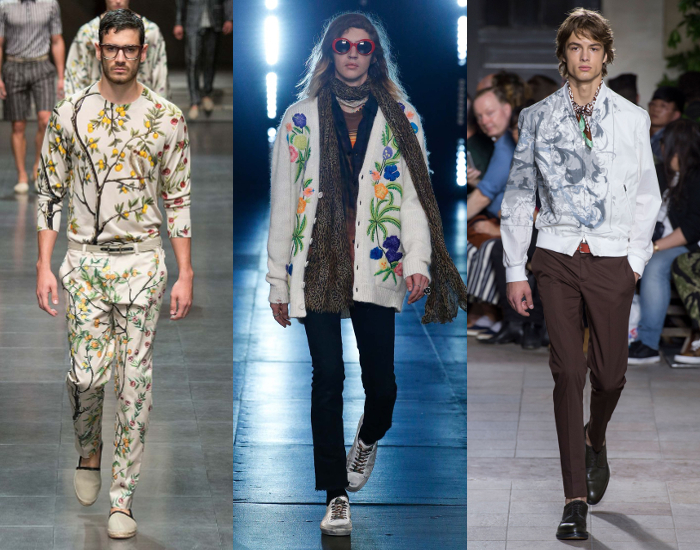
Image courtesy of expofashionmagazine.com

Image courtesy of expofashionmagazine.com

Because of unseasonably cool spring weather and shifting consumer-shopping patterns, spring 2016 has been a less than spectacular retail season. That said; the recent spring 2017 men’s weeks in Europe demonstrated that menswear designers are not shying away from presenting collection that push the proverbial fashion envelope. Let’s American menswear designers follow suit, creating collections that are retail friendly combining innovation with fashion forward sensibility.

Fashion Reverie is primed to bring our viewers complete coverage of NYFW: Men’s Spring 2017 from runway/presentations to behind the scenes. New York Men’s Fashion Week: Men’s dates are July 11–14.

—William S. Gooch


Fashion Reverie Exclusive: “In the Name of Gucci,” the Man Behind the Brand

Collages715What determines a legacy? And more in question, how is a fashion legacy created? From fashion giants Yves Saint Laurent, Christian Dior, Hubert de Givenchy to Coco Chanel, Cristobal Balenciaga, and recently Oscar de la Renta—just to name a few—have left behind a deep well of creative fashion genius and inspiration.

In recent years most of these great fashion houses have been taken over my younger creative forces that have expanded upon the signature aesthetic of the original visionaries, while other creative directors have evolved these iconic brands on a totally different path.  The verdict is still out if these hallowed fashion houses will survive or at the very least continue to product fashion masterpieces.

Gucci was one just Italian fashion house that has set it’s own indelible footprint on the annals of fashion history. From the mid-1950s Gucci has been identified as a global brand that fashion goods that expand the depth and width of a luxury lifestyle. From clothing and accessories to even cars and other lifestyle products for over half a century the word Gucci is the penultimate expression of sophistication and luxury.

This was all accomplished by Aldo Gucci who took his father’s Italian goods business and elevated it to a fashion empire. By concentrating on the American luxury market in the 1950s, Aldo Gucci transformed a small Italian leather goods business into a global brand. President John F. Kennedy even called Aldo Gucci “the Italian ambassador of fashion.”

Still, there was much family strife among the Gucci heirs, and in the late-80s, a shameful tax evasion imprisonment. Much is known about the successful career of Aldo Gucci, but very little about his personal life.

Collages714With the recent publication of “In the Name of Gucci:A Memoir,” daughter Patricia Gucci reveals the man behind the Gucci brand. From love letters between her father and mother Bruna Palumbo, Patricia Gucci brings readers into the inner life of Aldo Gucci and what it was like to be a part of the Gucci brand during its heyday.

Fashion Reverie was given the unique opportunity to speak with Patricia Gucci prior to the publication of “In the Name of Gucci: A Memoir.”

Fashion Reverie: What prompted you to write this book?

Patricia Gucci: It was basically very important for me to give a tribute to my father. It was something that had been on my mind for years. I wanted to show his legacy to the world because two decades had passed and many people had forgotten because of the many things that had happened afterwards. It was very important to put a face to the man who had created the brand. And for me, he was someone very important in my life, Aldo Gucci, for many years I saw the greatness of what he brought to the House of Gucci and created this incredible phenomenon. And unfortunately, I witnessed the tragic end of his life.

And lastly, my mother was a very important part of my life and I felt I needed to understand more about my life and she was the only one would fill in some of the blank spots of my life and explain some of the mysteries. I understood that my mother was the only one who really could help me accomplish that goal. My mother opened so much more than I expected and that evolved into something even more significant as a book in some ways.

FR: You expose some very personal and traumatic things in this book, why open up and reveal so much and was it a hard decision?

Patricia Gucci: I didn’t feel there was anything to be ashamed of. And yes, it was very hard to reveal and write about some of the personal things.

After my father died it was quite hard and we had to read a lot of things about my father in the papers that were not true and those things were very hurtful and it made me withdraw into my own world. However, I felt my father’s story was bigger than my own pain. My father deserved to have this journal of remembrance. I also wanted my daughters to know who their grandparents were and how their Mommy came about, and there was so much unfinished business, and I wanted to set the record straight. My mother was gracious enough to open up various elements of her life that were hard for her to talk about.

Image courtesy of vogue.it

Image courtesy of vogue.it

FR: During your father’s later years at Gucci, how were you involved with the brand?

Patricia Gucci: For the last four or five years of my father’s life I was an integral part of the Gucci company. My father brought me into the company as the first female family member on the board of directors. On a creative level I was successful, and my father gave me more and more creative duties, challenges, and responsibilities. This was a very special time because I got to spend more time with my father. That was also very incredible time because Gucci was at its peak.

FR: How did your father Aldo transform the Gucci brand from a luxury baggage brand to a global fashion house?

Patricia Gucci: Gucci was founded my grandfather as a luxury bag line and my father transformed it a global lifestyle brand. My grandfather while working at the Savoy Hotel saw and met wealthy people who carried luxury luggage and he felt he could translate that luxury into a high-end Italian luxury line because Italy has great leather artisans. My father continued that luxury, taking the brand to Rome from Florence. He was the first Italian to bring a brand of this nature to the United States. It was a force that couldn’t be stopped.  It was a brand that was received with open arms by Americans. If it was up to my grandfather the brand would have just stayed in Florence and not become the global luxury brand that Gucci is now.

Gucci Pre-fall and fall 2016 images courtesy of youtube.com

Gucci Pre-fall and fall 2016 images courtesy of youtube.com

FR: Now, you source your mother’s love letters for “In the Name of Gucci,” why did you look to your mother’s love letters as a source in the book?

Patricia Gucci: It was a spontaneous act on my mother’s part. When I was talking to her and asking her questions at one point she went to her room without giving me any warning and brought out this pouch that contained love letters from my father. When I read this letters, I discovered a side to my father that I never knew existed. It was a tremendous revelation.

The passion in these letters was amazing. I always knew my father was eloquent and a very skilled writer, but this was all in business. I had never experienced my father being so personal and so devoted. It was a side of him I had never seen before. My father was from the old school and didn’t show much emotion.

These letters made me realize how much my father loved my mother. My mother was not able to say no to my father because his love was so overwhelming. He gave her the confidence that he loved her and would stay by her side, which he did until the end of his life.

FR: Could you talk a little about your mother Bruna’s relationship with Aldo Gucci? There were some secrets around their relationship.

Patricia Gucci: She started out as a sales girl in one of the Gucci stores and later replaced my father’s secretary. He started wooing her and she was flattered and was overwhelmed by my father. He wrote her these incredible love letters. Even though at the time she was engaged to someone else at the time, she fell for my father. She came from a very conventional Italian family, so the relationship that she developed with my father was taboo. (Aldo Gucci was already married with three sons. Patricia Gucci is the lovechild of the union between Aldo Gucci and Bruna Palombo.)

FR: You talk about in the book how you were shuffled between Italy and London as a child. Your father was loving but not really present a lot in your early life. What was your relationship with your father like as a child and how did that relationship evolve?

Patricia Gucci: As a father, at times, he would sweep into our lives. He was a larger than life force full of energy. He was very happy man, full of stories and gifts. He was never gruff, always kind. Unfortunately, he was not around enough. He would take me to church and he loved to go for walks and walk around the garden.

When we were together in Florida at his home in Palm Beach, he was much more relaxed. He would laugh and do things that we really didn’t have time to do in Europe. Occasionally, he would take me on elaborate shopping trips. My time with him was magical. I really didn’t wish for a lot more time from him. I accepted that he was extraordinarily busy and his time was limited.

Gucci spring 2016 image courtesy of youtube.com

Gucci spring 2016 image courtesy of youtube.com

FR: How did you come to work at Gucci?

Patricia Gucci: I finished my education and moved to New York aspiring to become an actor. I attempted to get into Juilliard and didn’t get accepted. My father was very kind and allowed me to go through that process of trying to become an actor. At the same time my father wanted me to become associated with the brand because of my personal style and my affinity for fashion. Eventually, I apprenticed at Gucci, observing my father at work, and moved up the corporate fashion ladder into being on the board of directors.

FR: Could you define the golden years of Gucci?

Patricia Gucci: Gucci was at the peak of its success during this golden period.  There was no other global luxury brand like Gucci during this time period. Everywhere you went everyone was wearing the brand. There was such an excitement around the brand. And my father created so many different licenses of watches, cars, and a variety of lifestyle products.

There were fantastic clients that were huge fans. People were proud to work at the company. There seemed to be no end to Gucci proliferating the market, it was an exciting time!!

FR: What do you want readers to get from your book?

Patricia Gucci: I would like people to be aware and remember how my father, Aldo Gucci built this incredible fashion empire. And to be reminded of Aldo Gucci’s legacy, that still continues to this day!!

“In the Name of Gucci:A Memoir is published by Crown.

—William S. Gooch


Copyright © 2012-2025 | Fashion Reverie Publications, LLC - All Rights Reserved