In Memoriam: Notable Fashion Luminaries Who Have Transitioned


Some very significant fashion industry professionals passed away in 2020. Some from COVID-19 infections, others from natural causes or other disease states; still, the industry mourns their loss. And this year Fashion Reverie had a personal loss with the death of Editor-at-Large Karyn Collins.

 Out of deep respect and reverence, Fashion Reverie looks back on some distinguished fashion industry professionals that said goodbye in 2020.

Image courtesy of theguardian.com

Pierre Cardin

There were several fashion designers that passed away in 2020; however, the fashion designer most known to consumers was Pierre Cardin. In fact, I remember purchasing a pair of Pierre Cardin shoes when I was in college which made be believed I had arrived as a fashionisto before the word became a part of the fashion lexicon.

Throughout his very long career, Cardin is perhaps best known for introducing licensing to the fashion industry, which was his way of democratizing the fashion industry. Pierre Cardin established his own fashion house in 1950 in Paris. In 1954, Cardin introduced his “bubble dress,” which is a short-skirted, bubble-shaped dress made by bias-cutting over a stiffened base.

“Because of his vast knowledge of construction, tailoring, and sculptural-architectural proportions, Cardin is the only Paris couturier, outside of Balenciaga, who is not only a designer, but an excellent fitter and cutter,” noted a fashion journalist in 1958, as reported in The New York Times.  In his own word, Cardin wanted his work to “an adventure in ideas.”

Pierre Cardin’s designs were distinguished by their sculptural, architectural construction. And for its time it pushed the fashion envelope with a projection toward the future. Cardin has been credited with creating a revolution in menswear with Vogue describing his 1966 menswear collection seen in New York’s Bonwit Teller, “as in the style that Cardin describes as ‘sexy … plus elegant que kicky … very young … the shape picks a man up and gives him height and youth ….”

As the haute couture started to decline in the late1960s, Pierre Cardin’s ready-to-wear collections gained more market traction. And with Cardin’s combination of maxi and mini dress aesthetic with a new hemline, Cardin was on his way to dominate the ready-to-wear market in the early 70s.

In the 1960s Cardin was one of the first designers to adapt licensing to expand his business into licensing everything from accessories to cosmetics and fragrances, and even at one-time toilet paper. Though this expansive licensing venture diminished the credibility of the Pierre Cardin brand, by the 1980s licensing had made Cardin one of the richest fashion designers.

In 2011, Cardin’s business was valued at a billion dollars, though the Wall Street Journal contested that value. Cardin died on December 29. He was 98 years old. There is a retrospective of Cardin’s work currently at the Brooklyn Museum.

Image courtesy of rochebobois.com

Kenzo Takada

Though not a household name like Pierre Cardin, Kenzo Takada was one of the first designers to employ the East meets West design aesthetic. And was one of the first Asian designers to acquire a global fashion audience.

Kenzo arrived in Paris from Japan in 1965 and established his first fashion brand in 1970. Kenzo opened his first flagship store in Paris in 1976. Launching his first menswear collection in 1983. Since 1993, Kenzo’ fashion brand was owned by LVMH.

Kenzo’s fashion designs were a combination of big jungle-inspired prints, East meets West design aesthetics, and dynamic graphics. Considered by many fashion insiders as a designer that was ahead of his time, Kenzo never wanted to duplicate what was already going on in Paris fashion.

His native Japan remained [the] source of inspiration for every collection he did. He kept the use of vibrant colors and volumes present at all times,” said Circe Henestrosa, head of the school of fashion at Singapore’s Lasalle College of the Arts.

“I think he was ahead of his time and was one of the first designers to experiment with the idea of genderless fashion. He would never conform to the stereotypical idea of masculine and feminine fashion,” said Ms Henestrosa.

Kenzo left his eponymous brand in 1999 but continued to design home goods. In January 2020, Kenzo announced that he was starting a new lifestyle brand K3. Kenzo Takada died of complications due to COVID-19 infection on October 4, 2020. He was 81 years old.

Image courtesy of vogue.com

Kansai Yamamoto

Though not as well known as Kenzo Takada, Kansai Yamamoto has had his moment in the sun. Known for design aesthetic of “wild maximalism” and making stage costumes for David Bowie in the 1970s for his “Ziggy Stardust” stage persona, Yamamoto debuted his ready-to-wear collection in Paris in 1975. And opened Kansai Boutique in Paris in 1977.

Always drawing inspiration from his Japanese heritage, Yamamoto in the early 1990s took a hiatus from showing and producing his maximalist collections and centered his creative energies on live shows that combined fashion, music, dance and acrobatics. These Super Shows could draw as many as 12,000 attendees with the first of such events held in Red Square in Moscow in 1993.

In 1999, Yamamoto returned to fashion with his collaboration with Junko Koshino, creating a modern version of the classic kimono. The Philadelphia Museum of Art produced a retrospective of his work in 2009. And in 2018 Yamamoto and Louis Vuitton worked together to create classic Japanese art and Kabuki-inspired patterns and prints for LV’s Resort 2018 collection.

Kansai Yamamoto died on July 21 after battling acute myeloid leukemia since of March 2020. Kansai Yamamoto was 76 years of age.

Image courtesy of British Vogue

Stella Tennant

Supermodel Stella Tennant will no longer grace runways, editorials, magazine covers, and campaigns with her steely British aristocratic presence. Tennant passed away suddenly on December 23 at her home in Duns, Scotland.

Stella Tennant burst unto the fashion scene in the early 90s with iconic fashion photographer Steven Meisel shooting Tennant for the cover of Italian Vogue. Later Tennant acquired an exclusive contract from Karl Lagerfeld for Chanel. Additionally, Tennant appeared in numerous campaigns for Giorgio Armani, Calvin Klein, Burberry, Hermes, and Chanel.

Tennant’s ascent as a fashion model was due to some respect to her boyish, androgynous look—which was in vogue in the early 1990s and had become a new way of looking at feminine beauty which Karl Lagerfeld and many top designers were embracing—and because of Tennant’s her aristocratic background. Stella Tennant was a distant cousin of Princess Diana and the granddaughter of the 11th Duke of Devonshire, Andrew Cavendish, and Deborah Mitford.

Stella Tennant is survived by her husband, French photographer David Lasnet and four children. She was 50 years of age.

Images courtesy of hula.com

Sergio Rossi

One of the early victims of COVID-19 was Italian footwear icon Sergio Rossi. Sergio Rossi shoes were used by  Azzedine Alaïa, Versace, and Dolce & Gabbana in their collections, and worn by celebrities from Lupita Nyong’o to Rihanna, and Paris Hilton to Laura Dern.

Rossi launched his eponymous footwear brand in 1968 in Bologna, Italy. And the brand’s most famous shoe styles being his extravagantly strappy, round-soled Opanca sandal and the more classic, sharp-toed and high-heeled Godiva pump.

Riccardo Sciutti, CEO of the brand told WWD that Sergio Rossi “loved women and was able to capture a woman’s femininity in a unique way. He was never over-the-top, always in good taste. The shoes were always wearable and he was never satisfied until they were perfect. They were not accessories for him. He told me once that he wanted to create the perfect extension of a woman’s leg.”

The Sergio Rossi brand was acquired by Gucci Group, now known as Kering, for 96.2 million dollars in 1999 and was later sold to European investment house Investindustrial in 2015. Sergio Rossi died on April 4. He was 84 years of age.

Image courtesy of fashionreverie.com

Karyn Collins

Though not as famous as some of the fashion designers in this memoriam, Karyn Collins light shines just as bright. As a fashion editor and journalist Karyn Collins was a constant presence at New York Fashion Week for over 25 years.

A graduate of Howard University, Karyn Collins continuously primed her craft, always striving for excellence. She required that of herself, and she also required that of the many journalism students she taught at Rutgers, Seton Hall, Bloomfield University, and other New Jersey universities.

Karyn Collins wrote for New Jersey’s Star Ledger newspaper, Madame Noire, fashionreverie.com and many other fashion and entertainment print and online publications. Karyn came to work with fashionreverie.com in 2013, serving as our editor-at-large until her death.

She is greatly missed by all our staff and her humor, wit, charm and intelligence can never be replaced. Karyn Collins succumbed to cancer on November of this year. She was 56 years of age.

Image courtesy of utkaltoday.com

Sharbari Dutta

Known for her ethnic menswear designs for Bollywood stars, Sharbari Dutta was found dead in her home on September 18. According to the indiatimes.com, Sharbari Dutta was “one of the most popular names in the fashion industry, Dutta had brought about a revolution in the way the world saw men’s ethnic wear. From styling current Pakistan PM Imran Khan to cricket meastro Sachin Tendulkar, her ethnic fusion designs changed men’s ethnic wear for the better.”

A well-known name in the global fashion industry, Dutta introduced colored Bengali Dhotis and designer Punjabi kurtas with embroidery to the mainstream fashion world. She had dressed personalities ranging from sportsmen Sachin Tendulkar and Sourav Ganguly to Bengali actor Prosenjit Chatterjee and singer-composer Anupam Roy, fashion industry sources said.

“I would like to ask the younger generation to flaunt their wear confidently. Don’t mimic, be yourself. Films don’t influence fashion statement,” Ms Dutta had told PTI earlier.

Sharbari Dutta was 64 years of age.

—William S. Gooch

Happy Holidays: Celebrate in Style

This has been a very challenging year!! The list is long and varied of all the things we have had to endure in 2020 with the most challenging being the COVID-19 pandemic. The havoc caused by the COVID-19 pandemic is too difficult to measure and it will take a longtime for global communities to recover. However, this is light at the end of the tunnel and despite deaths, infections, shutdowns and economic insecurities, in this holiday season there is still so much to celebrate and be grateful for.

Two COVID-19 vaccines have been created and is already being distributed to countries around the world. It is unprecedented to have effective vaccine created in so short a time. We can also celebrate a new administration coming to the White House in 2021. An administrative that will be more sympathetic to the needs of US citizens.

With all the hope on the horizon, Fashion Reverie wishes a happy holiday season to all our viewers, staff and supporters. Let this holiday season be a time of reflection on all that is good and a projection of good things to come.

In the words of Mame Dennis from the iconic film “Auntie Mame, “Life is a banquet, and most poor suckers are starving to death.” This holiday season count your blessing. Yes, you are blessed and celebrate in style. Just celebrate in small numbers, social distanced, and with caution. You can do it!!

William S. Gooch

Fashion Reverie’s 2021 Fashion and Retail Predictions

Images courtesy of pinterest.com

Fashion Reverie checked-in with a select panel of fashion industry experts, all operating in the high-end side of fashion, and with Morgan Stanley to explore their respective forecasts for 2021. They generously shared their thoughts about what they envision for the fashion industry going forward into 2021, on a micro and macro level. Together, Fashion Reverie and our experts arrived at the following five trends. Read on to find out what our panel predicts for 2021.

THE FIVE TRENDS

  1. The digital format of NYFW continues
  2. Color Trends: “Ultimate Gray,” “Illuminating” yellow, and “Orchid”
  3. A studied mix of clothing for 2021– cozy clothes and special occasion clothes
  4. Sustainability as an important element at the designer fashion level
  5. Will Wall Street Embrace Fashion & Retail in 2021?

MEET OUR PANEL

Images clockwise: Frederick Anderson, Deborah Sawaf, Demi Schimenti, Peter Arnold, Leslie Ghize, Marco Miliotti, Christina Neault

Deborah Sawaf is Thale Blanc’s founder and creative director, who works and resides in Los Angeles. She is known for her Thale Blanc handbag and jewelry collection. Recently, she has successfully expanded to include Thale Blanc’s ready-to-wear Statements Collection.

Frederick Anderson is founder, creative director, and CEO of the Frederick Anderson Collection. Frederick was formerly the half of the creative team of Douglas Hannant, a darling of the Park Avenue fashion crowd from 1996 until the brand closed its doors in 2014.

Demi Schimenti is an interior stylist and owner of Melbourne Interiors, whose focus is on unique projects in New York’s East Village, Soho, Brooklyn, the Berkshires, and Connecticut’s Gold Coast.

Christina Neault is one of New York City’s foremost fashion show producers. She has launched fashion weeks for IMG Worldwide, Pier 59 Studios, and the Swimwear Association of Florida.

Peter Arnold is the executive director of the Fashion Scholarship Fund. Previously, Peter was a Wall Street attorney who worked in the fashion space for years. His experience includes five years as executive director of the CFDA, eight years as CEO of Cynthia Rowley and three as CEO of Cushnie et Ochs.

Leslie Ghize is the executive vice president of the forecasting firm, TOBE TDG (The Doneger Group). She cites one of her group’s best calls as their May 2017 forecast of “the increase in anxiety and how that would affect product, presentation, and new business opportunities.”

Marco Miliotti is the managing director of Milior, S.A.S. Milior is one of Italy’s preeminent textile companies that has been in business since 1895. Milior works with the foremost fashion companies in the world.

TREND 1: THE DIGITAL FORMAT OF NYFW CONTINUES

Panelists: Christiana Neault, Peter Arnold, and Leslie Ghize

Christina Neault and Peter Arnold are well-versed in addressing this topic coming from the production and financial sides of fashion, respectively.

Christina says that the February/March 2021 fashion shows will be digital, no question, and that there will be far less travel than pre-2020. The second half of 2021 will be a hybrid in which the top editors of the city or country will attend physical shows, but only in their country, bringing about a new geography-based fashion editor. She credits the digital fashion weeks as being more sustainable than the old-school, in-person shows with venues in which the bigger shows were at capacity with close to 1,000 people in attendance.

Christina acknowledges that “every designer prefers to show their clothing on real people because there’s not a better way to show collections than in-person, so eventually some designers will show again in person.  While the shows might get a little smaller; however, that digital part is always going to exist.” She refers to Frederick Anderson’s digital spring 2021 show as an example of an engaging presentation that was outside of the box, which he produced with only a tiny team.

Peter Arnold approves of the digital format of New York Fashion Week (NYFW), and one that he says Donna Karan and Tom Ford talked about fifteen years ago. He continues, “We’re not going to go back, and the editors and buyers don’t want to go back. It (digital) democratizes the tradition (of the fashion show).” According to him, the ship has already sailed and that a digital approach to NYFW is here to stay.

New traditions present challenges going forward though, such as coming up with photogenic content, and as Christina says, the challenge of replicating the excitement that’s in the room at a live show. Peter cites Jeremy Scott ‘s much talked-about spring 2021 puppet show as “a win.” The digital model he states, “is a boon for smaller brands who can be nimble and pivot to the new, more efficient model, but time is of the essence. Smaller brands that want to participate must buy into it, ASAP.” He concludes, “it’s a much more efficient model, I’m kind of loving that the old model has been thrown out.”

Analyst Leslie Ghize agrees with Christina and Peter’s other call of a shift towards showing to season, enabling consumers to buy what they see then and there.  Says Leslie, “We are projecting a shift in the trend, merchandising, and fashion cadence that is in sync with the consumer, rather than the production calendar, allowing for more responsiveness to the customer and demanding more creativity in curation and presentation.”

TREND 2: COLOR: “Ultimate Gray” and “Illuminating” yellow from Pantone, and “Orchid” from Coloro/WGSN

Panelists: Frederick Anderson, Deborah Sawaf, Demi Schimenti, Marco Miliotti, and Christina Neault

Images courtesy of revolve.com and minimanimoo.com

After sifting through and analyzing our panel’s responses on this topic, several things became clear. While creatives who operate in the high-end realm don’t ignore color trend forecasts, they use themselves as their own internal barometers when it comes to determining which direction they will take in their work. They intuitively translate how they interpret what is happening, socially and politically, and work from that departure point. Frederick, Deborah, and Demi were on the same page when it comes to color preferences for 2021.

Says Frederick Anderson, “I don’t use color agencies as they actually follow high-end collections like mine to derive predictions that filter to the general public.”  He was months ahead of the Coloro/WGSN forecast of gray and yellow. He showed his spring 2021 collection featuring a segment of clothes in soft gray and yellow tweeds.

Deborah Sawaf is of the same mind. “We like to think of our Thale Blanc Statements RTW collection as setting a trend rather than just following ones prescribed by others. I like to reinvent our base palette and update it as a way of moving forward.” 

Images courtesy of WGSN/James Volpe and wwd.com

In her arena of home décor, Demi Schimenti is partial to gray “as a base to layer upon.”  She also likes Pantone’s “Orchid” color prediction. “It evokes innocence, vulnerability, and is inviting, open and feminine.”  Deborah Sawaf loves the color too and says it “signifies people moving towards a unique and special place. The color, like the flower is a symbol of the times we find ourselves in and the way we are living our lives going forward.”

Producer Christina Neault and Trend Analyst Leslie Ghize both skip ahead to the second two quarters of 2021. Christina believes we will move towards bright colors in a quest to put 2020 behind us. “Special occasion clothes will be a factor in the latter part of 2021; we’re going to want to brush our hair, put on lipstick and a pretty sundress on in summer of 2021. We will feel celebratory come summer, and color will play a factor. We’re going to see more color, bright color.”

Leslie shares that Doneger is expecting soft, neutral, relaxing tones, and bright, celebratory, and techno-inspired tones. Both ranges, Leslie says, “can be merchandised to capture the different directions the consumer is going in, from comfort and cocooning, to optimistic and out-and-about.”

Images courtesy of verynewyork.com, nailandmanicuretrends.com, and topazdetailing.com, respectively

Marco Miliotti relies on a variety of sources to determine what his fabric mills will produce.  Milior begins their process by researching specialized books of trends and information from the textile fair offices in Paris and Milan, and they also consider the Pantone color inspirations. While the design world is working on fall 2021, the textile world, is ahead of that, working on spring 2022.  Marco stresses that what the designers say in terms of color direction is incredibly important. His mills interpret their designer clients’ messages with the purpose of making the company’s fabric collections address the trends of the season in order to remain at the forefront of market.

Deborah Sawaf opines that strong jewel tones work year-round, when it comes to bags. “Red … Ferrari red (“Rosso Corsa” in Ferrari’s color swatch catalogue, which translates, to “Racing Red”) in both bags and fashion adds an element of surprise to any wardrobe. I tell women all the time to not think too hard about matching a bag color to their outfit.  Allow the bag to make the statement.”

 TREND 3: A studied mix of clothing for 2021:Cozy clothes and special-occasion clothes

Panelists: Frederick Anderson, Deborah Sawaf, Leslie Ghize, Christina Neault, and Demi Schimenti

Image courtesy of buzzfeed.com

Deborah Sawaf only designs timeless and classic pieces with a focus on special and unique pieces of a high-quality that possess a timeless quality.

Demi’s sees minimalism as the future of style. “By [the end] of 2021, the shift will favor more spending and ornamentation in fashion and [fashion] will continue to foster bolder expressions. Fashion consumers crave real expression in and bold monochromatic statements.” She feels that comfortable fashion will continue to remain a source of well-being amidst the tumultuous social and economic times we are immersed in.

Frederick Anderson and Christina Neualt agree that comfort will continue to be key in 2021. Frederick is working with soft knits for the coming year, and Christina likes loose wide-legged pants in colors and interesting patterns for the second half of 2021 when people will see us from the waist down again, post-COVID-19 vaccine. She splits 2021 into two parts, pre, and post pandemic. “In the first half, there will still be a focus on zoom, so statement earrings, crossbody bags for hands free and statement masks will continue to be important.”

Christina concurs with Deborah and Demi that timeless investment pieces will be top of mind. Many people will only be going back to the office one or two days a week, so why not invest in a pair of fabulous black cashmere pants, dress, and a coat that will last you ten years?

TREND 4: The Shift in High-end Fashion Design to a Greater Focus on Sustainability

Panelists: Deborah Sawaf, Christina Neualt, and Frederick Anderson

Image courtesy of wgsn.com

Sustainability has evolved from a fringe movement to the trend of the moment in 2008, to something consumers are increasingly demanding. Until very recently, sustainability was something most brands only paid lip service to. Smaller high fashion brands such as

Frederick Anderson and Thale Blanc are actively embracing sustainability. Frederick has always been aware of what he considers to be eco-friendly design and production, and recently added hand crochet knits, made by an artist in Argentina, to his collections. He calls-out fast fashion as culprits in the glut of clothes that only last for a few wears and are disposed of at an alarming rate.  He and Christina Neault point out that well-made, high-end clothing have a second life in the booming designer resale market, making them an eco-friendly choice.

Christina adds that thrifting and shopping our closet again will be an attractive option. Deborah Sawaf embraces eco-consciousness by using a reduced carbon footprint in her design and delivery process. She buys her fabrics from around the world, and everything is made in Los Angeles and shipped directly from Los Angeles to the customer to minimize the carbon footprint.

Trend 5: Will Wall Street Embrace Fashion and Retail in 2021?

Image courtesy of Morgan Stanley

Lastly, we turned to Morgan Stanley for their evaluation of the early part of 2021. Wall Street is known for its lack of sentimentality and its laser sharp focus on the bottom line. As Wall Street tends to do, Morgan Stanley hedged their bets, looking at a major department store, a trendy mobile shopping app, and the US retail leader of off-price home fashions and apparel to see how they were each pivoting to handle the disruption the global health pandemic has caused in their respective businesses. Morgan’s’ latest retail report focused on Macy’s, RVLV, and TJX Companies, with information gleaned from fireside chats with each company’s leadership team.

Their first fireside chat was with Macy’s CEO, Jeff Gennette. He shared that the Polaris plan —a strategic store closure of neighborhood smaller doors initiated in February 2020—was helping his bottom line, as was curbside pickup and digital sales and a conservative buying plan. Additionally, a $4.5 billion refinancing initiative has enabled Macy’s to invest in the business and retire some debt. Jeff’s prediction is that digital will be at the forefront of their omnichannel strategy.  In light of the COVID-19 health pandemic, Gennette instituted Klama, the buy-now-pay-later installment plan, to make buying decisions easier for his customers.  The Macy’s mandate is to have the best curated content from the big brands they buy from as well as exclusive content. The private brand collection is anticipated to grow 5%, up from the 20% they’ve seen historically.

Morgan’s next pick was in the digital space. Revolve is a popular shopping app that trades as RVLV (the Revolve Group) on the NASDAQ. Morgan’s fireside chat was with Co-CEOs Mike Karanikolas and Michael Mente. Throughout the crisis, the CEOs’ strategy has been to keep inventory lean and to act nimbly responding to data provided by their fans on social media throughout the COVID-19 crisis. They listened to their clients’ changing needs and pivoted their focus from dresses to loungewear and separates, especially tops, as many of their clients are now working at home and are only seen from the waist up on zoom meetings. Revolve has committed to continuing to rely on their data-driven approach to inventory management and to adjusting inventory for changing consumer demand as needed.

Morgan’s last pick was in the discount sales space. TJX (the TJX Companies Inc) also trades on the NASDAQ and includes the wildly popular national TJ Maxx and Home Goods chains. Morgan hosted a fireside chat and investor meeting with Scott Goldenberg, SEVP & CFO Jon Klinger and two other members of the upper management team.  Management is optimistic for 2021 and expects it will benefit from a period of “revenge buying” when consumers finally refresh their wardrobes and go back to the entertainment value of the treasure hunt TJX is so popular for.

According to our team of panelists, the coming year will be a positive one for fashion. Color and a sense of consumer positivity will manifest in an ombre pattern, with soft colors in the first half of the year. As life opens-up again, we will transition to stronger, more celebratory colors and soft clothes will continue to be popular.

Small brands will lead the way towards working in a more eco-friendly, sustainable way. Fashion Weeks will not go away. Rather, they will become more localized events and digital presentations will continue to improve and evolve. Despite the long-standing perception that department stores are slowly sinking, the news from Morgan Stanley’s analysis paints a cautiously optimistic story for retail overall in 2021.

Author Fritz Knapp may have said it best, “In fact, hope is best gained after defeat and failure, because then inner strength and toughness are produced.”

—Vivian Kelly

Fashion Reverie’s Most Stylish People of 2020

2020 was not the year anyone asked for, nor expected. With the globe being a ball of confusion, most of us did our best to stay separated and stay healthy. Part of that included canceling, postponing, or altering most major events—including red carpets. Even though there were far less red carpets for entertainers to walk down, they still made an effort to have fun with fashion whether by social media or simply in their private lives.

Even during a pandemic, there are fashion dippity do’s and don’ts. As there has been enough negativity this year, Fashion Reverie wants to focus solely on the fashion favorites, not the dippity don’ts and milquetoast fashion. We’re not talking just about public appearance; we also want to highlight personal style and flair even when away from the spotlight. With that, here is our list of the most stylish celebrities of 2020.

Alexandria Ocasio-Cortez

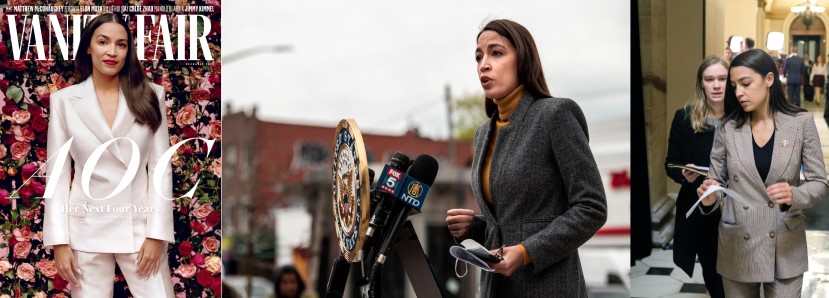
With the turmoil surrounding the recent 2020 election, it’s only right that we begin with a political figure. New York Representative Alexandria Ocasio-Cortez (AOC, if you’re hip) has been making her mark verbally and visually this year. She’s laying down the law in Congress and slaying the cover of Vanity Fair’s December issue (in suffragette white, may I add). She’s a two-for-one deal, beauty and brains.

BTS

Technically, K-pop group BTS is comprised of seven members, but how can you separate them when talking about a best dressed list? Yes, they all have their individual styles. Making seven different looks come together is challenging, but they flawlessly make it work every single time.

Selena Gomez

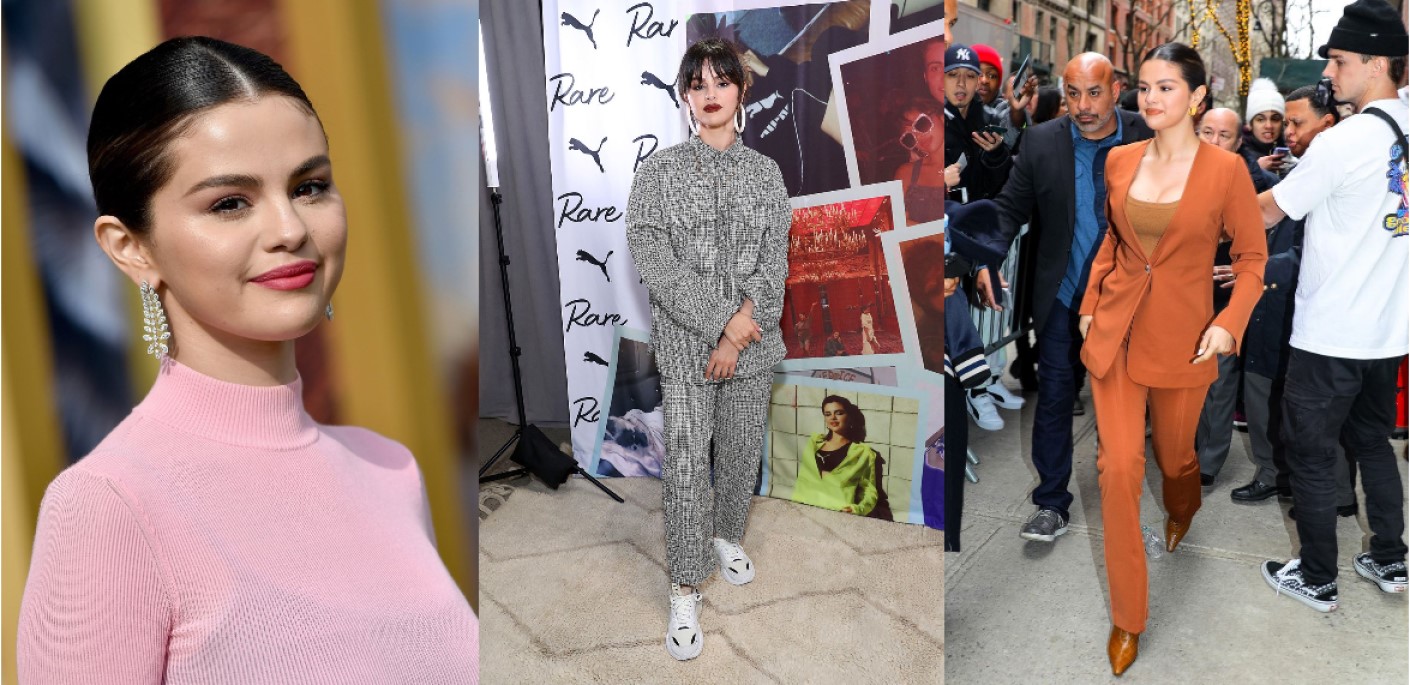
Selena Gomez has been a fashion doll for a decade, and each year we see her grow and flourish more. She did not let the pandemic slow her down. She launched her own cooking show, “Selena + Chef,” on HBO Max, collaborated with South Korean girl group Blackpink, and announced a new project, “Only Murders in the Building,” which she will executive produce and star in for Hulu. She is currently filming in NYC, and those outfits may land her on next year’s list, too.

Lil Nas X

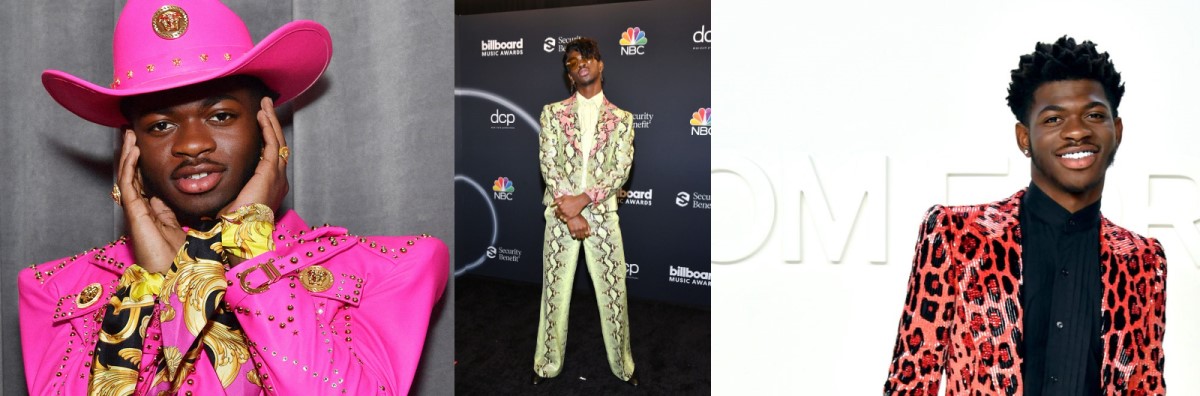
The world was taken by storm when Lil Nas X rode onto the scene at the end of 2018. Not resting on his laurels, he made appearances often outfitted in western attire associated with his first single, “Old Town Road.” In 2020, X made the rounds collecting award after award, letting his personal fashion flair come through. This year, he has written a children’s book, worked on his debut album, and released a single, simply called “Holiday.” Whether in music or fashion, Lil Nas X is showing us that he is not a one-trick pony.

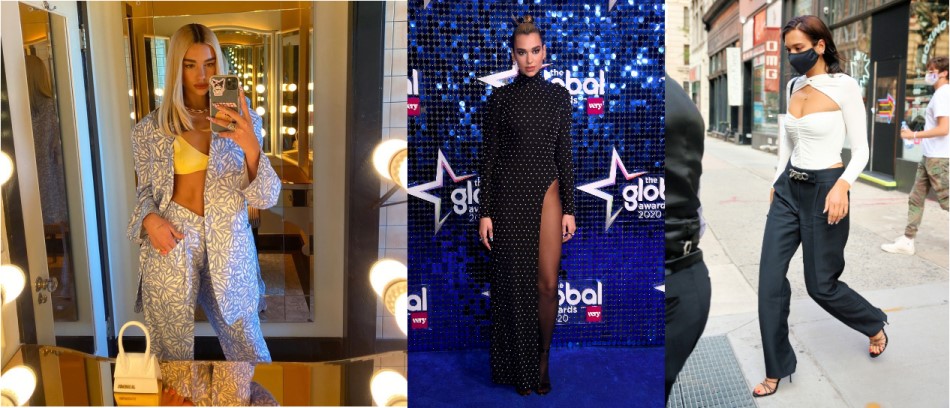
Dua Lipa

Singer. Songwriter. Activist. Philanthropist. Dua Lipa is the full gamut. And through it all, she is ever-changing, but always 100% true to who she is. Her style is fun and eclectic.  She can go from Hollywood glam to sexy neighbor to tomboy, all without batting an eye. She has the range, and she has the intrinsic style to pull it off.

Maluma

2020 has been kind to Maluma, the Colombian prince of Latin Pop. Aside from releasing his fifth studio album, “Papi Juancho,” he is awaiting the release of his upcoming film, “Marry Me,” co-starring Jennifer Lopez and Owen Wilson. Aside from music and acting, Maluma collaborated with Dior Homme creative designer Kim Jones to create the costumes for his postponed 11:11 world tour. The concert, and Jones’ designs, will be pushed back to 2021, but we still got to see Maluma flaunt his style in Balmain on the VMA stage and in Pyer Moss for the Latin Billboards.

Joey King

Joey King is one to watch. Only 21 years old, she has been an actress for ten years, but she is starting to come into her won and wow us on the red carpet. She is an award winner, and has a lengthy resume on the both the big and little screen. She’s no newbie. Her style tells us that she is grown (not too grown), confident, and knows where she is going. Far. Keep an eye out for her.


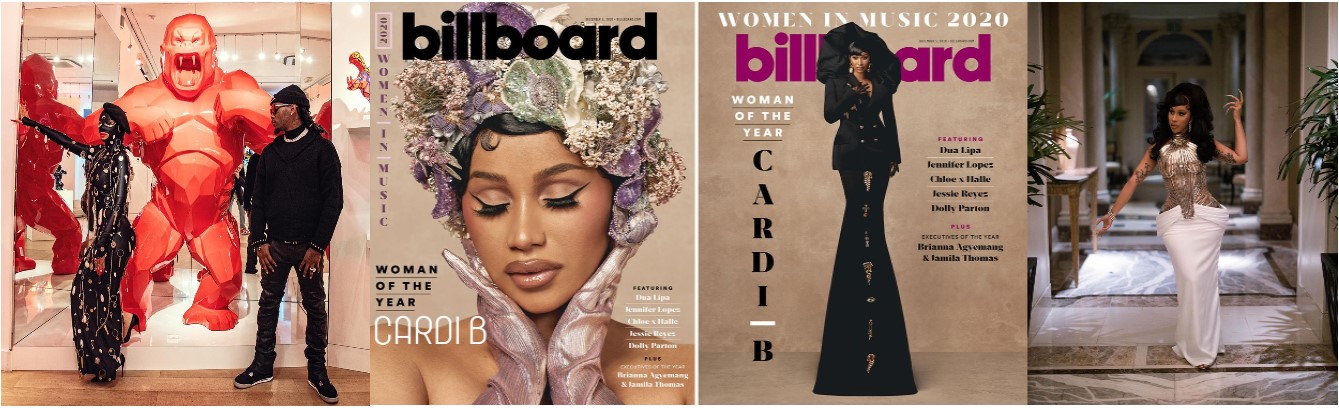
Cardi B

What’s a best dressed list without Cardi B? Incomplete, that’s what. Year after year, Cardi B knocks it out of the fashion ballpark. Even in a pandemic, 2020 was no different. From her many outfits during Paris Fashion Week, to her Grecian corset birthday outfit, to her Billboard Woman of the Year double cover, Belcalis Marlenis Almánzar has literally taken us around the fashion world and back. There is no sign of her letting up, and, frankly, we don’t want her to.

Michael B. Jordan

Michael B. Jordan (MBJ) has been a menswear icon for some years now, and he has finally been named People Magazine’s Sexiest Man Alive. We’re sure the honor was bestowed upon him because of his innate talent, charisma, humility, and charm. But we cannot neglect that his outside is just as great as his inside. His style really sets him apart and above his counterparts. Seemingly fond of combining turtlenecks and suits, he makes any man want to dress up and stand out. He looks equally as dashing in a tee shirt, jeans, jacket, and sneakers. His affinity for sneakers is so great that he has partnered with GOAT for a custom sneaker raffle to benefit GirlTrek, the US’s largest public health nonprofit for African American women and girls. Topping a best dressed list is about fashion, but being named the sexiest man alive has a lot to do with passion and compassion. MBJ exemplifies that true style is not just about clothes, but about how you carry yourself in your day to day life. And that comes from the inside.

—Carl Ayers

Fashion Reverie’s Top 2020 Fashion Moments

As 2020 comes to an end, now is a time of reflection of all things past. The good, the bad, the celebratory, the abominable, the great opportunities and the bad choices in this year of disruption and great change.

This was a year of uncertainty and absurdity, yet we soldiered on and made it through despite the odds. So, let’s celebrate the closing weeks of 2020 by reflecting on some great fashion moments. Fashion Reverie’s esteemed coterie of editors have curated some of the best fashion moments of 2020. Some of their choices even surprised me and has left me verklempt!!

Still, though there is a loss of words for me, our editors’ best fashion moments of 2020 are brilliant choices. So, Enjoy!!

Image courtesy of vogue.com

Harry Styles’ Vogue 2020 cover

This may have been 2020’s word of the year. Singer, Actor, heart throb, and fashion-plate, Harry Styles, broke a boundary this year when he appeared on the December 2020 cover of American Vogue, styled by Camilla Nickerson, and shot by Tyler Mitchell. Styles didn’t stop at simply wearing a Gucci jacket and dress for the cover shot. Typically, celebrities who pose for these prestigious covers don’t have final say about the outfit they wear; that decision is left to the magazine’s stylists. In this case, we all know that Styles has close personal ties with Gucci and Creative Director, Alessandro Michele, so the choice of outfit seemed completely genuine. Posing for the cover and the in-depth interview with Hamish Bowles, gave Styles a platform to speak directly to fashion lovers about why he believes that he can wear a dress or traditional menswear according to his mood, and why that’s just fine.

The interview delves into Styles’ long love-affair with dressing himself, however it suits him, whether it’s in a Gucci dress, or in more traditional coat from Martin Margiela and JW Anderson. The cover and article hit home because they broached the topic of inclusivity/gender acceptance in an interesting and thoughtful way.

Image courtesy of insider.com

Moschino’s Spring 2021 show

The show invited us into a fantasy COVID-19 safe world that was a throw-back to the Kennedy-Camelot golden age of the late fifties and early sixties, skillfully blurring the distinction between fantasy and reality. At first glance, the models and audience members appeared to be humans, and it wasn’t until we had “entered” the show, that we realized that the models and Anna and Hamish were themselves puppets. Scott proved that a virtual platform to present a fashion collection could be interesting and engaging, and as engrossing as a live runway show.

—Vivian Kelly

Image courtesy of time.com

Beyonce’s “Black Is King”

Music’s biggest fashion moment of 2020 must be Beyonce’s “Black Is King” musical film and visual album. Created as a visual accompaniment to the 2019 album “The Lion King: The Gift”, the film is a parallel of the classic “Lion King” animation but told using human form. The film tells of a young African prince who, exiled after the death of his father, grows into a man through a period of self-identity, and returns to reclaim his rightful place on the throne.

Aside from the actors, singers, and dancers, the most riveting performance is given by the wardrobe seen throughout the film. Styled by Zerina Akers, the hundreds of costumes represented the African diaspora in a way not seen before. Blending looks from young Black designers alongside garments literally taken from the runways of major fashion brands, Akers stated that the goal was to have a “global conversation.” She “wanted to reference different cultures, traditions and tribes, but to have the freedom to create fantasy for people to be able to escape into a new world.” Various segments of the wardrobe were inspired by different African cultures including the Kanaga masks of the Dogon, cattle hide prints of the Xhosa and Zulu, neck rings of the Ndebele, and the gele of Nigerians.

Images courtesy of harpersbazaar.com

Samira Nasr named editor-in-chief of Harper’s Bazaar

In this, the new age of equity and diversity, we saw another glass ceiling broken. In June of this year, Samira Nasr was named the new editor-in-chief (EIC) of Harper’s Bazaar. What makes this significant is that she is the first black person to hold this position in the publication’s 153-year history. To drive home the theme of “Firsts,” for her first issue as EIC, she placed veteran model Liya Kebede on the cover—the first time the model has graced the cover.

“… I’m thrilled that my first issue as editor in chief is also Kebede’s first cover for American Harper’s Bazaar, photographed in Paris by Christopher Anderson. The accompanying cover story by my fellow Montrealer Durga Chew-Bose unpacks Kebede’s decades-long career in an industry that has historically not made space for women of color and is often guilty of aging women out.”

—Carl Ayers

Image courtesy of popsugar.com

Lady Gaga at the 2020 MTV Awards

Lady Gaga took the latest “accessory” to the next level during the 2020 MTV Awards. She wore about five fantastic outfits but the multi-colored ensemble by Iris van Herpen and black boots by Pleasers was out of this world—literary looked like a Martian—did it for me. My number one favorite 2020 celebrity look!! 

Image courtesy of harpersbazaar.com

Rihanna’s multi Harper’s Bazaar September issue covers

Rihanna broke a Harper’s Bazaar record in 2020 by appearing on the covers on all 26 global Harper’s Bazaar September issue. One look from the editorial stands out. Why? It is ultimately a picture perfect of my everyday outfit during 2020 stay at home season. Super cozy, often without pants, but in my best shoes to simply take out trash! Rihanna is wearing an Artifact NY vintage tee shirt, Savage X Fenty bikini, Fenty sunglasse, Yvan Tufenkjian choker; Amwaj necklace (bottom), Gaspar Gloves gloves, and Amina Muaddi shoes.

—Tijana Ibrahimovic

Image courtesy of dailymail.com

Natalie Portman in Dior at the 2020 Oscars

More and more stars are using fashion to make personal statements. Some are overt, some are subtle. It is a stumbling block to make a firm political statement while remaining chic and elegant. Natalie Portman knocked it out of the ballpark with her stunning custom black and gold gown and cape from Dior. The dress itself would have been enough for her to skyrocket to the top of every best-dressed list; however, Portman took it one step further. 

In the Academy of Motion Pictures Art and Sciences 92-year history only five women have ever been nominated for directing awards and only one has won. (Kathryn Bigelow’s 2010 win for “Zero Dark Thirty”.)  With many women directing some of the highest regarding films of 2019, it seemed a lock that several would be nominated. None were.  Portman had their names stitched in gold along her cape to honor their achievements.

Image courtesy of buzzfeed.com

Lil Nas X in Versace at the 2020 Grammys

Red carpet fashion for men can be very blah; a seemingly identical parade of tasteful black suits. But some men are determined to make their own fashion statement. Lil Nas X drew gasps, in a head-to-toe hot pink cowboy suit designed by the late Gianni Versace himself from his 1992 collection.  It featured a buckled leather harness over a mesh top and a cropped leather jacket topped off with a match pink cowboy hat with the gold Medusa Versace logo. Lil Nas even added printed silk scarves on his wrists. Quite the statement! 

—Cameron Grey Rose

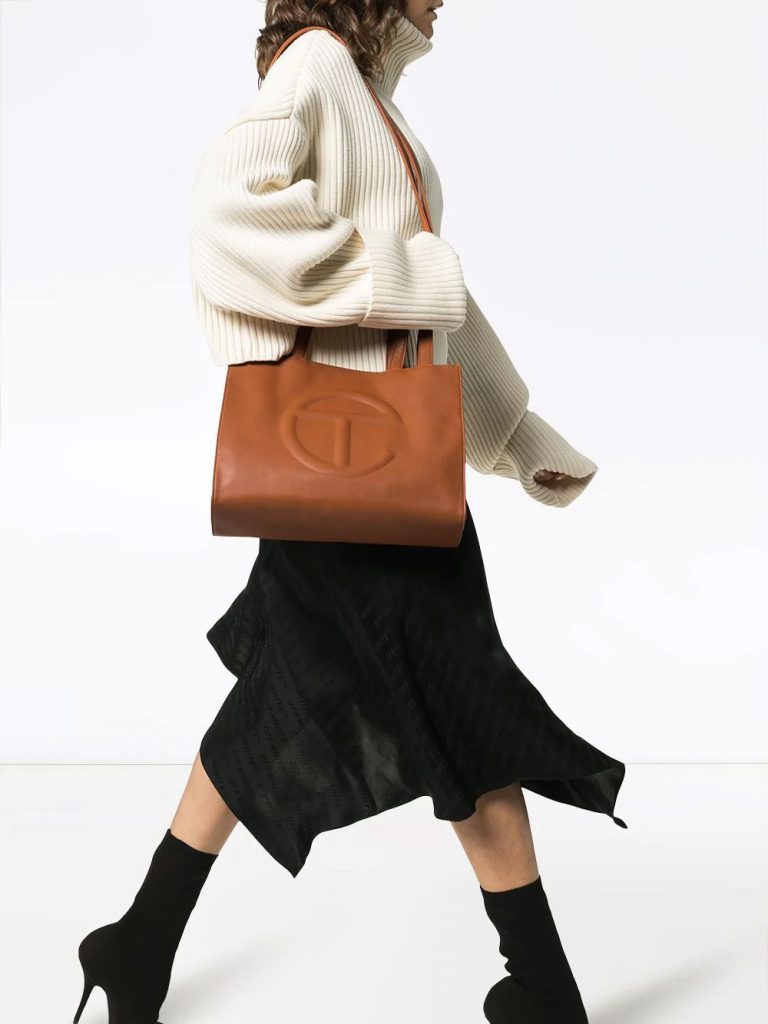
Clemens Telfar wins CFDA Award

Fashion designer Telfar Clemens of Telfar won the 2020 CFDA Award for American Accessories Designer of the Year. His Telfar shopping tote bag has helped put his brand on the map, and the award was a welcome seal of approval in a year that saw black designers receive tremendous recognition at the CFDA Awards.

The Telfar shopping tote has become so popular, the brand has had to launch a bag secure program to ensure customers would get their bags within six months of ordering. The Telfar brand continues to be about inclusivity and everyone from industry power players to the consumers are responding accordingly.

Image courtesy of pinterest.com

Zendaya’s Giorgio Armani’s Emmy Dress and Win

Zendaya made history at this year’s 2020 virtual Emmy’s when she became the youngest person ever to win the Primetime Emmy Award for Outstanding Lead Actress in a Drama Series. She is also one of the few women of color who have won this award. Of course, thanks to her stylist, Law Roach, she did it all fashionably.

Zendaya claimed her award in a custom Armani Privé polka-dot skirt and Bulgari jewelry with diamonds, opal, and mother of pearl. Not only did she make Emmy’s history, but she was on almost everyone’s best dressed list.

—Kristopher Fraser

Image courtesy of amazon.com

Andre Leon Talley’s The Chiffon Trenches

Everyone loves a good read, but it is rare when an autobiography not only entertains, but also gives valuable insight into a cloistered world. Andre Leon Talley’s “Chiffon Trenches” gives readers a perspective on the inner sanctum of the couture fashion world that only Andre Leon Talley can.

“The Chiffon Trenches” takes readers from Talley’s childhood in segregated Durham, North Carolina to his job at Interview magazine with Andy Warhol to his stint French Vogue, eventually landing at American Vogue as creative director.

The Chiffon Trenches explores Talley’s deep friendship with Karl Lagerfeld to other fashion and semi-romantic relationships and liaisons to went awry or served Talley’s ascent in the fashion industry. Talley handily tells all these truths and revelations with charm, great humor, and of course, and elegance.

Collage courtesy of fashionreverie.com

“Fashion Reverie Talks”

Despite the COVID-19 health pandemic, Fashion Reverie launched our ZOOM-based talk show “Fashion Reverie Talks.” This initiative has been something we have been considering for about three years. And since there is no better time than present, Editor-in-chief William S. Gooch and Managing Editor Carl Ayers dived in and launched “Fashion Reverie Talks” in August of 2020 with co-hosts Tijana Ibrahimovic and Cicily Daniels.

Though this fashion moment may not rank at the top of the list for many folks in the fashion industry, it is at the top of the list at Fashion Reverie. It is virtually a dream come true. And we are already up to episode 10.

—William S. Gooch

Fashion Reverie Investigates: Six Brands that Closed Their Doors in 2020

Image courtesy of newyorktimes.com

2020 was not a kind year for clothing, accessory, and beauty brands. That being said; the news was not as dire as first as reported in an article by www.fashionista.com, written on May 18, 2020 and updated on November 12, 2020. There is a popular misconception between “going Chapter 11” and filing for Chapter 7, which is going out of business forever.  

To further clarify this distinction, we spoke with Peter Arnold, a former Wall Street attorney who has worked in the fashion space for years. His experience includes five years as Executive Director of the CFDA, eight years as CEO of Cynthia Rowley and three as CEO of Cushnie et Ochs. Arnold explains, “Chapter 11 is a restructure; It’s a strategic tool.  It’s opportunistic and allows you to leverage your situation in a way that benefits you. For instance, you may be stuck in an expensive lease that would be beneficial to get out of.”

Many popular brands and stores such as J. Crew, G. Star Raw, and Lucky Brands declared Chapter 11 to buy some time to reorganize and restructure. Others shuttered the doors permanently and the latter are the focus of this article. We chose five fashion brands, and one beauty brand that range the spectrum from storied brands with a rich history, to brands led by bright young fashion stars.

Image courtesy of thenewpotato.com

Cushnie et Ochs

Carly Cushnie and Michelle Ochs were both Parsons School of Design students who hit it off and created their label in 2008. The business partnership dissolved in 2018, lasting a total of ten years. The aesthetic was sexy minimalism, strongly influenced by the 70s jersey pieces, similar to Halston looks created for his “girls” to wear to nightly Studio 54 outings. The Cushnie et Ochs brand combined Carly’s love of tailoring and Michelle’s skill in draping. As in vintage Halston, there were ample cut-outs in the midriff, neck chokers, mostly made of bodycon jersey fabric.

The response to the brand’s offerings was initially overwhelmingly positive. The who’s who of fashion had discovered the next bright new thing, a necessity to generate buzz and excitement and hopefully sales. At the height of their fame, the duo spoke on a segment of “Cadillac Confidential,” with Bergdorf Goodman’s Senior Vice President of Women’s Fashion, Linda Fargo, who said how much she adored the brand and the two designers, calling them “the body girls.” Fargo shared that Bergdorf immediately picked up the brand after seeing the debut spring 2009 collection. In 2009, the duo was also honored with the prestigious Ecco Domani Fashion Fund Award. At their height, Cushnie et Ochs dressed the right people: Michelle Obama, Beyonce, Selena Gomez, Blake Lively, and Jennifer Lopez.

Cushie et Ochs spring 2017 images courtesy of highfashionliving.com

As with many brands who are thrust into the spotlight early-on, the initial flurry of excitement could ultimately not be sustained. First and foremost was the lack of a strong business marriage at the brand such as that of Barry Schwartz at Calvin Klein’s that lasted from 1968 to 1999. Arnold cites the Calvin-Schwartz marriage as an ideal where responsibilities were clearly spelled-out, “a perfect counter point to Cushnie et Ochs.”

Arnold joined Cushnie et Och in 2015 as CEO, finding a company that had begun to unravel.  The designers were not getting along, and the excitement of the early days had faded. The clothes were unforgiving and were only flattering to a limited group of women of a certain age who assiduously maintained their physique and who could afford dresses that retailed upwards of $1,500. Carly Cushnie’s wealthy father, Guillermo Pacanins Acevedo, made the initial investment, and the family investment skewed the partnership in Carly’s favor. The ensuing deal with Farol Asset Management further eroded the already strained relationship. Managing Partner, Robert Azeke, specialized in investing in businesses of color, and at first glance, the investment seemed to fall in line with the firm’s direction. Unfortunately, Azeke did not have any prior experience with the fashion industry nor a clear understanding on what a realistic return on investment would be in the fashion sector.

“There were flawed expectations that investing in a ten-million-dollar company would turn it into a 50-million-dollar one in a few years,” Arnold shared. Ochs and Arnold left in 2018, and Neiman Marcus and Bergdorf Goodman stopped purchasing product, as the core customers had moved on to other brands. The COVID-19 pandemic was just the nail that closed the coffin. In June 2020, Michelle Ochs sued Carly Cushnie for two payments of $180,000, for salary owed. She filed a complaint in a NY Federal court.

Image courtesy of cnn.com

Elizabeth Arden Red Door Spas

Beauty legend, Elizabeth Arden, nee Florence Nightingale Graham in 1878, was a nursing school drop-out who discovered she had a natural talent for giving facials. She saw the opportunity to open a salon-spa that would deliver a five-star experience to the women who shopped the high-end stores on Fifth Avenue. She opened the Fifth Avenue flagship in 1911, with the distinctive red door that branded the salon for years to come. By the 1930’s, Arden owned over 100 salons internationally. Her legacy includes introducing the concept of the makeover and promoting the then revolutionary idea of holistic beauty. She died in 1966 as the sole owner of her empire.

Jitka D’Ambrosio, former Regional Director for Maryland and Washington D.C., joined the operation in 2010. According to her, the eighties and nineties were the Red Door’s glory years. “People had quite a bit of disposable income. There wasn’t that much competition and it was the only unified spa chain of its kind, comparable to the Ritz Carlton. Both companies deliver consistency of experience at all their locations.”  D’Ambrosio praised the highly structured operation that invested considerable time and money in onboarding the employees and in on-going training. The Salons presented a unique opportunity for the employees to cross sell their services. At its height, the Red Door was a regular destination for its well-to-do core 45-60 customers, and often an inter-generational gathering place.

Image courtesy of Elizabeth Arden

As for the demise, retail changed, in part due to the new Shared Economy platform, in which people leverage one-another (Lyft, Uber, Rover, Airbnb). Stylists, particularly the younger ones, who had a less favorable compensation structure than the veterans, went out on their own taking their clients with them. D’Ambrosio blames the company’s flawed marketing model as a factor in the downfall. It was an attempt to capture the Millennials, whom management believed had money to spend. The resulting marketing materials were edgy and turned off the existing 45 to 60-year-old core customers. Furthermore, the one size fits all marketing for all locations failed to tailor their message to the varying regional markets. The final stake to the company’s heart took place in May 2019 when former CEO Todd Walter rebranded the Red Door as Mynd in a final effort to reach the illusive Millennials. Customers were confused as the company failed to inform them of the name change. Mynd declared bankruptcy in July 2019.

BLDWN

BLDWN began in Kansas City in 2009 as Baldwin, a heritage denim brand geared to men with the tagline, “Clothes designed to last.” At its height, it had offices in Los Angeles and Kansas City and employees in seven stores, spanning Los Angeles, New York, San Jose Austin, Dallas, and two stores in Kansas City.

Image courtesy of sourcingjournal.com

In 2018, the company attempted to rebrand itself as a contemporary brand with a greater focus on women’s clothing. In addition to a rebranding, in August 2019, BLDWN opened a 1,100 sq. ft. flagship on Los Angeles’ tony Melrose Avenue, and hired Jonathan Crocker as CEO and Creative Director. Crocker was the former Vice President for Global Communications at AG Jeans. He was given a two-year contract and tasked with repositioning Baldwin into a ready-to-wear brand by releasing a men’s and women’s ready-to-wear collection for three consecutive seasons.

The new messaging required that customers visit the stores to experience and buy into the new ready-to-wear branding. The COVID-19 pandemic was terrible timing as customers were understandably reluctant to shop brick and mortar stores after March 2020. The BLDWN failure was due to an all-in expansion effort rather than staying with what it was known for—premium men’s denim.

 On March 17, 2020, BLDWN made an announcement on Instagram, that it would be closing its doors to try to help stop an increase in COVID-19 infections. All employees were let go and once the existing inventory is sold online, the brand will end. The website (www.bldwn.co) confirms that the company will not be taking any new orders or returns.

Image courtesy of businessoffashion.com

Sies Marjan

Dutch designer, Sandar Lak, came out of the gate strong. He had worked for Dries Van Noten before launching Sies Marjan with Joey Laurenti, part of the Opening Ceremony team, another cool downtown brand. The effort was bankrolled by Nancy and Harold Marks, billionaires who had also worked with American couturier, Ralph Rucci. Lak’s first collection debuted in September 2016 at New York Fashion Week (NYFW), boasting an A-list celebrity front row including Anna Wintour.

The fairy tale continued when shortly afterwards, Barneys New York gave Sies Marjan a US department-store exclusive. Two years later, Lak won the CFDA Award for Emerging Designer of the Year. That same year, he expanded to include menswear, and dressed a myriad of celebrities including Beyonce, Jennifer Lopez, and Zoe Kravitz who loved the brand’s easy lounge wear silhouettes and saturated color palette.

Sies Marjan spring 2020 images courtesy of runwaymagazine.com

According to The New York Times, Lak cited the global COVID-19 pandemic as the reason for the company closing. Sies Marjan was dependent on celebrities being seen out and about and on red carpets wearing the clothes which stopped abruptly in March of this year. Sies Marjan was also an unfortunate victim to the Barneys’ closure and a cautionary tale for designers to not put their eggs in one basket.

The Modist (Dubai)

Dubai has been a designers’ mecca for decades. According to fashion stylist Mimi Lombardo, “the malls are gorgeous and even the floors sparkle.” The problem is that culturally, Muslim women who wear hijab cannot openly wear their Western designer finery in public.

Image courtesy of abouther.com

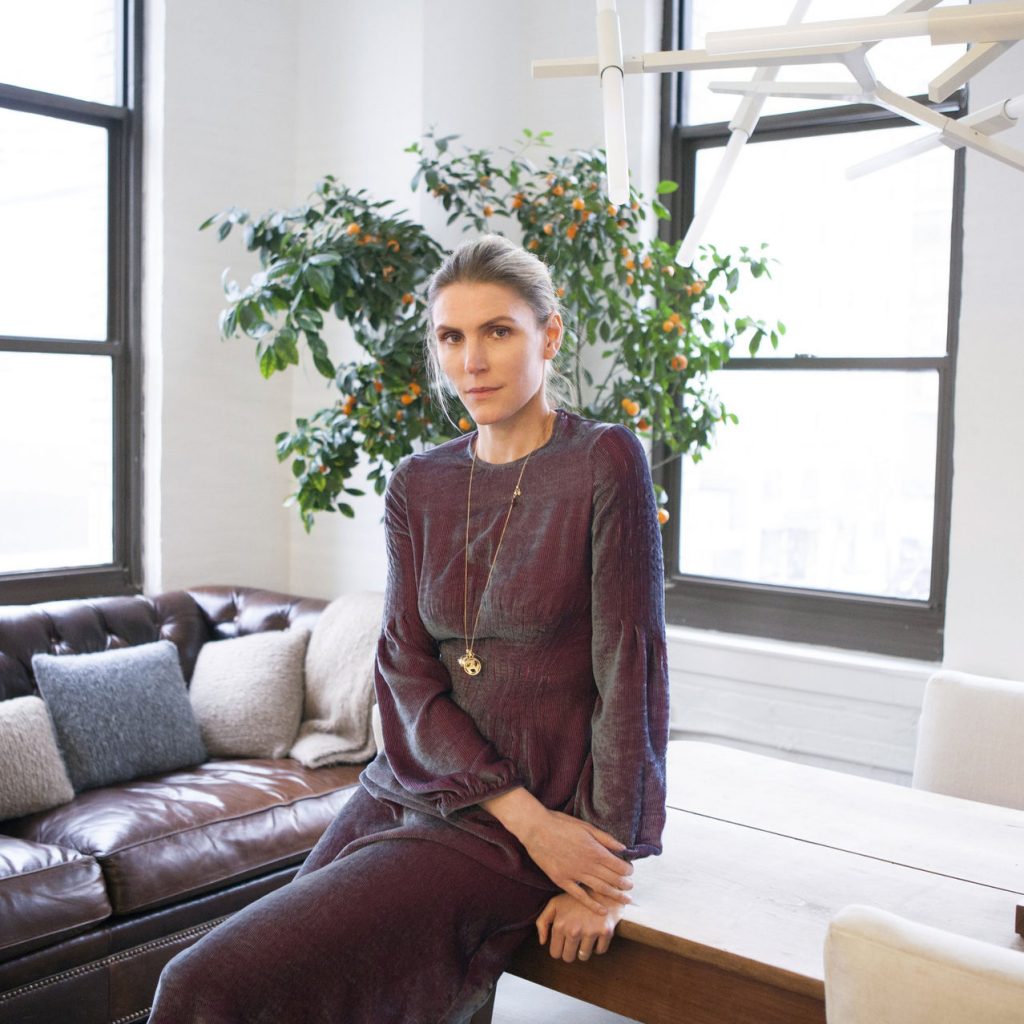
The Modist founder, Ghizlan Guenez, saw an opportunity to present luxury retail with a focus on modest fashion that would cater precisely to this underserved demographic. She launched the Modist in 2017. It was a shopping site and a resource for women who wanted styling tips to help them dress modestly yet, wear the designer clothing they loved.

The Modist was a contender in the fashion tech company space and was ready to play in the same arena as giants Netaporter, Farfetch, and Moda Operandi but fell victim to being the small fish who simply couldn’t compete with the big fish in the same pond. According to The New York Times, larger e-commerce retailers realized the opportunity Guenez had discovered, and began adopting the same strategy. They added full-coverage categories to their websites, declaring war on the Modist. Guenez tried to fight-off Net-a-porter and managed to get investor money, but the former was too large and powerful. The end was near when the pandemic erupted, and investors tightened their wallets. It was unlikely however that the Modist would have prevailed, pandemic or not. The Modist closed permanently on April 2, 2020, citing the global pandemic as the reason.

Matter

Founders Renyung Ho and Yvonne Suner launched their Singapore-based company as an ethical fashion brand that partnered with rural artisans and used heritage-based textiles. The company made apparel that was responsibly sourced reinterpreted in a modern manner that told a story. Customers felt engaged with the clothes and were encouraged to view them not just as clothing but as symbols of a cultural heritage. Matter’s social media was educational and interactive, inviting customers to talk and post pictures about how they engaged with the brand.  Designs were more forgiving as pants never had zippers, just buttons and fabric belts. Leftover fabric offcuts from every order were collected by production partners and repurposed sometimes used by other brands they worked.

One core principle was to help enable textile craft to continue. They would incorporate digital and mechanical processes to help efficiency if needed to help the craft survive. Matter seemed eminently suited to long-time environmentalists and to millennials who are committed to products that are organic and who question production methods.

Images courtesy of matterprints.com

The global pandemic was not kind to an already delicate operation in which ethically made goods are still more expensive to produce. It’s likely that the founders assessed the situation when the pandemic hit and decided to shutter the company before they began losing too much money. They may have foreseen that many people would lose their jobs and be hesitant to continue to purchase Matter’s more expensive goods, regardless of the positive messaging.

The company posted a heart-felt good-bye message on their website (www.shop.matterprints.com) in April 2020 that read, “This is not goodbye forever. This is goodbye, for now.” The website remains open to answer customer questions and concerns and even until the end, honors their commitment to their artisans by refusing to slash remaining inventory to rock bottom prices.  

Lessons to Be Learned

According to Arnold, the CFDA Vogue Fashion Fund is emblematic of the systemic problem of brands failing to sustain their initial success. “Every year, the Fund anoints 10 designers who are immediately subjected to intense focus and pressure; the high beam of attention is part of the equation.”  What needs to happen next, he continues, is for the creative to find a solid business partner. Arnold holds out hope as designers such as Michael Kors have been willing to work closely with their business partner (John Idol) and have committed to commercialize their name in order to capture a far greater market share than if they had limited their efforts to the tiny and notoriously fickle high-end designer fashion customer pool.

Image courtesy of matterprinting.com

As for the COVID-1919 pandemic, it has served to realign expectation that anyone could create a 500-million-dollar brand. The pandemic was not the only reason brands have failed but served to accelerate the process. Once we are past the pandemic, we may be looking at a new model in which designer brands become more self-sufficient, leaner, and less reliant on celebrity endorsements and store exclusives.

—Vivian Kelly


Breaking News: Gabriela Hearst Is Named Chloé’s Creative Director

Image courtesy of wsj.com

Gabriela Hearst has a new job. Five years after launching her eponymous brand, Gabriela Hearst has been named creative director of Chloé. This appointment makes the first time a non-European has helmed the iconic French brand. Natacha Ramsey-Levi left the creative directorship of Chloé in November.

In searching a replacement for Ramsey-Levi, Chloé CEO Riccardo Bellini confirmed that the brand was looking for a creative director that would nudge Chloe solidly on a path to being eco-friendlier and more sustainable. Gabriela Hearst set a standard her namesake brand for creating collections that were eco-friendly and measured up to standards of sustainability.

“What a brand stands for, its beliefs and values, will become as relevant as products and aesthetics,” Bellini explained in a wwd.com article. For many brands sustainability has become a talking point, but Hearst’s appointment cements Chloé as one of the most environmentally minded luxury goods companies in the world. 

Image courtesy of marieclaire.com

Hearst’s debut runway show in 2017 was designed to have as little of a global footprint as possible. And since that time Gabriela Hearst has used eco-friendly materials like recycled yarn, linen and deadstock materials.

“I am grateful for an opportunity at such a beloved brand as Chloé,” Hearst said in a statement. “I am thankful to Natacha Ramsay-Levi and all the other extraordinary designers that have come before her and helped build on the purposeful vision of Gaby Aghion. I am excited for the opportunity to work under the leadership of Riccardo Bellini and support him in his commitment to create a business that is socially conscious and in balance with our environment.”

If you are wondering if Gabriela Hearst’s eponymous line will continue, the answer is yes!! Hearst will split her time between New York and Paris. Her first collection for Chloé will debut in March 2021.

—William S. Gooch


Fashion Reverie’s 2020 Holiday Cocktails

It’s the most wonderful time of the year. The holiday season is a time of reflection for all that we have, and a time of celebration of what’s to come. While we are all smartly socially distancing, many of us will come together in small groups to cherish time with family and friends. What’s a holiday get-together without a few libations? Master bartender Rick Fuller has created a few holiday drinks to add some festive cheer. To that, we say good tidings, gather in only small groups, and drink responsibly.

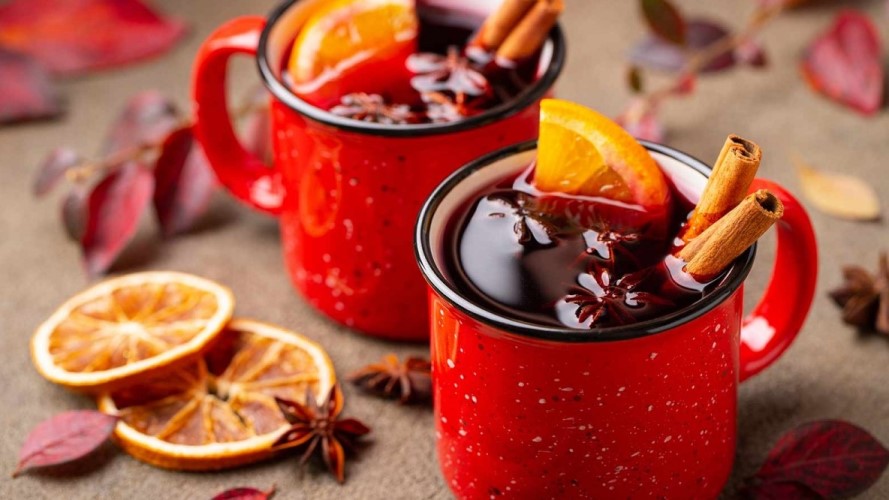
Mulled Wine

For a small, relaxed get together of four to eight people, a warm drink around the campfire may be what the mood calls for. Mulled wine is great for the occasion because it can be prepared in advance and will keep everyone warm and toasty on a cold winter night.

2 750ml bottles of dry red wine

1 cup brown sugar

6 cloves

2 star anise

3 cinnamon sticks

Sliced apples and oranges

Cranberries

1 cup bourbon (optional)

In a large stockpot, toast the cloves, star anise, and cinnamon sticks over a medium heat for 3 to 5 minutes.

After the spices have toasted, add the red wine to just below the simmer point. DO NOT let it bubble, you do not want to boil off the alcohol.

While the mixture is simmering, add the fruit, and bourbon, if you’re using any.  Next, stir in the brown sugar until it dissolves. Cover the pot and continue to heat the mixture over a low flame for 5 minutes.

Turn off the flame and let the mixture cool, covered, for 8-10 minutes.

Serve warm in heatproof mugs.

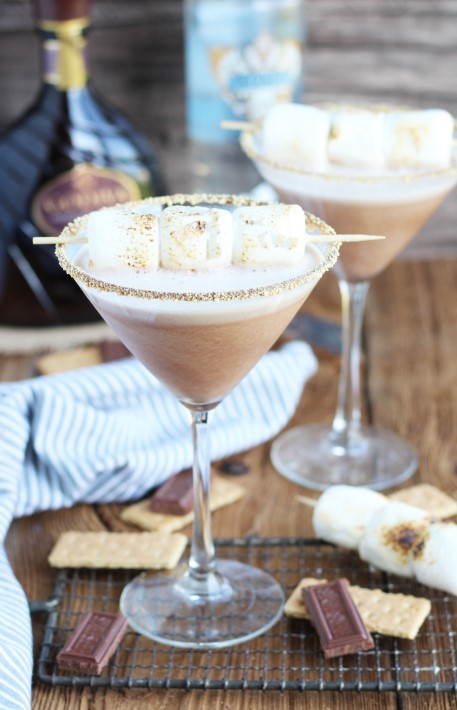
Mezcal Snow Martini

Egg nog. Coquito. Ponche de crème. The de rigueur holiday drink is often cream based. But this year, why not try something a little different? This Mezcal Snow Martini brings you the creamy confection that you’re accustomed to but adds a savory flair that you don’t always get with other cream drinks.

1.5 ounces mezcal

2 ounces RumChata

½ ounce Irish Cream

Marshmallow

Lemon wedge

Cinnamon sugar mix

In a shaker, add ice, mezcal, RumChata and Irish cream. Shake for 20 seconds until chilled.

Using the lemon wedge, rim a martini glass. Dip glass into cinnamon sugar mixture to garnish.

Pour mixture from shaker into the rimmed martini glass and top with a marshmallow.

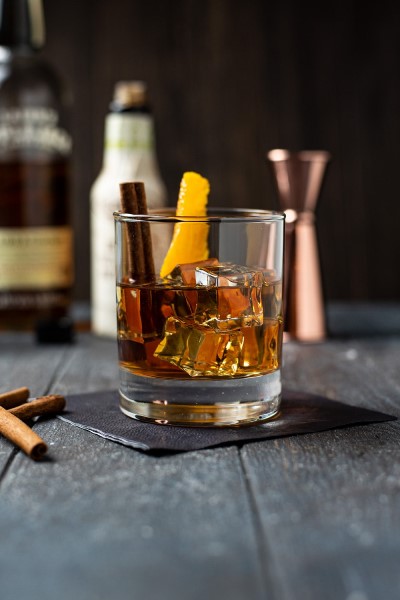
Rum Old Fashioned

Some of us are old school, and we like classic drinks. But like most holiday classics—movies, music, family traditions—sometimes it’s nice to experience an updated version. This rum old fashioned is just that, a modern take on an oldy but goody. The remix with the spiced rum is the holiday kick you’re looking for.

1½ ounces spiced rum

½ ounce brandy

½ ounce agave

2 tablespoons sparkling water

3 dashes orange bitters

3 dashes Angostura bitters

Cinnamon sticks (for garnish or can be frozen in ice for presentation)

Add sparkling water, agave and bitters to a mixing glass then stir until agave is fully combined.

Add ice, spiced rum, and brandy to the mixing glass. Stir well to combine and chill.

Strain the mixture over a large ice cube in a lowball glass. Twist the orange peel over the drink to release the aromatic oils. Place the orange peel in the drink. Enjoy!!

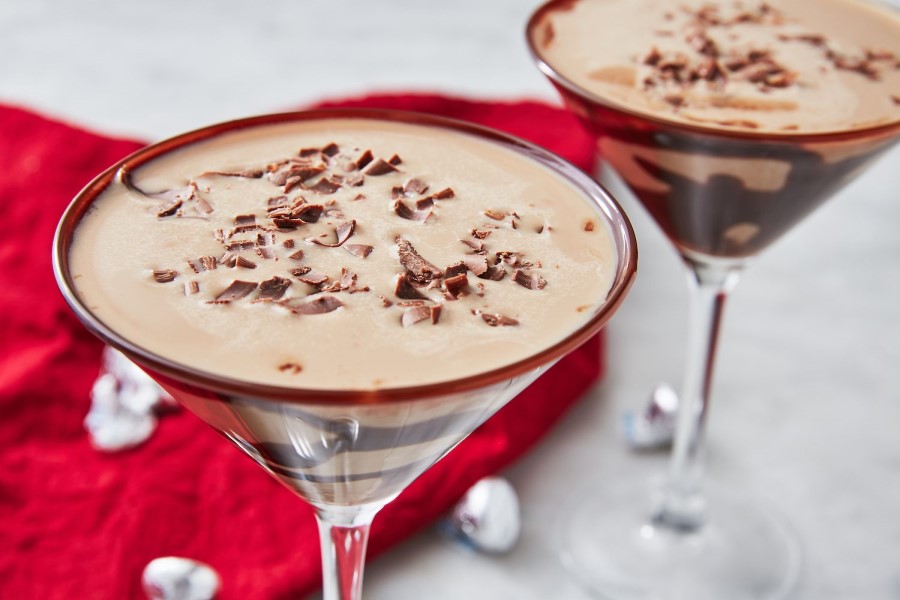
Chocolate Martini

Let’s get decadent! Chocolate on chocolate on chocolate. What’s wrong with that? Nothing! Satisfy your sweet tooth with this martini that proves chocolate isn’t just for Valentine’s Day and Halloween.

2 ounces rum

1 ounce Irish crème

¼ ounce Kahlua

¾ ounce chocolate syrup

Shaved dark chocolate, for garnish

In a glass shaker, add rum, Irish crème, Kahlua, and a few cubes of ice. Shake for 15 seconds.

Decorate the inside of the martini glass with chocolate syrup—not too much, but just enough for presentation.

Pour the chilled mixture into the martini glass, garnish with shaved dark chocolate and serve. CHEERS!

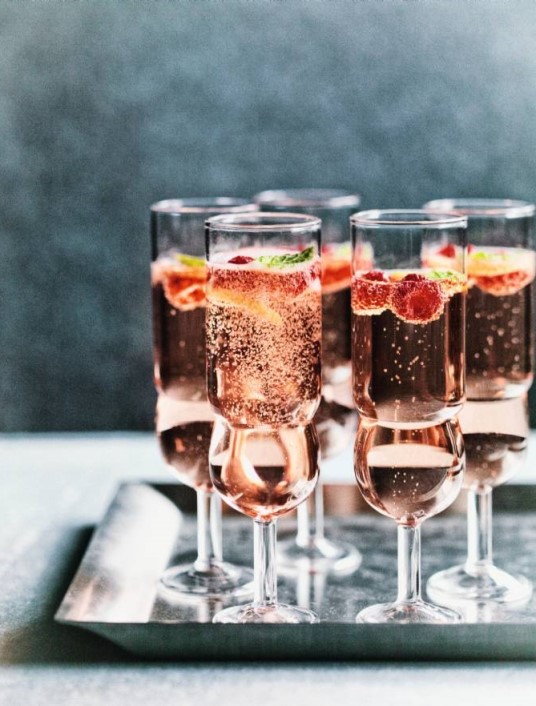
Winter Sparkles

Who would have thought that bourbon and bubbly would go well together? Guess what … They do! Combining a serious spirit with a fizzy splash is what Winter Sparkles is all about. A strong start and a refreshing finish; seems apropos for 2020.

1 ounce bourbon

1 ounce champagne or sparkling wine

Ginger Ale

Raspberries, for garnish

In a highball glass, add 1 ounce bourbon and 1 ounce of champagne, then add ice.

Top off with ginger ale and add raspberries to finish. There you have it, ready to drink. Enjoy!

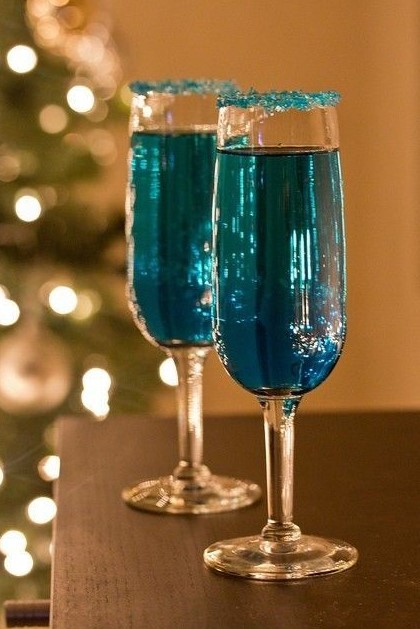
Party Starter for 2

An intimate occasion for two. The Party Starter certainly sets the mood for your private rendezvous. The recipe is simple and fool proof, and it means you’ll spend less time at the bar, and more time … together.

2 ounces vodka

1 ounces bourbon

½ ounce blue curacao

7up (cold)

Fill a shaker halfway with ice. Add vodka, bourbon, and blue curacao shake.

Strain into champagne flutes and top off 7Up in both glasses.

—Carl Ayers

Loungewear That Also Works As Work-From-Home Attire

Image courtesy of alltheprettybirds.com

This December it will be one year since COVID-19 reared its ugly head in the Wuhan Province of China. Twelve months later we are headed into our second lockdown as the prediction that cold weather would result in a massive uptick in cases was sadly correct.

That said; there have been some major breakthroughs in COVID19 vaccines, and experts are predicting that we might be getting back to a more typical life by spring 2021. There is a light at the end of the tunnel!

Still, the fact remains that due to the lockdown, we’re not going anywhere anytime soon. Even after a vaccine is available, many companies are discussing making the work-from-home method permanent at least part-time since office space is not cheap and clearly many jobs CAN be done remotely.

It’s so tempting to just wear pajamas all the time while working from home, but don’t. It can really blur the lines between work time and off time. Let’s face it, our reality is becoming so fragmented already. But that doesn’t mean it’s time to break out your suits and heels. One of the best things about working from home is we get to be very comfortable! Fashion Reverie is here to help you answer the question “Can comfortable be chic?” YES!

Image courtesy of NakedCashmere

NakedCashmere

Cashmere is so soft and comfortable most people want to live in it! But that comfort comes with a price tag. Looking to score some cashmere without maxing out your credit cards? NakedCashmere cuts out the middleman to sell directly to the public on their website, making their exceptional pieces more affordable. Additionally, this family-owned company has a deep commitment to the environment. Their cashmere yarns carry certifications for being sustainable, fair trade, and are harvested with animal welfare in mind. If that isn’t enough to sway you, the clothes are of such high quality, that their motto is “you don’t buy NakedCashmere clothes, you collect them.”

Image courtesy of The Reformation

The Reformation

Fashion’s impact on their environment simply cannot be dismissed anymore. At The Reformation not only is sustainability critical to them but they also take great care to make sure their workers are treated well and paid fairly. You can even see pics of the workers on their website and learn a little about them! Need another reason to shop The Reformation? Their loungewear is fantastic! Super comfortable, chic, affordably priced, and easily worked into any wardrobe.

Image courtesy of fashiongonerogue.com

Revolve

Looking for a bit of excitement? Leave it to Revolve to create comfy loungewear so chic the loungewear is not entirely work appropriate! They also carry a colorful line of graphic sweatshirts with band names. Revolve carries dozens of brands including Nicole Ritchie’s House of Harlow. Their stylish comfortable loungewear could easily be worn to go clubbing in! Who says party clothes must be binding?

Image courtesy of Nadaam

Nadaam

Cashmere is comfortable, warm, and ridiculously soft. But it is not inexpensive. While a well- cared for cashmere sweater can last years, and it may take you all those years to pay off your credit card. Nadaam was determined to produce the world’s finest cashmere sweaters but make them at affordable prices. The company is also deeply committed to sustainability as well as fair wages. They work directly with herders in Mongolia, to keep prices down. Their high-quality elegant pieces are work appropriate and nap appreciative.

Image courtesy of Backcountry

Backcountry

Looking for loungewear that can double as activewear? Backcountry has a HUGE catalog of high-quality relaxed athleisure wear durable enough to be workout gear but also with a high level of chic.  You can speak with a specialist online 24/7 for free at their website to get advice, ask questions etc.  Backcountry partners with National Ability Centers to ensure persons of all abilities have access to outdoor fun. Take 15% off your first order when you sign up for their mailing list.

Image courtesy of Eloquii

Eloquii

Looking for loungewear to fit your sexy curves? Eloquii has you covered with some super stylish duds in sizes up to 5X. Fashion Reverie recommends their relaxed velvet jumpsuit (Sadly only available in dusty rose, hear that Eloquii? We need more colors!) This saucy number is so comfortable you could nap in it, yet so pretty and elegant it could easily be worn out to dinner! Perhaps buy 20 copies and make it your lockdown uniform? Fashion Reverie is kidding … or are we?

Image courtesy of Entireworld

Entireworld

Entireworld like many companies are devoted to sustainability and ethical business practices; however, Entireworld distinguishes themselves by focusing on comfort and durability.  Their underwear and socks will last wash after wash and will be some of the comfortable underthings you’ll ever don.  Not only that, but their soft graphic sweaters are super fashionable. Even on Zoom calls your coworkers will be asking, “where did you get that? “

A few tips for keeping work life separate from the home, which becomes so difficult when your home is your office.

  • Have a dedicated workspace. If you can’t dedicate an entire room, designate an area. That area is to be used exclusively for work.


  • It sounds odd but since smell is strongly tied to mood, spritzing yourself with your ‘work’ perfume or cologne (only used for work) is a way to signal your brain it’s time to be productive!


  • Make sure your office knows there are certain times when you are NOT available. You won’t answer texts or emails. These times are strictly for relaxation and recharging.


  • Schedule one or two breaks during your day where you take a walk around the block (weather permitting) or perhaps march in place for 10 minutes, something to get your blood flowing.

—Cameron Grey Rose

Social Media Gives Indigenous Fashion a Much-Needed Push

Image courtesy of collectorsweekly.com

Indigenous fashion is a concept that predates America itself, after all, Native Americans were the first ones here. Native Americans developed their own processes for textiles, fabrications, and had their own fashion history, some of which are still a major part of the cultures of various Native American tribes. Although indigenous fashion was once very localized to the individual communities, cultures, and tribes, more recently indigenous fashion has started to gain more visibility and popularity.

Navajo stylist and influencer Shondina Lee recently collaborated with fashion brand Wrangler for a series of images exploring her Navajo roots and personal relationship with the denim company. Native American brands, including streetwear brand OXDX and handbag line Maya Stewart, are also finding new fans that extend far beyond their own indigenous communities. Many indigenous designs are also rooted in sustainability, and with sustainability currently as one of fashion industry’s main thrusts, the rise of indigenous fashion had perfect timing.

Image courtesy of sheandturquoise.com/Heath Herring

Lee’s collaboration with Wrangler was truly a game changer. For an affordable mainstream American brand with the ability to reach a massive consumer base to collaborate with a prominent indigenous model, stylist, and photographer was monumental in terms of representation. Lee, who grew up on a Navajo reservation, told Vogue she had a very personal relationship with Wrangler’s denim pieces as that was all her late grandfather, who was a rancher, wore. Lee, who founded her own fashion blog that focuses on her personal style, She and Turquoise, has become a micro-influencer and fashion inspiration in her own right.

Ginew image courtesy of vogue.com

While indigenous fashion designs and trends were once kept within their communities, the advancements of social media have made it more possible for indigenous fashion to reach a broader audience. In Lee’s case, the photographs she was posting on Instagram led to independent fashion brands sending her products to take photos in, including indigenous-owned brands like Ginew, an Ojibwe-made denim line, and pieces from Orenda Tribe, a brand owned by Navajo artist Amy Yeung. Whereas Indigenous brands once had a hard time making it past the gatekeepers of the fashion industry, platforms like Instagram have made it easier for them to grow and connect with an entirely new audience.

Molina Jo Parker, a member of the Oglala Sioux tribe based in Red Shirt, South Dakota, has become well known for her beaded jewelry. Her pieces include a beautiful rainbow array of colors from bubblegum pink to lime green, and she’s even made beaded pieces in the image of traditional Lakota dancer Aunties. Her products can be purchased on e-commerce site, B. Yellowtail, a Native American owned and operated retailer. While she says that social media has made it possible for her to reach broader audiences, she also says there are still obstacles for indigenous designers.

“We are vulnerable to people with more capital appropriating our work,” Parker said. “Another challenge is that most of us can’t afford to hire help, so people, including me, do everything ourselves including prep work, making the item, photography, marketing, packaging, and shipping. We wear many hats, which is why small releases are what work best for me so as not to get burned out.”

Molina Parker Earrings image courtesy of molinas-lakota-beadwork.square.site/

Parkers says her work is “a continuum of what my ancestors did. We’ve always adorned ourselves with jewelry, hair pieces, and fashion. What I do is not only personal expression, but also has a very ‘Lakota’ vibe. It comes out in my designs and color palette.”

The majority of Parker’s customer base is in California, Minnesota, South Dakota, and Canada. While these are communities who have supported her work from the beginning, she has noticed an increase in sales from these states over the past few years, and she attributes the increased interest in Indigenous fashion to social media. However, for indigenous fashion to continue building its future, Parker believes that it needs to start with the educational institutions.“ I would love to see more and more Indigenous fashion designers and I believe a good way for that to happen would be to offer fashion courses at our tribal schools,” she said. “I remember attending the Institute of American Indian Arts and was so upset to find out that the fashion and cultural arts classes were gone.”

Pueblo artist Virgil Ortiz also notes the advantages of social media, and contends that he has been able to find support in the fashion industry, “through message and meaning behind my fashion—all of my art has a story behind it. The viewer can gain insight and knowledge of our history if you dig deep enough behind the significance of the prints and design elements I incorporate into my garments. Also, because the current political, social, and cultural climate has been (and still is) quite contentious and antagonistic, I’ve become of an ally to Amnesty International. My designs are intended to make a statement: fashion x equality.”

Image courtesy of virgilortiz.com

Ortiz has managed to grow his customer base worldwide. His products can be purchased on his website, virgilortiz.com. Ortiz’s designs feature boldly patterned textiles based on the graphics of his decorative painting. He believes that the reason more consumers have taken such an interest in Indigenous fashion designs is because prominent and established non-indigenous designers scour the internet for sources of inspiration and end up applying Native-inspired designs and motifs on their collections. In some instances, it’s created backlash because of misappropriation and copyright infringement, but ultimately it has catapulted Native-owned designs aesthetics into the spotlight.

Many within the indigenous community have helped build platforms to give Indigenous designers the credit they so rightly deserved. Jared Yazzie, founder of OXDX, a Diné-owned fashion label that operates out of Tempe, Arizona, has dedicated OXDX clothing to preserving the cultural heritage of indigenous people through art and fashion. OXDX’s clothing specializes in graphic art, screen printed apparel, and cut’n’sew clothing.

Yazzie says he has been able to successfully grow his brand because, “OXDX has always had a goal to constantly create content and properly represent indigenous people, specifically my Diné heritage. Representation was a valuable commodity when I started, as many brands and larger companies were always releasing native ‘tribute’ products that tried too hard to be native design but lacked the authenticity and were very often offensive. I found my work being shared and reposted through social media, and when I finally created my work in a format that could be purchased and worn, like on a [tee] shirt, the interest for my product grew. I could unload hundreds of tees weeks at a time until eventually I was able to create my first fall line. Our fall release line then became an annual tradition complete with a fashion show and pop-up shops that people continue to look forward to.”

While Yazzie and OXDX have always had a great following around the southwest, around 2015 when he was added to online Indigenous boutique Beyond Buckskin, his work became amplified throughout the entire Native American community and helped further establish his presence in the Northeast and Midwest. This led to features in major national publications including Huffington Post, WWD, Refinery29, CNN, Rolling Stone, and The Wall Street Journal. OXDX was also featured in a major travel exhibit called “Native Fashion Now” that showed at the Peabody Essex Museum in Salem, Massachusetts, the Portland Art Museum, the Philbrook Art Museum in Tulsa, Oklahoma, and the Smithsonian Museum of the American Indian in New York City. Today, OXDX ships their products all throughout the United States and Canada in addition to Australia, Japan, France, Germany, and Brazil.

Yazzie doesn’t deny the challenges that come with being both an independent designer and racial minority in the fashion industry. “Owning and managing a small business is very difficult, and the fashion industry especially is super competitive, so to add to the many challenges that already exist we, as minority designers, also spend a large amount of our time educating people about indigenous culture and the many issues affecting our communities,” he said. “We become the one voice customers know that talk and care about native issues and in turn we become the one voice that is supposed to represent hundreds of tribes. It is great to ask questions and learn, but indigenous people should be compensated for their time and sharing of knowledge.”

Image courtesy of mindbodylook.com

Dusty LeGrande, a member of the Woodland Cree tribe and founder of streetwear brand Mobilize, has used streetwear to tell a story through his perspective of indigenous ancestry and color. His pieces are a mix of customized, remixed vintage and can incorporate furs, scarves, and fabrics that have been used by Native Americans for decades. LeGrande never had any interest in being a major corporate brand because he felt that staying small would make it easier to stay true to his roots, and he originally started out as an Instagram page selling products before he even had a website.

While the fashion industry is known for being elitist and selective, LeGrande says he has been able to find support because of his “Concept of authenticity.  Even when I do fashion shows I don’t do them like everyone else with the traditional models. I’ve had Bboys walking on the runway, I’ve had runway shows where people painted their own faces and took selfies on a runway. The fashion world can be pretty boring in how much they push outside of that box, so what I try and do is challenge them. I don’t like the rules of all this structure. I like to show people they can do this however they want.”

LeGrande says that although he continues to see growing success, his designs can also be polarizing. “Most of our designs speak on issues and display a call of action,” he stated. “That always results in a spectrum of reactions from admiration and interest to disdain and anger. Either way this creates conversations and we count that as a win for the movement.”

Polarizing or not, people are still shopping his products in a major way. LeGrande will be launching a new store this month, and his line will also be carried in Zumiez across North America, making him the first Indigenous brand to be carried by Zumiez, one of the largest streetwear retailers in North America. “I do streetwear because that’s what the youth rock, that’s what they wear, and that’s what they represent,” LeGrande said. “I wanted to be able to tell this story, and Zumiez was always a space I wanted to be in. For me, being at Zumiez was always the goal for the brand. Spring 2021 is going to be a dream come true, and I can’t wait to connect with customers through Zumiez 700 stores across North America.”

Erik and Amanda Brandt of Ojibwe, Oneida, and Mohican heritage are the co-founders and co-owners of Ginew, the only Native American denim brand in the United States. Many of their contemporary American denim styles, which they sell through their own e-commerce channel, ginewusa.com, are infused with Native American heritage, such as pockets with hunted deer skin patches to honor the heritage of the designers original clothing. Erik says that the mainstream fashion ecosystem has long been enamored with Indigenous creation and design, but that has mostly resulted in appropriation in the past.

“Indigenous designers haven’t been able to achieve the same level of success and access the same opportunities as other folks,” Erik said. “Indigenous political activism is potentially leaning toward an ‘Indigenous moment’ that would lead to Indigenous designers no longer being tokenized for our creativity, but we will be thrust into a position where we will be recognized and valued for our work, and it won’t be a novelty.”

Erik notes one of the challenges Indigenous designers face in this country is that Indigenous culture is often treated as invisible. The public-school system seems to forget that there is Indigenous history after 1890 and the Battle of Wounded Knee.

Erik says that in the decade since he’s had the brand, he’s encountered people who have no idea how to react when they see a Native American person in a contemporary context. “We’ve had the brand since 2010, and when we go to market people are confused,” he said. “Most people think Native Americans are Oglala, Lakota or Navajo. They don’t realize there are hundreds of different tribes with different languages, customs, and beliefs. It shocks people. It took us almost a decade to get traction, and during that time people were just confused by why we didn’t look like Native Americans from Western movies. Combating this notion of invisibility and confronting people’s preconceived context of what an Indigenous person actually is has been the biggest challenge for us.”

Image courtesy of talentbureau.com

The platform for indigenous designers has only continued to grow, particularly thanks to organizations dedicated to indigenous fashion. The need for representation became a focal point of the work of Sage Paul, the founder and artistic director, of indigenous Fashion Week Toronto. According to Paul, the increased interest in indigenous fashion is because, “The internet has provided visibility to make people a lot more aware of indigenous fashion. It is beautiful work, above all else. There’s also a shift toward local made and more sustainable pieces. Those two aspects are very strong within the indigenous community and the values and traditions that have been handed down through these cultures.”

Throughout the year, Indigenous Fashion Week Toronto does projects to help bring attention to indigenous designers and collaborate on projects with retailers. They also present workshops on economic and professional development for Indigenous designers to help have a positive impact on the community.

“As a Pueblo potter, we utilize traditional methods and materials, meaning we dig our clay, use natural clay slips, and pit-fire using aspen wood and cow manure,” Ortiz said. “We honor and respect the clay and materials the earth provides, so we make every effort to prevent waste. That same practice carries over into my fashion designs. I try to use fabrics sourced from verifiable companies that use less water and adequately dispose of dyes and inks used for printing.”

“We come from the mindset that we only take what we need and are not wasteful,” Park said. “As it is, most indigenous designers come out with small, sustainable collections. I believe that we already do that.”

Keri Ataumbi jewelry image courtesy of vogue

While one of the popular terms in the indigenous fashion community has become “decolonize the fashion industry”, but Kiowa artist and jewelry designer Keri Ataumbi says that rather than “decolonize” the fashion industry, the industry needs to “indigenize.”

“We can’t decolonize, it’s not like we can we go back hundreds of years in race history and start over,” she said. “But, what we can do is ‘indigenize’. We can indigenize our thoughts, our designs, and institutions and we need to do this as a planet. We need to listen to the indigenous voices of this planet because that’s the only we can survive. There is knowledge there for preservation of the environment, how to treat the planet, and how to treat other human beings.”

Ataumbi also takes a sustainable approach to her design by using only conflict free diamonds and recycled metals. “Gold mining is a hugely destructive thing, it ravishes whole mountainsides,” Ataumbi said. “There’s so much gold in the world already, and all of that can be recycled. In my studio I have vacuum systems. Every surface I wipe down with my paper towels, I put it in a garbage bag, and send it back to a mill, and it all gets refined down. All those tiny bits of dusts in the air gets recycled back and turned into gold grain which I can use again.”

While indigenous designers still face their share of challenges in the industry, with consumers growing passion for local brands and sustainability, the Indigenous fashion movement is only poised to ascend. The fashion industry is on its way to being more ‘indigenized,’ and the diversity is welcome.

Kristopher Fraser

Copyright © 2012-2025 | Fashion Reverie Publications, LLC - All Rights Reserved