The Rise of Romanticism and Sentimental Fashion

Image courtesy of @fitfashionhistory on Instagram

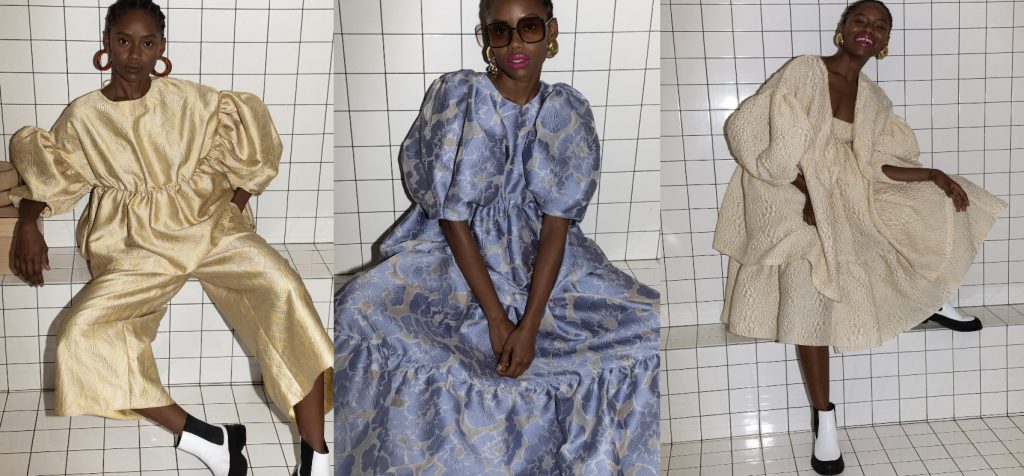
Romantic fashion in the 1820s spun societal notions of femininity and softness into lace trims, brimming and billowing hats and sleeves, highly saturated textiles, and buoyant silhouettes. Romantic fashion stems from the concept of romanticism, which is most commonly discussed in reference to art and literature. According to Britannica, romanticism is “a rejection of the precepts of order, calm, harmony, balance, idealization, and rationality that typified classicism in general. Romanticism emphasized the individual, the subjective, the irrational, the imaginative, the personal, the spontaneous, the emotional, the visionary, and the transcendental.” When translated to fashion, these sentiments were expressed through decorative ornamentation that could be deemed excessive, and increased volume to combat simplicity in a puffy presentation of contemporary society.

Harper Franklin for FIT NYC writes, “by 1825, the early romantic silhouette was established with a natural waistline, large puffed sleeves, and a wide skirt with an increasing number of gores. The breadth of sleeves grew exponentially into true gigot or leg-o-mutton styles by 1827, and skirts became so wide that gores were no longer enough.” While skirts and sleeves became almost double the size of the waist, trims nearly doubled in weight as they were lined with “lace and flounces, puffs, and rouleaux which were tubes of bias-cut fabric filled with wadding to create a firm roll.” Romantic dressing was often synonymous with hyper-femininity supported by ideas that women were as soft as silk, as airy as lace , and embodied the emotional element of romanticism.

Image courtesy of @selkie on Instagram

Modern Romantic Fashion

American fashion’s shift back to romanticism is best evidenced through the Costume Institute’s statements about this year’s Met Gala. This year, the gala is based on the Costume Institute’s two-part exhibit:  In America: A Lexicon of Fashion and In America: An Anthology of Fashion. Andrew Bolton, the curator in charge of the Costume Institute states, “Over the past year, because of the pandemic, the connections to our homes have become more emotional, as have those to our clothes. For American fashion, this has meant an increased emphasis on sentiment over practicality.” Echoing the movement away from rational classicism of the 1800s, he also states, “Taken together these qualities will compromise a modern vocabulary of American fashion that prioritizes values, emotions, and sentiments over the sportswear principles of realism, rationalism, and pragmatism.”

The romantic fashion movement of today can be equated to societal shifts of the 1800s to some extent; however, there are also several changes in society that affect the meaning of modern romantic fashion.

The deeply personal and imaginative element of romanticism is currently intensified by social media. Franklin writes of 1800s romantic fashion stating, “long, fluttering ends of ribbon from the hat or bonnet and waistband of the dress were particularly fashionable, and combined with the shimmering gauzes and blonde lace, there was a feeling of constant movement, buoyancy, and exuberance in women’s clothes when at their best. At their worst, however, these styles could appear wild, fussy, and nonsensical, and the balance was not always easy to maintain.” While nonsensical and unbalanced was a part of the signature look, social media allows for the nonsensical and extravagant to be made into an aesthetic that plays into an individual’s “digital aspirational persona.” An individual today, in other words, can present romantic looks on their social media that could be deemed “fussy” outside of their social media space, while wearing more muted romantic pieces in daily life. Due to social media, romanticism can expand even further into an increasingly imaginative realm.

Image courtesy of @selkie on Instagram

A woman’s role in society and the perception of her in the 1800s heavily influenced romantic dressing. Charlotte Jirousek for Cornell writes of women as the romantic period’s muse; “Women were placed on a moral pedestal, and looked upon as the guardians of family and community virtue, and the educators of the children. This moral elevation of women would eventually lead some to suggest that women deserved a wider role in public affairs. However, for now, dress reflected the perception of women as weak and decorative.” While this moral pedestal notion eventually may have led to women’s rights sentiments, the early depiction of femininity through clothing could not necessarily be considered a form of “power dressing.” Today, with much wider definitions of femininity and movements toward equity, romantic dressing can certainly be considered a form of power dressing.

Ella Alexander for Harper’s Bazaar notes that “romantic dresses are on the rise, imbuing a softer strength that offers a different kind of armour.” She cites Dr. Findlay who comments on the “frivolous” aspect of romanticism when she writes, “These dresses take up space, they take light colours, tulle, ribbons, and place them on adult bodies, perhaps reframing the ‘frivolity’ of these textures and colours. So, they could be read as claiming something – a vision of femininity, taking up space in the world—that could make someone feel powerful.” So, while romantic dressing is no longer about women being placed on a moral pedestal, it is about women and men alike re-claiming or claiming their femininity and placing themselves on a self-created platform. It is also an assertion that femininity and softness are not synonymous with weakness and submission.

Image courtesy of @lirika.matoshi on Instagram

Fashion Reverie’s Romantic Fashion Brand Picks

A plethora of emerging brands, particularly those that gained popularity on social media, best represent modern romantic dressing especially among youth demographics.  Below are Fashion Reverie’s top 5 brand picks:

Image courtesy of Lirika Matoshi

Lirika Matoshi

Image Courtesy of @dauphinette.nyc on Instagram

Dauphinette

Image courtesy of @_minjukim_ on Instagram

Minju Kim

Image courtesy of @emmabrewin on Instagram

Emma Brewin

Image courtesy of @selkie on Instagram

Selkie

—Tessa Swantek

A Cause for Celebration: 2021 American Image Awards

Image courtesy of prnewswire.com

Sustainability, innovation, diversity, and global stewardship were the themes celebrated at the 2021 American Image Awards Gala which shone light upon the accomplishments of the fashion industry over the past year.  Hosted by the American Apparel & Footwear Association (AAFA) as a digital gala presentation, the audience was treated to a well-orchestrated storyline told by some of our industry’s most recognizable luminaries.

The honoree slate included:

Designer of the Year – Gabriela Hearst

Eco-Steward of the Year – Sustainable Apparel Coalition

Company of the Year – HanesBrands

Retailer Innovator of the Year– Walmart

Fashion Maverick – Black In Fashion Council

Digital Entrepreneur of the Year – ShopShops

Image courtesy of Very New York

Emceed by the host of the award-winning “The List” television show, Segun Oduolowu, the event featured opening introductions by Stephen Lamar, AAFA CEO and Steven Kolb, the CEO of the Council of Fashion Designers of America (CFDA), the foundational beneficiary of the proceeds of the event.

Image courtesy of VERY New York

“The American Image Awards is about celebrating the future of fashion and the path upon which our industry has embarked in the post-pandemic era. This year’s honorees are the very embodiment of where the industry is heading, and it was a privilege to showcase their success,” said Stephen Lamar, president and CEO of the American Apparel & Footwear Association. “We cherish AAFA’s support and efforts in strengthening American fashion’s global impact. In a year that has been filled with great challenges and uncertainty, leaning into our communities and these partnerships has made all the difference in our continued recovery,” said Steven Kolb, CEO of the CFDA.

While all the themes of the evening were addressed loud and clear by every speaker, the messages of innovation and sustainability were those heard most emphatically.  At a time when the fashion industry seems to be coming to terms with the responsibility we all have to ensure the future of our planet through reducing waste and rethinking the practices we use to source and consume fashion, the messages couldn’t have been more timely, nor more poignant.  Industry giants Walmart and Hanesbrands spoke to the work they are doing on a macro scale, while white hot designer Gabriela Hearst, speaking from the Chloé global headquarters in Paris, offered her perspective on how fashion at the highest levels can innovate towards a more sustainable future. The Sustainable Apparel Coalition, the organization leading the cause to educate fashion companies to identify paths towards sustainability, truly drove the final message home by providing the 30,000-foot perspective on the cause.

Images courtesy of Very New York

Surprise appearances included Brandon Maxwell, introducing Walmart’s Denise Incandela, Elle magazine’s editor-in-chief and “Project Runway” judge Nina Garcia who introduced Gabriela Hearst, influencer and author Caroline Vazzana ( @cvazzana & Author of Making It in Manhattan) and environmental activist and Miss Earth 2020, Lindsey Coffey, offered congratulatory introductions to the Sustainable Apparel Coalition, and our own Tijana Ibrahimovic ( @TijanaStyle ) congratulated HanesBrands on an incredible 120 years in business.

While the event was overall one of celebration, it was Under Armour COO & Chair of AAFA, Colin Browne who summed it up best when he said, “we have the opportunity—no, the responsibility—to be a force for good. We also have the responsibility to lean-in and embrace changes … we can change the world. This community reaches into every household in America and in all corners of the world. Tonight, we celebrate this amazing industry.”

—Staff

For Beautiisoles, It Took Two to Make the Brand Right


It takes two, it takes two, me & you
It takes two to make a thing go right
It takes two to make it out of sight — Seduction

If you are a late 80s pop music fan—like I am—you probably remember Seduction’s hit pop music single “It Takes Two.”  And if you are not old enough to remember “It Takes Two,” you will probably agree that two heads are better than one.

Two heads are better than one and that applies to the burgeoning shoe brand Beautiisoles. Born out of Robyn Shreiber’s need for comfortable shoes and Daniella Clarke’s fashion acumen, Beautisoles is for that consumer that wants fashion-forward, comfortable shoes at a price that won’t break the bank. “I came up with the initial idea for Beautiisoles because of a foot surgery I had just had. That put me on a mission to create a beautiful line of shoes that was both comfortable and stylish,” explained Robyn Shreiber.

Though Daniella Clarke and Robyn Shreiber have known it each for 20 years and lived on the same street, they had never worked together or collaborated. Shreiber works as an executive with a snacks food manufacturer and Clarke is a fashion disruptor who founded the brand Frankie B.

What came out of the partnership is Beautiisoles, a luxury shoe brand that emphasizes comfort and fashion-forward sensibility. (The double i in the brand name represents two concepts, style, and comfort, and that these two concepts can be compatible bedfellows.)

You may ask yourself, does the market need another luxury shoe brand, particularly post-pandemic? Clarke ingeniously answers that thought, “Every woman wants sexy, stylish shoes, but we also want comfort. This has been a battle for women who go out wearing these fashion-forward shoes … but their feet are hurting.”

And what makes these stylish shoes comfortable is their construction. “For our inaugural line, we concentrated on a wider toe box and, there is poron (memory antibacterial foam) in the sole. For some of our shoes there is a platform under the ball of the foot which is where some women experience pain. On most of our styles there is a cylindrical inch-width heel,” explains Shreiber.

Still, you may ask yourself, can comfortable shoes be fashion-forward? Absolutely. “If you look at our current collection, it is a compilation of things we loved from our first collection and taking those things like the leopard, and blush color palette to the next level. So, our spring 2021 collection is an extension of what we’ve done before, but better. Our booties and boots are equally, if not more striking, than our Roxy boot from our first collection,” details Shreiber.

And Beautiisoles clear-boot heel is a fan favorite.  Shreiber confirms, “the clear-boot heel was in the original collection and carried over to our current collection. Our Savannah Gold shoe is the most popular shoe in our collection. Our Roxy boot also does very well. The clear-boot heel was an idea that was brought to us by the manufacturer.”

Despite the COVID-19 pandemic and only launching in 2018, Shreiber and Clarke have managed to keep Beautiisoles solvent. “Our online sales has helped to keep us solvent, as well as putting a lot of emphasis on our website. Social media has also been wonderful, helping us to stay connected to our consumer base,” explained Clarke.

Images courtesy of Beautiisoles

“We also have approached retailers very selectively. We haven’t tried to sell to the big retailers of big box stores yet. We are working mostly with small stores and retailers. It has been slow going because of the health pandemic; however, it is working.  We understand that small stores and retailers cannot buy a big inventory right now, but we have been willing to work with them wherever they are.”

Fashion-forward sensibility, style, comfort, and affordability seems like a win-win. The creative duo of Daniella Clarke and Robyn Shreiber are proving that two heads are better than one and things do go right when necessity and innovation meet.

For more information, go to beautiisoles.com.

—William S. Gooch

Fashion and Music Come Together in a Bold, Dynamic Way in “Cruella”

Image courtesy of popsugar.co.uk

Musicals, as presented in American cinema, has changed. There was time, not to far back, where movies musicals were mostly about an All-American protagonist who encountered some sort of life challenge and used their mother wit, charm, and positive attitude to overcome adversity. Good triumphs over evil and the hero or heroine rides off into the sunset and choreography, music and plot distill the wholesome values of the Golden Rule.

Oh, the good ole days!! Still, maybe those good ole days were not so realistic even if they made you feel good and put a smile on your face. “Cruella” is not about the good ole days and does not make you feel shiny and clean. It does put a smile on your, but maybe because the subversive and the crooked also gives pleasure.

Prop from Disney’s live-action CRUELLA. Photo by Laurie Sparham. © 2021 Disney Enterprises Inc. All Rights Reserved.

And even though the music, costumes and décor of “Cruella” do move the plot forward as in days of yore, the combination of these things in “Cruella” can cause you to yearn for a time of adventure, risk-taking, and anarchism. There are no easy answers in this plot, and though the storyline is nuanced and well-thought, the real star of “Cruella” is the music and the fashion.

Set in the mid-60s and extending into the late 70s, “Cruella” tells the backstory of infamous Cruella de Vil character from the Disney 1961 classic “1001 Dalmatians,” based Dodie Smith’s 1956 bestseller “One Hundred and One Dalmatians.” “Cruella” delves into how the Estella character portrayed brilliantly by Emma Stone evolves into the 1001 Dalmatian-hating villain.

Image courtesy of Disney

The Music

While in most musical or movies with musical interludes the music helps the evolution of the storyline. In “Cruella,” the music serves as a background force to set and enhance the mood of the scenes. The music in “Cruella” span an eclectic pantheon of musical genres from 60s pop to 60s psychedelic rock, to 70s disco to glitter rock of early 70s, to 70s funk and beyond. Musical highlights are songs from Ike and Tina Turner, The Ohio Players, The Zombies, Doris Day, The J Geils Band, Joe Tex, Nancy Sinatra, Blondie, Judy Garland, The Rolling Stones, David Bowie, Nina Simone, The Bee Gees, and many others. There are 33 songs in “Cruella,” we will highlight a few that stood out most.

Joe Tex’s “Gotcha”

One of the funnier musical choices in “Cruella,” “Gotcha” is front and center when the Stooge-like trio bundle a robbery and punctuates the gala scene at Baroness’ party when the fancy ladies are tackled to the ground by male attendees.

Rolls Royce’s “Car Wash”

This disco hit of the mid-1970s is distinguished by it the opening beat of the unforgettable handclaps, followed a rhythmic rush of violins. Director Craig Gillepsie humorously place this 70s hit in the movie and Cruella and duo of thugs wait outside a dog grooming parlor to capture the dalmatians.

Electric Light Orchestra’s “It’s a Livin Thing”

Why include some rats in “Cruella” and pair this scene with the Electric Light Orchestra’s “It’s a Livin Thing”? Was this idea borrowed from “What Ever Happened to Baby Jane”? Whatever the reason the pairing of the rats on a tray with “It’s a Livin Thing” was a genius combination and funny, almost to a fault.

Ohio Player’s “Fire”

If you are going to include 70s funk tunes in a movie, depending on the scene, nothing works better than the Ohio Players funk hit “Fire.” And no other 70s funk song comes to mind that could work when Estella/Cruella purchases a vintage red Baroness dress.

Image courtesy of Disney

Nina Simone’s “It’s a New Day”

When Estella starts working as a design assistant for the Baroness, at her first glimpse of the design studio/atelier, Nina Simone’s “It’s a New Day” rings loud and clear, signifying that Estella’s dream is finally coming true. The dramatic sweep of Simone memorable voice illuminates Estella’s mixed emotions of anticipation and hesitation.

The Wardrobe

As outstanding and provocative as the music is in “Cruella,” the wardrobe is equally, if not more compelling. With silhouettes and design aesthetics spanning the freewheeling sixties to the British punk revolution, two-time, Academy Award-winning designer Jenna Bevan (“A Room with a View,” “Mad Max: Fury Road”) has created a fashion menage that is perhaps the best distillation of fashion in any film of the twentieth century .  Bevan was very adept at matching the right garment with the appropriate period, further enhanced by the musical choices in the film.

With nods to Alexander McQueen, Vivienne Westwood, Zandra Rhodes, Galliano and other underground fashion designers of the British Punk era—actually McQueen and John Galliano are much later than that—Bevan gave the eye a kaleidoscope of what underground British punk fashion looked like 45 years ago married with the more traditional 70s and 80s fashion of Yves Saint Laurent, Nina Ricci, and Thierry Mugler.

Image courtesy of popsugar.co.uk

The Flame Dress

Purchased in a London vintage store, ‘the flame dress,’ is a wonderful example of art meets glamour. Though the garment is rendered from an original 1965 Baroness gown, Estella uses the gown to become Cruella as she presents herself as her alter ego at one of the Baroness’ gala events. This one-shoulder trumpet gown with petalled bottom makes a wild dramatic statement as the now Cruella reveals herself disrobing from her white capes.

Image courtesy of vulture.com

The Garbage Truck Dress

One of the most dramatic garments in “Cruella” is the awe-inspiring ‘Garbage Truck Dress.’ Cruella arrives at one of the Baroness’ many soirees on the back of a garbage truck donned in a gown made of tulle and distressed satin with a newspaper bodice. As exciting and underground as this garment was the most fascinating element was the 40-foot train that accompanied the gown that dragged down the street as Cruella took off on the back of a large garbage truck.

Fashion designers have been using newspaper and design elements in garments since the 1960s; however punk fashion devotees like Vivienne Westwood and Zandra Rhodes took this design aesthetic to a new level in the late 70s. Jenna Bevan borrowed heavily from Rhodes and Westwood, and it was well worth it.

Image courtesy of vanityfair.com

The Petal Dress

Cruella stole another red-carpet moment from the Baroness in a John Galliano-inspired red petal dress with military jacket that rocked metal epaulets, safety pins, chains, rosettes, and an absolutely massive, swoon-worthy organza skirt of reds, blacks, and purples comprised of over 5,000 hand-sewn flowers. Cruella capped this look off with Army combat boots, standing on the top of cab being photographed by paparazzi. You almost felt you were at a Dior/Galliano haute couture in smoggy London town.

Image courtesy of vulture.com

The Butterfly Dress

 One of the most beautiful gowns in the film is the gown Estella creates for the  Baroness, a gold beaded, strapless architectural gown with peplum-like bodice. This gown looks very similar to Alexander McQueen’s bee dresses from his spring 2013 collection. And in true Cruella fashion, the gown deconstructs and falls apart when the Baroness wears it to one of her many fabulous events.

—William S. Gooch

Fashion Reverie’s Fashion Quiz: The Intersectionality of Fashion and Music

Image courtesy of thomann.com

Fashion Reverie’s fashion quiz was such a huge success that we have decided to bring it back. In this month of celebrating the intersectionality between fashion and music, Fashion Reverie’s staff editors submitted fashion and music questions that will not only educate you about how the sometimes disparate worlds of music and fashion are intrinsically linked, but will also enlighten our viewers that the links between fashion music go back over one hundred years.

Test your knowledge and take the quiz. Give us a shout out on Instagram page, fashionreveriemag.com, and let us know how you fared!!

  1. Which fashion designer started his career designing stage costumes for The Jacksons and Earth, Wind, and Fire?
  2. Who designed Whitney Houston’s tracksuit for her singing of the National Anthem at Super Bowl XXV in 1991? 
  3. Who were the supermodels in George Michael’s “Too Funky” video?
  4. What music artist who is often regarded as a fashion icon created her own fashion label under LVMH in 2017? 
  5. Which fashion designer is responsible for designing muse Madonna’s iconic corsets for the Blonde Ambition Tour?
  6. We all know that Vivienne Westwood is associated with the British Punk fashion revolution. What other British fashion designer was also a major force in the British Punk fashion revolution in the 1970s?
  7. Who designed the famous dress worn by Jennifer Lopez to the 42nd Grammy Awards in 2000?
  8. Which pop star from the pop band No Doubt launched her fashion brand in 2004 and became one of most sought-after shows during New York Fashion Week?
  9. Which celebrity’s fragrance, though they have a short shelf life, are the highest grossing fragrances of any celebrity?
  10. Which supermodel appeared in Billy Joel’s video “Uptown Girl”?
  11. Which hip-hop artist launched his men’s sportwear collection in 1998 and won the CFDA Men’s Designer of the Year Award in 2004?
  12. Which R&B/pop 70s musical group had the lyric in their hit song “Halston, Gucci, Fiorucci, he looks like a still, that man is dressed to kill”?
  13. Who was the first fashion designer to use music with their fashion show?
  14. Who designed Beyoncé’s bustier with over 30,000 Swarovski crystals for the 2013 tour?
  15. Which 90s pop group had the lyrics “Armani, Armani, ah-ah-Armani
    Versace, cinque in their 1986 song?

ANSWERS

Images courtesy of teamyellow.com and latimes.com

1)Tadashi Shoji was born in Sendai, Japan and came to the US as a fashion design student at Los Angeles Trade-Technical College. While a student he apprenticed with costume designer Bill Whitten and eventually designed costumes for The Jacksons, Earth, Wind, and Fire and many other musical stage acts of the 1970s.

2)The tracksuit was by Le Coq Sportif with matching Nike Cortez sneakers. She was going to wear a sleeveless black cocktail dress, but when the Miami temperatures dropped, she opted to wear the tracksuit. The tracksuit would have been her post-performance outfit she would have worn to watch the football game from her stadium box.

Image courtesy of pinterest.com

3)The supermodels in George Michael’s “Too Funky” video was Linda Evangelista, Tyra Banks, Nadja Auermann, and Emma Balfour.4)Rihanna’s Fenty brand and its many spinoffs is the only brand by a black artist that is under the auspices of LVMH

5)Designed by Jean Paul Gaultier, who Madonna personally requested to create the costumes for the tour (she even handwrote him a letter to express her admiration for his humorous take on fashion), the look was the product of many months of collaboration, with fittings taking place both in New York and Gaultier’s ateliers in Paris.

Image courtesy of dvcloset.com

6)British fashion designer Dame Zandra Rhodes played a huge part in the evolution of punk fashion in Great Britain in the 1970s. She made her biggest splash in 1977 with the establishment take on punk which she called Conceptual Chic. She created dresses with holes and beaded safety pins—10 years before Versace—to form a sort of embroidery, mixed with loosely drawn figures screen-printed on silk jersey, or on the newly developed Ultra suede fabric.

7)Versace designed the very low decolletage, tropical print dress that Lopez wore to the 2000 Grammy Awards. In September 2019, Lopez made a surprise appearance wearing an updated version of the dress down the Versace spring/summer 2020 show, which was centered around its tropical print.

8)Gwen Stefani launched her fashion brand L.A.M.B. with a runway debut in 2004. L.A.M.B. is an acronym for Los Angeles music baby. L.A.M.B started as a two-week design project in Stefani’s kitchen as a collaboration with LeSportsac. At its height, L.A.M.B was a major “It” brand for that stylish fashionista. However, the brand has not had fashion shows since 2015 and currently you can only find the L.A.M.B brand on sunglasses.

9)The celebrity fragrances that have grossed the most amount sales are Jennifer Lopez’s fragrances. Lopez’s Glow fragrances are her best-selling fragrances.

Image courtesy of snakkle.com

10)Supermodel Christie Brinkley appears as the main character in Billy Joel’s 1983 video “Uptown Girl.” In an interview with Howard Stern, Joel had originally named the song “Uptown Girls” after an encounter when he was the company of Whitney Houston, Elle McPherson, and Christie Brinkley. When Joel wrote the song, he was currently dating Elle McPherson who the song was originally about. By the time, Joel filmed the video he was dating Christie Brinkley, who would later become his wife.

11)Sean Coombs launched his men’s sportwear brand Sean John in 1998. Sean John showed at New York Fashion Week for the first time in 2001. To date the brand has enjoyed critical and commercial success with revenues now exceeding $525 million annually. 

Image courtesy of cdandlp.com

12)Sister Sledge had the hit song “Greatest Dancer” in 1979 that contained the iconic lyrics that referenced Halston, Gucci, Fiorucci. “Greatest Dancer” hit number 9 on the Billboard 100 chart in May 1979. Bernard Edwards and Nile Rogers originally wrote the song for the R&B/Disco group Chic; however, Atlantic Records felt that Sister Sledge needed a disco-sounding song on their album “We Are Family” that was produced by Edwards and Rogers.

13)Lady Lucy Duff-Gordon is believed to be the first fashion designer to have music accompany her fashion shows in the 1920s. Lady Duff-Gordon was also the first fashion designer to use professional models in her fashion show. She is recognized for launching slit skirts and low necklines, popularized less restrictive corsets, and promoted alluring and pared-down lingerie.

14)The Blonds designed Beyoncé’s Swarovski embellished bustier with over 30,000 crystals. It took over 600 hours to apply the 30,000 Swarovski crystals.

Image courtesy of soundcloud.com

15)The Pet Shop Boys used the lyrics “Armani, Armani, ah-ah-Armani
Versace, cinque” in the 1986 song “Paninaro.” “Paninaro” was on the B-side of the 1986 single “Suburbia.” “Paninaro” is one of the few Pet Shop Boys songs in which Chris Lowe provided most of the lyrics.

—Staff

Deanna First Gives Voice to Fashion Illustration and What Inspires Her

Image courtesy of Instagram.com

Deanna First, a NYC-based fashion and lifestyle artist, is inspired by David Downton, one of the world’s leading fashion artists, who has stated, “Paul Clay said that drawing is taking a line for a walk. I think fashion drawing is taking it dancing.” First exemplifies this concept in her artwork and in her style of live sketching, where she focuses on the fluidity of the feminine form in all of its beauty and grace as she seems to hear the music within each subject and is able to underscore it so that we can all tune in. Her ability to work in a variety of mediums, including pencil, charcoal, marker, and watercolor, as well as digital editing, along with her broad range of illustration styles, has led to her successful partnerships with such noted brands as Hermes, Diane von Fürstenberg, Alice + Olivia, Ralph Lauren, and Tommy Hilfiger, among many others.

Diane von Fürstenberg, who Deanna works with often, has famously noted that “the greatest natural enemy of women is insecurity.” First’s live sketching work combats this enemy as she creates “personal illustrations” that dazzle with crystals and pearls while illuminating the subject’s best features. While much of her work had been concentrated on these live events around the country, First tells us about her pandemic pivot, lessons learned, upcoming announcements, and her plan to expand her portfolio in the future. She also personally curates an art gallery wall using her favorite pieces!

Fashion Reverie: First, tell us a little bit about yourself and what makes you different from other artists?

Deanna First: I’m a NYC-based fashion and lifestyle artist originally from Cleveland, Ohio. I knew I wanted to be an artist since preschool and am so happy I am following my childhood dream! What sets me apart from other artists is my variety of styles. I can draw very realistically where I capture every detail (those can take a full day to complete) and I can also sketch very fast, in a more loose and artistic style, which takes only a few minutes.

Having several styles, I’m able to appeal to a variety of people. This comes in handy when clients book me since they can pick which style they want me to recreate the reference photo in. The magic is, even though the styles are quite different, you can still tell I created them and they somehow still look cohesive.

FR: What artists inspire you and how does their work make you feel?

Deanna First: I love artist David Downton. His work makes me feel transported to another time period—a more simple yet glamorous era. My senior collection was draped eveningwear so I really enjoy his use of movement and softness with watercolor and charcoal while illustrating the most fabulous women in gowns.

FR: What color palettes do you tend to gravitate towards and is this reflected in your work?

Deanna First: For my personal artwork that I would hang in my home, I love neutrals, soft blues, tans, blacks, and whites. Most of my pieces are for custom commissions so my personal style is not always reflected. It depends on what the client wants, but the palette ranges anywhere from bright and vibrant colors to muted tones. It just depends.

FR: You were creating art over ZOOM during the peak of the pandemic. A lot of your work is based on “personal illustrations.” How did the dynamic change when you are not in person? Do you think that this option is more difficult or do you think it has opened even more windows of opportunity for you? 

Deanna First: Most of my work was based on my live events—I would say 70% of my business was prior to the pandemic. It made me realize not to put all my eggs in one basket. I would do a few custom commissions in the past, but they were not something I heavily marketed since I was so busy with my sketch events. I still think most people like in-person sketching more than ZOOM, in my opinion. It’s opened a few doors, but my focus really isn’t on that as much since things are opening up again.

Something that has really taken off in the pandemic has been my custom matchbook illustrations. People can pick which restaurants or hotels they love and have them translated into a custom and memorable gift for anniversaries, birthdays, weddings, and more.

FR: You often illustrate attendees at in-person events for Diane von Fürstenberg and Alice + Olivia, and attempt to emphasize best features. How do you do this and what elements do you attempt to capture? Do you have any memorable stories where someone’s confidence was boosted by one of your illustrations?

Deanna First: If someone has really cool, curly hair I make it extra voluminous or if they are wearing unique glasses I might make them a little bigger so they pop off the page during my live sketches.

So, the features I emphasize could also be pieces I pull from their look. I also add pearls and mini crystals to most of my live sketches which gives guests a little surprise towards the end that they aren’t expecting. I try to keep each person’s sketch around 7 minutes so those small details really are crucial to helping the live sketch come together.

What’s great about offering live sketching at events is that not everyone wants to be photographed so this is a fun alternative from a photo booth where they still get to take home a memory from the event. Many people actually end up getting them professionally framed! In a few instances, people will come in and feel a bit shy about being sketched— especially if they are struggling with insecurities. I try to take the focus off of the actual sketch for a bit and get to know them while I’m drawing. By the time I’m done they forget they were being sketched and are always pleasantly surprised to see how I interpreted them. I can’t tell you the number of times I’ve heard “I want to look like the sketch version” or “I’m flattered.” The goal is to have everyone smiling by the end of the process.

Deanna First x Anne Cate Collection image courtesy Deanna first on @Instagram

FR: You recently collaborated with Anne Cate to create a wallet and clutch collection with 4 prints—Just Peachy, Chanel, Lady Liberty, and City Chic. What made you choose these 4 prints as one collection?

Deanna First: Yes! That was such a fun collection. We actually have another collaboration in the works as we speak that will be launching during summer, so stay tuned. City Chic was a custom commission done for Anne Cate and her brand. They actually have it hanging in their showroom as well and have been using it for marketing for their brand, in addition to the clutch collection.

I sent Anne a selection of my favorite sketches that I thought would translate well on the clutch. These were all existing pieces so I knew they would do great since I was already able to see how my audience reacted to them in the past. I also wanted them to be diverse enough so that they would appeal to a variety of audiences.

I think Just Peachy would be a fun vacation summer bag, though, to take your sun lotion, lipstick and mini journal. Lady Liberty is such a great gift if you are planning a trip to NYC or know someone who loves the Big Apple. This one is unisex so you can use it for packing/traveling/art supplies/passport … so many possibilities! Chanel is my personal favorite since I love the realism and muted classic tones.

FR: Philanthropy and the arts are often linked, many times with philanthropists donating to the arts. But we see that you, the artist, have used your talents to support other philanthropic efforts, such as City Harvest, Sneakers for Heroes, the Babies Heart Fund, and several animal rescue organizations. Do you feel you have a greater purpose as an artist and how does this tie into philanthropy?

Deanna First: I believe my purpose is art. It’s an bonus that I can use my talents to help others. The emotion and messages art evokes are sometimes more powerful than words. It has the power to connect to anyone regardless of their background, religion or language. I’ve always had a soft spot for animals, so I would love to do even more with animal organizations in the future and bring awareness to adopting pets and looking into cats being housed in basements in NYC without proper food and light. Tons of people don’t even know this is even going on, but many cats are being used strictly to catch rats and never see the light of day. It’s horrible and something I would love to bring awareness about to spur change.

FR: If you could build a gallery wall of about 6 to 10 pieces from your artwork, what pieces would you choose?

Deanna First: Oh, that’s a tough one.

Image courtesy of Deanna First

 “This is such a classic piece. It reminds me of my days in fashion design and the runway shows in the city. The muted tones bring all the emphasis on the details.”

Image courtesy of Deanna First

 “I love the sultry look of her red lips with the contrast of the black and white paint I used for the leaves.”

Image courtesy of Deanna First

 “I find myself always craving the ocean and nature. This piece reminds me to take a breather, cleanse my energy and spend time outdoors.”

Image courtesy of Deanna First

“I did this piece a long time ago and it still always makes my favorites list. This sketch reminds me why I love using charcoal. She oozes confidence and is such an icon.”

Image courtesy of Deanna First

 “This piece is the definition of elegance and grace. I sketched this for “Christie’s Auction House” menu cards years back and it still brings such great memories.”

Image courtesy of Deanna First

 “This piece is a background to a piece originally commissioned by designer Adrienne Elliott. I would want to be surrounded by sketches that make me feel at peace and relaxed while in my apartment and this piece does the trick. There is something so soothing about the pale pink and green combination and overall color palette.”

Image courtesy of Deanna First

 “I love this piece because of the over the top sun hat. It was inspired by Blair Eadie (@blaireadiebee) and you can’t help but smile when looking at her style combinations. This one makes me daydream of packing my bags for a tropical vacation every time I look at it! I want to surround myself with art that makes me feel good.”

Image courtesy of Deanna First

 “These are always fun since you can mix and match your favorite restaurants into a custom piece of art. It’s a great conversation piece, which is why I would include it in a gallery wall.”

Image courtesy of Deanna First

 “This piece was a twist on a book cover I did for author Tasha Ray and I loved the movement! I feel free and weightless when looking at it.”

FR: Is there anything else you would like to share with us?

Deanna First: Yes! I’ve been in the process of doing a lot more book covers lately, so stay tuned for those releases. I am trying to connect to more publishers as well since I really do enjoy doing them. Regarding updates, I’m branching out into more lifestyle illustrations so I’m looking to draw new and exciting concepts, not just fashion and beauty related. I can draw food, restaurants, hotels, cars, animals—basically anything. I’m excited to switch things up a little bit in my portfolio this year!

To stay connected with Deanna First:

Follow Deanna First on Instagram

Visit Deanna First’s Website

—Tessa Swantek

Fashion Reverie’s “Get the Party Started” Spring/Summer Dresses

Image courtesy of university of fashion

It appears the US recovery is right around the corner. If you live on the East Coast, temperatures have warmed up to a breezy, balmy 70+ degrees. Many New Yorkers have been fully vaccinated, most restaurants have reopened their doors with some great indoor and outdoor dining, and the re-opening of Broadway shows are a few months away.

This is a time to celebrate. Whether celebrating with your gal pals or that very special someone, don’t be shy about showing off your great sense of style with some bold color and florals with an interesting twist. Fashion Reverie has curated some great spring/summer dresses that will not only get you in the mood to celebrate life but will also demonstrate that the COVID-19 pandemic didn’t take away your sense of style and panache.

What would a spring fun and frolicky dress be without a floral print dress. I know, I know you’re thinking florals for spring, groundbreaking!! Didn’t Miranda Priestly say that in “The Devil Wears Prada”?

Images courtesy of vogue.com

Nicole Miller

For her spring 2021 collection, Nicole Miller took a page from the counterculture design aesthetics of the late 1960s and early 70s. Spurred by the George Floyd and Breanna Taylor protests and Black Lives Matter street actions, Miller immediately saw the parallels and juxtaposed her spring 2021 collection between the worlds of political protests and vintage looks from her bridal archives.

For those ladies who are looking for a nice Sunday brunch ensemble or an easy, breezy weekend day out with other gal pals, there are some very nice boho blouses and tiered maxi dresses in this collection. Although Miller is not setting any new trends in this collection, Miller’s comfortable, breezy hippie-inspired summer dresses are just perfect for that weekend outing.

Images courtesy of vogue.com

Vivienne Tam

Always a favorite of Fashion Reverie, for spring 2021 Vivienne Tam looked to the 600th anniversary of China’s Forbidden City. Due to COVID-19 travel restrictions, Tam couldn’t visit this historical landmark; instead, Tam chose to include the beautifully costumed period drama, The Story of Yanxi Palace, which put her in a romantic mood. 

Tam ingeniously transferred the romantic mood of the drama to her spring 2021 collection, evidenced into architectural details such as ruffles and curvilinear shapes. This collection is for the adventurous fashionista girl who is not afraid to standout in a crowd, in fact, she relinquishes in her unique approach to style. Though Tam stayed away from florals this season, there some great prints in the collection and a denim short dress with florals that any stylish women would love to have in her wardrobe.

Images courtesy of vogue.com

Sachin & Babi

Another Fashion Reverie favorite is Sachin & Babi. Never brand to stray to far from the signature aesthetic, for spring 2021 the Ahluwalias design duo chose to “delighting and surprising the girls.” And that they did!!

The Ahuluwalias included several day dresses in this collection swaying on the side of lots of florals. Still, the relaxed mood of this collection will serve female consumers well this spring/summer season. If uncomplicated looks are what you are looking for, then this collection fits the ticket. Fashion Reverie chose dresses that could be dressed up or dressed down. And the one evening/out on the town look is elegant and uncomplicated, which is what Sachin & Babi were aiming for.

Images courtesy of vogue.com

Zimmerman

Now, if your closet is oversaturated with floral prints, you may want to make room for some of the prints from Zimmerman’s spring 2021 collection. These are prints with a twist.

Entitled “Wild Botanica” after the native flora and fauna of Creative Director Nicky Zimmerman’s native Australia. Zimmerman also referenced turn-of-the-century artwork of painter and explorer Ellis Rowan.

In this collection Zimmerman uses floral embellishments on top of floral print dresses to render this collection a unique aesthetic. She also employs some interesting design silhouettes that a not necessarily associated with spring garments. Very buttoned up clothes with high collars are not to always speak to a spring aesthetic, yet, in this collection Zimmerman makes it work. And interestingly she pairs many of her looks with cowboy boots. The cowboy boots reference back to her Australian heritage of sportsmanship in the Outback.

 The bold floral and bird prints on ruffled tops and maxi dresses, and playful 3D flower appliqués on other blouses and billowy frocks make several of the looks in this collection perfect for that spring/summer garden party. Your hosts will not be disappointed!!

Images courtesy of Monique Lhuillier

Monique Lhuillier

Monique Lhuiller described her spring 2021 collection as “barefoot glamour.” And that is just what this collection is.

Always known for the glamour and elegance, Monique Lhuillier does not disappoint with this collection. Though much smaller than previous collections and a bit toned down, this collection is lovely and a great option for spring/summer home entertaining with guests on that garden party in the Hamptons or in Bel Air.

This collection contains opulent textures, sculptural puff sleeves, bold colors, glitter tulle, dripping sequins, liquid satins, in sophisticated, signature shapes for evening. It’s a celebration of textures and prints women feel comfortably elevated in. An easy, relaxed approach to dressing for life’s special moments.

—William S. Gooch

Despite an Uncertain Future, Cristina Egger Forges Ahead with Hope, Vitality, and Passion

Image courtesy of popstyletv.com

In case you haven’t heard, the COVID-19 pandemic is still having a deleterious effect on many global industries and markets. New COVID-19 variants are coming out of India and other countries. And just when we thought we might have this pandemic under control, something else happens.

Still, the fashion industry perseveres. Cristina Egger is one of those stalwart fashion industry professionals that won’t give up. Maybe it is because of love of beauty and creativity continues to feed her soul.

Whatever the reason, Cristina is primed and ready to go despite the setbacks from the global health pandemic. Always hopeful and full of joy, Cristina Egger is focused on the future and tirelessly working bring vitality back to the European fashion market. And she sees that future in the many young emerging designers she has mentored and supported.

Fashion Reverie was privileged to have a conversation with Cristina Egger about her love of fashion, her experience working with legacy Italian fashion houses and her mentorship of young fashion talent.

Fashion Reverie: You have an extensive career working in fashion. Was working in fashion always something you want to do?

Cris Egger:  I started working in fashion as a fashion model when I was 18. I worked for Valentino Garavani and other designers. I was always passionate about fashion and beauty. I love art and music as well; everything that is beautiful to see and hear is my passion. Later, I worked for Versace in VIP sales. After that, I was senior consultant for a foundation in Holland, helping to recruit and mentor young design talent.

Image courtesy of Amesterdamfashiontv.com

FR: Now, let’s go back a bit. In your early 20s you were working with Gianni Versace. Could you talk about that?

Cris Egger:  Gianni Versace was extremely creative in every aspect. He could change an entire collection in as little as two days before a fashion show. His shows were a huge event with big stars and celebrities. He also gave very big parties. He was one of the first fashion designers that used the big supermodels of the 1980s and 90s, all in one show. He really helped launch the careers of some of those supermodels. It was great to be a part of his team and see how Versace could create something from nothing and turning nothing into something wonderful.

One of my favorite clients when I worked for Versace in the mid-90s was the Sheik of Oman, who adored Versace and brought so many garments. I also had many Japanese VIP clients that bought a lot of Versace.

FR: Now, you also worked for Gucci and Etro in VIP sales. What was that experience like and was your experience working for those brands different than working for Versace?

Cris Egger:  Gucci and Etro’s philosophy was totally different than Versace. Etro was a very sophisticated brand to work for when I worked for them around 1996 and 1997. The focus was really on sourcing interesting fabrics and textiles. The brand wanted to give consumers high quality fabrics and they kind of brought back the paisley design aesthetic. At that time, Etro was dressing very refined ladies from Milan, concentrating on a very English countryside aesthetic.

Also, the Etro showroom was brown and green with lots of wood fixtures and always smelled of jasmine, patchouli, and other Asian fragrances. These effects made the showroom seem a little dated and old fashioned. The brand is much more youthful now, as many other European fashion houses are attempting to attract a younger consumer.

As we know, Gucci is all about comfort. When I worked for Gucci in the late 90s, Tom Ford really invigorating the brand. I never saw Tom Ford without a suit on. He brought sex and desire to the brand evidenced in the campaigns. The consumers that were purchasing Gucci wanted to be the sexy man or woman in the campaigns.

Image courtesy of crfashionbook.com

FR: When you reflect on the sexiness of the Gucci campaigns of over 20 years ago, do you think that major fashion houses campaigns are currently alluring and exciting?

Cris Egger: Fashion and life in general is so different now. One of the current challenges on the fashion landscape is there are too many fashion brands. The market is oversaturated. In the 90s, there were far fewer brands and consumers could focus on those brands because consumers were confident that those brands would appeal to their individual tastes.

I currently work as a fashion talent scout and I work with very talented emerging designers. However, some of the younger, emerging brands are just creating a copy of a copy of something that was done two decades ago from a very important fashion house. Sometimes, they are not creating new ideas that showcase their own taste or identity. Something can be sexy one time, but after you see that image or style from so many brands time again, the excitement diminishes.

Also, consider that some of the legacy brands are making a lot of red-carpet gowns and special event garments that are not selling because most everyone was quarantined during this pandemic. Some of garments were very sexy, but where were you going to wear it.

Image courtesy of politico.eu

FR: Speaking of fashion during this pandemic, what is the state of fashion in Europe now?

Cris Egger:  There were over 183 billion garments created in 2020. I don’t know what happened to all these clothes because consumers certainly were not buying.  People were not going out, a lot of people were working from home, there were quarantines everywhere, etc.  So, what happened to those clothes, were the garments burned or recycled, who knows?

Now we have 7.8 billion people of this planet and only about 4 billion can afford to spend money on clothes. And most of that 4 billion can only afford very inexpensive clothes or low-priced fast fashion. Still, to properly clothe everyone globally, we need about 15 billion garments, new, recycled, used, sustainable, whatever.

If consumers shop fast fashion, because that is what they can afford, the garments don’t last long and they most buy more clothes, and ultimately that is bad for the planet. That said, the future is going to be more sustainable because everything else is disastrous. And honestly, most young people in Europe cannot afford clothing from the legacy fashion houses. To that effect, most young Europeans are not even attached to the legacy fashion houses, the clothes are simply outside of their budget. European youth are going vintage, purchasing lesser-priced garments and they are happy. If they spend a significant amount of money, they spend it on accessories.

FR: You transitioned from working from legacy European fashion houses to working with young emerging fashion talents through a Dutch foundation. Could you talk about that transition and how you have been able to encourage and support young fashion talent?

Cris Egger: I learned a lot working for the big European fashion houses, but I needed a change and I wanted something more in life. I felt with the European big fashion houses I had acquired a lot of knowledge, and I could use that knowledge to support emerging fashion designers. I knew I could use my knowledge to help them understand how to create a collection, source great fabrics, and manage production and budgets.

I knew in this new phase of my life I would be giving back to a community I loved so much. In the eight years that I worked with the Dutch foundation, I helped young fashion talent create collections, present at Milan Fashion Week and Paris Fashion Week. I also organized the Dutch Fashion Awards for eight years of which Mercedes Benz was the sponsor. The best designer of the year received $50,000 euros.

The foundation helped over 50 fashion designers and this endeavor was all supported by the Dutch government. I was really honored to help these designers and impart any knowledge I had to them.

FR: What would you say is the biggest challenge for young European designers?

Cris Egger:  The current challenge for all fashion designers is the COVID-19 crisis. The COVID-19 crisis is totally unprecedented, and it is killing motivation, creativity, and the European fashion community has been shut down with some small movement in the last three months, but nothing substantial.

There was a small restart in September of 2020, but we had to close again in October of 2020. Now, the fashion industry in Italy, where I live, is mostly defunct. There were a few shows during Milan Fashion Week, but for the most part everything was digital.

I believe moving to digital platforms, though out of necessity, is not helping the fashion industry. Fashion is something that must be touched and experienced live. And the same is for accessories. If you are a buyer, it is very difficult to work with pictures and videos to get a sense of the collections or garments that you want to put in the stores.

If the COVID-19 crisis doesn’t end soon, it will destroy the fashion industry, as well as many other industries. People are tired of this pandemic and weary of not celebrating life. Currently, a lot of restaurants in Europe are still not open after 6pm. There is very little theatre and events to go to, so why purchase new garments, there are very few places to go.

FR: What is the most rewarding aspect of mentoring young talent?

Cris Egger: When I witness young fashion designers’ growth and I see their collections are being picked up by stores and the garments are selling, I know I have done my job. This is very rewarding. Also, when I see their joy, this is the best gift I could ever receive. When you give knowledge to someone and you direct all your positive energy, it is so fantastic to see them smile and witness their collections on display, I can go to bed and be content.

FR: Sustainable fashion is beginning to get a lot of traction in the US. Is that also happening in Europe, and if so, why?

Cris Egger:  The first European designers that were talking about sustainable fashion were fashion designers in Denmark. They developed a fashion week that only presented sustainable fashion. I attended this fashion week and it was very interesting.

Currently, the northern European countries seem to be more attracted to sustainable fashion than the rest of Europe. The Nordic countries are far more commented to the environment, being socially conscious, and creating industries that are aligned with sustainable goals.

Now, we see more multinational companies like Nike and H&M turning toward creating more sustainable items. Sustainability is gaining market traction in Europe, but not as fast as it should be in France and Italy.

I have some sustainable boots made from vegetable peelings, and they feel like silk. I have supported a designer that using onions to dye her fabrics and the colors are just glorious.

Image courtesy of Iris van Helpern

FR: Is there any new fashion talent that you’ve discovered that the US market should be aware of?

Cris Egger: When I was working for the Dutch foundation, we launched Iris van Helpern. She was a student of Alexander McQueen. She was the most successful designer that I was involved with that has achieved global success. Mario Dice is a very important Italian designer that should be on American consumers’ radar.

FR: What’s next for you?

Cris Egger:  I am organized a small event, a little restart, you might call it in February. This event showcased some new fashion talent and we will see what happens next.

—William S. Gooch


LVMH Prize 2021 Finalists

The Met Gala may have been canceled this year, but there is always something to look forward to in the world of fashion. Big brands are beginning to present their resort collections, but the fashion community has their eyes focused on seeing who will be the next rising star designer.

Every year, a number of organizations spotlight designers they think will be the next big thing. Fashion East is a London-based, non-profit program that annually offers three womenswear and three menswear designers, financial sponsorship, business mentoring, and the ability to present their collections to the press. The mission of the VFiles incubator is to connect, empower, and amplify global youth, and its Foundation offerings span across grants, incubation, education, R&D, and policy. The International Woolmark Prize awards fashion talents from around the globe who showcase Australian Merino wool. The British Fashion Council/Vogue Designer Fashion Fund recently announced Bethany Williams as its 2021 winner of £200,000. In an update to their past award structure, instead of announcing one winner and two runners-up, The Council of Fashion Designers of America has announced 10 winners of their CFDA/Vogue Fashion Fund.

Now we await the next crop of winners. LVMH Moët Hennessy Louis Vuitton has whittled down 1,700 applicants for their LVMH Prize to just 9 finalists. Fashion Reverie takes a look at who is in the running.

Bianca Saunders (London, UK)

Bianca Saunders, an RCA alumna, is a distinctive new voice in menswear who specializes in proposing jarring twists to succinct garments, effectively redefining existing notions of masculinity. Influenced by her British and West Indian background, she addresses the tension between tradition and evolution in designs that reference classic streetwear and avant-garde couture. Staple jersey tee shirts are transformed with ruched flourishes, while experiments in textures blur the line between lounge pant and formal trouser. These carefully considered tweaks transform everyday basics into imposing statement pieces; all the while instilling an overarching sense of artisanal craftsmanship to augment otherwise straightforward constructions.

Charles de Vilmorin (Paris, France)

A graduate of Chambre Syndicale de la Couture Parisienne in June 2019, Charles de Vilmorin launched his eponymous brand at the end of April 2020. His prototypes are made in a very instinctive and spontaneous way. When he has an idea, the piece can be made in one go, overnight. His favorite techniques are painting on fabric, patchwork, and printing. His jackets are made of hand-printed waterproof polyester and include four layers of padding. The volume of the jackets is created by meticulous stitch work that gives relief to the pattern. The jackets are entirely made in a workshop in Paris.

Christopher John Rogers (New York, USA)

Christopher John Rogers, a 27-year-old from Baton Rouge, LA, launched his namesake label in 2016 upon graduation from the Savannah College of Art and Design. Based in New York City, the Christopher John Rogers brand exists to create emotional and sensitive clothing with a focus on effortful dressing, directed towards an individual with a strong sense of self. They deliver clothing with an emphasis on quality manufacturing and timeless appeal, whilst encouraging their customer to take up space. In 2019, Christopher was the recipient of the CFDA/Vogue Fashion Fund’s top prize and was awarded the 2020 American Emerging Designer of the Year by the CFDA.

Conner Ives (London, UK)

Born and raised in Bedford, New York, Conner Ives moved to London in 2014 to attend Central Saint Martins, where he graduated with a BA fashion womenswear in the summer of 2020. He now resides in London where he runs his design studio.  His design aesthetic is nostalgic, yet forward thinking. His work always relates to a new Americana; an expansion of what it comes to represent. Through the use of vintage garments as raw material, there is a feeling of responsibility to elevate the identity of re-generated items; shaking away the connotation of craft as something non-desirable.

Kidsuper (New York, USA)

Colm Dillane is the multimedia artist and entertainer behind Kidsuper, a hybrid art brand with a storefront and studio in Brooklyn. Dillane started by selling tee shirts in his high school cafeteria then later went on to showcase his collection at Paris Fashion Week. He played a year of professional soccer in Brazil before attending college, then earned a mathematics degree from New York University. He went on to direct award-winning short films, music videos, and sold-out solo art fashion shows. A wide range of life experiences fueled Colm’s super hero imagination and need to create his own world through art and design. Kidsuper’s mission is to remind people that anything is possible.

Kika Vargas (Bogotá, Columbia)

Romantic silhouettes, striking patterns, and luxurious textiles define Kika Vargas’ poetic vision. After studying fashion design at Istituto Marangoni in Milan, the Bogotá-born designer spent two years working at Missoni before launching her namesake label in 2011. Architectural forms inspire Vargas’ collections—eccentric proportions and lively volumes result in an oeuvre defined by its aesthetic sensibility. Blouses feature exaggerated puff sleeves and idyllic ruffle trims while dresses boast Peter Pan collars and elongated-tiered constructions. Although each piece is a statement on its own, every garment is designed with everyday wearability in mind. Dramatic but not over-the-top, Kika Vargas’ riveting ready-to-wear creations speak to a romanticism fit for the contemporary era.

Lukhanyo Mdingi (Cape Town, South Africa)

Born in 1992 in the east coast of South Africa, Cape Town-based fashion designer Lukhanyo Mdingi graduated with a BTech fashion degree from Cape Peninsula University of Technology in 2014. With a profound interest in considered and sincere design, the intention is to ensure a pragmatic and mindful approach to product development; looking into human ingenuity as the provenance in creating design that is honest, steady and strong. By collaborating with artisans with a rich history in craft-making, the aim is to build a bridge by bringing artisan’s heritage to timeless premium pieces while providing a platform to support artisans, through continuous work and awareness.

Nensi Dojaka (London, UK)

Nensi Dojaka, 27, is an Albanian womenswear designer living and working in London. With a background in both contour and womenswear studies, Dojaka graduated from Central Saint Martins with an MA from the womenswear program in 2019. After showcasing the MA collection as part of the university’s LFW show, she garnered significant attention from the industry, resulting in a capsule collection with Ssense immediately after graduating. Dojaka was then selected to showcase under Fashion East and made her debut with them in 2020 with her fall 20 collection. For spring 2021, Dojaka was selected for the mentorship program by Alessandro Dell’Acqua x Tomorrow.

All images courtesy of their respective brands

Rui (Shanghai, China)

Rui Zhou was born in a small city in the middle of China surrounded by mountains and trees. This environment influenced her interest in zen Buddhism and the Wabi-Sabi Japanese aesthetic. Rui appreciates asymmetry, irregularity, and imperfection. She sees a garment as a second layer of skin and the space between skin and fabric, body and garment, shows “the power of fragility”. Rui studied BA at Tsinghua University in Beijing and in 2018 graduated from Parsons MFA fashion design and society program. She was selected for the H&M semi-final 2017, won “CFDA+2018 design graduate” and “Elaine Gold launch pad 3.0.”

To learn more about the LVMH Prize and this year’s finalists, go to https://www.lvmhprize.com/.                             

—Carl Ayers

From Carrie Bradshaw’s Closet: The Past, Present, and Future of Product Placement

Image courtesy of dailymail.co.uk

You open your closet to gaze upon your prized pair of cobalt blue satin designer shoes, but have you ever considered how those Manolo Blahniks from Carrie Bradshaw’s closet ended up in yours? You watch a popular show, film, or video and you see an item you love in the apartment of your favorite character maybe covertly in the background, a beautiful dress hanging in a closet, or overtly, a pair of Manolo Blahniks raved over by the main character, and the next thing you know, you are on the hunt for the newest must-have item.

According to the Branded Entertainment Network (BEN), the leading organization responsible for major product placement since the late 1970s, formal product placement originated in the early 1900s when “full length radio SOAP operas were sponsored by soap companies,” which moved into the 1950s wherein television shows on major networks were “wholly sponsored by brands.” Then, in the late 1970’s product placement organizations like BEN appeared in a way that formalized and organized the industry practice. Early sponsorships were overt and restricted to brands who had the spending power. As time has progressed, advances in technology and viewer sophistication (and ad annoyance) has necessitated that product placement become more ingenious and creative to influence purchases without necessarily interrupting viewing with an outright commercial. This is why product placements are also referred to as embedded marketing. Many assume that product placement is still a matter of a company’s budget, however this is not entirely true today. In the same way that fashion is now democratized and fragmented, so too is product placement. Embedded marketing is no longer a simple organized industry, it is one that is often shrouded in mystery and entangled in a web of relationships, cross promotions, and bartering. There are several modern product placement strategies for large and small brands outlined below to unravel this complicated web.

Organizational Liaisons

Organizational liaisons such as BEN and several PR companies can facilitate product placement for brands mostly through a more traditional buy-in strategy, but also take advantage of the organization’s network of relationships. So, again, the web is complicated in that even if a brand pays a PR company, the placements still may not be entirely monetary in nature. The brands with the largest budgets do not necessarily receive the best placements. Through AI (artificial intelligence), the playing field is much more even as BEN looks for the perfect product placement for each client based on 40 years of data. In a Forbes article by Lela London, she interviews BEN’s Chief of Integration and he states “our AI breaks this information down, thereby effectively analyzing every aspect of the content. Using this data, we create customized algorithms for each client that are guaranteed to predict the best content opportunities for generating results.” BEN represents clients from Chanel and L’Oreal to Old Navy and Gap; however, there is a niche for everyone including small start-ups. According to BEN’s Brand Partnerships Manager for a Vogue Business interview by Lucy Maguire, “Music videos are a key growth area for BEN. 46 per cent of consumers consider purchasing a brand after watching an integration in a music video, and 42 per cent of consumers report having made a purchase based on seeing a brand integration.” These statistics represent the power of brand integrations on consumer’s purchasing decisions as well as a growth area in a segment that is more democratized than film or TV. YouTube is a social medium that hosts a wide variety of product placement opportunities, as well as an extremely engaged audience.

Image courtesy of ben.productplacement.com

Individual Liaisons

Individual liaisons, especially stylists and costume designers, often choose to style characters in brands that result in organic placements based on the stylist’s and producers’ creative vision. Patricia Field, for example, is well known for her styling on “Sex and the City” and most recently, “Emily in Paris.” Chanel products were commonly touted by Lily Collins’ character throughout “Emily in Paris” (which gained some backlash due to inconsistency with the character’s wealth that we spoke about on “Fashion Reverie Talks” Episode 6.)

Patricia Field commented on her choice of Chanel in an interview with Giorgia Cantarini for L’OFFICIEL; She stated that she chose Chanel because “it is classic, it can be styled in many different ways, from classic to funky, e.g. with a pair of jeans like I did with Carrie [Bradshaw].” Field’s personal choice and appreciation for Chanel products plays a large factor in her styling decisions and represents a way in which brands achieve placements organically that still contribute to their bottom line. Similarly, Field’s choice to feature Manolo Blahniks throughout “Sex and the City” propelled the shoes to become a household name (and eventually Anna Wintour’s shoe of choice) which shows the major influence that stylists have on product placement and brand popularization.

“Emily in Paris” image courtesy of Instagram.com

Many stylists have become very aware of this powerful autonomy and have in turn opted to meticulously choose which brands to support based upon their values and relationships. Elaine Welteroth, a host on “The Talk,” is surrounded by a majority Black team from fashion stylist Jason Rembert to makeup artist Alana Wright, and hair stylist Angela C. Stevens. Welteroth and her team often actively choose to support Black-owned brands that she often highlights in her Instagram stories from a Melody Ehsani necklace that showcases notable Black figures throughout history to a fringed Hanifa cardigan dress and scarf. Zerina Akers, Beyonce, and Chloe x Halle’s stylist, also understands the power of her platform as evidenced in her continuous support of small brands as well as Black-owned brands. She is the creator of the Black Owned Everything profile on Instagram and has worked alongside Welteroth in their American Express collaboration called “Built to Last,” a YouTube series that highlights Black-owned brands. This shows how many organic placements can also transform into partnerships wherein stylists keep coming back to certain brands. An example is Akers’ curating AREA’s crystal crochet poncho for Beyonce’s “Black is King” and more recently collaborating again for a custom AREA nameplate suit.

Kim Kardashian’s bridal image courtesy of instagram.com

Co-promotional Marketing

Many high profile designers have equally high profile muses. Hubert de Givenchy, for example, long capitalized on his personal relationship with Audrey Hepburn. Hepburn touted Givenchy gowns in films such as “Sabrina” and “Breakfast at Tiffanys” as well as on television at major award shows. Givenchy’s ties to American cultural muses have not yet been severed as Ricardo Tisci, former Givenchy creative director, maintains a relationship with Kim Kardashian. She wore his designs from her MET Gala debut to her highly publicized wedding with Kanye West. In many ways, both muses relationship with the brand represents a form of product placement that can be referred to as co-promotional marketing. While Tisci and Hubert de Givenchy propelled Hepburn and Kardashian toward “style icon” status, Hepburn and Kardashian contributed to Givenchy’s brand image. At the time of Hepburn, Givenchy was branded as a classic French fashion house; however, Kim Kardashian’s presence as a muse helped the brand reinvent itself. In an article for Glamour, Elana Fishman writes, “Tisci completely reinvented the classic French fashion house, making it a go-to for stylish streetwear as well as sophisticated red-carpet fare—and embraced the budding style icon that was Kim, even when other designers wouldn’t.”

This symbiotic exchange cannot be equated to a simple monetary exchange and represents a type of marketing that is rooted in networking and relationships.

Image courtesy of youtube.com

Small Brands as their own PR agent

Not every product placement is quite as lofty as those between designers and their muse. In the world of a fragmented fashion and fashion marketing industry, there are abundant possibilities for product placement, and liaisons are not always necessary. Accion Opportunity Fund lists several strategies that small brands can use: connecting to influencers via social media, cold calling, preparing press kits, and selling your story through social media content. Very often, micro influencers (those with less than 25k followers) are highly impactful when they represent brands, and also tend to be somewhat accessible. Small brands can send PR packages to these influencers in hopes that their products will be featured in the influencer’s content or they can pay them to feature their product.

Fashion (and Fashion Marketing!) is cyclical

In the same way that fashion is cyclical, so are the ways in which fashion is promoted. The future of product placement seems to be one in which brands are maintaining the placement as a major point of the production. As television had once been fully sponsored by a brand, many shows are now publicizing their relationship with a brand or service as a major point of value. The difference, however, is in the seamless integration that is not hidden yet adds to the viewing experience. For example, Amazon-sponsored “Next in Fashion” featured clickable Amazon products while viewing the show. This was not a covert relationship and signifies a possible future of product placement that relies on high tech and enhanced experiences. Likewise, TV show “Love Island” and online retailer I Saw it First partnered so the service styles the wardrobe of those on the show while the looks are then promoted on “Love Island’s” website.

Image courtesy of Isawitfirst.com

There exists significant blurring of the lines between monetary product placement, organic placement, and co-promotional placement which represents the current fashion business practices of  omni-channel selling and retailing. Just like the phrase “a sale is a sale is a sale,” “a placement is a placement is a placement,” and brands should embrace the glories of product placement.

—Tessa Swantek

Copyright © 2012-2025 | Fashion Reverie Publications, LLC - All Rights Reserved