
Image courtesy of Upsplash
Since Mark Zuckerberg announced Facebook’s name change to “Meta” in October 2021, many are debating whether we are entering into the next era of the internet, namely the “Metaverse.” The Metaverse is difficult to conceptualize as it has not exactly materialized yet. The concept, at the moment, is best understood through video games like Fortnite and virtual reality software that acts as an indicator for the meta universe. According to Eric Ravenscraft for WIRED’s “What is the Metaverse, Exactly,” “It [the Metaverse] translates to a digital economy, where users can create, buy, and sell goods. And, in the more idealistic visions of the Metaverse, it’s interoperable, allowing you to take virtual items like clothes or cars from one platform to another. Right now, most platforms have virtual identities, avatars, and inventories that are tied to just one platform, but a Metaverse might allow you to create a persona that you can take everywhere as easily as you can copy your profile picture from one social network to another.” Essentially, the Metaverse would allow for us to live a digital life that blurs the physical and digital world. Many presume that the Metaverse stemmed from COVID-19 since our physical and digital world has merged through this time; however, the concept of digital personas and virtual reality have existed long before the pandemic.
Apart from virtual reality, digital personas have existed for quite some time now, especially amongst GenZ on TikTok. As Fashion Reverie noted in our piece titled “Global Youth Redefine Themselves Through TikTok Fashion,” “Youth users of the platform are able to construct their own fluid identity that is not restricted to gender, social class, or even time periods. This fluid identity is essentially their ‘digital aspirational persona,’ one where the users place themselves in every context that they want to be in without boundaries.” The Metaverse, in simple terms, seems to be a much more advanced evolution of these digital aspirational personas that already exist, just in the form of avatars. A study conducted in November of 2021 by the Business of Fashion titled “The Opportunity in Digital Fashion and Avatars” revealed that “approximately 70 percent of US general consumers rate their digital identity as important. 65 percent rate digital ownership as important, and 50 percent are interested in purchasing a digital asset (skins, digital fashion, digital avatar, NFT) in the next 12 months.” These statistics suggest that the average person, in the US, is willing to enter a new digital era.

Image courtesy of Balenciaga
The Metaverse has become synonymous with a “digital renaissance,” that fashion brands have already tapped into. The existence of virtual self-expression on social media has interlaced with the fashion industry for years. Fast fashion and rental fashion became popular partly due to Instagram influencers who feared outfit repeating while more avante-garde fashion can be worn on TikTok for a short form video, rather than in public. Luxury fashion brands are at the helm of digital fashion, especially Balenciaga, which presented its autumn 2021 collection, “Afterworld: The Age of Tomorrow” via virtual reality Oculus. The collection featured armor-like boots, pants layered over pants, and NASA puffer jackets in a blend of casual and futuristic fashion. The digital world essentially allows for seemingly unlimited self-expression without physical waste. Fashion Reverie spoke with Michaela Leitz, one of the first professional fashion stylists of the Metaverse, about styling in the digital world. She comments, “In the digital world, people feel so much braver to express themselves through styling. You can be anything at any time. For example, if you grew up very conservative and were taught that showing skin is a sin, you can tap into the feeling of a sexier look in the digital world for the very first time, without getting judged or having feelings of guilt for your outfit.” Leitz’s observations as she styles in the digital world are in line with our observations of digital aspirational personas that have existed on social media, so Metaverse fashion amplifies this concept.

Images courtesy DRESSX
Leitz then tells us, “There isn’t much boring and conventional fashion available in the virtual world. The fashion in the virtual world reminds me so much more of avant-garde fashion crossed with urban street style and pure luxe. The inner princess in me would LOVE to wear a crown and opulent baroque dress all day. But in my everyday life, even I can’t channel my inner Marie Antoinette, where would I walk around like that? In the virtual world, it’s possible if I feel like it.” DRESSX, which is a brand-selling digital fashion rentals, sells pieces that range from glass-blown dresses and 3D printed art boots to gravity-defying liquid metal gowns and floating solar headpieces that reflect this sentiment. This type of avante-garde virtual fashion has major implications for the physical world as well. Fashion Reverie sees opportunity for relatively low-cost high fashion editorials using physically impractical virtual fashion that defies design barriers. This lack of barriers is what makes the concept of the Metaverse most exciting as the digital world blends with the physical world on an even larger scale in the Metaverse.
Fashion Reverie asked Deborah Ferguson, Fashion Director/publisher of CONTENTMODE Magazine and award-winning film Costume Designer, about how she believes the Metaverse will impact the future in fashion as much of her background is in experimental fashion. Ferguson grew up in London for most of her life and she tells us “There was music and art everywhere, especially through my college days at Saint Martins. It was all so intertwined, so radical, so experimental and so fearless. In the late ’80s, early 90s London, it was incredible because it was the perfect mix of young people not worried about anything and doing exactly what they wanted in fashion—something you could maybe find in Japan nowadays” Ferguson also worked with John Galliano as a design assistant in an environment where “the aesthetic had more focus on inspiration, researching and resources and knowing every period of fashion.” Ferguson’s thoughts on the Metaverse, like Leitz, centers around avante-garde fashion and new opportunities with less barriers. She says, “The Metaverse will quickly integrate into more online retailers. This will organically increase the demand for hard to wear and unusual clothing and accessory brands which one might see on their favorite recording artist or influencer. I also think as consumers are evolving into virtual relationships and experiences, we will soon be able to virtually rent a runway look for a social media selfie and or virtual encounters. I see it as a positive, empowering opportunity for those who may have the money but not the opportunity to experiment with their image.”

Image courtesy of DRESSX
Other than surpassing design barriers, the Metaverse is also expected to decrease size, income, and status barriers. Leitz tells us that she believes the Metaverse to be the future of fashion partly because “fashion weeks will no longer only be an event for the ‘fashion elites.’ We already have Balenciaga and Balmain having their fashion week on the Metaverse or selling NFTs. With brands having a Metaverse fashion week, everyone can be a part of it.” Of course, a guise of inclusivity is always something to be worried about relative to the fashion industry, and anything presented as a form of utopia is something to be wary about. Decentraland, a virtual world, is set to host a four-day digital fashion week from March 24th to March 27th with virtual shows, stores, and events.
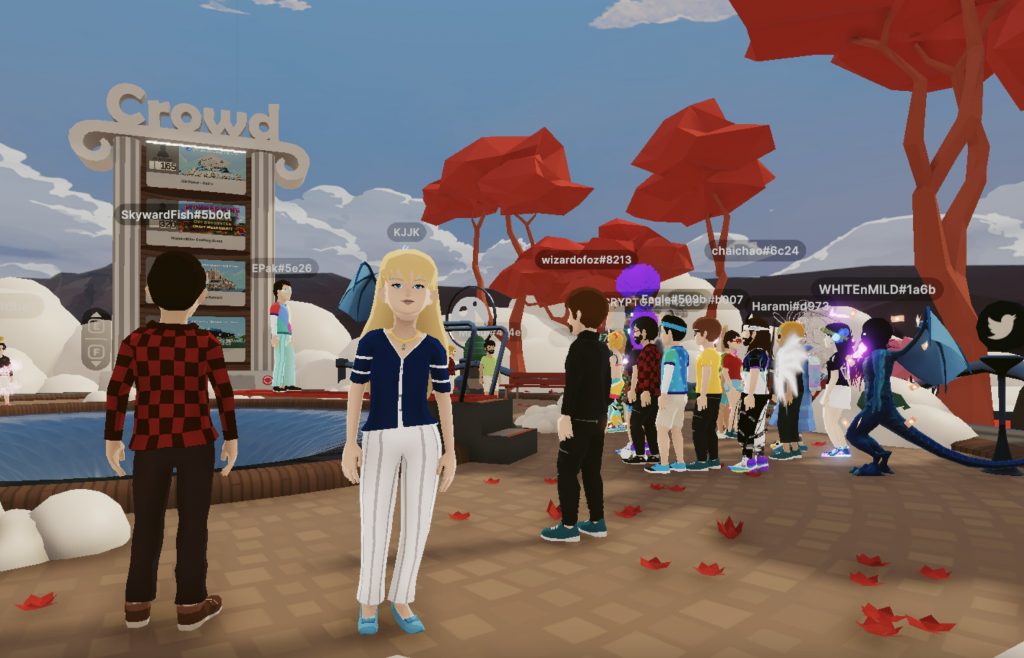
Image courtesy of Decentraland
At Fashion Reverie, we have some doubts about the inclusivity on the platform and how it will impact fashion in the Metaverse and subsequently how that will cross into the physical fashion industry. When creating an avatar on Decentraland’s website, there are few options in terms of body shape, hairstyles based on hair type, and skin tone. This feels a bit antiquated since there should be legitimate fears that steps in the physical world made toward inclusivity in the fashion industry could be reversed in the Metaverse, despite a utopian facade. In other words, the erasure of different body types and industry status in the Metaverse is regressive rather than progressive. This fear, however, is simply speculation as the Metaverse has not yet materialized fully.
This debate mostly revolves around the presentation of avatars in the Metaverse, which is not a concrete concept yet. If avatars can be made to look completely life-like as we see in video games like Death Stranding or in digital fashion presentations like Balenciaga’s “Afterworld,” then progression in the fashion industry is entirely feasible. Leitz, who is an advocate for plus-size inclusivity in fashion via her “Plus Size Experience Podcast,” says “the Metaverse brings so much potential in terms of just being accepted the way we are. Let’s also think about someone who is born in the wrong gender. This person can live on the Metaverse the gender she/he or they would like to live and is not being judged for that. And that can give you a really big confidence booster also in the real world. Of course, it can bring a negative mental health effect especially for people who already suffer from body dysmorphia. But I am convinced that it just matters who you surround yourself with, also in the virtual world.” She also points to the influence of media and celebrities in the physical world that have created this beauty standard in the physical world, implying that these influences would not be as present in the Metaverse.
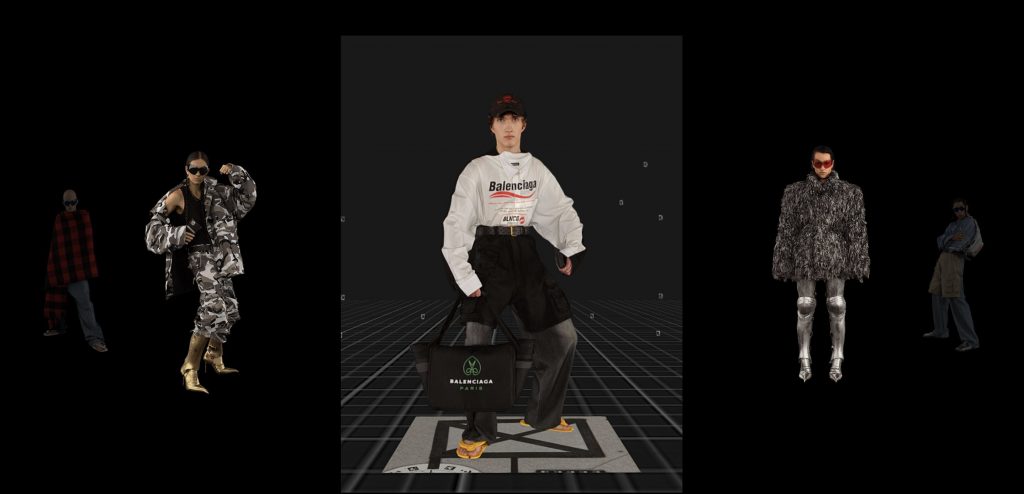
Image courtesy of Balenciaga
Luxury fashion has long been synonymous with exclusivity based on a consumer’s physical size, wealth, and social status. With luxury fashion brands being at the forefront of the Metaverse, it is difficult to understand what luxury fashion becomes when it is far less exclusive. Additionally, what does fashion marketing in the luxury sphere become when it is no longer demographic based? While these are questions that cannot readily be answered, they signal the possibility that fashion, at least in the Metaverse, will center around innovation and creativity which should be placed at the core of fashion. Leitz seems to believe that the Metaverse will just exacerbate the marketing that has started to become popular over the past few years—marketing that targets hyper specifically rather than broadly. She says, “The new luxury will come from small brands that listen to the needs and wishes of their audience. As mentioned before, the fashion will be more ‘ready-to-order’ or completely designed based on the customers’ wishes. If I want luxury fashion in the future, I will simply go online, try on the designs, and get the clothes exactly made within my measurements. I am looking forward to the day that clothes off the rack are not the fashion standard anymore.” While Fashion Reverie also hopes that standards in the physical fashion industry do not transfer to the Metaverse, there is no way of knowing until we enter the Metaverse. See you there!
—Tessa Swantek


This was very helpful, thanks!