KAVI’s KAVI’s Take on Affordable East Indian Luxe

In case you haven’t noticed there has been an explosion of designers of East Indian descent that are making incredible inroads in the US ready-to-wear market. From Prabal Gurung, who has dressed First Lady Michelle Obama, to Naeem Khan, whose garments are a mainstay on red carpets, to the fashion-forward sophistication of Sachin + Babi, East Indian designers and/or brands that reference the rich traditions of the Silk Road are becoming the order of the day.  Whether these designers infuse East Indian design aesthetics into their collections or their garments have that extra special something that is making Americans consumers stand up and take notice, it is all too obvious that this proliferation is not a passing fancy or trend.

KAVI KAVI is one emerging brand that has set its goal on capturing a US market.  Designers Dipika and Ravika Gupta since their early childhood in Canada have funneled their love of fashion and design into career that has rendered success on the North American continent as well as in India. From 2005 to 2008 they showcased their collections at the L’Oreal Fashion Week and their garments have appeared in Elle Canada, Flare Canada and Vision magazines.

With their ‘Indian Royalty’ collection, KAVI KAVI looked to their Motherland for inspiration. “Because of our East Indian heritage, especially in this collection I was influenced by my trip to Jaipur—an Indian city that is thousands of years old and is called the princess city,” details Dipika Gupta. “Many European designers—Dior, McQueen, Yves Saint Laurent, and many others—have looked to India for inspiration; however, because I am from India, the culture is a natural expression of who I am. So, instead of having just a patina of the culture referenced in my collection, I have the beauty and history of Jaipur as an integral part of the collection while still making it modern and accessible to consumers.”

Though the collection does reference East Indian beadwork and embellishment, KAVI KAVI has kept the garments fresh and fashion-forward by subtly mixing the craftsmanship of East Indian artisans with modern textile technologies. “The sequins, or the bling, in my collection is my homage to Western traditions which I believe mixes well with some of the East Indian influences. I wanted to have that synergy between the East and the West funneled through a prism of modernity,” explains Dipika.

And with price points between $300 and $500, consumers will be able to have their own slice of ‘Indian Royalty’ in their wardrobe. “Though, I call my collection Indian Royalty, I still want a young consumer to be able to afford my take on luxury and have that experience,” confides Dipika.

Modern East Indian luxury clothes at an affordable price; hmm, seems like a win-win!!

For more information on KAVI KAVI, go to kavikavi.com.

—William S. Gooch

SHIVAN & NARRESH Marry Contemporary Beachwear Looks with Functionality

For their 2012 swimwear/resort collection, the Indian design team behind swimwear brand SHIVAN & NARRESH looked to the clean lines and logical geometric planes of the Bauhaus era evidenced in the work of abstractionist Wassily Kandinsky. SHIVAN & NARRESH’s Mosaic collection draws from the flat planes, delineated forms and layers of Kandinsky infused with an expressionistic color palette.

Known for their uses of bold color, attention to detail and structural silhouettes, in their Mosaic collection SHIVAN & NARRESH express their Bauhaus-era references through color-blocked, geometric shapes, linear silhouettes and monochromatic forms. This collection’s easy, form-flattering silhouettes in a variety of colors render an effortless, sensual summer style that is appealing to a wide age-demographic and figures. And many of their resort items can be easily dressed up for a night out on the town.

The brainchild of design duo Shivan Bhatiya and Narresh Kukreja , SHIVAN & NARRESH is the first Indian brand to present at Mercedes-Benz Fashion Week Swim  2012 in Miami.  They are also the recipients of the Swarovski Most Creative Designer of Year (07), and Marie Claire’s 2012 Best Emerging Designer’s Award. They also have the distinction of being the first mainstream beachwear designers creating 100% handcrafted, stitched-free beachwear along with ready-to-wear beachwear made of 100% Italian fabrics and complementing resort wear.

The design duo also brings a rich tradition of leather corsetry and accessories mastered at New Delhi’s  National Institute of Fashion Technology, as well as design techniques learned while completing their masters at Rome and Milan’s  Instituto Europeo di Design.

Awards and training aside, the real proof is in the SHIVAN & NARRESH product, which for the past few seasons has created quite a buzz and is injecting innovation and vitality into the resort/swimwear market.

SHIVAN & NARRESH ‘s resort/swimwear can be purchased at select boutiques and stores. For more information, go to shrivannarresh.com.

—William S. Gooch

Images courtesy of Leela NY

Trend Report: A New Approach to Going Green

Trussardi fall 2012. Images courtesy of style.com

The color green is thought of as the kiss of death to any collection.  A difficult color to match with lighter skin tones, green garments have a reputation for being the last in a collection to attract the eyes of buyers and the last to sell on department store racks. However, this season, designers are choosing from a variety of green palettes, making green an easier color for consumers to wear. From hunter green to emerald green to olive green, red carpets and runways have never celebrated green more than in spring 2012 and the upcoming fall season.

Rad Hourani Fall 2012. Images courtesy of style.com.

“Green has always been one of my favorite colors to work with, in its deepest tone it is a very rich color. Emerald green, forest green, and khaki green are very natural tones,” explains Loris Diran.  “It is also a very flattering color for brunettes and redheads.  If you have the wrong coloring, green can actually make you look green. “

Though the fashion industry in the last few seasons had practically stayed green free, in previous decades green was a dominant color of choice. In 1961 Harper’s Bazaar devoted its entire May issue to the color green. And in the late 80s Anne Klein and Calvin Klein featured a variety of green garments in their collections in such varying shades as lichen and apple.  “When I worked for Chanel and Versace, we always used lots of green in our collections. In recent years the industry has shied away from green because it can be a complicated color that doesn’t match every skin tone,” details Loris Diran.

Sometimes when a major celebrity or media figure dons a designer or color, the media buzz around that garment can boost sales and place a color palette prominently in the minds of consumers; and sometimes not. Though Keira Knightly wore a killer open back, slinky green gown in the movie Atonement in 2007, green never really took off that year.

Images courtesy of Getty Images

Past seasons aside, green has definitely made an auspicious comeback, particularly on red carpets. Laura Dern at the 2012 Golden Globes looked ravishing in a sequined dark green gown by Andrew Gn. While Natasha Poly at the 2012 Cannes Film Festival seductively showed her exquisite gams in a green Gucci gown.

Loris Diran Fall/Winter 2012

And for fall 2012 the color green is also the order of the day. “Though I had already planned on using green in my fall collections I didn’t realize that the color forecasters had pinned green as a dominant color for fall/winter 2012, until I read the predictions in WWD” explains Diran.  “I felt compelled to use green in my color story for fall because we are referencing Pan’s Labyrinth and using more prints and texture for our fall collection and I felt the variations of green we used matched our prints and texture without being too complicated for our customers.” And green has permeated a wide array of collections for fall 2012 from Trussardi to Cinzia Rocca to Yigal Azrouel to Maison Kitsune.

Going green this season can mean purchasing eco-friendly fabrics or just adding more green color to your wardrobe. It would be nice to do both!!

—William S. Gooch

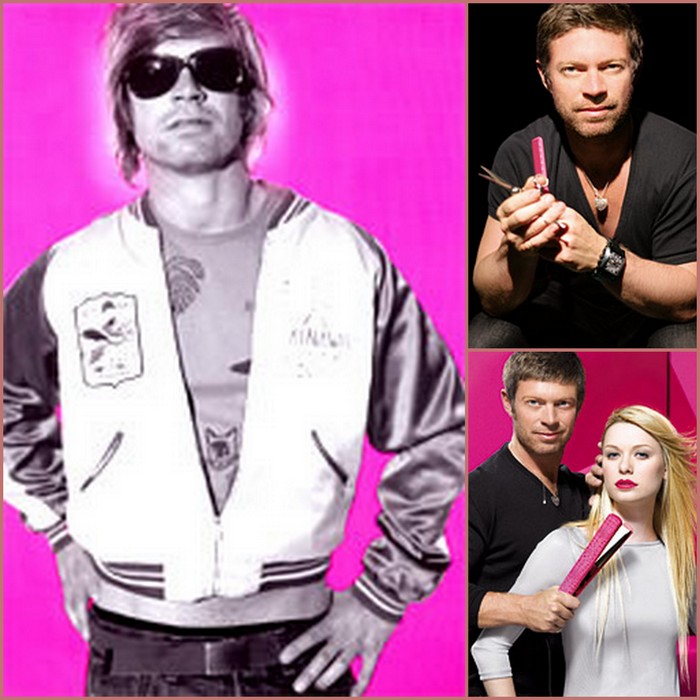
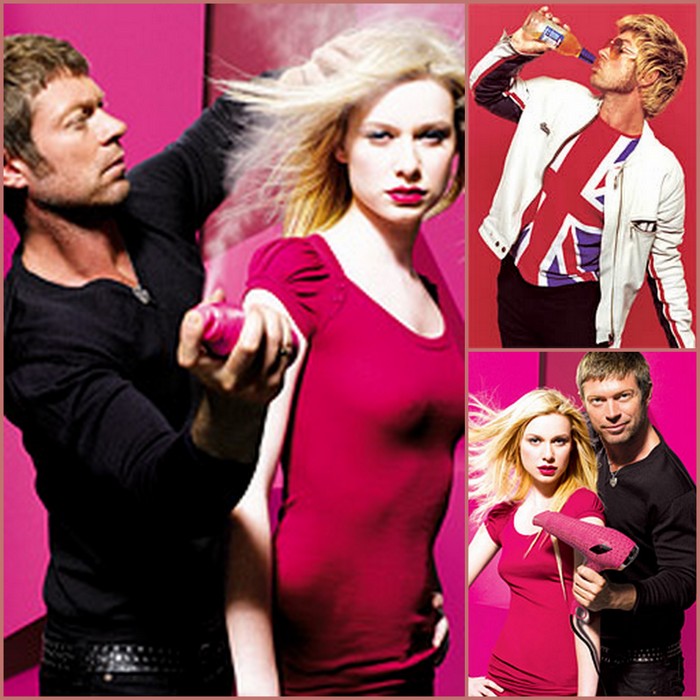
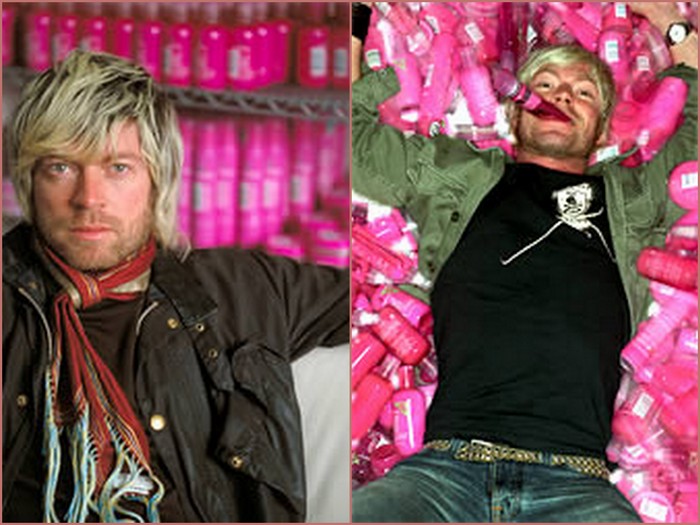
The Midas Touch of Lee Stafford

British hairstyling celebrity Lee Stafford is charming, witty and full of focus. Come to any of his demonstration and Stafford can make something as unseemly as getting a great haircut in five minutes seem like a shared, fun adventure that renders a fine result. Entertaining demonstrations aside, unlike the current crop of celebrity hairstylists that have flooded the airwaves and red carpets thanks to the plethora of reality television, Lee Stafford is truly committed to his craft and the beauty industry. And though hairstyling was an unlikely career for Stafford, once he picked up his first pair of styling shears, he knew he had found his true calling. “Being a hairstylist was never a burning desire of mine. I do remember when I was young sitting in the hair salon with my mother, my mother suggested I become a hairdresser because I hated getting my hands dirty and I loved fashion. It was kind of an offhanded remark from her, but once I pursued it, I fell in love with it,” explains Stafford.

And that love has given Stafford an international following and a hair care line that is sold in over 35 countries. But like all great artists, Stafford realized early on that in order for him to be successful at his chosen profession he had to work hard and acquire the requisite skillset. “I really fumbled my way cutting hair at first until I went to the Vidal Sassoon Academy. I didn’t have much money, nor did I have a lot of extra time because I was cutting hair full time. So, I knew I had to be frugal and spend my money and time wisely. And I wisely chose the Vidal Sassoon Academy to acquire the precision and fine tuning.  The training there had a massive impact on my career,” confides Stafford.

Though Stafford’s signature cuts are sometimes compared to the late Vidal Sassoon, Stafford has forged his own unique path. And unlike Sassoon, Stafford has used the media and new technologies to advance his career and create new opportunities. From winning the British Men’s Hairdresser Award to his regular appearances on the British morning magazine show This Morning to creating the 5-minute cut, Stafford takes the proverbial bull by the horns and has learned how to turn even the smallest opportunities into gold. “In the UK, I became the resident hairdresser on This Morning, one of the morning magazines shows. Usually if the show had five extra minutes to fill a segment they would come to me and ask me to do something. So I came up with the 5-minute haircut to fill in live time on This Morning. It started out as a bit of fun, but I discovered that cut always comes out fine because you are using the shape of the head to the cut the hair, so the hair always falls right to frame the face. I now use the 5-minute cut as an entertaining element of demonstrations I do globally,” details Stafford.

With all his success, Lee Stafford has not forgotten his humble beginnings and is striving to pass on his knowledge and love of his craft to others. “I am very passionate about proper training for our youth. Unfortunately, most of the government-sponsored beauty and hair training schools in Britain are subpar, so I’ve started my own hair academies in the UK,” confides Lee Stafford.

With his hair care products now in the US market and his chain of hair academies in the UK, Stafford has come full circle. Still, Stafford projects toward the future. ”The next hair trend is going to be matte hair. Shine and healthy-looking hair will always be in fashion. However, many young people want the opposite and don’t want to look like their parents, they are leaning toward the way people wore their hair in the 18th century, you know almost dusty.”

Dusty hair, well I don’t know. But, who would have thought that a boy from the seaside town of Essex would become an international hairstyling celebrity. Prove me wrong, Lee!!

For more information, about Lee Stafford and his products, go to leestafford.com.


—William S. Gooch


Editor’s Pick: Jia Collection; The Only Way to Travel


Are you always on the move, living out of a suitcase as you fly from one major city to next? Well, maybe you don’t live the life of an international traveler or jetsetter, but if you are thinking about going on vacation one of your concerns might be how to be chic and fabulous while packing fewer clothes.  And you want to have room in your luggage for all those great items you find while vacationing in exotic locales.

Jia Collection has come up with a great solution to this conundrum.  With an entire wardrobe that is reversible, Jia can shrink an entire week’s wardrobe into just three fashion-forward, chic looks. From great separates to easy, sophisticated knit dresses, Jia Collection is the go-to brand that combines advanced knitwear techniques with modern trends and construction. And with price points ranging from $185 to $380 there are lots of looks that can fit a variety of lifestyles and budgets.

Images courtesy of EFG PR

Who said you can’t travel light!!

Jia Collection is available online at www.jiacollection.com

—Earlean Suitte-Henderson

Scottish Designers Part 2: Eribé Knitwear Uses Color and Technology to Make Something Old New Again


How many times have you watched a Merchant Ivory film and marveled at the glorious Victorian tweeds and wools worn by the English aristocracy, as well as other characters in those films.  These films have helped us Yanks fall in love with comfy wool sweaters and scarves with Nordic designs and fisherman patterns.

Well, that British tradition of great wools and knitwear has carried over into the 21st Century.  For over two decades, Scottish knitwear brand Eribé has advanced the art of Scottish knitwear by infusing new technologies and a wide palette of colors and hues not normally seen in traditional Scottish patterns and shapes. “We have been inspired by the British heritage of patterns that have been used in knitwear and sweaters in the British Isles for centuries. We’ve looked at all these traditional patterns and symbolic images that are indigenous to our culture and found a way to modernize these looks and stay on trend,” says founder and creative director Rosemary Eribé. “We do carry over traditional herringbone and fisherman patterns, but we have added explosions of color that you wouldn’t normally see with these patterns. By incorporating these new colors, we been able to add a youthful appeal to these traditional looks that hadn’t existed before.”

Rosemary Eribé’s love for Scotland and her campaign for the preservation of authentic Scottish products have caused her to make significant inroads in fashion communities in Japan and Germany that love traditional Scottish knitwear. “Germany and Japan are some of our biggest buyers. They love the feel of the wool and they love all the color that we have added. The Japanese in particular love our traditional designs and patterns and the luxuriousness of our cashmere,” details Rosemary.

While Eribé is a beloved brand in Great Britain, Japan and Germany, the brand has had to come up with some new strategies for the American market. “We have had to work closely with our markets because each market has a specific taste and point of view. Japan is more traditional, while the American market is much more commercial, so we’ve had to use more color and not as many patterns weaved together,” explains Rosemary.

Another one of those strategies is incorporating new technologies into their textile design. “We have carefully examined the use of technology and how necessary it is to fuse fashion with how people work and coexist.  That said; we have come up with gloves that you can wear while you are working on your I-Pad or laptop. I-Pads and laptops are sensitive to human touch and the resistance between gloves and these devices prevents the user from working properly. Through our research we have weaved tiny fragments of metal in the tips of the gloves, so that you can work on your IPad or laptop while you have your gloves on.”

Eribé has also been involved in sustaining local communities in and around Scotland by employing local herdsmen to supply the raw material for its products. “We have eliminated a lot of the middle men and started to buy directly from the Scottish farmers and sheepherders, so that the locals get more of the profit. We are trying to get more involved in supporting economies and spreading the wealth, so to speak,” explains Rosemary.

Images courtesy of Eribe

Marketing strategies and advancements in technologies aside, the real proof of the brand is in the quality and market viability of the product. In its fall/winter 2012 capsule collection, Eribe has married style, authenticity and functionality as seen through the prism of elegant silhouettes and lavish textures.

Proof confirmed!!

—William Gooch


Trend Alert: The Roaring 20s Roars Back into Fashion


The fashion industry adores fashion revivals. And we have seen styles from decades past dynamically resurface; continue to be at the forefront for several seasons, while other style references disappear as quickly as they re-emerge. The color blocking trend that was such a prevalent component of the mod 60s—remember Yves Saint Laurent’s Mondrian collection—has had a lasting influence for the past few seasons, while the 1960s bohemian, hippy revival was not as successful.

For spring/summer 2012 designers looked to the Gatsby/flapper girl style of the 1920s. Though this trend had a mild resurgence in 2008, the current affection with the Roaring 20s may have a deeper saturation in the industry. Unlike the 2008 homage of drop- waisted frocks and fringed Charleston dresses, which coincidentally only lasted one season, the present incarnation merely borrows certain elements from that era and mixes those elements with early 1930s Hollywood Glamour influences, sequins, tribal and floral prints, and lace embellishments. Marry these influences with a sequined headband, a cloche hat and sorbet colors and you will have a look that conjures up images of a festive, Great Gatsby Long Island‒soiree without feeling weighted down by the past.

Venexiana fall/winter 2012 images courtesy of style.com

This trend also carries over to fall/winter 2012 collections evidenced in the rich, taffeta and sequined crush velvets of Venexiana’s glamorous fall/winter collection, and Tadashi Shoji’s nod to the Golden Age of Shanghai in his fall/winter 2012 outing. Both Shoji and Katie Stern of Venexiana for fall/winter 2012 expertly combine the 1920s aesthetic with the diaphanous fabric trend of lace, silk chiffon, organza, and tulle, while keeping their collections fresh and fashion forward.

Image courtesy of O Magazine

Perhaps, this continued fascination with all things 1920s is due to the soon-to-be-released remake of “The Great Gatsby,” or maybe fashion designers just like time travel. Regardless of the motivation, influences from the Roaring Twenties are making a roaring comeback, and its le jazz hot!! Daisy Buchanan would be oh so happy!!

—William Gooch


Agabhumi’s Eco-Conscious Point of View

Fashion designers and brands are always drawing inspiration from different cultures and exotic locales. Riccardo Tisci of Givenchy drew inspiration from Tahiti for its spring/summer 2012 collection; while Monique L’huillier referenced molten lava and volcanic rock for her current fall/winter outing. Still, rarely does the referencing go beyond the runway and retail stores. Nor does it necessarily have to. Yet, when a brand does seek to give something back to cultures that have so generously feed their creative mien, their generosity deserves special attention. Agabhumi is one such brand.

Since 2002, Agabhumi, which means ancient earth, has married the craftsmanship of local Balinese artisans with current trends and color schemes. “Bali is such an industrious culture and there is a unique spirituality that is reflected through the [artisan’s] craftsmanship. What we do at Agabhumi is take color stories and seasonal trends and reflect Balinese culture through these prisms in a fresh and innovative ways,” detail Agabhumi co-creator Regina Kirschbaum. From handbags and sandals that employ the ‘ata’ or vine-weaving technique to the detailed, silver jewelry that incorporates the principles of tri chita karana—translated means replacing in the earth what you have taken—Agabhumi is solidly engaged in the synergy between its local artisans and its consumer base. “Our brand is an interactive experience that creates a synergy between the consumer and the Balinese artisans that make our product … we bring those two entities together to make a whole, which facilitates our ability to create head-to-toe color stories for our consumers,” explains Kirschbaum.

As a brand that deals mainly in accessories, Agabhumi has tapped into the resurging boom of accessories on the American market. “Agabhumi has tapped into this boom with moderately priced items that are on trend. We offer our customers more than the ‘look for less’ sales pitch, which you get from a lot of brands; we are giving great looks at incredible value,” confides Kirschbaum.  “I spend a lot of time reading trend forecasts and looking at the trends for the new seasons. From that knowledge base, I mix and match accessories from the 45-plus Balinese vendors that we employ that complement the trend and color schemes … We also try to combine trends with what works for our customer’s lifestyle.”

Agabhumi has uniquely funneled its eco-friendly, hands-on business model into economically buttressing the local economy of vendors in Bali, as well as being involved in various charities stateside that range from anti-bullying campaigns to teen crisis centers. This holistic approach to creativity, business and human rights has manifested a fashion-forward, quality product that satisfies a wide variety of consumers.

Images courtesy of Agabhumi

Agabhumi is proving that commerce, creativity and respect for the environment and local economies can be congenial bedfellows.

Agabhumi has stores in New Haven and Stamford, Connecticut and Santa Monica, California. For more information, go to agabhumi.com.

—William S. Gooch


Step into the Sunshine with Colorful Spring Jewelry

As designers have infused their spring/summer 2012 collections with floral prints, bold splashes of color and animal prints in a kaleidoscope of vibrant hues, so should your jewelry this season reflect the current trend of vivid, rainbow colors that make fashion temperatures run from seasonally warm to steaming hot. Fashion Reverie has selected has great items from emerging designers that will keep you in style and make everyone stand up and notice.

Image courtesy of MeeheeNY

For spring/summer Meehee has selected high-quality cultured fresh water pearls, precious and semi-precious stones along with 14k gold, sterling silver and 14k gold filled metals in rich deep blue chalcedony and coral colorations. Meehee’s Lila 10k gold flower cocktail ring will spark conversation and gives that added pop to any evening ensemble.

Meehee’s deep red coral up-and-down floral necklace is on trend with all the red garments we have seen on runways in current seasons  and is a great jewelry that can help transition a garment from the office to a night out on the town. The red coral floral necklace retails for $145.00 and the Lilia 10k cocktail ring retails for $299.

Images courtesy of Agabhumi

If you have a penchant for great jewelry items from exotic locales, then Agabhumi has some fantastic colorful jewelry items that highlight the mystery and enchantment of Bali. Agabhumi, which means ancient firmament, is a reflection of the strength and creativity of the Balinese artisans who have found ways to combine current fashion trends with their indigenous craftsmanship and reverence for Mother Earth. This confluence of perspectives has produced a very thoughtful and provocative spring/summer collection that would be a welcome addition any woman’s wardrobe.

Agabhumi’s spring/summer earrings are made of sterling silver and abalone stone retail from $42 to $58. Agabhumi’s glass bead and wood necklaces retail for $18 and range in colors from turquoise to green to rust. Agabhumi’s products generally range from $6 to $375. With such a range in price there is something to fits everyone’s budget.

Images courtesy of Agabhumi

For more information, go to meeheeny.com and agabhumi.com.

—William S. Gooch

Uncovering the Modern Bra: Fashion Reverie’s Discussion with Bra Guru and Stylist Jene Lupoli-Luciani

Fashion Reverie: Now Jene, are you like the modern Herminie Cadolle, fitter of bras to queens, princesses, dancers, and actresses?  Please tell us about your background and how you became the Bra Guru.

Jene Lupoli-Luciani: I was a TV producer for outlets like NBC News for several years right out of college.  After about five years working in news, I forayed into fashion broadcasting and journalism, and never looked back!!  My parents owned a designer clothing boutique called The Jean Station while I was growing up and my mom used to make her own clothes and comment on trends in the local newspaper.  You could say that fashion was in my “jeans.”  In 2005, I began producing content for fashion designers and writing a fashion column in a local luxury publication here in Westchester. I also began appearing on-air as a fashion commentator and expert on local news outlets, which eventually led to national TV.

In 2006, I wrote an article on bras for the magazine for which I was the fashion editor at the time, and realized there was such little info out there, and so many women who wanted help.  OPRAH had just done her first “bra intervention” show so everyone was talking about it.  I decided I should tackle the task of writing a book on bras because there was such a void in the marketplace, and began the proposal process and really refining the concept with my agents Michael and Kristina at Ebeling and Associates.   Three years later, it was published by BenBella Books.  Now I’m one of the country’s top three bra experts in the media.  I love helping women and truly have my dream job!  I have truly researched the topic and lived and breathed it for the past six years.

Besides the aforementioned article, I had a personal reason to want to help other women with bras and body image issues related to their breasts. I suffered from Tubular Breast Deformity and had two reconstruction surgeries in my twenties.  Before my surgeries made my breasts look “normal,” I used to use a Victoria Secret Miracle Bra and take out the padding on one side and leave it in the other, and at least my breasts appeared even and symmetrical under my clothing.  It had a major impact on my life and I wanted to share my story to help other women.  I tell the whole story in the introduction to The Bra Book.

 FR: Are most women like myself, in a love/hate relationship with their bras and undergarments?

Jene Lupoli-Luciani: I would definitely say this is true.  Foundations can have a huge effect on how you look and feel in your clothes, and on a woman’s self-esteem. Some women equate breast sagging to failure.   So, when we’re looking and feeling good, we’re loving it, and vice-versa.  I do think all women hate the process of shopping for bras. That’s something I’m trying to change.  The mentality that it has to be a negative experience.  If you read The Bra Book and get educated before you hit the stores, you’ll feel a lot more confident.

FR: What is the most common source of problem for women when it comes to finding the right bra size?

Jene Lupoli-Luciani: Women get stuck in a size rut.  They either think, they got sized 10 years ago so will remain that size forever, OR they think they will be the same size in every brand under the sun.  This is simply not true.  All fit models are different across the spectrum and not every style is made for every woman.  You must just use size as a guideline and try everything on!!!

 FR: Is there a “right” bra, or is it more like trying to find the “right” man—an illusion of sorts?

Jene Lupoli-Luciani:  Funny that you say that because I use this analogy in the very beginning of The Bra Book.  Some women are always on that quest to find the right bra, like they are on a quest to find the right man.  Also, your perfect bra one year might be the worst bra for you the next.  Our bodies as women are changing so frequently, we need to keep our bra wardrobes up to date.

 FR: Are there any recent advances in technology or materials that make you excited?

Jene Lupoli-Luciani: There are always advancements being made.  But, what I like to see is manufacturers, like Curvy Kate for example, a British line now just launching in the US, catering to the way women want to fit into their bras RIGHT NOW.  What I mean is that now that the industry is finally realizing the old ‘rule’ of adding plus 4-5” to a woman’s band measurement no longer works.  Women are measuring more true to size, which typically means a smaller band with a larger cup.  So you have a lot of 32G’s walking around.  Unfortunately though, most brands are still catering to the ‘average’ sizes of 34A-38D.  This makes sense for them because it means fewer bras that they have to manufacture.  However, the number of women who are in these ‘odd’ size combo’s are growing and they need options.

FR: What are some of your favorite names for everyday bras?

Jene Lupoli-Luciani: There are so many great brands and styles out there at all price points, from Bali, Barely There and Playtex to higher end brands. I like sites like BareNecessities.com where you can find most of them under one roof, and decide for yourself.

FR: In looking for a good sports bra, what factors should a woman consider?

Jene Lupoli-Luciani: First off, what ‘sport’ you will be using it for is a major consideration. Whether it’s high impact or low impact, and the range of movement you need it for. Also, your bust size plays a factor.  Generally anyone larger than a D cup should have an encapsulation style, which has two separate cups, like a regular bra.  Some of the bra brands make great options or you can look at sporting goods like Under Armour, who definitely understand the physics involved.  Our breasts bounce up and down while we’re exercising and that constant movement can eventually lead to sagging or in the short term, pain.  We want to avoid that of course.  I give a whole guide to sports bras and what to look for in The Bra Book.  This is the most common question I get asked, next to the other dreaded “S”—strapless bras!

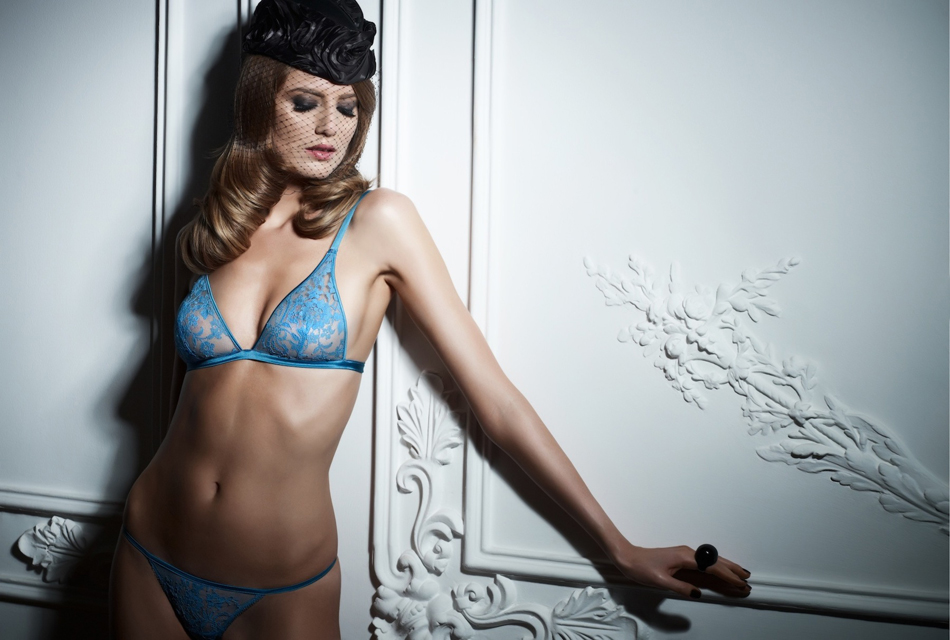
I.D. Sarrieri’s Mysteries Collection – Spring Summer 2012. Image courtesy of Iemybra.com

FR: How about for that special occasion, how should a woman handle a plunging neckline and/or a backless dress?

Jene Lupoli-Luciani: Again, there are tons of style bras to go underneath even the craziest necklace. You can try a backless strapless or an extreme plunge bra!!  Or, another trick is to buy those foam pads at the fabric store and have a seamstress sew them right into a top or dress. Add some double stick tape for extra security.

FR: Where should women go if they need more help in finding the right bras?

Jene Lupoli-Luciani: The Bra Book of course! Or, my website for links to various publications and information.


You can learn more about Jene and bras on her website www.JeneLuciani.com and follow her onTWITTER: @JeneLuciani.

—Jeanine Jeo-Kim

Copyright © 2012-2025 | Fashion Reverie Publications, LLC - All Rights Reserved