The Brits Bring Sexy Back in Hysteria

When you think about Victorian period films, rarely does the mind consider film that is outside of the realm of Merchant Ivory dramas or films that distill prudish Victorian values. With the exception of Oscar Wilde’s The Importance of Being Earnest and a few others, comedic devices such as double entendre, sexual innuendo, and god forbid, slapstick are not commonly used tools that advance the plot. Tanya Wexler’s romantic comedy Hysteria employs all those devices, and then some.

Set in 1880, Mortimer Granville (Hugh Dancy) in an attempt to forward his medical career leaves his position at one of London’s state clinics for a position in private practice with the esteemed Dr.  Robert Dalrymble (Jonathan Pryce), London’s leading specialist in women’s medicine. Dr. Dalrymble’s claim to fame is treating women who suffer from hysteria, a disease state characterized by irritability, melancholy, frigidity, and nymphomania. Victorian medical science believed that hysteria results from a disorder of the uterus, of which Dalrymble’s practice specializes in relieving the symptoms of hysteria by massaging the womb. Into this practice, Mortimer Granville brings his medical acumen and somewhat compassionate spirit.

Add to the plot Dalrymble’s polar opposite daughters, Emily (Felicity Jones), the paragon of Victorian virtue and intelligence and black sheep Charlotte (Maggie Gyllenhaal), who has chosen to waste her aristocratic privilege and position championing the rights of women and the disenfranchised, and Granville’s well-heeled, dilettante, inventor friend John Smythe (Rupert Everett) and Wexler has concocted a tale that delves not only into the Victorian perceptions about love, sex, and familial duty, but also the political issues of class, gender rights, sexual freedom, and government responsibility. Ideals we still struggle with day, particularly in this election year.

Wexler ingeniously mixes comedy, romance and Victorian morays in this story that is ultimately about the invention of the first vibrator. As Charlotte Dalrymble, Maggie Gyllenhaal brings charm and a feisty determination that is a welcome change from some of the pathological, outsider roles she has portrayed in the past. Though her British accent is a bit off, Gyllenhaal does capture the essence of a privileged English woman who is caught between the worlds of Victorian duty and rectitude and her own passion for human rights. And though Gyllenhaal has never been seen as a great beauty, in this role the combination of Victorian elegance, passion, Gyllenhaal’s convincing performance causes her unique beauty to shine through in a way, perhaps, no seen before.

As Dr. Mortimer Granville, Hugh Dancy struggles with the emerging world of modern medicine and the stuffy, fading world of Victorian sensibility. This juxtaposition is also manifested in his sensible romance with Emily, while secretly attracted to the wild, impulsive, evolved Charlotte. Dancy navigates these polar opposites brilliantly without losing his character’s charm or sense of duty.

Images courtesy of Sony Pictures Classic

Based on the true story of the first battery-operated vibrator, at its core, Hysteria, though titillating at times, is never vulgar. And Wexler has found a way to insert witty charm, sexual entendre, and humor into a subject matter that could be strained and pedestrian.

Who knew the story of the first British vibrator could be so stimulating.  Maybe now we Yanks will look at sex and the Brits in a different light!!

—William S. Gooch

Cicily Daniels’ Hereafter Is Present Time

Though she may not be a household name yet, Cicily Daniels is making significant strides on both stage and screen. From appearing in Broadway’s The Little Mermaid as Ursula the sea witch to co-starring in the original episodes of Ugly Betty, Cicily Daniels always stays prepped for the next career opportunity. This Broadway veteran is very clear about what it takes to make it in the big time.

Though her Yale Drama training has served her well, early on Cicily Daniels understood that hard work and an ounce of good luck were important components of an actor’s career. And the hard work has reaped rewards. Season after season Cicily has appeared on Broadway and in the touring companies of some of the most successful stage musicals.

Fashion Reverie caught up with Cicily after the premiere of the Off-Broadway smash Hereafter Musical. Cicily brought her cheery disposition and seasoned wisdom as she talked about her love of the stage, her love of fashion and her zest for life.

 Fashion Reverie: How did you come to be cast in the Hereafter Musical?

Cicily Daniels: It was very coincidental, actually. My boyfriend is friends with the choreographer/director of the show and through him I learned that there was to be a casting for the Hereafter Angel Choir. Unfortunately, I was going to be out of town during the casting dates and I was able to arrange my schedule and they producers gave me a special audition. The producers liked me, and my agent arranged my contract and I was cast in the show; simple, but not so simple.

FR: You are a part the Hereafter Angel Choir which consists of three female vocalists. Could you talk about that?

Cicily Daniels: We serve as a Greek chorus throughout the show. So, as angels we are able to see everything that occurring in the show. We are able to interact with the living and the dead, but no one can see us. We can also imbue the living and the dead with our help.

FR: The Hereafter Angel Choir reminds of the doo-wop girls in Little Shop of Horrors. Did the writers of the show draw from that reference?

Cicily Daniels: The producers wanted to have a girl group motif as the angels because together we harmonize really well, and we able to solo singing, as well as backup singing. And we enhance all the songs that are in the show.

FR: The Hereafter Angel Choir was also a nice addition to the gospel-inspired number in the show.

Cicily Daniels: The song “Someday” was written by Vinnie Favale, and the deceased B-movie actress Anita (Frankie Keane) is trying to tell the living that there is hope to connect with loved ones in the hereafter. Our voices really connected with Frankie and the number is very moving.

FR: You have had such a varied career from being in four Broadway shows to being a co-star in the initial episodes of Ugly Betty. Could you talk about your Ugly Betty experience?

Cicily Daniels: It was a wonderful experience and my character—the main character’s lunchtime friend at the fashion magazine—initially was a much bigger part and was a carryover from the original Ugly Betty Mexican novella. The character got dropped from the show due to budget constraints and a reworking of the series. Although Ugly Betty became a huge hit, at first it was not a series that was major priority for the network and did not have a big budget.

FR: In that the premise for Ugly Betty is the goings on at a glossy fashion magazine, when you found out that you had been cast, did you do any background research on fashion magazines or the fashion industry?

Cicily Daniels:  I wish I could say I used my Method Acting skills to do that particular type of research, but I didn’t. Coincidentally, the timing of Ugly Betty’s premiere was around the same time as the Devil Wears Prada, which was an interesting time when people were getting a more intimate glimpse of what goes on behind the scenes at fashion magazines. At the time I had just viewed the Yves Saint Laurent documentary, so culturally I was attuned to what was going in the fashion world. Plus, I live in NYC and the fashion community is all around me.

FR: Who are some of your favorite designers?

Cicily Daniels: I am not a big fashionista, but I like Cynthia Rowley a lot which appeals to my feminine sense of fashion. I love Elie Tahari’s jeans. I absolutely adore Diane Von Furstenberg and I usually wear her wrap dresses to castings or auditions. And projecting into the future when I get married I have to wear a Monique L’huillier wedding gown.

FR: What is your own personal style?

Cicily Daniels: Because my family is from the South, that kind of southern sensibility of a feminine, lady-like aesthetic permeates by sense of style. I like clothes that a form flattering. I also like old Hollywood glamour.

Cicily Daniels as Motormouth Maybelle in “Hairspray”

FR: Has your career turned out to be what you thought it would be?

Cicily Daniels: You can never predict what kind of acting career you are going to have. Until you immerse yourself in this industry you really don’t have any idea the amount of hard work it takes or the risks involved. When I moved to NYC after Yale Drama School I immediately sized up my competition, so to speak, and I realized I had a lot of work to do. But I must say the hard work has propelled me forward.

There are moments that are dreamlike, like my debut in Rent on Broadway. My Dad had just passed away and I felt that he was with me on stage that night. Also, I recently did my first red-carpet event, and I was all dolled up with major media and paparazzi taking my photo. That was a lot of fun; icing on the cake!!

—William S. Gooch


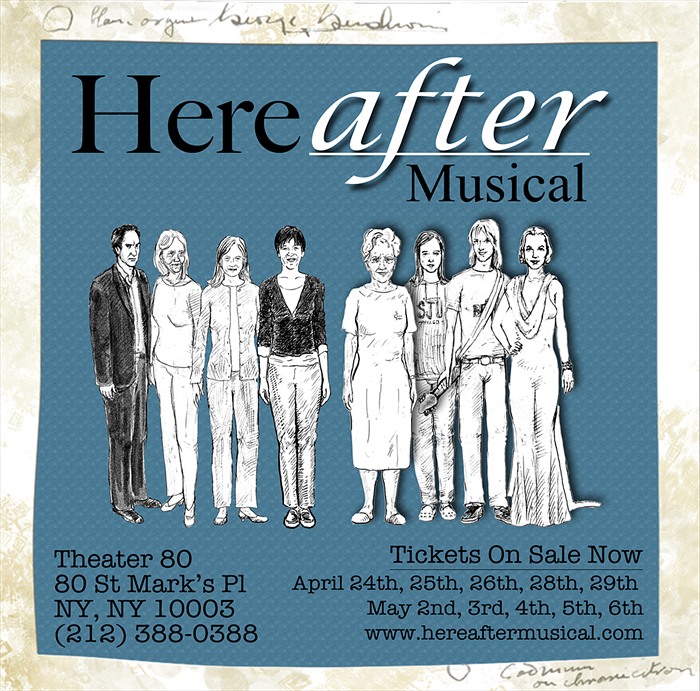
Hereafter Musical: Death by Any Other Name

Is any person truly ready for death? And the bigger question is how prepared are loved ones for a family member’s final demise? In Hereafter Musical Vinnie Favale and Frankie Keane examine three women who’ve lost loved ones unexpectedly and/or way too early. Their sorrow continues over a period of time until they decide to visit a medium that can get them resolve some issues as he communicates with the deceased.

Favale and Keane had done a reasonably good job with the dialogue and music in Hereafter Musical. Though many of the musical motifs and arrangements are similar, in this particular musical, the sameness works because of the fine libretto and orchestration. And the cherry on the top musically is the “Hereafter Choir,” composed of Cicily Daniels, Tanesha Gary, and Emily Jenda. Reminiscent of the girl group trio in Little Shop of Horrors, the “Hereafter Choir,” as a modern-day Greek chorus, gives this musical a bit more nuance and flourish.

Among the spirits, the standout is Deborah Tranelli. As a Jewish mensch, Tranelli understands when to punctuate with humor and when to commiserate with the bereaved and the other spirits. Though her character is reaped in Jewish stereotypes, Tranelli finds a way to elevate the material above just another archetypal depiction of the Jewish mother.

As the B-movie actress spirit Anita, Frankie Keane is given the opportunity to show off the pyrotechnical feats of her fine gospel mezzo voice. Unfortunately, the script does not convincingly clarify her role as the middle woman—so to speak—between the spirits and the medium, played by Paul Blankenship.

With better sets and bit more finetuneing, Hereafter Musical —think of Nunsense, the Fantastiks, and Little Shop of Horrors—could become one of those Off-Broadway standards that delights audiences from all walks of life for years to come. After all it’s not so easy to find humor and write toe-tapping tunes about death and the hereafter. Well, the Hereafter Musical has done just that!!

Hereafter Musical runs  through May 6 at Theater 80 in St Mark Place, New York City. For more information, visit: www.hereaftermusical.com.

—William S. Gooch

Dwight Eubanks: Atlanta’s Black Dandy Speaks Out

Life aint been no crystal stair for Real Housewives of Atlanta’s Dwight Eubanks. But like all true champions, Eubanks always bounces back with grace, charm and a reservoir of internal strength and wisdom. Unlike other breakout celebs from the Bravo megahit, who’ve acquired their own spinoffs—Kim Zolciak and Candi Burruss both have new reality shows, while perennial favorite NeNe Leakes’ pilot The New Normal has been picked up for the fall lineup—Eubanks has yet to acquire entertainment gold. Still, Dwight is holding steady with several new projects in the works, as well his popular hair salons that cater to Atlanta’s elite.

New ventures and businesses aside, Dwight Eubanks is not shy about revealing his truth. And though some might say his sass and spice is peppered with too much sardonic wit, in reality Eubanks verbosities are always tempered with charm and southern grace. Dwight Eubanks, if nothing else, is a southern gentleman who loves fashion and style and his keen intelligence comes from his many years of working in the beauty industry.

Fashion Reverie had the opportunity to speak with Dwight Eubanks while he was in NYC working on several projects.

Fashion Reverie: Do you have your own lingerie line?

Dwight Eubanks: Yes, I do. I’ve helped so many people develop their own fashion line that I decided to develop a men’s lingerie line. (Remember, I was involved with S**t by Sheree. Well, that’s what I call it.) Women have everything when it comes to lingerie and usually men only have a small segment of the store for undergarments and lounge items. I’ve traveled to Europe many times and I have been impressed with the quality of men’s undergarments there, as well as the variety. I launched the Two Box capsule collection about three years ago with just a few items. This was a luxury, high end undergarment brand, and unfortunately do to some manufacturing issues and the downturn in the economy, the brand do not do as well as we had hoped. We are now in the process of revitalizing the brand, and we hope to relaunch Two Box in the fall.

FR: How would you describe your own personal style?

Dwight Eubanks: I dress very conservatively, though others have described my style as flamboyant. Basically, style is very individual and I wear what I like. My style is dictated by the day and my mood.

FR: Who are some of your favorite designers?

Dwight Eubanks: I love Alexander McQueen, Christian Lacroix, Valentino, Givenchy, Ralph Lauren, Jean-Paul Gaultier. I love Thierry Mugler and Armani for suits. I tend to favor European designers because they think a little bit out of the box. But, I also like emerging designers like Barbara Bates.

FR: Could you talk about fashion in Atlanta beyond what we see on reality television?

Dwight Eubanks: Well, I don’t watch a lot of reality television, but I am aware that showing women in very tight dresses with too much jewelry increases ratings.  We have very fashionable people in Atlanta who have a great sense of style and are sophisticated, but that way of dressing is not ratings friendly.

Atlanta would like to establish itself as a major fashion hub, but I am not sure that will ever happen because Atlanta does not have the necessary ancillary businesses for it to become a fashion capital.  We have some great stores and a fashion week, but Atlanta does not yet have enough of a fashion infrastructure to play with the big boys.

FR: How are you maintaining your salons in spite of this continued economic malaise?

Dwight Eubanks:  We maintain a level of professionalism and excellence in spite of hard economic times. We do not use sub-par products, nor do we allow ‘get rich schemes’ to become a part of our business model. Where others in Atlanta do very inexpensive weaves and extensions using non-human hair, my salons continue to use quality product. We do cater to a certain clientele, and they expect and demand quality.

FR: How did you become a recurring character on The Real Housewives of Atlanta?

Dwight Eubanks: Carla Mouse, who was a recurring character on the first season on The Real Housewives of AtlantaI, was friends with one of the producers of the show and one episode of the first season showed Carla getting her hair styled in my salon. And the rest is history.

FR: What is your current affiliation with The Real Housewives of Atlanta?

Dwight Eubanks: I was recently on Andy Cohen Live while they were airing the reunion. I am now more involved behind the scenes and my friendship with Phaedra Banks continues. She is my attorney and I have known her for many years.

FR: And your relationship with NeNe Leakes.

Dwight Eubanks: I am cordial with NeNe. We have made up. We don’t agree on many things but we have moved on and our relationship is solid.

FR: Has being on the show advanced your career?

Dwight Eubanks: Being on the show has not advanced my career in the beauty industry. I have been a part of the beauty industry for over 30 years and have done make-up and hair for films and television shows filmed in Atlanta. But, Atlanta Housewives has given me celebrity. I can’t even walk down the street without someone wanting to chat or get my autograph. I have had great fun being on the show.

FR: What’s next for you?

Dwight Eubanks: My calendar is packed with public appearances and I continue to support charities and causes I believe in. I am also pushing forward with my men’s lingerie line. I believe I am in a state of grace, and I am loving my life and spreading the love.

—William S. Gooch


Gina Garan’s Magnificent Obsession

If you are going to have an obsession, have an obsession that reaps dividends. Gina Garan has turned her magnificent obsession with dolls into a lucrative labor of love that is manifesting rewards beyond her wildest dreams. And none of it was planned.

“I’ve collected dolls from childhood on. I would spend all my money on dolls; it was a way for me to live out my fantasies, explains Garan.  When Gina Garan decided to write a book about dolls over a decade ago, she could not anticipate that one book would turn her life upside down and open up doors in fashion that she never thought she would walk through.  “I pitched a doll book idea about the Blythe doll to four publishers and they all offered me a book deal. I really thought I would write one book that only my family would buy  … Within a short amount of time, I had an agent and Japan Vogue got word of what I was doing and asked me to do a photo shoot a month of my dolls in clothes by a different designer and it just kind of mushroomed from there,” details Garan.  And the designers that have dressed Blythe is a who’s who of the fashion world—Karl Lagerfeld, Dolce Gabbano, Tommy Hilfiger, and Donna Karan to Miuccia Prada, Vivienne Westwood, and Armani, just to name a few.

Since that first Blythe book, Garan has penned 11 photo table top books with Blythe in a variety of clothes and hairstyles.  Interestingly enough, the original Blythe doll had a short shelf life. Designed in 1972 by Kenner, the Blythe doll did not catch on with kids at the time. With its rather large head, small neck and receded eyes—think of a fashionable, feminine ET—the Blythe doll made children uncomfortable. Still, a small subset of doll-loving adults embraced Blythe, and over the next decades Blythe became a sought after collector’s item. Gina Garan was one of those doll enthusiasts—she owns over 3,000 dolls—that was attracted to Blythe’s somewhat macabre figure and unusual silhouette. “Because I have such a history with dolls, I was told by several people that the Blythe doll resembled me in some weird way. So when I bought my first Blythe doll, I fell in love with her and I started buying lots of them on Ebay or any place I could find them, in fact, now own over a hundred of them” confesses Garan. 

The success of the Blythe books has led Garan to her latest project with a similar doll from the 70s. Like Blythe, Susie Says has large, expressive eyes and does not meet the standard beauty test that most associate with dolls. Still, in true form, Garan was attracted to Susie Says’ unusual beauty. And in her first collaborative effort with writer Justin Vivian Bond, Garan has co-authored Susie Says, recently released by Powerhouse Books. “With this table top doll book I decided to give Susie Says a voice. None of my other doll books had any text, so in that respect this new book is a departure,” explains Garan.  Garan has even purchased the manufacturing rights to Susie Says, of which a new modernized version of the doll is expected to go into production this fall.

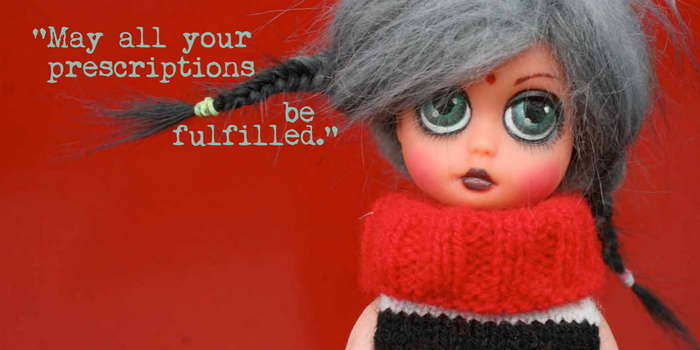
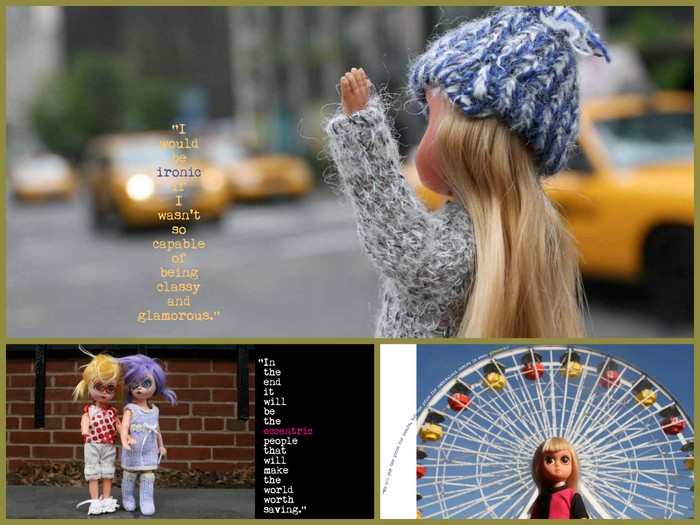
Images from Gina Garan’s recent “Susie Says” book

Having turned her labor of love into a lucrative obsession, Garan is focused on her insatiable quest to share her love of dolls with the world.  “I didn’t start out having a point of view or an agenda with my doll books; it was just a labor of love.  Over time, I have developed a significant following … Dolls actually have a calming effect for me and I would like other people who love dolls to experience through my books that love and sense of peace.”

Hmm, a magnificent obsession that promotes peace and tranquility. Well, it just might work!!

—William S. Gooch

Images courtesy of Gina Garan


Badoo’s Fashion-Forward Approach to Social Networking

Badoo, the largest social networking groups for meeting new people, likes to do everything in a big, bold way. On March 22, Badoo with celebrity host Nick Cannon and four of America’s hottest fashion photographers launched the largest photo project ever, capturing the portraits over a 1000 New Yorkers in only three days.

This project is a part of new marketing campaign with 24 of the best photos appearing in billboards and taxicabs all over NYC from April through May. The 24 photos will be picked by the amount of “I Likes” voted on via the Badoo Project’s website. Voting ends on March 31.

Images courtesy of badoo.com

“I’m all about The Badoo Project’s mission to update New Yorkers’ profiles, because the truth is, everyone needs a great online profile picture! My advice to New Yorkers is to take a photo that is true to you! At The Badoo Project, to look your best, simply be yourself in all your unique glory. Let the professionals do the rest,” explains Nick Cannon.

Well put!!

For more information, go to http://theproject.badoo.com/gallery.phtml


Staff

Eleanor Lambert: A Charmed Life, Part 2

Part Two

FR: You touched on this a little bit in Part 1, but could you elaborate more about how Eleanor Lambert started Press Week?

John Tiffany: Well, it is a little complicated how Press Week started.  Everyone knew that WWII was just around the corner, so the federal, state and local government, the International Ladies Garment Union and other manufacturers formed the New York Dress Institute to take advantage of the shopping habits of women when the male population was away in combat. Everything during wartime was rationed, so women had extra money to spend on clothes. Though fabric was rationed and a lot of the fabric was used to make military uniforms, there was a significant amount of fabric left over to make women’s garments. The rationing of fabric also resulted in dresses being shorter in the 40s.

The New York Dress Institute wanted to promote shopping, so they had an advertising campaign to get American women to buy clothing made by American designers. At any rate, the ad campaign was not good and all the major retail stores at the time, Bergdorfs, Saks and Bloomingdales, were appalled. So Eleanor Lambert was brought to give a bit of taste and sophistication to the ad campaign. Eleanor Lambert invented the Best Dressed List with society women wearing American designers as a part of the campaign. Eleanor suggested that in addition to the Best Dressed List there should also be an event to show the collections of American designers to the press. Her ideas were embraced and this series of events birthed Press Week, which came to be known as New York Fashion Week.

FR: Many people believe Eleanor Lambert’s crowning achievement was the Grande Divertissement à Versailles. Could you elaborate on that?

John Tiffany: Eleanor believed and I believe her crowning glory was spearheading the Grande Divertissement à Versailles. She was probably the only person that believed in the importance of American fashion from the 1930s. She had to prove the American aesthetic was just as important and revolutionary as their European counterparts. It was not until the Versailles exhibition that American fashion was given its rightful place.

While the French designers at the exhibition put on this over-the-top fashion show, the American designers (Halston, Anne Klein, Stephen Burrows, Oscar de la Renta, and Bill Blass) demonstrated the fashion-forward sensibility and youthfulness of American designers. This exhibition raised the visibility of American designers and American Vogue and Harper’s Bazaar realized that American fashion was just as important as French and Italian fashion.

Because of the Versailles exhibition fashion shows stopped using commentators to narrate the shows and started incorporating music into the presentations. Fashion used to dictate down and Paris was the center of the fashion universe, but after the Versailles exhibition, New York became a major force. The breakout American stars of the Versailles exhibition was Anne Klein and Stephen Burrows because they were pulling from the street and capturing the cultural revolution of the 70s.

FR: She also helped open the door for African American models, could you talk about that?

John Tiffany: Eleanor Lambert used black models in her shows going back to the 1940s. Every time a fashion designer is credited with using black models, that designer was usually a client of Eleanor Lambert. Eleanor Lambert was instrumental in having 12 black models in the Versailles exhibition and as a direct result of that in August of 1974 Beverly Johnson appeared on the cover of American Vogue.

Eleanor Lambert would not say that she forwarded the careers of African American model, but she was instrumental. She used black models in the Coty Award shows and her March of Dimes fashion shows. This point of view continued, even into the 90s when I worked for her, she was requesting designers to use black models in their lookbooks. She also had African American designers as her clients from Stephen Burrows to Willie Smith and B. Michaels.

FR: Could you speak about her eccentricities?

John Tiffany: Eleanor Lambert loved over-the-top jewelry and comfort food. She loved macaroni and cheese, she love mashed potatoes, and bacon. She also had weird quirks. She hated taking the tunnel to the airport. She would always feel the elevator to see if the elevator was hot. I remember we had a meeting at the World Trade Center and she kept talking about the Trade Center collapsing one day. She was right!!

She was not a frivolous person; she knew the value of a dollar. But, she absolutely believed in talent and supporting that talent. She believed that fashion would be the number one industry in NYC and it was until it was recently replaced by finance.

FR: What in Eleanor Lambert’s childhood informed her extraordinary personality?

  John Tiffany: I can’t say for certain, but I know her father abandoned the family early in her    childhood. He was a circus promoter with a lot of charm and charisma, and though Eleanor did not see her father again until she was 25, she held him in high esteem. Maybe because her father was not around she became an overachiever and had to be the best at whatever she did.

FR: Why was she so committed to promoting American designers?

John Tiffany: She believed American designers were talented and deserved recognition. She never took credit for the designer’s talent; she was only interested in promoting them. Sometimes people immediately embraced her clients, and sometimes it took decades. But if Eleanor Lambert believed in your talent, she would keep promoting.

FR: In your opinion what is Eleanor Lambert’s legacy?

John Tiffany: I believe her legacy is wide and diverse. To hear the mayor of New York City say that Mercedes-Benz Fashion Week brings in almost a billion dollars in tax revenue every year is due to the work of Eleanor Lambert.  Creating the CFDA is another one of her legacies. With the formation of the CFDA, Eleanor Lambert took the power away from the manufacturers and put it back in the hands of the designers. The garment industry was running NY Fashion Week and those dates didn’t work for designers, so Eleanor Lambert broke that up and created the CFDA. Now, the designers control NY Fashion Week.

There is a documentary about the Versailles exhibition premiering during the Cannes Film Festival. I believe we are just beginning to know the depth and width of this great woman. Ultimately, her lasting legacy is the belief in the American fashion aesthetic.

FR: What’s next for you?

John Tiffany: What is next for me is documenting and telling more of these stories. I have some big projects in the works that I cannot reveal just yet.

—William S. Gooch

Eleanor Lambert and John Tiffany. Images courtesy of John Tiffany

Eleanor Lambert: A Charmed Life

A supermodel famously once said, “You need charm to open doors and charm will keep those doors open.” Fashion warrior Eleanor Lambert funneled charm, passion, determination, and a lot more into her indefatigable desire to bring worldwide attention to American designers and artists.

For a significant part of the 20th century, Eleanor Lambert was the driving force behind American fashion and instrumental in putting the American aesthetic on the fashion map internationally. From founding New York Fashion Week to creating the Council of Fashion Designers Association (CFDA) to inventing the Best Dressed List, Eleanor Lambert used determination, intelligence, and charm to get the job done.

Biographer John Tiffany in his biography Still Here: Eleanor Lambert brilliantly captures the inimitable spirit of a woman who dedicated her life to promoting American fashion. Fashion Reverie was privileged to interview John Tiffany about his book and his long relationship with Eleanor Lambert until her death in 2002. This rich and revealing interview will be presented in two parts.

Part 1

Fashion Reverie: How did you come to work for Eleanor Lambert as her assistant?

John Tiffany: My relationship with Eleanor Lambert goes back to high school, believe it or not. I had a speech teacher who encouraged me to do a speech about style and fashion because he knew I loved clothes. The speech had to be a speech about a fashion anniversary of some kind. My high school librarian directed me to all these WWD articles and one of them was celebrating the 10th anniversary of the Grande Divertissement à Versailles of which Eleanor Lambert was the organizer of that iconic event. So that was my first introduction to Eleanor Lambert.

A college a good friend of mine, Jane LaForce’s, brother, John,  had a fashion PR firm in NYC,  and he told me that Eleanor was looking for an assistant and within a short period of time I was working for Eleanor Lambert. That is it in a nutshell.

FR: What was it like working for her?

John Tiffany: When I started working for Eleanor Lambert she was 92 years old. She was very hard working, even at that advanced age. At that time she had about 20 clients. She always went to lunch at noontime, at places at La Cirque, and then she would go home take a nap because later she had to go out and do social networking and market her clients at night.

FR: What type of events at that advanced age did she attend to promote her clients?

John Tiffany: She would attend store openings, cocktail parties, balls, magazine parties, client parties.  She was out every night, and if there was not a party or event to attend, she would have dinner parties for clients and friends at her home.

FR: Why did you feel the need to write a book about Eleanor Lambert?

John Tiffany: One of the things that people don’t fully understand about Eleanor Lambert is that she was a publicist, but not a publicist in the way we think of some publicists today. She was not really trying to promote herself.

Eleanor loved talented people and she would represent a talented person even if they didn’t have any money. She was the first and only publicist for artists for many decades. She helped found the Museum for Modern Art which was her way of trying to promote her clients. She wanted to be well known enough so that people would also become interested in her clients.  Eleanor Lambert created what we now know as New York Fashion Week, and that made her a very powerful person behind the scenes.

She founded New York Fashion Week, then called Press Week, in 1944 and invited 53 local editors of magazines and newspapers to Press Week. By including local editors in the first fashion week, Eleanor formed a lifelong bond with publications and editors who were indebted to her because she helped turn these local editors into well-informed fashion editors. She ingeniously understood that her range needed go beyond traditional fashion magazines—Harper’s Bazaar and Vogue—that at the time were not very interested in American designers. After WWII, Europe was devastated by the war, so Eleanor Lambert was contacted to help start fashion weeks in major European capitals.

So, people know about Eleanor and some of her accomplishments, but most don’t know the breath and width of her influence or her legacy. Because I was around her so much in her later years and she would tell me all these great stories about her life, I felt I could detail and connect all the dots in the life of this great woman of fashion.

FR: What is most misunderstood about Eleanor Lambert?

John Tiffany: People sometimes assumed that she was controlling and had too much power. But in the context of the times, in her day, she was the only fashion publicist, and she wielded a lot of influence because she really was one of a kind. And she did not misuse her influence. She was powerful but she used that power in service to her clients and promoting American fashion.

FR: Even though she was a tough woman, she was extremely generous. Could you talk about that duality?

John Tiffany: When I decided to write this book I didn’t want to write a book in the vein of “Devil Wears Prada.” As a New Yorker and fashion industry professional a salacious book about her life didn’t carry a lot of weight. I wanted to concentrate more on her accomplishments and how her motivation and point of view helped bring American fashion to the forefront.

She was a very tough business woman, but she helped people who were genuinely talented.  She felt talent alone was enough. Nowadays, people mostly help people if there is something in it for them or there is an exchange of money.

Images courtesy of John Tiffany

FR: Many people assumed that Lambert was extremely wealthy, but she was not, could you talk about that?

John Tiffany: Eleanor Lambert was not wealthy, but she was very comfortable. She lived in a beautiful apartment that was left to her by her husband who died when he was 53. She kept working after his death, but she never made millions of dollars as a publicist. Eleanor really believed in promoting talent. If you were talented and you couldn’t pay her, she would take you on as a client, free of charge.  Eleanor never really cared about making money. She went to a fortune teller when she was young and was told that she would have an amazing life and live like royalty but never be rich.

She had wonderful clothes, jewelry and great pieces of art because she represented artists and designers like Salvador Dali, Noguchi, Halston, and Oscar de la Renta. She was rich in life experiences, but not financially wealthy.

—William S. Gooch


Model/Actress Analeigh Tipton Has Two Loves

The mega-hit reality show America’s Next Top Model (ANTM) strives to turn model aspirants into model superstars. And though the show is currently shooting its 18th cycle, very few models from the show have become breakout fashion stars. With the exception of Jaslene Gonzales (winner of Cycle 8 and a regular on Mercedes-Benz Fashion Week catwalks) Fatima Said (a successful model stateside and abroad from Cycle 10), and Dani Evans (winner of Cycle 6), and a few others, most of the ANTM contestants main claim to fame is having appeared on ANTM.

Model/Actress Analeigh Tipton is one former ANTM contestant that has used her fame from ANTM to knock on doors other than the revered doors of fashion designers and casting agents. While a contestant on the show, ANTM judge Paulina Porizkova suggested that an acting career might be a better choice for Analeigh. Well, those words of wisdom did not go unheeded. Though Tipton still models, her sights are clearly focused on the silver screen. And with a breakout role in last year’s Crazy, Stupid, Love and a recurring role on HBO’s Hung, Analeigh Tipton is poised for the big time.

“Damsels in Distress” image courtesy of Sony Pictures Classics

Analeigh Tipton’s current star turn as Lily, a college transfer student befriended by an odd trio of girls from a self-help clique, in the soon-to-be released Sony Pictures Classics’ Damsels in Distress, promises to be another demonstration of Tipton’s affinity for celluloid.  To put it more bluntly, the camera loves her. “I approached my character Lily [in Damsels in Distress] and her relationship with “the damsels” who have a philosophy of life that she doesn’t quite accept the same way I approach that same dichotomy with my real friends … Lily’s character is very skeptical about this self-help clique, but she is also searching for her own identity after being in a failed relationship. I think the element of self-searching brought a dimension to the character that I was able to connect with and gave the character a certain kind of depth,” details Tipton.

Tipton is correct. The combination of introspection and fresh-faced honesty are key ingredients to Tipton’s appeal. And she is oh so good to look at on screen, never leaving the model behind. With an upcoming role in Jonathan Levine’s Warm Bodies with John Malkovich, Analeigh Tipton has made that transition that so few models are able to make.

See, it is possible, you can have two loves. Ask Analeigh!!

—William Gooch


Damsels in Distress: A New Kind of Heathers

hWilt Stillman has made a career out of giving an insider’s purview into the pre-adolescent lifestyle and emotions of the trust-fund brood. Perfect examples are Metropolitan and The Last Days of Disco, where protagonists opine about opposing political points of view and the eroding of certain upper class, social constructs.

In Stillman’s Damsels in Distress, a small clique of New England coeds Violet (Greta Gershwig), Rose (Megalyn Echikunwoke), and Heather (Carrie MacLemore) set out to change the male predominant attitudes and morays that still prevail at Seven Oaks University after years of coeducation. Transfer student Lily (Analeigh Tipton) is taken on the wing of this trio of reformers and immediately employed at the university’s Suicide Center, the reformers’ strategic stronghold on campus, and becomes enmeshed in the politics and philosophy of the clique.

Images courtesy of Sony Pictures Classics

While Metropolitan and The Last Days of Disco gave an accurate insight in the haute bourgeoisie’s raison d’etre, Damsels in Distress sometimes fails to illuminate the sincere frustration and annoyance still felt by female students on male-dominated, Ivy League universities. And though Stillman cleverly uses lots of double entendre and tongue-in-cheek dialogue to add levity to a rather overdone subject, the film never gathers enough steam to be a parody of the machinations of this post-Heathers trio or a serious look at an ongoing dilemma.

Noteworthy performances by Greta Gerwig and Analeigh Tipton aside, Damsels in Distress lands somewhere in between half smiles, light chuckles and missed opportunity.

—William Gooch


Copyright © 2012-2025 | Fashion Reverie Publications, LLC - All Rights Reserved