Fashion 4 Development: Fashion with a Global Purpose

Franca Sozzani, Evie Evangelou, and Livia Firth at the 2nd Annual Fashion 4 Development Ladies’ Luncheon

In this election year there is much chatter about the need for sustainable economic growth through homegrown manufacturing. And while our two presidential candidates are still debating about this country’s need for further development of homegrown industries, there are organizations that already have their hands on the pulse of this growing economic challenge. Fashion 4 Development is one such organization.

Runway images from F4D’s 2nd Annual First Ladies’ Luncheon

As a private sector global initiative in direct cooperation with the Office of the United Nations Secretary-General H.E. Ban Ki Moon, Fashion 4 Development (“F4D”) seeks to harness the power of the fashion and beauty industries to implement creative strategies for sustainable economic growth and independence for communities worldwide. Originally founded in 1996 by supermodel Bibi Russell, F4D developed a sustainable economic model that now employs 150,000 textile workers in Russell’s native Bangladesh.

Under the leadership of Evie Evangelou, F4D has launched the F4D media platform on South South News, an official media partner of the United Nations. Also, under Evangelou’s watch F4D is involved in sustainable economic initiatives in Kenya, Rwanda, Uganda, Nigeria, Ghana, Bostwana, South Africa, Guatemala, Bangladesh, Colombian, Indonesia, and Haiti. “I thought was creating something new until I found out about Bibi Russell’s efforts with F4D online. I was interviewing designers at a F4D show for South South News and there was such a huge positive response from that effort that it gathered inertia on its own. We have worked very hard and the United Nations has been a huge supporter of our efforts,” details Evangelou.

Franca Sozzani attending the 2nd Annual F4D First Ladies’ Luncheon

Franca Sozzani, editor-in-chief of Vogue Italia, is also lending her support to F4D. “When F4D originally asked me to be their premier goodwill ambassador I was shocked. But they felt I brought a unique experience because as editor-in-chief of Vogue Italia I am always looking for and encouraging young designers and new talent,” explained Sozzani. “F4D felt that Africa was primed and ready for the type of help I could bring to craftsmen and young designers. So our outreach was to bring the incredible talent on the African continent into the forefront and help develop more sustainable growth through these discoveries. We are helping these designers and craftsmen with distribution in Europe and America.” With Italian designer Roberto Cavalli, Sozzani has visited several African countries and with the assistance of F4D has facilitated the distribution of African goods and fashion products in several European boutiques and on QVC. Franca Sozzani in this past May/June L’Uomo Vogue spearheaded in entire issue dedicated to Africa.

Pat Cleveland attending the 2nd Annual F4D First Ladies’ Luncheon. Images courtesy of Ernest Green

“F4D is about getting down to the nitty gritty of elevating the lives of people in developing countries, especially the lives of women. Look, sometimes you have to get down and dirty and make sacrifices in your own life to make life better for other people … Fashion is sometimes seen as the window dressing of our lives, but the reality is you have do two things every day, you have to eat and you have to wear something and F4D is tapping into one of those daily necessities and finding ways to develop sustainable economies through something that is a part of our daily lives” concedes supermodel Pat Cleveland.

Fashion 4 Development is sending out the clarion call that  giving back is truly the new luxury.

—William S.  Gooch


Linden’s “10 Years” Looks Back at High School with Humor and Regret


Though many dread the thought of attending their own high school reunion, audience and movie goers can live their high school reunion vicariously through Jamie Linden’s  10 Years, an ensemble comedy about nine friends and their high school experiences a decade later. Like most reunion films, Linden through the prism of old friends reuniting examines high school angst and clicks and those who have moved on to fulfill their aspirations and those still emotionally stuck in high school. With an all-star cast including Channing Tatum, Rosario Dawson, Chris Pratt, Justin Long, Jenna Dewan-Tatum, Anthony Mackie, Max Minghella, and Oscar Isaac there is sure to be a character that everyone can relate to from their own high school years.

The story enfolds as Jake and all of his former high school colleagues arrive at their ten-year high school reunion. Tatum (Jake)  comes to the reunion with his fiancee  Jess (Jenna Dewan-Tatum). Though Jake and Jess have a great relationship, Jake still holds on to feelings for his old sweetheart played by Rosario Dawson. Although Jake and  his former sweetheart have both moved on to other relationships, old feelings resurface at the reunion.

Cully (Chris Pratt), Jake’s friend, who’s married his cheerleader girlfriend from high school and has been looking forward to the reunion to apologize to all the classmates he ‘s bullied. After far too many drinks, Cully gets sloppy and  resorts to old habits of ethnic and racial slurs. Some of these scenes are the funniest scenes in the film.

Between the classmates who were most likely to succeed to the ones who would be best friends forever, 10 Years is a heart-touching comedy that most moviegoers can relate to.  Despite the large ensemble cast and subplots, Director Jamie Linden has done a great job at detailing each character in 10 Years, giving audiences a variety of characters with which they can identify.


Tatum  with his boy-next-door- looks has mastered playing Everyman characters that  pull at audiences’ heartstrings. This role is in that same vein. Rosario Dawson seen more recently in such action-packed roles in  Unstoppable, Eagle Eye and Grindhouse, in 10 Years has gone back to the more sensitive, pensive  roles of her earlier career. Playing a level headed yet flirty Jess, Dawson brings a much softer side to her personality to bring out the authenticity of her acting. While  Chris Pratt (Bride Wars and the television hit Parks and Recreation), with his character  Cully stays true to similar other comedic roles.

Audiences are sure to enjoy this 21st century spin on the 1997 hit, Romy and Michele’s High School Reunion. Whether you just graduated or are looking to attend your own high school reunion,  10 Years will resonate with your own high school experiences.

10 Years  is released by Anchor Bay films and opens in select cities September 14, 2012.

– Cory Orlando

Schreier’s Robot & Frank Takes a New Twist on the Help

In 2011 who can forget the life-as-art performances of Olivia Spencer and Viola Davis in Kathryn Stockett’s The Help, a moving drama about African Americans maids’ attempt to find a semblance of justice as the work in white households in the Jim Crow South. And as The Help takes a look back at the plight of African American domestics during a tenuous and heated time in American history, Robot & Frank takes a forward approach to what domestic service could be in the near future.

Concerned that their father can no longer live by himself, Frank (Frank Langella) is paired with a humanoid robot (voice by Peter Sarsgaard) to help him with his daily needs. Frank, an aging cat burglar, initially bucks at the idea that a robot will set discipline in his household and life, but later realizes that the robot is a possible asset to his re-entry to a life of crime. Frank’s robot is programmed to not only clean his house and manage his daily existence, but to also give advice on diet, extracurricular activities and keep him happy. Frank discovers early on that his robot has no moral compass and since thievery brings great satisfaction to Frank, the robot is willing to assist Frank as long as there is no risk of bodily danger.

In this unusual buddy movie, director Jake Schreier takes an interesting look at what life could be in the very near future as computers replace human initiative and ingenuity, and also serve as companions for the sick and elderly. Schreier juxtaposes human relationships against humanoid computer relationships and ask us in our singular, self-absorbed society to examine the nuance and value of our relationships with the elderly and things of the past. He also examines what happens to senior family members as they seemingly loose value in our society and their children try to provide for their well-being, though they have their own complicated lives and live far away.

Frank Langella manages to inject a lot of humor into a film that could have been heavily weighted down with aging issues. And he has a lot of help from the excellent ensemble cast. Liv Tyler has Frank’s well-meaning humanitarian daughter (Madison) who gallops around the world documenting indigenous cultures is funny, quirky and domestically outpaced by the robot. Susan Saradon is effective as the town librarian and Frank’s love interest who must adapt to changing technology that could easily put her out of a job. And James Marsden as the exasperated son (Hunter) successfully combines sincere concern with his futile attempt to rectify his troubled relationship with his father.

Still, the true star of this film is the relationship between Langella and the robot. Langella makes aging funny, desperate and hopeful all at the same time. It aint over til it’s over for Frank, and Langella uses all the supposed negatives that come with old age to his advantage. Forgetfulness is an excuse to do what you want; low energy is an excuse for lounging around, and a bad disposition is an excuse for candor and honesty.

Images courtesy of Samuel Goldwyn Films

Though Robot & Frank is a funny, charming film, it does cause us to look at our own mortality and examine our relationship with those keepers of experience and wisdom.

Robot & Frank is released by Samuel Goldwyn Films is and currently playing select theaters.

—William S. Gooch

Robert De Niro Sees and Knows All in Cortes’ Red Lights

While most recent movies about paranormal phenomena lies in documentary cinematography—think  Paranormal Activity and Chernobyl Diaries— the psychological thriller Red Lights is sure to break that trend.

Photo courtesy of Millennium Entertainment

University professor Dr. Margaret Matheson (Sigourney Weaver) and her assistant Tom Buckley (Cillian Murphy) team together to debunk claims of ghost whispering, faith healing, and other psychic phenomena. The two paranormal researchers look for what they call ‘”red lights,” signs or mistakes that suggest fraudulent claims of paranormal ability.

Photo courtesy of Millennium Entertainment

Buckley becomes intrigued as Simon Silver (Robert De Niro), a legendary blind psychic, comes out of a 30-year retirement. Part of Silver’s charm and draw is that his blindness seems to increase his psychic ability and box office appeal.  Determined to defraud Silver, the obsessed Buckley leaves no stone unturned as he doggedly attempts to crack a series of seemingly uncrackable codes and “red lights” that could possibly reveal Silver as the penultimate psychic fraud .

Through climatic scenes down hallway corridors and tense visual double takes, Buckley goes on the wild goose hunt of his life tracking down ways to crack Silver. Using scientific methods and procedures to try and dissolve Silver’s career, Buckley has to reexamine his own beliefs that are juxtaposed between fact-based science and the supernatural.

Though there is an intriguing plot line and unexpected twists in Red Lights, the weak dialogue does little to develop the characters. However, Murphy, Weaver, and De Niro find ways to push the plot along and give noteworthy performances which is a testament their artistry. Still, if De Niro and Murphy’s characters were more invested in the final scenes of the film, the climatic ending would have carried more weight.

The distraught, yet determined Buckley is a  sharp departure for Murphy, who is known for his Scarecrow role in Batman Begins (2005) and Robert Fischer in Inception (2010). Playing dark and mysterious is nothing new to De Niro—consider roles in Raging Bull,  Godfather II, and to some extent Casino.   The Simon Silver character lives up to De Niro’s trademark  screen characterizations of borderline psychotic personas, making the character believable.  While Weaver’s background in the science fiction genre qualifies her for this type of role, director and writer Rodrigo Cortes has given her some great witty one-liners that gives insight into her personality and brings some levity to her character.

Photo courtesy of Millennium Entertainment

Along side startling video direction and a melodramatic sound mix, Red Lights lives up to its genre’s unpredictability. Writer and director Rodrigo Cortés (Buried) keeps you on the edge of your seat until the final unveiling of the masterful puzzle that audience members won’t forget.

Red Lights opens nationwide on July 20, 2012.

–Cory Orlando

Andres Escobar: The Master Builder Speaks

“This is the house that Jack built, y’all. Remember this house! This was the land that he worked by hand. This was the dream of an upright man. This was the room that was filled with love,” croons R&B icon Aretha Franklin from her 1968 hit by the same title.

Master builder Andres Escobar just like the character in “This Is the House that Jack Built” pours lots of love and dedication into his craft. Moved more by what his heart dictates than financial gain, Escobar has created a phenomenal portfolio of work that illustrates his passion and creative genius. From designing the New York Times Building interior to the Guess Flagship store in Toronto to the newly renovated and renamed Noir (originally Nikki Beach) in Midtown East, Escobar is riding high on an astonishing list of accomplishments. Still, Escobar approaches each new project as an opportunity to evolve and test the limits of  his ingenuity.

Andres Escobar took time out of his busy schedule to talk to Fashion Reverie about his trajectory, his philosophy of life, and the thing that brings him so much joy.

Fashion Reverie: You moved from Colombia to Montreal to study engineering. During your studies you switched from engineering to architecture/interior design, why?

Andres Escobar: I have always been a creative person, and in my youth I would make model buildings and automobiles. I started out as an engineer major because my family thought that a creative career was too risky. I decided to move to designing spaces and it had taken a long time for me to obtain what I wanted to achieve.

NY Times Building rendering

FR: What were you trying to obtain?

Andres Escobar: I wanted to have a portfolio of a diversity of projects. Obviously, you have to make enough money to support yourself, but it is more about the challenge of designing different venues. Working on a new project is like starting a new love affair. It is fun for me and I don’t feel like I go to work.

It is very important as a designer to work on a diversity of projects that have a different aesthetic. In this industry it is very easy to get stereotyped. For a while I was thought of a designer that only designed very edgy, downtown spaces with a minimalistic aesthetic. But with this new project, Noir, I have been able to show a wider range of my talents, combining Art Deco with neoclassicism, mixed in with Hollywood glamour and modern elements. This space also gives the feeling of the old supper clubs, but modernized.

FR: When you opened your company in 1989 what were some of your first projects?

Andres Escobar: Early on I was designing large supermarkets that had very specialized departments with their own personalities within the food store, like a boucherie, boulangerie or chacuterie.  Early on we had clients in Halifax, Montreal, and even some European clients. That morphed into designing restaurants and later retail stores like Timbaland and sportswear stores.

FR: What sets your firm apart from other architectural/interior design firms?

Andres Escobar: I am able to understand what people are looking for. I am great listener. When I am meeting with my clients I let them talk and I am able to discern what they want, even if they are not clear or so sure themselves. My firm is very good at understanding markets and what works best for that particular market. We are good at not letting the design overwhelm the product.

FR: Your job requires a lot of hands-on knowledge. How do you do the research needed to stay competitive?

Andres Escobar: I am very fortunate to do a lot of traveling.  I love meeting people and different cultures, and I infuse all those experiences into my work. One common quality among all people and cultures is that there is beauty among all people and all cultures. The media would have us to believe that beauty comes in a very specific package, but that is not so.

I make it a point to see what is going on in different cultures. I go outside of the packaged tourist areas. I visit different types of restaurants and hotels.  I always look at what people are wearing, how they accessorize; how the men and the women are beautifying themselves.

Duo Restaurant

FR: What is your design aesthetic or signature look?

Andres Escobar: I try to create a place that has its own unique look. For long time it was very linear, and that was a part of my learning and growing. You know, sometimes it is more difficult to create a clever, minimalistic space than a Baroque-inspired space.  You can hide imperfections in more busy or Baroque spaces. Having said that, you have to understand what is going on right now, but you also have to understand different periods, from Baroque to Bauhaus, etc.  This knowledge really enriches you and you can use those historical references in your work designed with your particular point of view.

FR: How do you select your projects?

Andres Escobar: Most of the projects come by word of mouth, so the more projects we work on, the more people are aware of my firm’s work. I also have to feel that I have the right chemistry with my clients to have a successful relationship. I can usually tell within five minutes if it is going to work out.

FR: What has been your most challenging, and why?

Andres Escobar: We worked on a hotel a while back, and I knew early on that it would be difficult. I followed my financial necessity and not my heart. I did the project to honor the commitment, but I hated the project. I promised myself to never do to that again.

FR: You designed the New York Times Building, Noir, and other significant spaces in NYC. What is it about NYC that lends itself to your design aesthetic?

Andres Escobar: I believe personality is very important. Once people get to know me they understand that I am probably the easiest guy to work with. There are a lot of prima donnas out there that are very hard to work with. New Yorkers like to get down to brass tacks without a lot of fuss and muss. So my personality lends itself to getting things done and meeting deadlines without a lot of drama. I believe also that New Yorkers appreciate when a designer can bring in different elements from different cultures and periods and make the design look like one seamless expression of beauty and functionality. My firm is able to accomplish that.

Noir Images courtesy of Robert Chojnacki

FR: Could you talk about how Noir and how that project came about?

Andres Escobar: I met the owner George Giordano in Florida and he mentioned that he had a club/restaurant, Nikki Beach in New York City. He contacted me when he wanted Nikki Beach to be renovated. When I looked at the space I immediately wanted to make the space different from other similar spaces in NYC. Most marquees in NYC are square, so we wanted to differentiate Noir’s marquee from the others. I decided to bring a little bit of the Champs Elysees to the space, so that is what we did. We built in a beautiful spiral staircase, padded walls and banquettes.

FR: There has been a trend in NYC and other major cities to move toward upscale lounges and away from large clubs and dance spaces. What to you contribute this to?

Andres Escobar: There has been a very big generational shift in populations that desire a night life. The baby boomers want to go out and have a relaxing time in environments that not too crowded and noisy. The clubbing scene is too loud and you cannot have a conversation in those spaces. Also, designers are bored with being asked to always create cutting edge, Jetson-like environments; it is too linear with hard edges. If you notice a lot of beauty comes in soft, round, smooth-edged packages. The Renaissance was all about round edges, and architecture and interior design is having a renaissance of sorts.

People want to go back to the basics. You want all the innovation and accessibility that comes with technology, but you want the beauty of the basics and the quality of great design.

FR: That said; what are the current trends in architecture?

Andres Escobar: Design is becoming a lot more fluid because of access to a wider variety of building materials. In my case, which is mainly interiors, technology has come a long, long way. Through media, like the Internet, consumers are exposed to everything and they have a certain amount of sophistication. Advancements in lighting have changed the industry. LED and longevity of the product is now the order of the day. However, with the new technologies we are losing the craftsmen. Because everything now is done through machines, craftsmen are becoming almost obsolete and with that loss we are losing some of the romance of their artistry. Through machines we can do an interpretation of an engraved wall, but it is not the same.

The retail industry everyone is trying to follow the leaders in terms of personality and branding a interior design look in the store. Each store will have its own individual look. Prada started this, now everyone is trying to copy that. Unfortunately, the branding looks similar.

FR: What comes next?

Andres Escobar: I want to keep evolving and doing the romantic, evocative designs. I want to keep doing what I am doing, and that is always fun and fulfilling.

—William S. Gooch


Reiner’s The Magic of Belle Isle Finds Another Formula for Success

Summertime is box office heaven for major film studios. Most try to capitalize on school-free kids by churning out one action film after another or animated films. And that strategy is paying off this summer. Just look at the box office receipts from The Avengers, Men in Black 3, Madagascar 3: Europe’s Most Wanted, and Snow White and the Huntsmen. The one exception this summer being Rock of Ages; but with Tom Cruise, Alec Baldwin, and Mary J. Blige in the cast, how can you go wrong.

Rob Reiner has opted for a different appeal in The Magic of Belle Isle. There’s no superhero, no cgi-wonderworks. Reiner instead has opted for a very good script, great casting, and Academy Award‒winning Morgan Freeman. This simple story of redemption, imagination and community contains ingredients that use to attract significant audiences to movie theaters, and in spite of the pyrotechnical feats that satisfies the ever-thirsty palettes of summer movie goers, there is still room for this type of film.

Famous Western novel writer Monte Wildhorn (Morgan Freeman) struggles finding his passion for writing while dealing with alcoholism and a paralyzing disability. Though confined to a wheelchair, Wildhorn’s nephew (Kenan Thompson) believes there is still hope and arranges a housesitting and dog keeping job for Monte in a small lakeside community. Next door, divorced mom Charlotte O’Neil (Virginia Madsen) and her three kids attempt to lift Monte’s spirits and reconnect him with his writing muse. Of the three kids, preteen Flora (Nicolette Pierini) has the most influence on Wildhorn’s cantankerous mood and gets him to consider writing again after asking him to be her writing mentor.

Reiner has taken a post-racial approach to this film. Though Morgan is one of the few African American in the small lakeside enclave of mostly white residents, there are no racial acknowledgement or references in the film. And though this idyllic setting could promote racial tolerance, in the real world we are not quite there yet. That said; the Magic of Belle Isle is no less charming. And for a feel-good summer movie, there is lots of genuine charm and good performances.

As Monte Wildhorn, Morgan Freeman does not allow the character’s grumpiness to overwhelm the nuance and arc of his performance. His masterful craftsmanship facilitates unearthing the polarity of Wildhorn; the good and the bad; the hopeful and the defeated; the strength and the weakness. And even the burgeoning romance between Madsen and Freeman characters though dubious, Freeman’s sincerity makes the relationship almost believable.

Morgan Freeman and Virginia Madsen in “The Magic of Belle Isle.” Images courtesy of Magnolia Pictures.

Virginia Madsen as Charlotte brings a levity and maturity to a film that just could have been another movie about the redemptive power of a child’s imagination. Though her part could have been meatier, Madsen makes a lot out of what she’s been given.

In The Magic of Belle Isle, director Rob Reiner proves that summer movies can be entertaining without a lot of bells and whistles. Good actors are key, but plot and good direction completes the puzzle.

The Magic of Belle Isle is released by Magnolia Pictures and comes out in limited release on July 6.

—William S. Gooch

Fashion Reverie’s Summer Artists Series: Jan Staller—More than a Passing Glance

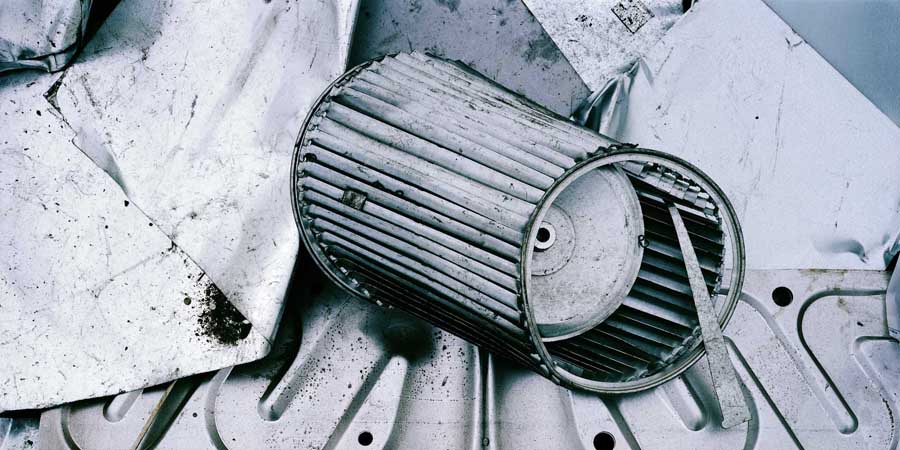
Sims Recycling Center, New Jersey 2010


Summer is when the city blossom—colors flourish in the form of flowery sundresses, tank tops, and sandals against gotham’s icy glass towers, while grey streets mushroom with green awnings and blue umbrellas as outdoor cafes sprout.  New York’s summer traditions include the outdoor Midsummer Swing Festival at Lincoln Center, The Public Theater’s Shakespeare in the Park, and a range of free concerts throughout the city’s five boroughs.  One of New York City’s unique treats is the array of art exhibits, many of which are free and open to the public.  Fashion Reverie is delighted to keep you “in the know” with our Summer Artists Series.

We begin with our discussion with Jan Staller, whose work is currently on exhibit at the Art and Picture Collection of the Mid-Town New York Public Library.

The exhibit, More than a Passing Glance, showcases some of Jan Staller’s photographs of construction sites, parking lots, boat yards, scrap metal yards, and other man-made settings. Arézoo Moseni curates the exhibit by the well-known photographer whose work, over the past thirty years, has captured vestiges of the industrial age and man-made fragments, both large and small, rendering them into otherworldly landscapes and unexpected yet lyrical abstractions.

Published in 1988, Jan Staller’s first book, “Frontiers New York,” captures images of the city’s barren streetcorners, subways cars, toll booths and the once desolate Westside Highway with the quizzical eye of an alien who had ventured from outer space to record    life in gotham for the first time, but had landed in the wee hours of the night. The images, somewhat apolocalyptical, echo scenes from the “Bladerunner”—portends of human existence, great structures, engineering, and beauty, amid wreckage, unfinished work and abandonment.  In Staller’s second book, “On Planet Earth” published in 1997 (with an intro by Luc Sante), the alien visits again, but this time across the US and the world to find odd works of art in the form of abandoned factories, military test sites, and power plants.

Shipping Container in Snow, New Jersey 2011 by Jan Staller

Fashion Reverie: Jan, let’s trace back to the beginning.  How did the two of you meet, that is, you and the camera?

 Jan Staller: My father was a serious photo hobbyist back in the 1950s and 60s and he had sophisticated cameras and a darkroom. This was quite unusual in those days, as most consumers would be using simple box cameras and having their photographs processed at a drugstore or camera store. So I was introduced to the technical side of the medium at an early age. In addition, my father subscribed to numerous photography magazines and purchased books about the practice and art of photography.

 FR: As a young artist, who were your early inspirations?

Jan Staller: Photographers such as Lewis Baltz, Richard Misrach, Joel Meyerowitz and Rheinhart Wolf were inspirational to me.

FR: Curators and followers often allude to the shift in your work toward greater abstraction. Why the shift?

Jan Staller: In more than 30 years of working, I feel that my work has followed a trajectory. I wouldn’t be satisfied making similar photographs of similar subjects. The kind of subjects I am drawn to have a clear connection because it is the same mind following its own interest, but over time my interest evolves and I am led through my work to make new discoveries about the medium.  I simply follow my interests and curiosity and by doing that, my work keeps developing.

Photo by Jan Staller from “Frontiers New York,” published by Hudson Hills Press, Inc., 1988

FR: Why landscapes—large, small, some natural, but most often man-made?

Jan Staller: Construction sites and industrial objects have always attracted me. Beyond the intense inspiration that things and places can bring to me, I am at a loss to explain the interest.

FR: Color and light are very distinctive in your work.  In the past, you’ve worked with large stadium lights.  Your recent pictures have involved more flat, white daytime light.  Would you explain how and why this evolution has come about?

Jan Staller: For many years I was interested in massive industrial forms which had often been rendered in my images with a bold prominence in the surrounding landscape. I preferred an uncluttered look to the backgrounds. In my earlier work, it had been my custom to photograph my subjects with a mixture of artificial and natural light.  Initially, I used available lighting- the street lights of NYC. Later, I used two large metal halide lights- the kind found at sports stadiums to illuminate my subjects at twilight.  In more recent times, I tend to photograph in natural light, particularly overcast and rainy days when the light quality is even and shadowless. I have also moved my camera closer to my subjects in effect distilling their essence into a more pure formal statement.

Photo by Jan Staller from “On Planet Earth,” published by Aperture Foundation, 1997

FR: What challenges to see you ahead for yourself?

Jan Staller: The challenges have long been the same. Keep looking and stay curious about the world.

FR:  What do you think of change, that is, change in technology in relation to photography?

The changes in photography have more to do with quantity than quality. Always a machine driven medium, the photographic apparatus, when used by someone with a modicum of technical ability could make images which previously were only made by someone with the ability to paint or draw. From its inception the photographic processes have become ever easier and ever cheaper with greater numbers of images generated with each new simpler device. Today, anyone can make pictures and they are seen everywhere.  The digital age has had similar effects on music and writing: it’s much easier to produce and distribute works in these media. Alas, the challenges of making great art are unchanged and for all the work produced today the proportions of good art to bad are probably the same.

Digital processes have added a plasticity to the medium allowing greater control over how images can be rendered. On occasion I make use of digital tools in producing my work.

FR: Do you have words you’d like to share with aspiring photographers out there?

Jan Staller: Keep looking and stay curious about the world. Regularly look at other artists’ work at the galleries. Try not to directly repeat the work of others.

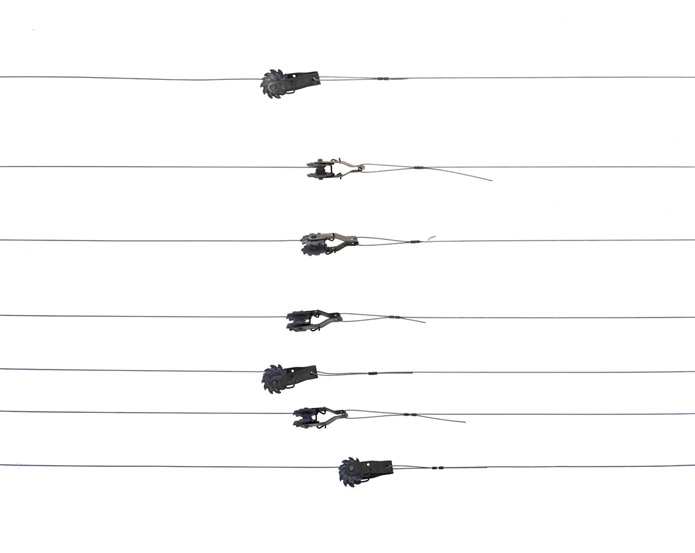
Ratchet Fence, New Jersey 2011 by Jan Staller

More than a Passing Glance will be on exhibit until August 22, 2012 at The Art Collection on the 3rd floor Mid-Manhattan Library, 40th Street @ 5th Avenue, New York, NY 10016, 212-340-0871. The Art Wall on Third Exhibition series at the library is curated by Arézoo Moseni.  Jan Staller’s work has been exhibited at the Museum of Modern Art in NYC, Whitney Museum of American Art, New Museum in NYC, Brooklyn Museum, International Center of Photography, New York Historical Society, Corcoran Gallery in DC, Basel Art Fair, National Museum of Art of South Korea, among others. To learn more about Jan Staller, please visit janstaller.net.

— Jeanine Jeo-Hi Kim


Stars Gather to celebrate 66th Annual Tony Awards Tonight

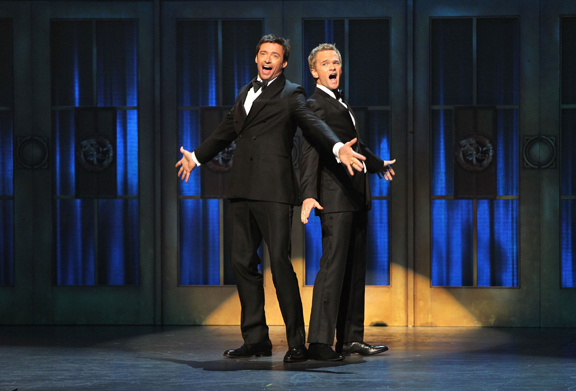
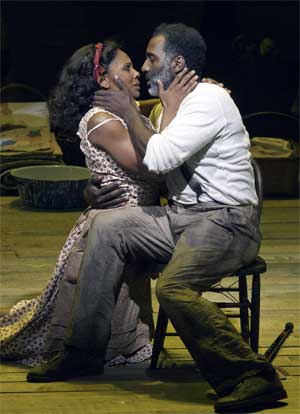
Tonight, the 66th Annual Tony Awards will air live on CBS at 8 p.m. ET/7 p.m. CT (with delayed telecast at 8:00 p.m. PT for West Coast fans).  Neil Patrick Harris will host the star-packed show, which will feature more performances than ever including scenes from 2012 Tony-nominated musicals Evita by Ricky Martin and Elena Roger, The Gershwins’ Porgy and Bess by Tony nominees Audra McDonald, Norm Lewis and David Alan Grier, Leap of Faith by Raúl Esparza, and Nice Work If You Can Get It by Matthew Broderick and Tony nominee Kelli O’Hara.

Ricky Marin and Elena Roger in “Evita”

Presenters for the 2012 Tony Awards will include Ellen Barkin, Candice Bergen, Jessica Chastain, Sheryl Crow, Nick Jonas, Angela Lansbury, James Marsden, Jim Parsons, Mandy Patinkin, Tyler Perry, Bernadette Peters, Christopher Plummer, Paul Rudd, Amanda Seyfried, Matthew Morrison, James Marsden, Trey Parker, Matt Stone, and Josh Groban.  Additionally, Tony Award winner Hugh Jackman, who appeared on Broadway earlier this season in a concert show called Hugh Jackman: Back on Broadway, will receive a Special Tony Award this year.  Other special honorees include Bernadette Peters, producer Emanuel Azenberg, and Actors’ Equity Association.

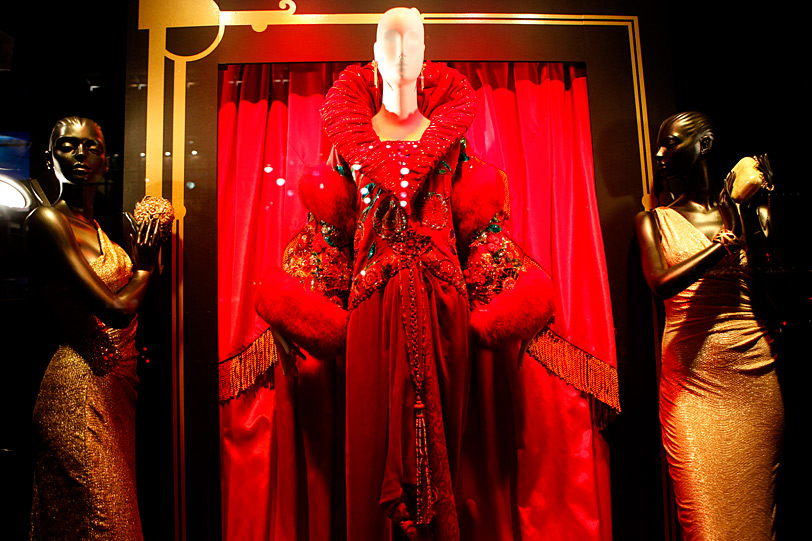
Arrivals at the Beacon Theatre on the Audemars Piguet Red Carpet (courtesy NY1) will be featured live on TonyAwards.com, beginning at 6:00 p.m. ET.  A free outdoor screening of the Tonys will be held in Times Square (in Duffy Square at the northern end of Times Square on Broadway between 46-47th Streets) from 6:00 p.m. to 11:00 p.m., rain or shine.  Additionally, Bloomingdale’s in New York City (4th floor of Bloomingdale’s flagship 59th Street location) is featuring a Tony Award Costume Exhibit, which includes costumes from past Tony Award-winning, to run through Monday, June 18th.

‒Jeanine Jeo-Hi Kim


Producer Catherine Schreiber Enlightens with Multiple 2012 Tony Nominations

Tonight, the stars will gather on the Audemars Piguet Red Carpet at the Beacon Theater in New York City for the 2012 Tony Awards celebrating Broadway’s finest.  Fashion Reverie speaks with producer Catherine Schreiber, whose plays Peter and the Starcatcher, Clybourne Park and Stick Fly have garnered a total 14 Tony Nominations this year.  With nine nominations, Peter and the Starcatcher has received the most nominations for a new American play in the history of the Tony Awards.  Here, Catherine Schreiber reveals her secrets on how to become a Broadway producer, nevertheless one with multiple award nominations in her pocket, and how to pick a good script.  She also shares with us what it’s like working with Alicia Keys, behind the scenes cast rituals, and how to celebrate if one wins a Tony.


Fashion Reverie: When you were a little girl what did you dream of becoming?

Catherine Schreiber: I dreamt of becoming a starring actress.  I remember acting out movie songs for my parents as I listened to the scores on a record.  God, I think I did the entire score of Bye Bye Birdie…My poor parents….

FR: How did the theater become a part of your life? 

Catherine Schreiber: I always loved theater and was always in the school plays.  I was Dorothy in the Wizard of Oz at Camp Walt Whitman when I was really young, the only time anyone has let me sing on stage.   In junior high, I played Cordelia in the Happiest Millionaire.  Great Neck North High School had an amazing theater department.    I played a range of parts from Abigail in the Crucible to Amanda in The Glass Menagerie to Muriel in You Know I Can’t Hear You When the Water’s Running.  I went to Yale as an English major, but continued acting and never stopped.  I worked with people like Wendy Wasserstein, Chris Durang, and Meryl Streep.

Charles Edwards as King George VI in The King’s Speechin London 


FR: How does one wind up becoming a Broadway producer?  What does it take to be successful? 

Catherine Schreiber: There isn’t one simple answer.  I think people who love the theater, be it actors, directors or designers who want to be more involved in making things happen, in putting the pieces together to make the magic happen, become producers.  In this business, you can’t wait around for things to happen.  At least I can’t. So when I had a project I loved and wanted to do, I decided to do it.

In terms of what it takes to be successful, well let’s see, successful is an interesting word.  There are different kinds of success.  In the three years of working on Broadway, I’ve been involved with seven shows.  Four were nominated for Tonys: Next Fall, Scottsboro Boys, Peter and the Starcatcher and Clybourne Park.  Next Fall and Scottsboro Boys are brilliant and were critically successful, but weren’t financially successful.  The King’s Speech, which was an extraordinary production in London and opened to ecstatic reviews, isn’t yet a financial success because of the timing of the piece.  I have no doubt, however, that when it comes to Broadway it will be successful critically and financially.  It is just brilliant and the consensus in London was, “better than the movie.”

So to be successful as a producer, I suppose it takes seeing the brilliance and importance of a piece, and believing in it and working hard to make it happen.  Actually, it takes being lucky enough to be given projects created by such musical geniuses as Kander and Ebb or creative geniuses such as Rick Elice, Roger Rees and Alex Timbers.  To be successful in a financial sense… well, that takes all this, plus a little more luck.  I guess if you love something and believe in it and you help give it life, then you are successful.

FR: What attracts you to a script or project? 

Catherine Schreiber: I need to be deeply moved, to tears or laughter.  It has to be important, even on just a human level.  And as a producer, I just don’t bring money to the table, I really work hard on many levels, from marketing to ticket sales.  When I produced Desperate Writers, I did everything from cleaning the bathroom, to help designing the logo to selling tickets, to creating marketing plans, to walking a large rubber duck down the street on a leash to get attention. If I’m going to spend the time on someone else’s project I need to really believe in it.

Scene from “Clydebourne Park”

FR: We’ve seen a big change in the movie industry.  People just don’t go to the movies like they used to unless it’s an “event.”  Do you see the same trend on Broadway? 

Catherine Schreiber: Well, I’m not going to go into the “Mega event” that is Spider Man —but I guess that answers your question.  In general because it’s so expensive to do a musical on Broadway, there often is the tendency to pour everything into it, whether that be casting big TV or movie names to creating sensational special effects.  But I think the last couple of seasons have shown this doesn’t always work. The little musical Once has been hugely successful, and Peter and the Starcatcher has shown how magical theater can be using the simplest of props, the cleverest of minds as those of Rick Elice, Roger Rees and Alex Timbers and one’s imagination.  So hopefully, theater can return to making magic the old fashioned way.

FR: The US has been in an economic slump for a few years now.  How has that affected your profession? 

Catherine Schreiber: There are periods when it seems people aren’t buying tickets because of the economic slump, but surprisingly, Broadway continues to show tremendous growth year after year.  While many people can’t afford some of the top prices of plays dictated by their high budgets, there are discount tickets for people to come to see plays.  According to the analysis by the Broadway League, the 2010-2011 season showed a growth of 9% over the 2008-2009 season. The League estimated that the “direct and indirect contributions to our economy totaled $11.2 billion” and that Broadway’s contribution to the city “is almost entirely from the money brought in by Broadway tourists.”

In terms of a specific reaction to the economic slump, I would say producers feel the need to cast stars in roles to ensure audiences will come.  This worked beautifully for How to Succeed in Business without Really Trying.  Everyone wanted to see Daniel Radcliffe, and he was indeed wonderful in the show.  But, sometimes, star casting is a problem because once that star leaves, people don’t want to come to see the show anymore.  Then there are shows like Next Fall, which I think would have had a longer run if there were star casting because it would have brought more attention to the show.

“Stick Fly”

FR:  Speaking of stars, you’ve worked with some of the biggest names in the entertainment industry.  On your last production, Stick Fly you co-produced with Alicia Keys.  What was that like?  

Catherine Schreiber: Let me just say that Alicia Keys is one of the kindest, most gracious, giving people I have met … and of course, unbelievably talented.  She believed and still believes in Stick Fly and has been tireless in her support and promotion of it. From what I’ve seen with “celebrity” producers, this is rare.  It has been an honor to work with her and her team.  She brought over 25,000 Facebook fans to the Stick Fly site—that’s a stunning number.

FR: Two of your productions, Clybourne Park and Peter and the Starcatcher, are up for Tony nominations for Best Play.  How does that feel?

Catherine Schreiber: Well, it feels wonderful!  Clybourne Park and Peter and the Starcatcher are both brilliant in their own right.  I’m a mother and not allowed to have favorites.  So I hope it’s a tie.  But, I have to say, I think Stick Fly also deserved a nomination.  Stick Fly didn’t get the respect it deserved.  Audiences loved it and it reached out and spoke to a segment of our society that has not been addressed before.  Stick Fly may be gone from Broadway, but it will have a life touring and on television, and perhaps in film.  Condola Rashad (nominated for Best Performance by an Actress in a Featured Role in a Play) was fabulous in it, and I’m so glad she was recognized.  In general, this was a ridiculous season in terms of how many good plays there were that could also have been nominated.


Scene from Peter and the Starcatcherwith David Rossmer, Adam Chanler-Berat, and Carson Elrod center. Image courtesy of O&M Co. 

FR: If either of your plays win, how will you celebrate?

Catherine Schreiber: With the family—the theater family.  Bottom line, it’s just wonderful to be nominated, and the Tonys provide an opportunity for a broad audience to get a taste of all the plays.  So hopefully, more people will come.  There is nothing like the experience of live theatre. I  hope more and more people become addicted.  I think with the plays that Broadway offers this year, there is plenty of wonderful stuff to feed that addiction.


Catherine Schreiber, producer/actress/writer is a four time Tony-nominated producer for Next Fall, The Scottsboro Boys, Peter and the Starcatcher and Clybourne Park.  She was a producer on King’s Speech the play, which played to rave reviews in London, and Stick Fly. She produced Desperate Writers, a play she co-wrote based on her movie, Off Broadway at the Union Square Theatre.  Her acting tv/film roles include “It’s Always Sunny in Philadelphia”, “Rat Race”, “Jane Austen Book Club”. Her theatre roles include Desperate Writers, Wayside Motor Inn at the Manhattan Theatre Club and Sly Fox directed by Arthur Penn. Catherine was honored with the Key to the City of Scottsboro, Alabama for her work with the Scottsboro Boys Museum. She is a Founder of the Center Theatre Group, Los Angeles, a VIP member of the Flea Theatre, NY and a member of the League of Professional Theatre Women.  www.wowcatherine.com

—Jeanine Jeo-Hi Kim


HOUSEWIVES Alum Jill Zarin Has Graduated to Bigger and Better

This week The Real Housewives of New York City Season 5 premiered on Bravo with new cast members—and without some of the old.  Housewives alumna Jill Zarin reported on her blog, “I felt like I graduated high school and am in college now… going back to the high school to visit my old friends and some transfer students.”  What’s Jill been up to;  apparently, quite a lot.  In addition to continuing a round of television appearances, Jill Zarin has been just a tad occupied—building an empire around her name with her Jill Zarin Home Bedding Collection, Skweez Couture shapewear line, and most recently her Jill Zarin Jewelry Collection.  Fashion Reverie has had a chance to catch up with her to learn more about her newest ventures in the fashion and accessories industries.


Fashion Reverie: What inspired you to start Skweez Couture?

Jill Zarin: I had my “aha” moment while I was filming Season 4 of The Real Housewives of New York City when I was wearing someone else’s shapewear and getting out of the car and my whole leg was exposed.  It was really squeezing my whole leg, very uncomfortable and very unattractive.  It was at that moment, I told my husband that I have to make own shapewear, and I have to make it look pretty.  I said I could do better, and I did!

FR: Can you go over your background for some of our readers who may not know of your professional background beyond The Real Housewives of New York City?

Jill Zarin: I started as a buyer at Filene’s Department Store in Boston, Massachusetts.  My last job was President of Jockey Hosiery for Great American Knitting Mills.  So I’ve really ran the gamut in ladies and menswear and undergarments, specifically from hosiery to tights, for over 10 of my 25 years in the business.  Then I worked for my husband, Bobby, who has a fabric company, which allowed me to learn a lot about textiles and fabrication.

Skweez Couture’s Peek-a-boob

FR: What does your collection consist of?

Jill Zarin: It ranges from functional and affordable undergarments to a hybrid collection and outerwear.  For example, I have a Bodyguard Bodysuit that can be worn under a blouse, under a sweater, under a dress, under anything to hold in your stomach, lift your rear end, to give you support because it has an underwire, and yet makes you feel very feminine and comfortable.  You can also wear my shapewear by itself with a jacket, or a jacket over it with jeans, which is the way I like to wear it.  So it can go from undergarment to outerwear.  I also have items that are primarily for outerwear, but can be worn under clothes, which makes up my corset line.

So I have items that go under your clothes, items that are hybrid that can be worn under or out, corsets, then I have garments that are just phenomenal—soft, easy to wear, from velvet leggings to cotton capris to those that have more spandex and support.  My favorite item allows you to wear your own bra: it’s called the Peek-a-boob.  My biggest concern as a seller is bra size.  This way, I can support all of them, no pun intended, by letting them wear their own bra and giving them an undergarment that surrounds it literally and sucks them in all the way down.  At the bottom, I’ve added lace, which I love.

The side effect of these garments is that it gives you incredible back support, which all of us need.  We’ll all leaning over our computers, we’re slouching as we get older, we’re tired, and we’re resting in that position.  These garments force you to stay up straighter.  It’s healthier for your body.

Skweez Couture’s Bodyguard Seamless Shaping Bodysuit

FR: Would you tell us about the fabrics you use?

Jill Zarin: I like to use fabrics that have incredible softness, which is the most important thing to me because I think the first thing you do when you open up your package is touch it. It’s really important for me that it passes a certain number of washing machine passes.  It’s sort of like a Good Housekeeping Seal of Approval.  I should really apply for that!  But we put the garments through our own testing.  I have my own Jill Zarin Housekeeping Seal of Approval.  So does HSN by the way.  One of the things I am most proud about is being one of the suppliers of HSN.

FR: Please tell us the steps it took to put together Skweez Couture.

Jill Zarin: It’s been trial and error.  I’ve never opened a business so aggressively and quickly in my life.  My husband, Bobby, is an entrepreneur, and he helped guide me.  I have a licensee that is my partner in making these goods and designing.  That was the fastest way to do it.  If I had tried to do it myself, it would have taken me another year or two.  I had to make that choice to give part up a part of my business, but it was worth it.  With that, there comes a lot of expertise and many, many years of experience.

 Forbes Magazine recently named us one of the top 5 emerging shapewear brands in the world.  They were doing an article on my competitor.  This other company has been in the business for ten years and is now worth billions of dollars.  And now Skweez Couture is on its heels.

 FR: But you’re still actively involved in the design?

Jill Zarin:  That’s where there was a bit of a challenge because they’re based in Boca Raton, Florida and I’m based in New York.  So, FedEx is my best friend!

FR: What are you most proud of regarding your collection?

Jill Zarin: I think it would be the corsets because that was the most challenging.  I literally took apart with a scissor one of my favorite corsets that I had bought years ago because I needed to find out what was annoying me so I could do it better. My weight would fluctuate up and down, but this thing had no stretch at all.  I’d have to hold my breath while Bobby would struggle to try to help hook all the eyes.  It had no straps and would slip,so I took it apart.  One of the things I did was replace hooks and eyes with a very a practical zipper that has a safety latch on it.  When I took it apart, I noticed the reason why it was hurting me so much was because the bones were so hard and wiry and tore through the fabric and dug into me.  I wanted soft boning, which I had to source, and of course I wanted a really beautiful sateen finish, and a silk look.

My retail price is $75 for a gorgeous corset, which is unheard of at that price.  I also added removable straps.  I made the straps removable so people who didn’t want them could remove them, for example, smaller chested women who might not need the extra support.

I used the princess seaming 360 degrees around it.  In fact, one of HSN hosts, Diana Perkovic, loved it so much that she picked me as the Host Pick, which is a big honor.  WWD also featured that same corset.

Jill Zarin Jewelry Collection’s “Allyson” ring, $78, Jill Zarin Jewelry Collection’s “Gloria” ring, $38

FR: How did the Jill Zarin Jewelry Collection come about?

 Jill Zarin: I’m a jewelry hoarder, like so many of my peers. I am a little bit careless, and I’ve lost a lot of jewelry, with that in mind I really wanted to make the collection affordable.

FR: What has the road been like since leaving the reality show and entering this new phase of your life as a fashion and jewelry entrepreneur?

Jill Zarin: It feels organic.  I feel like my life is always evolving.  That was a stage in my life for 5 years, and I was ready to leave.  I never thought it would last as long as it did, and I’m grateful that it’s still on-air because people are still talking about the show.

I feel like I’ve graduated.  It’s sort of like being in high school.  They forced me to graduate.

FR: What was your experience like being on one of the most popular reality shows, and are there any regrets?

Jill Zarin: I don’t live with regrets.  I’m sure I’ve had regrets, I just don’t remember them because I don’t live in the past.  I did the show to have fun and to promote my brand.  My brand at the time was solely Zarin Fabrics on the lower eastside, the largest discount drapery and upholstery fabric store in New York City.  Then it became more about the Jill Zarin brand, and then I came up with Skweez Couture.  It kept evolving.

The show also gave me a platform to write a book with my mother and sister, “Secrets of a Jewish Mother.”  That was an advice book on everything from marriage to dating to career.  It’s the kind of book that will live forever and will stand the test of time.

 FR: I have heard from celebrities, especially those who are on TV on a weekly basis, that they are often approached by fans, who mistake them for the characters they portray.  It must be doubly confusing for a reality star.

Jill Zarin: Actually it’s much easier as a reality star because I am my character.  When I meet fans, they know a lot about me that is all true.  I’m married to Bobby.  My daughter is Ally.  Sure, there are different storylines that may be exaggerated.  But the core of who I am, what I do is all true.  So people will just feel like I’m a familiar friend.

FR: Is there more you’d like to accomplish?

Jill Zarin: There’s always more; things I don’t know yet.  I’m very creative, and I’m always coming up with new challenges and things for me to do.  I’m working on twenty different projects I can’t even talk about.  I’ll have a couple that I’ll be able to talk about in a couple of months.

Jill Zarin will appear on HSN June 15th at 8pm EST. Skweez Couture and the Jill Zarin Jewelry Collection can be purchased on www.jillzarin.com.

—Jeanine Jeo-Hi Kim


Copyright © 2012-2025 | Fashion Reverie Publications, LLC - All Rights Reserved