Fashion Reverie Exclusive: “A Raisin in the Sun’s” Sean Patrick Thomas


Sean_Patrick_Thomas_01Sean Patrick Thomas has been in the acting business long enough to have his own small tastes of stardom.  In addition to starring roles in “Save the Last Dance” in 2001 and “Barbershop” in 2002, Thomas has also been seen in the occasional television series.  He even had a small part in the 2008 film version of “A Raisin in the Sun.” From Ice Cube to Sara Michelle Gellar and Puffy, Thomas has worked with his share of big stars.

Sean Patrick Thomas in "Save the Last Dance" and  "Barbershop," respectively. Images courtesy of imbed.com

Sean Patrick Thomas in “Save the Last Dance” and “Barbershop,” respectively. Images courtesy of imbd.com

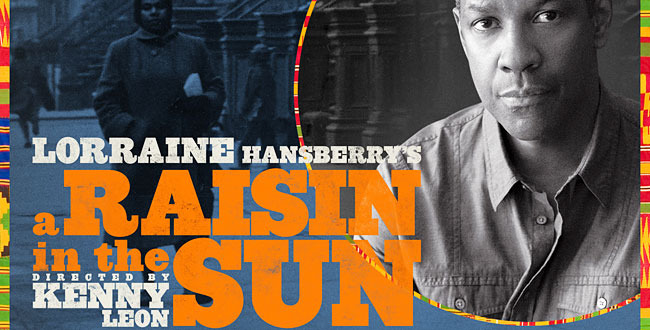
But Thomas said being a part of the current revival of Lorraine Hansberry’s “A Raisin in the Sun” that stars Denzel Washington, LaTanya Richardson Jackson, Sophie Okonedo and Anika Noni Rose is on a whole other level.

The limited run production is scheduled to only run through June 15. The production is being performed at the Ethel Barrymore Theatre, the theater where “Raisin” originally premiered in 1959.

“It’s been fantastic. As an actor you so rarely get to be around other actors that you respect and actors that make you better and every single one of them is like that,” Thomas said during an interview last week. “Being in this show is something I’ll never forget. I know it won’t happen too many times in my career—a cast where everybody is just outstanding across the board.”
raisin ad

Image photographed by Brigette Lacombe, courtesy Philip Rinaldi Publicity

“A Raisin in the Sun,” which originally debuted in 1959, is considered one of the most important works in theater for its honest depictions of black life. The play focuses on the Younger family which is grappling with a range of life altering decisions including what to do with $10,000 from a life insurance policy.

Thomas plays Joseph Asagai, the Nigerian student and boyfriend of the family’s college co-ed firebrand, Beneatha.
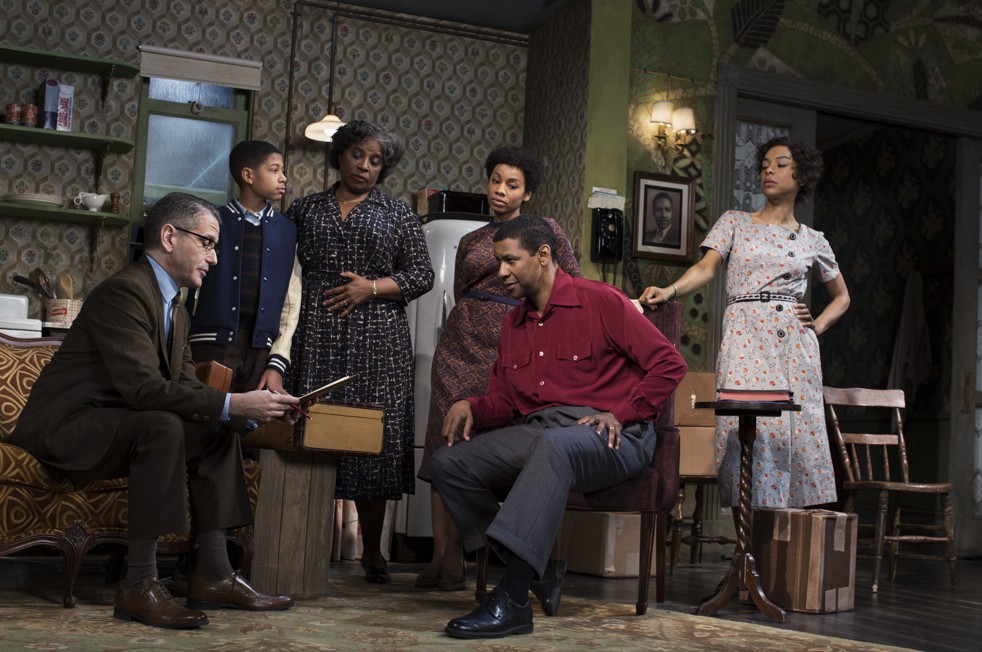
Images from show are by Brigette Lacombe, courtesy Philip Rinaldi Publicity

Image photographed by Brigette Lacombe, courtesy Philip Rinaldi Publicity

The revival earned five Tony Award nominations which were announced April 29: Best Revival of a Play, Best Director of a Play for director Kenny Leon, Best Actress for Richardson, and Best Actress in a Featured Role for Okonedo and Rose. The winners will be announced June 8 during a televised ceremony.

In a surprising development that had theater insiders buzzing, Washington did not receive a Tony nomination. But Thomas said it’s clear that Washington is the draw for many coming to see “Raisin.”

Images from show are by Brigette Lacombe, courtesy Philip Rinaldi Publicity

Sophie Okonedo, Denzel Washington, and Anika Noni Rose, respectively. Image photographed by Brigette Lacombe, courtesy Philip Rinaldi Publicity

“You know that Denzel is going to attract a certain amount of attention. But what I didn’t fully anticipate were the reactions to him. He has lines before you actually see him and when people recognize his voice they just go nuts,” Thomas said. “I remember the first night that we performed and I heard that I was like ‘wow, that’s amazing.’ But it’s every night. He gets that kind of response every single night.”

Thomas said now that he’s used to it, the Washington adulation gets Thomas and the other actors more excited and, as Thomas put it, “hyped.”

“When the crowd responds that way to Denzel, that gives me that feeling—‘It’s show time!’—which I like,” Thomas said.

Adding to the backstage excitement has been a steady stream of VIP’s who stop by backstage after seeing the play, including the President of the United States and First Lady Michelle Obama.

President Barack Obama and First Lady Michelle Obama

President Barack Obama and First Lady Michelle Obama

“That was really a historic event—the first black President coming to watch us perform. That’s once in a lifetime stuff,” Thomas said. “The fact that he’s from Chicago and the play is set in Chicago and the play has a lot of racial themes, things that he obviously deals with, just made it very special to have the President there.

While his character isn’t part of the Younger family, Thomas’s role—Asagai—is a critical one. It is Asagai whose fresh perspective on survival and the meaning of freedom that pushes all the Younger’s to look at their lives differently.

Image courtesy of broadway.com

Image courtesy of broadway.com

“Asagai is a really pivotal character. The family has this major, major crisis that they’re going through and I think my character is the first time that anybody in the family hears that there are other ways of looking at life and at this event,” Thomas said. “The audience needs to see that there is a light at the end of this tunnel and the family needs to see that, too. My character starts that process.”

—Karyn D. Collins


Ballet Hispanico’s El Beso

Gustavo Sansano"s "El Beso"

Gustavo Sansano”s “El Beso”

Ballet Hispanico’s season at the Joyce Theatre clearly demonstrates that the company under the helm of Eduardo Vilario is evolving in a direction that expands beyond the traditional Latin themes that the company had become associated under its founder Tina Ramirez. Some arts pundits may say this is a step in the right direction, while others might champion a return to the tried and true.

The real test of this directional shift is audience reaction. And based on the cheers and bravos on Ballet Hispanico’s opening night at the Joyce, Vilario has found a choreographic revitalization that has audience appeal.

Two of the pieces in the mixed bill on the Opening Night program have been reviewed in a previous Fashion Reverie review, so the focus of this review will concentrate mostly on Ballet Hispanico’s new work, El Beso.

1545676_750120355019170_6615772493857330427_nIn the vein of Twyla Tharp’s Push Comes to Shove, Gustavo Ramirez Sansano’s El Beso with costumes by Angel Sanchez, like many choreographers of his ilk, ingeniously combine dance vocabulary from a wide range of dance styles and idioms. There are nods to Graham, Cunningham, Tharp, Horton, lyrical jazz, classical ballet, with a little Forsythe thrown in for good measure.

This hodgepodge of seemingly diverse dance styles requires dancers that have incredible versatility and have the technical dexterity and experience working in this dance hybrid. Ballet Hispanico’s current rosters of dancers are definitely up to the challenges of Sansano’s choreography.

The overriding motif of El Beso is a kiss, and kisses in a various incarnations, forms and gestures. There are air kisses, kisses expected and unexpected, declined, romantic, playful, yet all fitting into Sansano, humorous but at times bombastic, rhythmic mélange.

Like Tharp’s Push Comes to Shove, El Beso has that emotion-free, pliable ragdoll quality that requires a very loose torso. Movement can start at your center but pull the dancer in a lot of different directions, sometimes off center, other times athletically spiraling in unexpected directions.

El-español-Gustavo-Ramírez-debuta-en-Nueva-York-con-El-Beso-y-Ballet-HispánicoAngel Sanchez’s pleated, asymmetrical skirts paired with shorts and a variety of pant-like garments helped facilitate the kind of movement employed by Sansano in El Beso. Sanchez’s billowing skirts at times seemed to continue and extend movement beyond the steps themselves, giving the Sansano’s choreography a buoyant quality that filled the stage.

Sombrerisimo-1c-Paula-Lobo

Annabelle Lopez’s Ochoa’s “Sombrerisimo”

 Annabelle Lopez’s Ochoa’s Sombrerisimo utilizes great partnering for the men in this male tour de force. Ochoa also infuses technique from modern dance, ballet, flamenco and lyrical jazz, all while several derby hats are passed back and forth, caught in the air, ricocheted and used as a centerpiece of the choreography.  Though Sombrerisimo highlights the versatility and technical acumen of Ballet Hispanico’s men, the work is not without humor or lyricism.

1801259_750118251686047_6306912962161506699_o

Edgar Zendejas’ “Umbral.” Images courtesy of Michelle Tabnick Communications

Edgar Zendejas’ Umbral is a mostly cerebral work, inspired by the Mexican celebration of the Day of the Dead. Umbral has some good choreography with inventive partnering in Umbral.  One of the most effective sections was sequence were the Ballet Hispanico women danced topless with their backs to the audience.  Zendejas ingeniously devised movement that spoke to the futility of life and the stark bareness of death without being too literal or kitschy.

—William S. Gooch

Broadway’s Spring 2014 Lineup

Start spreading the news.

Big stars—veterans and theater newcomers—are flocking to Broadway stages this spring to test their mettle in what is often considered to be the most challenging of acting genre.

The star turns—a trend that’s become increasingly popular for producers seeking a quick (and big)  return at the box office—mean that theater fans can see stars in a full range of plays and musicals.

Broadway veterans appearing this season include stars like Audra McDonald and Tyne Daly, both of whose careers have successfully straddled the theater and television worlds.

Other stars like Alan Cumming and Denzel Washington, made their careers in film but have also found increasing success in theater.

But the real news for this season is the number of Broadway newcomers appearing. They include Michelle Williams (“Cabaret”), Zach Braff (“Bullets Over Broadway”) and James Franco (“Of Mice and Men”).

Here’s a look at what’s new this spring on Broadway:

“Act One”

Lincoln Center – Vivian Beaumont Theatre, W. 65th St. off Broadway

In previews; Premieres April 17 for a two-month run

The word: Broadway royalty Andrea Martin and Tony Shalhoub along with Santino Fontana (“Brighton Beach Memoirs,” “Cinderella”) star in director James Lapine’s adaptation of Broadway playwright Moss Hart’s autobiography.

James Monroe Iglehart as the Genie in "Aladdin", photo courtesy Disney on Broadway

James Monroe Iglehart as the Genie in “Aladdin”, photo courtesy Disney on Broadway

“Aladdin”

New Amsterdam Theatre, 214 W. 432nd St.

Premiered March 20

The word: Disney’s latest musical, based on the 1992 Disney animated feature, has been universally praised by critics, especially the performance of James Monroe Iglehart as the Genie.

“All The Way”

Neil Simon Theatre, 250 W. 52nd St.

Premiered March 6

The word: Bryan Cranston (“Breaking Bad”) has won raves for his portrayal of Lyndon Johnson during the ‘60s.

"Bullets Over Broadway" image courtesy of newyork.com

“Bullets Over Broadway” image courtesy of newyork.com

“Bullets Over Broadway”

St. James Theatre, 246 W. 44th St.

In previews; Premieres April 10

The word: Zach Braff (“Scrubs”) makes his Broadway debut in the Broadway adaptation of this Woody Allen film classic directed and choreographed by Tony winner Susan Stroman.

Michelle Williams, courtesy "Cabaret"

Michelle Williams, courtesy “Cabaret”

“Cabaret”

Studio 54, 254 W. 54th St.

In previews; Premieres April 24

The word: Michelle Williams (“Brokeback Mountain”) makes her Broadway debut as Sally Bowles opposite Alan Cummings who will reprise his Tony Award–winning performance as the Emcee in this revival.

"Casa Valentina" image courtesy of playbillvault.com

“Casa Valentina” image courtesy of playbillvault.com

“Casa Valentina”

In previews; Premieres  April 23; Closes June 15

The word: Harvey Fierstein’s play stars Patrick Page (“Spider Man: Turn Off The Dark”) as part of a group of men whose summers in the Catskills saw them live as cross dressers.

Daniel Radcliffe, photo by Johan Persson, courtesy "The Cripple of Inashmaan"

Daniel Radcliffe, photo by Johan Persson, courtesy “The Cripple of Inishmaan”

“The Cripple of Inishmaan”

Cort Theatre, 138 W. 48th St.

Begins previews April 12; Premieres April 20 for a three-month-long run

The word: Harry Potter’s Daniel Radcliffe reprises his star turn in the Broadway transfer of this critically acclaimed play from London’s West End; written by Martin McDonagh.

Neil Patrick Harris in poster for "Hedwig," courtesy "Hedwig and the Angry Inch"

Neil Patrick Harris in poster for “Hedwig,” courtesy “Hedwig and the Angry Inch”

“Hedwig and the Angry Inch”

Belasco Theatre, 111 W. 44th St.

In previews; Premieres April 22

The word: Neil Patrick Harris “How I Met Your Mother” stars in the revival of this edgy rock musical about a German singer’s life after a botched sex change operation.

“If/Then”

Richard Rodgers Theatre, 226 W. 46th St.

Premiered March 30

The word: Idina Menzel (“Wicked”) stars in this original musical about a woman following two different paths. Menzel has earned raves; the show itself has been mostly panned.

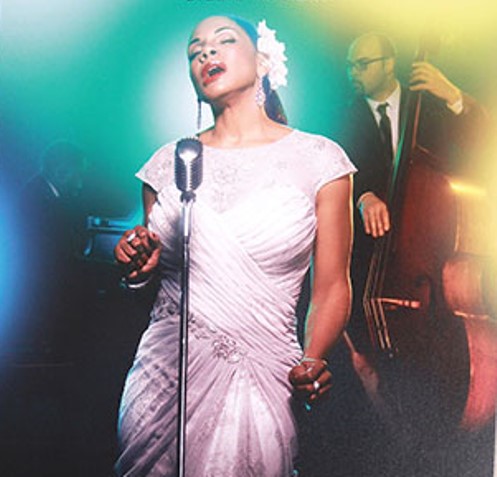
Audra McDonald in poster for "Lady Day at Emerson's Bar and Grill", courtesy "Lady Day at Emerson's Bar and Grill."

Audra McDonald in poster for “Lady Day at Emerson’s Bar and Grill”, courtesy “Lady Day at Emerson’s Bar and Grill.”

“Lady Day at Emerson’s Bar and Grill”

Circle in the Square, 235 W. 50th St.

In previews; Premieres April 13; Closes June 1

The word: Five time, Tony winner Audra McDonald stars in this musical play in which singer Billie Holiday recounts moments in her life during a concert performance shortly before her death.

Scene from "Les Miserables", photo by Michael Le Poer Trench, courtesy "Les Miserables"

Scene from “Les Miserables”, photo by Michael Le Poer Trench, courtesy “Les Miserables”

“Les Miserables”

Imperial Theatre, 249 W. 45th St.

Premiered March 23

The word: This Broadway revival is based on the show’s recent touring production. In addition to more multi-cultural casting this time around (black actors as Javert and Eponine!), this production also does without the original’s famous turntable set.

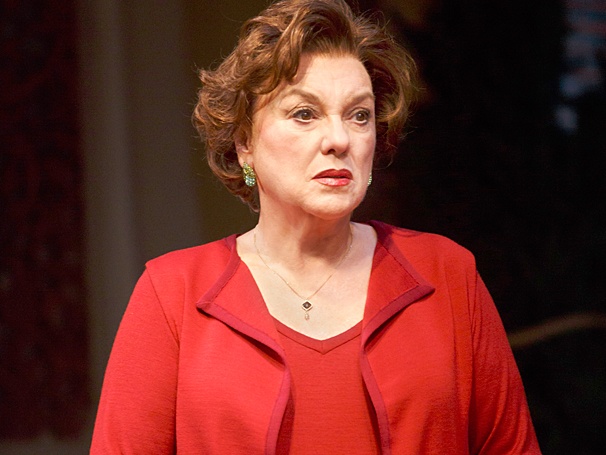
Tyne Daly, photo courtesy "Mothers and Sons"

Tyne Daly, photo courtesy “Mothers and Sons”

“Mothers and Sons”

John Golden Theatre, 252 W. 45th St.

Premiered March 24

The word: Tony and Emmy Award–winning actress Tyne Daly has earned good to mixed reviews for her star turn in this new play by four-time Tony Award–winning playwright Terrence McNally.

Chris O'Dowd and James Franco, courtesy "Of Mice and Men"

Chris O’Dowd and James Franco, courtesy “Of Mice and Men”

“Of Mice and Men”

Longacre Theatre, 220 W. 48th St.

In Previews; Premieres April 16; Closes July 27

The word: When he’s not sending flirting texts to teen girls, movie star James Franco is making his Broadway debut in this revival of the John Steinbeck classic.

Image courtesy of broadway.com

“Raisin in the Sun” image courtesy of broadway.com

“A Raisin in the Sun”

Ethel Barrymore Theatre, 243 W. 47th St.

Premiered April 3; Closes June 15

The word: This revival of Lorraine Hansberry’s classic play has received rave reviews for star Denzel Washington as well as the play’s other leads—Anika Noni Rose, Sophie Okonedo, and LaTanya Richardson Jackson.

Broadway_rocky_time

“Rocky” image courtesy of time.com

“Rocky”

Winter Garden Theatre, 1634 Broadway

Premiered March 13

The word: This Broadway musical version of the iconic movie franchise has received mixed reviews but its lead actors and the show’s final scene have earned universal praise.

“The Velocity of Autumn”

Booth Theatre, 222 W. 45th St.

In previews; premieres  April 21

The word: This is a play by Eric Coble and starring Broadway favorite Estelle Parsons with Stephen Spinella.

—Karyn D. Collins

Cirque du Soleil’s Amaluna Charms and Excites, but?

Cirque Amaluna 1When you’ve established a reputation for setting new standards in creativity and “wow” moments, it gets harder and harder to top yourself. So, it is that with “Amaluna,” the newest production by Cirque du Soleil, there is no new “wow,” just plenty of a classic Cirque du Soleil moments.

And since classic Cirque du Soleil is still better than most of what’s out there on the entertainment scene, audiences will find plenty of magic, charm, beauty and yes, even some “wows.”

The Montreal-based entertainment company’s latest production, “Amaluna,” is being performed through May 18 on the grounds of Citi Field in Queens (home of the New York Mets), under one of Cirque du Soleil’s signature blue and gold striped traveling tents. For information and tickets go to: www.cirquedusoleil.com/amaluna

Collages295One of the wonders of Cirque du Soleil is that, with a few notable exceptions like its cadre of spectacular Las Vegas shows, it continually produces great shows with a mix of new acts and those that seem to rotate around the Cirque universe in different incarnations. Add some cool background music, beautiful costumes and sets, and a patina of class and style and Voila! Welcome to Cirque du Soleil.

But just when you think you’ve seen it all, Cirque du Soleil one-up’s itself. And so it is with “Amaluna.”  And this time around, part of the difference maker is that there is a smidgen of a narrative, an unusual element in the Cirque du Soleil world.

Written and directed by noted theatrical director Diane Paulus (“Pippin,” “The Gershwins’ Porgy and Bess”), “Amaluna” tells a story loosely based on Shakespeare’s “The Tempest” and “Romeo and Juliet”;  Mozart’s opera, “The Magic Flute,”; and Greek and Norse mythology. Here, we meet Miranda, daughter of Prospera, a goddess who rules over a kingdom of female warriors and goddesses and other life-sized mystical creatures. When Miranda falls in love with a (male) Pirate named Romeo who washes ashore, the couple must prove themselves before they can receive Prospera’s blessing.

Downloads215The female-centric story means that almost all of the performers, including the live rock band, are women. And there is definitely a very cool Girl-Power vibe that gives an extra jolt throughout the show. You can’t help but smile, for example, at the battle cries from the fierce female gymnasts who serve as Prospera’s warriors. And the rocker chicks, who frequently appear onstage with the performers, add a cool vibe as only a rocker chick can.

Added to this are the kind of beautiful visual effects—hand painted, intricately detailed costumes and sets—that show a painstaking attention to detail. A small swimming pool mirrors the crystal ball given to Miranda (played with a sprite-like charm by Iuliia Mykhailova) and the daredevil edge of her contortions take on another dimension when she ends a series of maneuvers by diving into the pool.

All of this makes for some beautiful window dressing for a series of thrilling athletic and juggling acts. But there’s also a sense that the show is building up to a climactic moment that never quite happens.

Cirque Amaluna 6

All images courtesy of Cirque du Soleil

Yes, in addition to Miranda and her Romeo, there are plenty of oohs and ahs. The Icarian jugglers are charming, spinning their lamps while they are twirled and tossed on the feet of their partners. Modern dancer Amy McClendon is mesmerizing as the Peacock Goddess, making absolute magic out of little more than a series of arm movements and purposeful strides. And the trio of aerial strap artists thrill as they soar above and into the audience (a definite benefit of being in the Cirque tent instead of an arena).

But there wasn’t that one amazing moment. True, the performance I attended was absent one act because of an injury. Was that the “wow” that was missing? Perhaps. But it’s also quite likely that this is a Cirque production built not for a climactic spectacular moment but for an overall high gloss experience.

—Karyn D. Collins

Ladies and Gentlemen … The Beatles!

Collages291Fifty years ago, the winter of our discontent quickly became the winter that changed rock and roll in America.

That was the winter that the Beatles took America by storm. In one of the more unique tastes of Beatlemania, the New York Public Library for the Performing Arts—located at Lincoln Center—started offering fans a chance to step back in time thanks to a special multi-media exhibit, “Ladies and Gentlemen … The Beatles!” The Beatles exhibit will be on view through May 10.

This is a full-immersion exhibit into Beatlemania. The simple cases in the front lobby of the library with the display of original records, album covers, newspaper and fan magazine clippings are just a hint of what awaits visitors once they step into the gallery on the library’s first floor.

The display cases contain some quirky finds—a press release from Capitol Records that mentions the Beatles’ impending arrival in America; a February 11, 1964 column by Dr. Joyce Brothers in which she explains to worried parents that teenybopper’s adoration of The Beatles is a result of “adolescent rebellion (which) appears to be an unavoidable trauma.”

That’s all just a warm-up for the main act happening inside the library’s main gallery. Take a step inside that gallery and hello, you’ve stepped back in time. As you gaze at life-sized portraits of John, Paul, George, and Ringo, you’ll hear all the Beatle-related sounds of that winter of 1964.

This gallery rocks with the Beatles’ hits from 1964 like “She Loves You” and “I Want to Hold Your Hand.” Visitors will see (and hear) plenty of images of chattering, screaming, sobbing, singing teenagers.

“We love you Beatles, oh yes we do…”

Image courtesy of theguardian.com

Image courtesy of theguardian.com

The exhibit also features news coverage of the Beatles landing in New York City including the now-classic press conferences where the lads from Liverpool proved themselves to be quick with clever one-liners. Robert Santelli, the music historian and critic who is executive director of the Grammy Museum in Los Angeles that put the exhibit together, said the press conference footage is one of his favorite parts of the exhibit.

“I love the press conference when they first get off the plane in America. We see the wit, their humor and their ability to respond to some of the silliest questions that any rock and roll band had to answer,” Santelli said. “They did it with such style and grace and wit. If you don’t think The Beatles were funny guys, all you have to do is watch the clips of the press conference.”

Santelli said the biggest challenge in putting together the exhibit was deciding what could be cut. There just wasn’t enough room for everything, he said.

hoto courtesy the Grammy Museum/Fab Four Exhibits LLC and Jonathan Blanc/The New York Public Library

Images courtesy of the Grammy Museum/Fab Four Exhibits LLC and Jonathan Blanc/The New York Public Library

“We found a number of collectors whose collections were pretty substantial so there was a lot of material for us to choose from—over 600 objects to choose from. And the library had a very large collection of items as well,” Santelli said. “In the years that the exhibit deals with—1964 through 1966, there was so much Beatles merchandise and Beatles related objects so it really was difficult to figure out which items to leave out.”

Clearly, Santelli and his team opted to include as much as possible. In one area of the gallery, for example, the exhibit shows a teenaged Beatles fan’s bedroom (Santelli said he recreated his own bedroom from his childhood growing up in New Jersey) complete with a Beatles record player, a transistor radio blasting Beatles songs, Beatles trading cards and Beatles posters on the walls.

hoto courtesy the Grammy Museum/Fab Four Exhibits LLC and Jonathan Blanc/The New York Public Library

Images courtesy of the Grammy Museum/Fab Four Exhibits LLC and Jonathan Blanc/The New York Public Library

In another section of the gallery, a Beatles “store” shows a staggering display of Beatles merchandise—lunch boxes, wigs, sneakers, books, pins, coin holders, coloring books and dolls. There’s even Beatles gum and Beatles cans of Nestlé’s Quik chocolate milk mix.

The exhibit also includes sections about what else was happening in American pop music when the Beatles hit America and some behind-the-scenes footage about the group’s appearance on “The Ed Sullivan Show.”

The Beatles on the "Ed Sullivan Show" in 1967. Image courtesy of google.com

The Beatles on the “Ed Sullivan Show” in 1964. Image courtesy of google.com

While the bulk of the exhibit is devoted to the years the Beatles devoted to touring before retreating to the studio for the rest of the band’s existence, the rear of the gallery features three sections that link memories of the Beatles to the present day. In one area, documentary shows current and past rock icons, including Ringo Starr himself, reminiscing about the Beatlemania days.

In another section, a drum kit is set up to allow visitors to play the drums with instructions from Ringo. The final section of the exhibit is a recording booth where visitors can leave their memories about the Beatles and what the group’s songs mean to them now.

Fashion_Reverie21“I’m really excited about the oral history booth,” Santelli said. “This exhibit is going on tour after it closes in New York and we’re hoping to collect 25,000 reminisces. I think we probably have around 7,000 so far.

“Eventually we’ll keep all of the oral histories at the Grammy Museum. Fifty years from now, if people are writing a book on The Beatles, they’ll have all of these memories from people who were tremendously affected by The Beatles.”

—Karyn D. Collins

Les Ballets de Monte-Carlo Revisits Swan Lake

LAC_01It is very difficult to perform classical ballet repertoire extremely well. There are the technical demands, as well as a precise understanding of the style and nuance of these revered classics. Yet, season after season international ballet companies tackle these pyrotechnical warhorses to critical acclaim or to lukewarm results.

Les Ballets de Monte-Carlo has taken a somewhat different approach to Swan Lake, one of the most well known ballets from the Ivanov/Petipa repertoire. Though other companies have updated Swan Lake in the past—from National Ballet of Canada’s Freudian version to Matthew Bourne’s modern dance–based, homoerotic incarnation—Les Ballets de Monte-Carlo’s LAC after Swan Lake incorporates mixed media, movement from a variety of dance styles, as well as a modern sensibility evidenced in narrative, costume, and corps de ballet configuration.

LAC_05Though the narrative in LAC defers somewhat from the original Swan Lake that is based on a German folktale, some story elements remain consistent. The Prince must marry an eligible young aristocrat, there are evil forces afoot, and the Swan fluctuates between human form and a hybrid of bird and humanoid. The resemblance to the original storyline ends there. Instead of the evil magician Rothbart, there is a maniacal malicious Majesty of the Night in league with the Prince’s King Father, the Prince has a mother and a father in this version, and the Prince is the protagonist of the ballet instead of the Swan.

“Of course as a dancer, and being fascinated with Tchaikovsky’s music, I had to face Swan Lake at some point. For me, it is about trying to see if it’s possible to bring some contemporary code into those traditional ballets,” details Les Ballets de Monte-Carlo artistic director Jean-Christophe Maillot in a phone interview with Playbill.

Enter novelist/scriptwriter/lyricist Jean Rouaud who Maillot met at the Monaco Dance Forum.  “We discussed the mythology of those big classical ballets and tried to see if, by telling the story in a very precise way, we could bring something different to it that would be more connected to the reality of today, for the dancers,” explains Maillot.

he cast of Jean-Christophe Maillot’s LAC (After Swan Lake).  Photo by Laurent Philippe

he cast of Jean-Christophe Maillot’s LAC (After Swan Lake). Photo by Laurent Philippe

It appears that this revised, modern adaptation works choreographically for this company. Gone are the stylized swan arms and undulations—well, most of it—and the imperial approach to Tchaikovsky’s swelling score. Maillot’s naturalistic movement style, which includes Graham-like contractions, lyrical steps in the style of Lester Horton, combined with Maillot’s hybrid ballet vocabulary has created a lexicon of movement styles that gives LAC modern accessibility and buoyancy. The dancers soft, pliant pointe work was also a welcome relief from the staccato rat a tat tats of noisy pointe shoes.

Also, in Maillot’s LAC, the movement styles and stagecraft support the music in ways that don’t encroach on Tchaikovsky’s magnificent score. At times, it was like hearing Swan Lake for the first time without too many stage distractions.

Jean-Christophe Maillot’s LAC (After Swan Lake).  Shown: Anjara Ballesteros as The White Swan, Lucien Postlewaite as The Prince.  Photo by Alice Blangero.

Jean-Christophe Maillot’s LAC (After Swan Lake). Shown: Anjara Ballesteros as The White Swan, Lucien Postlewaite as The Prince. Photo by Alice Blangero.

One of the other elements that stood out most dramatically in LAC was Philippe Guillotel’s costumes. Guillotel’s costumes for this production were on trend, incorporating asymmetrical cuts, combinations of layered diaphanous fabrics, metallic fibers, and juxtaposing hard and soft fabrications. Though Guillotel’s creations were modern in scope and facilitated ease of movement for the dancers, there was a nod to some of the traditional ballet costumes seen in Swan Lake. The standouts among Guillotel’s costumes were the feathered, sequined gloves that conjured up images of flapping swan wings and the Majesty of the Night’s peplum/short tutu black sequined tunic.

The dancers in this company are all brilliant; however, there were some standouts.  Les Ballets de Monte-Carlo principal dancer April Ball was equally menacing and deliciously sensual as the Majesty of the Night. Noelani Pantastico as the Black Swan/Odile had the right combination of muscular urgency and lyrical elegance. And Anjara Bellesteros as the White Swan/Odette is graceful classicism at its best.

Image courtesy of Les Ballets de Monte-Carlo

Image courtesy of Les Ballets de Monte-Carlo

Still, the corps de ballet in this work is worth taking note of. Though the swans were a little “Swan Lake on Quaaludes” at times, the beauty and uniformity of the corps was not the point of Maillot’s LAC. This production uses the incredible acting/dancing ability of Maillot’s artists in ways that more traditional versions of Swan Lake don’t.

Though LAC may cause Swan Lake purists to cringe at times, there is much good to be said about Maillot’s reworking of this great classic. And those feathered, sequined gloves would look great on a runway!!

—William S. Gooch

Fashion Reverie Exclusive: Misty Copeland, an Unlikely Ballerina

Images courtesy of Vogue Italia

Images courtesy of Vogue Italia

Soloists in the ballet world are usually fairly anonymous beings, except to those who religiously follow the classical ballet world. They are, as one dancer once put it, the bridesmaids of ballet—in a state of constant waiting—to get a precious lead role, to move up, to be the one.

But Misty Copeland is anything but the usual soloist.

Yes, technically Copeland is a soloist with the prestigious American Ballet Theatre (ABT), a rank she’s had since 2007. And yes, within ABT—the country’s second largest ballet company— she is certainly playing the waiting game when it comes to getting plum roles.

But in every other way, Copeland is unique, achieving a level of renown and celebrity that even many principal dancers never achieve.

Images courtesy of Vogue Italia and ABT.com, respectively

Images courtesy of Vogue Italia and ABT.com, respectively

Part of that is due to her unique status. Not only is she a black ballerina in the very white classical ballet world, but she is one of a very few black dancers to ever make it to her level—a soloist with one of the world’s top ballet companies. Copeland is only the second black woman ever to be a soloist at ABT.

Then there is Copeland’s unique story. She only began studying ballet at age 13 after a drill team coach at the local Boys and Girls Club introduced her to a ballet teacher. Most girls begin training by age 7, if not younger. After only a few months, she was dancing on pointe. Within a year, she was competing and performing.

But that ascendancy came amid instability at home—constant moves, including a period living in a motel; dealing with her mother’s boyfriends and husbands including some who were alcoholic or abusive; and a battle between Copeland’s mother and her ballet teacher that culminated in Copeland briefly seeking to emancipate herself from her mother.

All of that, to say nothing of Copeland’s dynamic presence onstage, has led to the type of offstage celebrity that few dancers, even principals, enjoy. She’s even performed with music superstar Prince. Nelson George is filming a documentary about her.

Image courtesy of huffingtonpost.com

Image courtesy of huffingtonpost.com

This month, Copeland has released her autobiography, “Life in Motion: An Unlikely Ballerina.” In May, she’ll appear with American Ballet Theatre, including a major new role for her—the lead role in Delibes’ “Coppelia.”

Here, Fashion Reverie offers a brief, exclusive Q & A with Misty Copeland.

Fashion Reverie: Why did you decide to write your book and why now?

Misty Copeland:  When the opportunity came from Simon and Schuster/Touchstone, I was definitely intrigued. I thought the timing as far as where I am in my career could make for a very unique viewpoint.

FR: What did you want to say or feel was important for people to know now?

Misty Copeland: I felt that with the platform I have as an African American ballerina still in the prime of her career, that I could reach so many people. Sharing my story I thought was bigger than me as an individual. I believe it is universal and could influence a new generation to want to dream.

Images courtesy of Vogue Italia

Images courtesy of Vogue Italia

FR: You have been, without question, the most visible and celebrated soloist in a major ballet company who hasn’t—as of yet—been elevated to a principal dancer position. Others have been seemingly fast tracked ahead of you for whatever reasons. Do you think your being so open and public about your issues as a black woman in the ballet world has been a reason why you’ve been held back?

Misty Copeland: I don’t believe this is the reason. I know that my Artistic Director Kevin McKenzie has always been my number one supporter, willing to nurture me through all of my setbacks with injuries. I think that timing plays a role. My late introduction to ballet caused me to have to reassess a lot as I was evolving as a professional, which often happens while you’re still a student. I do believe that more than just the Artistic Director makes decisions and maybe his support alone hasn’t been enough to push me to the next level.

FR: What were the toughest parts of the book for you to write about and why? 

Misty Copeland: The toughest was writing about my childhood. There were situations I never actually spent time analyzing. It was a healthy process though.

FR:  Do you feel a lot of pressure to succeed, even now or especially now?

Misty Copeland: The pressure I feel is not so much from the black community, but from the dance world. Waiting and watching to see if I’m perfect because maybe that’s what they [the dance community] believe a black woman needs to be to reach this level of success in ballet. I have my own expectations of myself that I feel I need to accomplish in order to make my people and myself proud.

Downloads191FR: The subtitle of your book says “My story of adversity and grace.” When did you realize or come to understand that handling things with grace would be a crucial part of your story.

Misty Copeland: I’ve learned in my time as a professional ballerina that the ballet world doesn’t work like rest of the world; which I appreciate to some extent. The structure of respect and history is deep rooted in ballet. So that is ingrained in me because of ballet, to handle things with grace throughout my life.

—Karyn Collins


Jessica Lang’s Unusual Dance Trajectory

lang6In the dance world, some of the biggest stories have been about choreographers leaving their companies to return to their previous lives as freelance choreographers. Choreographer Jessica Lang has made news by doing the opposite. After 12 years as a successful freelance choreographer with more than 80 commissions and counting, Lang formed her own company.

Audiences will be able to see the two-year-old Jessica Lang Dance perform this week at the Joyce Theater.  The company performs through Jan. 23.

“I love it. It’s great having a company. It’s a good balance between my freelance work and building the company,” Lang said.

Lang said she enjoys the consistency of working with the same group of dancers.

Jessica Lang

Jessica Lang

“The bulk of my life has been about walking in with a plan, but not knowing anyone and them not knowing me. But by the second day I have to have a cast selected. That’s the reality when you’re a freelance choreographer,” Lang said. “With my company, I can come in and I know who’s in front of me. They dance my movement the way I want it to be done and their commitment allows me to have the freedom to keep growing myself artistically.”

“With my company it’s more about my work. When I go to another company it’s about that company’s experience in my work and how my work or my voice can be useful for them. I have a responsibility to give them something useful.”

Lang noted that she thinks of choreographer Mark Morris as a model for the career she’s forging.

lang3“He has his own company, his own voice, his own place to create and call home and yet he still does take outside commissions from various dance companies and operas. He also has a school,” she said. “All of that is really interesting and inspiring for me.”

Lang added that she’s also finding that with her own company, she can branch out more with some of the company members setting her works on one company while she travels to create a ballet with another company. “I can’t do it all so it’s great to have that kind of help,” she added.

lang5Another benefit for Lang (and for audiences)is that she has been able to surround herself with a cadre of seasoned, accomplished dancers whose credits include the Mark Morris Dance Group, Suzanne Farrell Ballet, the Merce Cunningham Dance Company, and the Metropolitan Opera.  And one of the most interesting additions to the Lang company has been former Alvin Ailey star Clifton Brown, who in addition to performing with the Lang Company also serves as the company’s rehearsal director. Brown, who left Ailey in 2012 after 12 years—the last as a guest artist, now works as a freelancer with, among others, Lang and Lar Lubovitch.

“I think (Lang) is an artist who I feel has a very clear vision and I think that’s kind of rare these days,” Brown said. “When I look at people’s work I would like to do or people I would like to work with, that’s very important.”

Photos by Takao Komaru, courtesy of Jessica Lang Dance and CAMI

Photos by Takao Komaru, courtesy of Jessica Lang Dance and CAMI

“I like the range in her work. There are some pieces that have a vocabulary that’s a little more classical ballet in terms of the movement vocabulary. But then there are other pieces that are much more grounded and modern in their aesthetic. But her voice is very clear throughout. That, in a nutshell, is what draws me to working with her.”

For tickets and performance information go online at www.joyce.org.

—Karyn D. Collins


Fashion and Football’s Brad Smith

Brad_Smith_14Brad Smith admits that most of the time if you see him on the street, the wide receiver for the Philadelphia Eagles will probably be dressed in sweats or jeans.

“I’m an athlete,” he said, explaining. “I don’t dress up too much.”

Brad_Smith_11

Photo by D. King for Visit Philadelphia/Philly 360°

But that doesn’t mean Smith is clueless when it comes to fashion. His closet, he said, includes a little bit of everything. Yes, there’s some Wal-Mart on the rack. But Smith said his closet also contains some Canali and Balenciaga.

If Smith has a discerning eye for fashion—he calls his personal style “subtle devastation”—he also has a sense of the realities of the fashion world. That’s why he’s headlining a special reception Friday night during New York Fashion Week to introduce designer Keser “Kassie” Haji of Columbus, Ohio who won a design contest Smith sponsored.

Brad_Smith_11“We wanted to build something where we can show how much we love fashion but at the same time give somebody an opportunity to be seen, let their art be shown and give them a step in the right direction in building a career in fashion,” he said of the Design for Brad Smith competition.

Fashion is more than just a passing fancy for Smith. He is a fashion contributor to Men’s Health magazine and did a fashion editor internship with the magazine last year.

“Fashion is like an art form. It’s a way of expressing yourself, just like sports,” he said. “For me it’s just a natural carryover from sports. It’s a way to get out of yourself.”

—Karyn D. Collins


Rennie Harris Sets the Record Straight about Hip Hop Dance

Rennie_Harris_01Rennie Harris knows that he doesn’t always say what people expect to hear when he’s asked about his dance company, Puremovement, and its groundbreaking work bringing hip hop to the concert dance world. He knows that he doesn’t always create what people expect to see either. But, after almost 24 years of being immersed in the concert dance world Harris feels that now more than ever it’s important for him to continue to represent what he believes is the truth about hip hop dance.

“I feel like we’re in a state of fighting the image of what presenters think is hip hop. I feel like I’m fighting for what’s authentic,” he said.

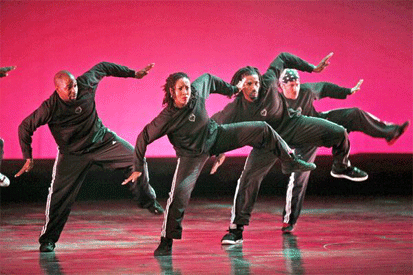
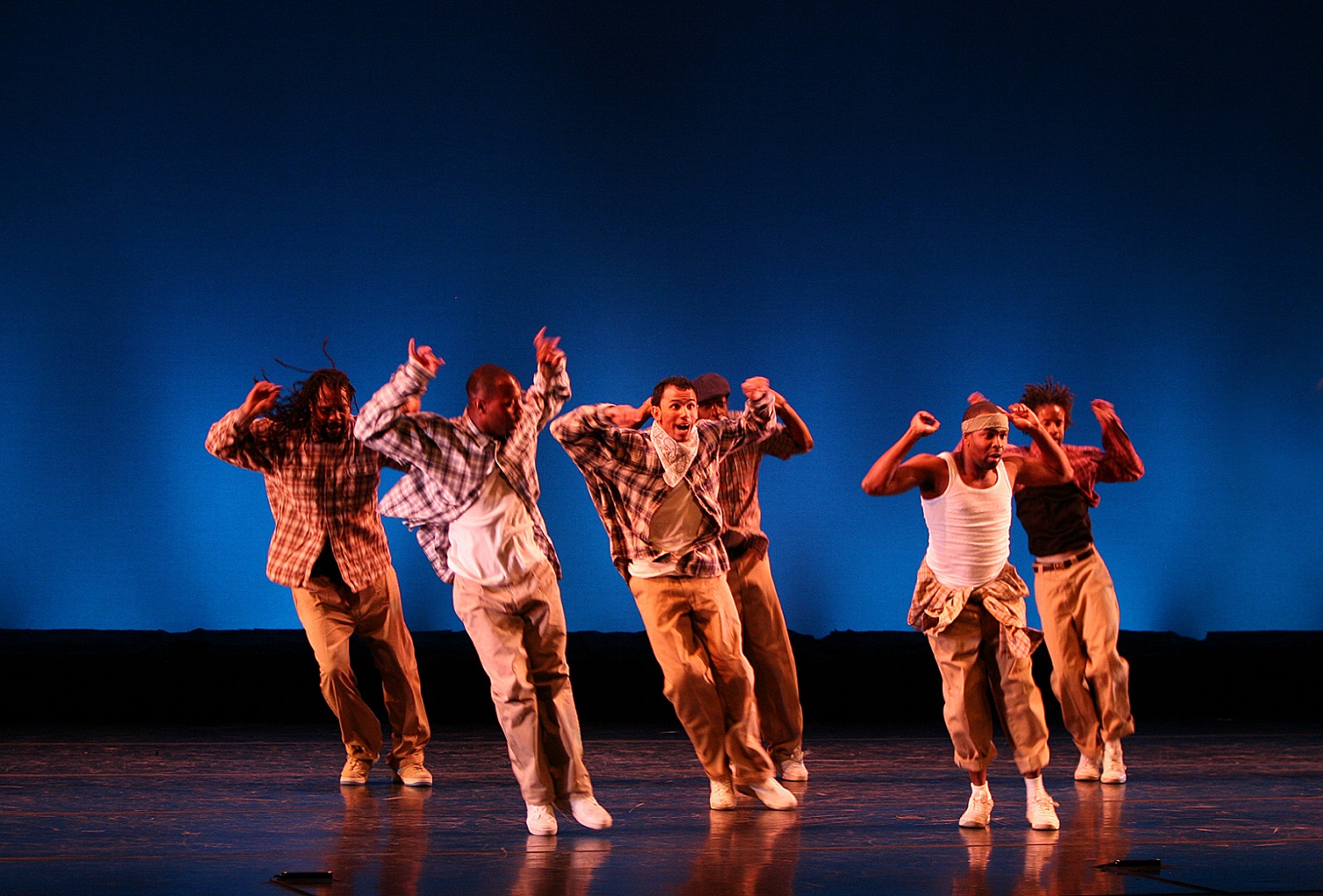
The Philadelphia-based Puremovement will present Harris’s definition of authentic hip hop when it performs Januay 28–Feb. 2 at the Joyce Theater. The Joyce programs will include highlights from the Puremovement repertoire: excerpts from his “Romeo and Juliet” inspired work “Rome & Jewels,” “Continuum,” “P-Funk,” “March of the Antman,” and “Students of the Asphalt Jungle.”

Rennie_Harris_05

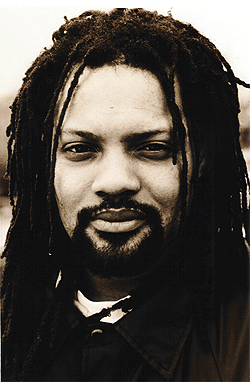
Rennie Harris

Harris, who divides his time between Philadelphia and Los Angeles where he is a dance professor at UCLA, said a big part of the challenge in presenting hip hop in the concert dance world is that expectations are skewed. Presenters and audiences, he said, are either looking for what they see on television in shows like “So You Think You Can Dance,” or they expect to see works that fit the model of more traditional dance works.

“I think artistically there’s a long way to go when it comes to hip hop or street dance. I don’t think enough time has gone by for people to really understand what they’re watching with regards to the movement,” he said. “You have a lot of presenters who are still judging it through a European lens.”

“At the same time, a lot of what is being called hip hop is just a mixture of jazz or modern dance and they call it hip hop and think ‘Oh, this is amazing work.’ When you watch a video and see all this choreography, it’s really just jazz dance with the gestures of rappers.”

Rennie_Harris_03

The real hip hop, Harris said, has a rawness to it and less of a concern with things like the placement of the arms or complicated spins.

“Hip hop dance comes from the hips down and it’s supported by the arms. The arms don’t necessarily dominate. It’s not about grabbing your crotch and all that,” he said. “If you watch hip hop from the early ‘80s like in a Dougie Fresh or Queen Latifah video you’ll see real hip hop. That’s the real thing.

“What you see today is okay. Some of it is actually dope. Some of it looks good. I’m not saying it’s not good dance, but it’s just not hip hop. It’s a hybrid.”

RHPM company picAt the same time though, Harris said he tries to be careful not to criticize the work of his fellow artists. Asked, for example, what he thinks of Lil’ Buck, who has become the new darling of the concert dance world with his performances combining the hip hop style known as Jookin with classical music, Harris gives a cautious critique.

“I don’t call it hip hop. It’s street dance. It’s interesting. He’s doing some gliding and some waves. It’s not really new. But it’s sort of like a new wave of juxtaposition,” Harris said. “That’s not to disrespect him or say he’s not a good dancer.”

Images courtesy of Rhennie Harris Puremovement

Images courtesy of Rennie Harris Puremovement

Harris, understandably, is more comfortable talking about what he’s doing and how that fits into furthering the conversation about what hip hop dance is really about. “My art is not about being dynamic all the time even though that’s what presenters and some people expect,” Harris said. “My art is about using this movement that started as social dance and using it as a base. It’s about being introverted and intelligent and thought-provoking.”

For more information or for tickets go online at www.joyce.org.

—Karyn D. Collins

Copyright © 2012-2025 | Fashion Reverie Publications, LLC - All Rights Reserved