
Image courtesy of joblo.com
Film critics knew it would happen. We just didn’t know when. We all understood that is was time overdue for a mega box office Asian film that put Asians as the main characters and spoke to the growing number of wealthy Asians globally.It has been 25 years since the US has had an Asian film—“The Joy Luck Club”—with a majority Asian cast. And though “The Joy Luck Club” had a stellar Asian cast and did well at the box office, Hollywood did not really stand up and take notice and nor did “The Joy Luck Club” spur Hollywood to invest dollars in other Asian films with a mainly Asian cast.

Image courtesy of vanityfair.com
That said; 25 years after “The Joy Luck Club” things have changed. Asians are the largest group of new millionaires and billionaires globally. And “Crazy Rich Asians” reflect this new wealth demographic. Though most Asians are not wealthy, in fact, globally, most Asians live below the poverty level; this fact did not stop Hollywood from producing a cinematic look in the luxury lifestyles of the Asian one percent—and in “Crazy Rich Asian’s” case, Asians from a former British colony, Singapore.“Crazy Rich Asians,” a romantic comedy based on Kevin Kwan’s novel, centers on Chinese American Rachel Chu (Constance Wu), a New York University economics professor, who travels with her boyfriend Nick Young (Henry Golding) to his best friend’s wedding in Singapore. Rachel does not know that her boyfriend’s family is the wealthiest and most esteemed family in Singapore.

Image courtesy of variety.com
Excited about visiting Asia for the first time, Rachel is not prepared for the rigors of Singapore’s elite class and in particular the expectations of Nick’s disapproving mother (Michelle Yeoh). Feeling out of place, Rachel reaches out to college roommate Goh Peik Lin (Awkwafina), whose family is a part of Singapore’s garish nouveau riche, for support and a quick lesson in the morays of Singapore’s elite class. What ensues is a layered romantic comedy that gives insight into the East meets West culture of Singapore and a universal love story about the clash of culture and class.Director Jon M. Chu gives audiences an inside peek into how very rich Asians live, outside of the US, and how Western culture has permeated Asian countries. And though this film is very funny, particularly the scenes with Awkwafina upstaging, in a good way, almost every actor in sight, Jon M. Chu touches on some very important elements of Asian culture that, in spite of Western assimilation, has not been uprooted. Michelle Yeoh represents those old world values; values that contradict Western attitudes toward individualism and personal achievement. Rachel, who was born in the US, is pitied against these old world standards and most find a way to adapt.

Image courtesy of nymag.com
At first glance, “Crazy Rich Asians” is formulaic and could be about any wealthy ethnic group grappling with fading, old world values and the inchoate morays that can accompany great wealth. However, at closer examination, Chu is asking audiences to re-examine neo-liberal concepts of wealth and status. In this way, “Crazy Rich Asians” has more depth and texture than more recent films of this ilk.Interestingly, Jon M. Chu displays an excessive amount of the Western influences of decadence, greed, and individualism compared to his examination old world Asian values of family, saving face, and sacrifice. Perhaps, Chu is saying that these decadent Western influences don’t work so well outside of Western countries, making folks a little schizoid and crazy. Or, at a deeper level Chu is demonstrating that old social norms die a hard death or never really disappear.

Image courtesy of hollywoodreporter.com
Whatever Chu’s motivation, “Crazy Rich Asians” is a lot of fun and a great addition to the end of summer blockbuster season. Standout performances, and there were many, include Awkwafina’s (Goh Peik Lin) over-the-top, hip hop–embellished portrayal of Rachel’s college roommate; Michelle Yeoh’s dogmatic, steely portrayal of Nick Young’s mother; Constance Wu as the Chinese-American girlfriend caught between two worlds; Lisa Lu as Nick’s stoic grandmother, and Ken Jeong as Goh Peik Lin’s nouveau riche dad.”Crazy Rich Asians” opens nationally on August 15.
—William S. Gooch
 R&B singer Porcelan is a triple threat. She’s got talent, looks, and intelligence. In an age when market traction can be about how great an artist looks in a video or magazine spread, Porcelan harkens back to a not-long-ago era when R&B singers had great looks and a great voice. (Think Whitney Houston, Mariah Carey, Tamia, Toni Braxton, and Deborah Cox.)


 FR: I noticed that in one point in the “Lois Lane” video you have your love interest walking with you and protecting you on the red carpet. As you have become better known, do you feel that you need more protection or have you become more cautious about outside forces?
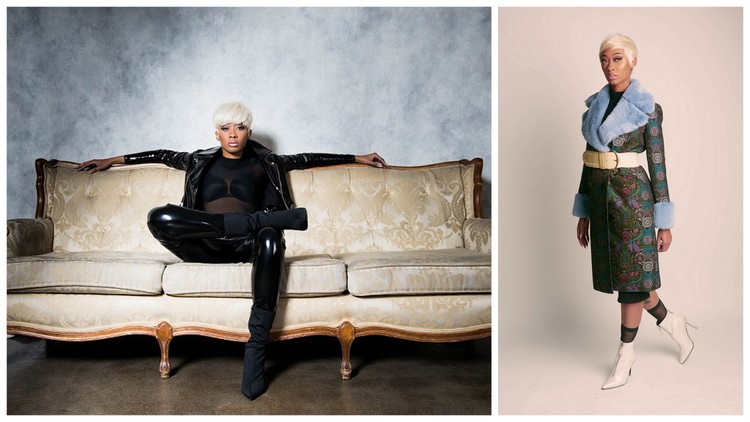 FR: How would you describe your personal style?

 Alicia Silverstone is currently singing her dramatic song in Paramount’s new television series “American Woman.” The show, based on the childhood of actress and socialite Kyle Richards, takes us through 70s wave of feminism as women began entering the workforce in higher numbers, seeking independence from traditional roles.

 FR: What other fashion brands did you use?
 FR: Were replicas made?




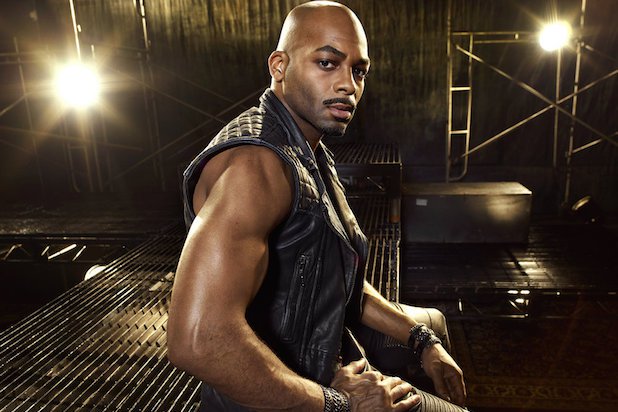







Boots Riley Gets it Frighteningly Right in “Sorry to Bother You”
Image courtesy of nymag.com
What can be said about Boots Riley’s “Sorry to Bother You”? A lot can be said. There is humor in this film, a love story, juxtapositions of wealthy elites against the working class, and most of all a phantasmagorical surrealism. All these disparate elements and sub-stories are all rolled into one surprisingly cohesive story. Which is a testament to how good of a writer and storyteller writer/director Boots Riley is.Known mostly as a political activist and lead vocalist of The Coup and Street Sweeper Social Club, Boots Riley in his directorial debut has spearheaded a film that is apt for our current, tumultuous political climate. “Sorry to Bother You,” though infused with humor, metaphor, and satirical commentary on the growing rift between economic elites and everyone else, is still entertaining in spite of the film’s harrowing message.
“Sorry to Bother You”—which some film critics might deem a science fiction comedy—follows the journey of a young African American telemarketer, Cassius Green, as he adopts a Caucasian-sounding sales pitch and rises to the top of the sales/marketing ladder. During his ascent Cassius Green is faced with choosing the wealth and creature comforts of his recently acquired success or helping his fellow workers organize a labor union. (Consider the play of words with Cassius “Cash” Green’s name that references money and sports icon Cassius Clay aka Mohammad Ali. And like Cassius Clay, Cassius Green has a ‘eureka’ moment that changes is ideology and life perspective.)
Image courtesy of theatlantic.com
At first glance, “Sorry to Bother You” is reminiscent of Spike Lee’s attempt in the late 1980s and early 90s to make socially relevant films that commented on race, class, and social mobility. (Riley even uses some of Lee’s cinematic techniques.) Still, Riley’s foray into cinematic expression is different from Spike Lee because there is a lot more humor and Riley’s metaphorical, phantasmagorical images, though harrowing and rooted in science fiction, when examined more closely, those images reflect accurately the times we are living in. Which in some ways makes those metaphorical references tangibly eerie.There are some very strong performances and standout moments in “Sorry to Bother You.” Though Danny Glover has a small supporting role as a fellow telemarketer, he almost singlehandedly is the deus ex machina of this film, expertly providing the momentum to push the film forward. Omari Hardwicke as Mr. _________ is brilliant as a clandestine character that aids Cassius Green in his transition from worker drone to successful marketer. And LaKeith Stanfield as Cassius “Cash” Green brings nuance and depth to Cassius Green nerdy, and ship-without-a-sail character. Stanfield also craftily navigates Cassius Green’s evolution from aimless worker drone to informed citizen.
Image courtesy of syfy.com
Standout scenes include, but not are not limited to, the scene where nerdy Cassius satisfies his rap music thirsty white co-workers by shouting the N-word every two seconds; Cassius stumbling upon equine/humans in the men’s room, and Cassius becoming more sexually appealing after he becomes more successful, even though his physical appearance has not changed. And even more impressive is how strategically Riley handles crowd scenes, a real accomplishment for a first-time director.In this current political climate, one would wonder how “Sorry to Bother You” has achieved nationwide release. Perhaps, this film slipped through cracks because of its criticism of capitalist elites and big business and not the Trump Administration directly, even though they are one in the same. At any rate, “Sorry to Bother You” is a film that must be seen.
Image courtesy of theatlantic.com
In “Sorry to Bother You, we finally have a film with a strong people of color cast that makes you think. We need many more films just like this!!”Sorry to Bother You” is playing in cinemas nationwide.
—William S. Gooch