The Demise of Made in the U.S.A

Look for the union label
when you are buying that coat, dress or blouse.

Remember somewhere our union’s sewing,
our wages going to feed the kids, and run the house.

We work hard, but who’s complaining?
Thanks to the I.L.G. we’re paying our way!

So always look for the union label,
it says we’re able to make it in the U.S.A.!

—Song by Paula Green, music by Malcolm Dodds

Boy, we haven’t heard the ILGWU (International Garment’s Workers’ Union) song in a long time. But on the eve of Labor Day, a presidential election, and with Mercedes-Benz Fashion Week less than a week away, the state of garment manufacturing in the US is heavy on the minds of many in the fashion industry and beyond.

The ILGWU song was composed in 1975, and in that year manufacturing was a strong, integral part of the American economy. I remember that in my hometown and surrounding cities in North Carolina there were over 20 textile plants. Sadly, now there are none. Most folks in my hometown worked in these plants, had a good, sustainable lifestyle and sent their children to good universities on the earned income from these jobs. Now, many of the citizens of these small North Carolina towns work in fast food and have to commute over an hour to low-paying jobs that offer very few benefits, pensions and chances for advancement.  This unfortunate, but true-to-life scenario is played out in many small and moderate-sized towns across the country; and even a metropolis as diverse and multifaceted as NYC has been affected by the demise of American manufacturing.   In the mid-80s, NYC boasted over 3,000 mom and pop factories; yet, today those numbers have decreased to a little more than 200 small shops.

Where did it all go wrong?

“ADIN International was founded my father 45 years ago.  And since that time, we have seen dramatic changes in the garment industry. We’ve survived by diversifying and being smart … Forty-five years ago there was no Limited, The Loft, Urban Outfitters, Casual Corner, etc. Macy’s only had maybe 20 stores. Most retail stores were mom and pop with a few extensions. Now you have multiple chain stores, where over four decades ago there were over 6,000 mom and pop stores. That has all changed and now the big guys rule the world,” explains Scott Fishman, president of ADIN International.

Michelle Vale

And he is right!! “In the 1950s and 60s more than 95 percent of clothing sold in the US was made nationally; that number has decreased to around 5 percent” according to a 2009 Reuters article. This decrease in American-made production also could dramatically affect New York Fashion Week, which globally is one of the biggest fashion cultural events that pump billions of dollars annually into NYC. “If we lose the garment center, we will lose New York Fashion Week. There are hundreds of designers that are still using the garment center to get samples and small orders made. Donna Karan, Ralph Lauren, Prabal Gurung, Billy Reid, Jason Wu, Nanette Lepore, and many others are all getting their samples made in NYC’s small shops. You can’t send sample orders to factories abroad because the orders are too small and the turnaround time is too slow. That said; if these small shops continue to disappear, so will Fashion Week,” contends Michelle Vale, luxury handbag designer and co-founder of Make It In Manhattan, a business initiative that promotes NYC as a fashion capital. “The small factories now are so busy during peak production season to fulfill small orders and samples, but during the rest of the year they are extremely slow. This is an imbalanced business model that is not working, and every season more and more shops go under” explains Vale.

What is to be done?

In the forefront in the fight to save the Garment District is designer Nanette Lepore. With a $5,000 loan from her father, Lepore was able to launch her fashion line in 1992 and today 80% of her brand’s product is still made in NYC. Lepore, a fierce advocate for the protection of the Garment District and homegrown manufacturing, in the past has meet with congressional representatives and City Council about the state of the fashion industry and the garment district as a whole. ““The fashion district is facing extinction, and small factories are being lost to developers,” … “Without it, young designers cannot get their start in New York City,”  explained Lepore in a 2009 New York Magazine article. “We need someone like Ralph Lauren on board, or someone like Donna Karan. We need them to realize that they’re still there, their design rooms are still there, and they should be helping support this cause … You have to give back to those who want the same opportunity.”

Despite the drastic decline of garment manufacturing over the past 30 years, over 845 fashion companies are still headquartered in NYC, which is more than London, Paris and Milan combined. Launched in 2007, Save the Garment Center (STGC) is a trade association devoted to promoting the garment district and the companies and brand’s that utilize it. As a response to City Hall’s plans to lift the 1987 zoning laws that protected the Garment District, factory owners Samantha Cortes, Anthony Lilore, Paul Cavazza, and Larry Geffner, formed STGC. Through advocacy and education, STGC supports factories, designers and suppliers.

Andrew Rosen photographed by Tina Barney

Though Lepore and STGC are doing incredible advocacy work and making headway with city, state and federal officials, Andrew Rosen is actually working on putting brick to mortar. In 1997, Andrew Rosen with Elie Tahari co-founded the successful brand Theory with sales in 2012 projected to top $700 million. Rosen has also bankrolled and nurtured such youthful American brands as Alice + Olive and Rag and Bone. “We don’t have a Gucci or LVMH in this country,” says Vogue editor in chief Anna Wintour in a recent Wall Street Journal article, “but in his own way, Andrew is creating a kind of American equivalent.”

But, Rosen is attempting to do more than nurture young talent. Rosen has been working behind the scenes for some time with the Lower Manhattan Economic Development Corporation to open a factory in NYC. “I want to put together a state-of-the-art building with manufacturing, cutting, sewing, sample making all together—that’s what they do in China,” Rosen told the WSJ.

The garment industry is in Rosen’s blood. As the scion of Carl Rosen, the CEO of Puritan Fashions, Andrew Rosen already owns a mini-garment center across the street from Theory, which encompasses 30,000 square feet.

Claudine Desola

Claudine Desola is taking a different approach to saving the Garment District. “I always wanted to connect young celebrities with new designers and talent. I also wanted to create a creative space for stylists, photographers, bloggers, and designers … I got the bright idea of having a creative space where industry professionals could get together, and what better place to meet than in the Garment District. I thought by having this communal space in the Garment District where industry professionals, and even celebrities could meet, network and even work, people would realize how important this area is and rich in resources,” details Desola. And with Caravan Stylist Studio, Desola has done just that.

But, pulling brands and people together is old hat for Desola. The former co-owner of Think PR and several Caravan stores, Desola has worked in the fashion industry for over 17 years. “In a way by bringing all these fashion creatives into one space in the Garment Center is my version of Occupy Wall Street,” explains Desola.

Caravan Stylist Studio is a fully functioning studio that by day serves as a space for private wardrobe, beauty and photo opportunities and at night serves as a space for private events. The space is supported by brand partners and sponsors, and there is no cost to approved designers, editors and their guests. Desola also fights the good fight by giving tours of the Garment District to tourists and students.

Still, the fight continues. “Consumers have to demand for clothes made in America. And until department store buyers get a consensus of shoppers asking for homegrown product, things are not going to change,” contends Michelle Vale. “We were once a manufacturing giant, there is no reason we can’t be that again, and I believe the tide is beginning to turn. But we need everyone’s help, from government to consumers.”

—William S. Gooch
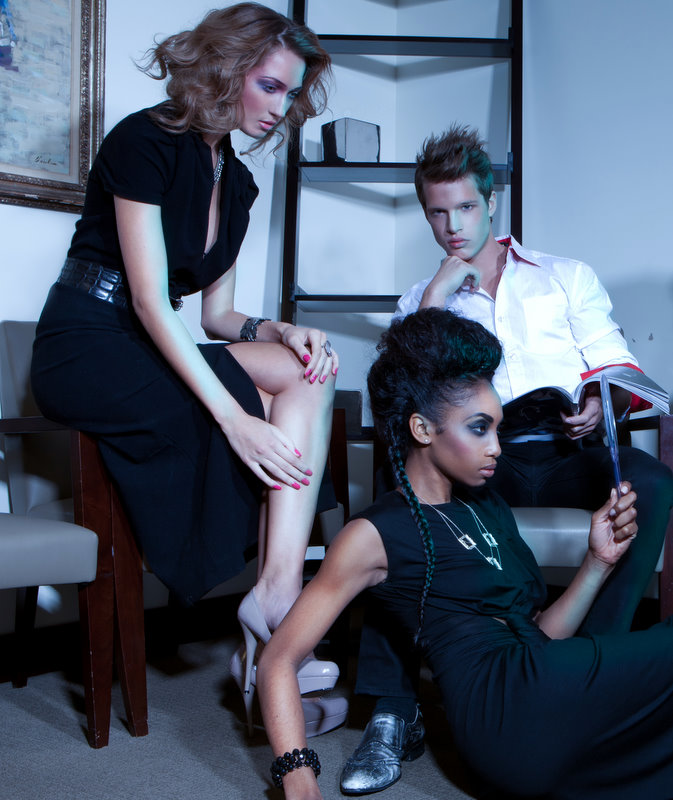


Get your Face Camera-Ready for Fashion Week

Image courtesy of Carlos Peralla

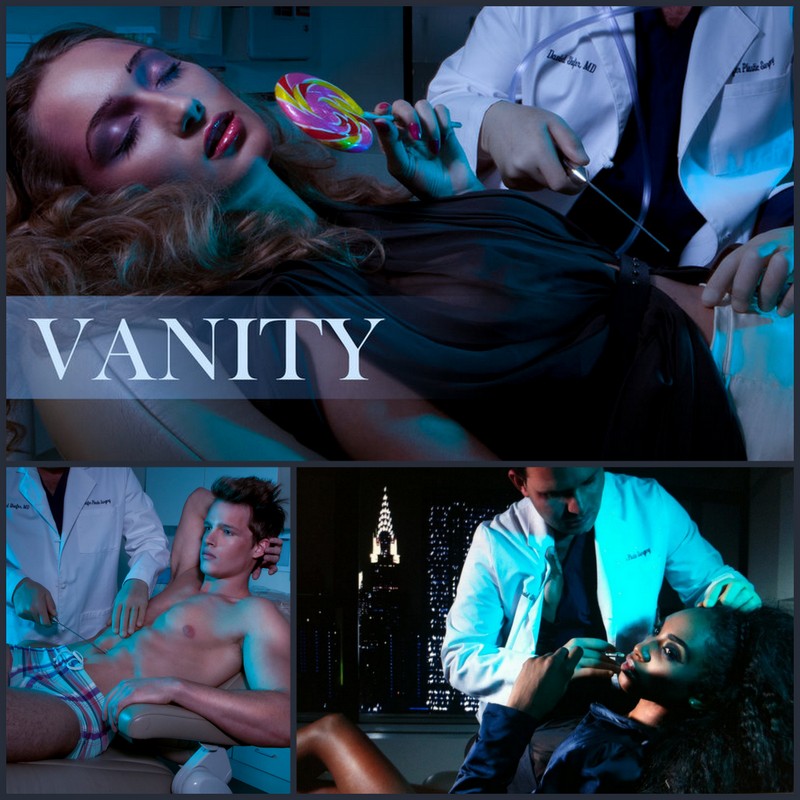
Countless hours are spent preparing fashions for the walk down the runway or across the red carpet.   What’s not covered by fabric often makes just as big a statement as the clothes themselves.  Cameras don’t miss anything—including your skin.  While models in general have  god-given beauty, there are several quick and effective treatments to help enhance anyone’s look as they prepare for Mercedes-Benz Fashion Week.  Dr. David Shafer, Manhattan-based, board-certified celebrity plastic surgeon discusses non-invasive treatments that will have you ready for the runway and the paparazzi.

Images courtesy of Carlos Peralla

Dermal Fillers

Cheek definition can transform a square or oblong faces.  Accentuating the underlying cheekbones with dermal fillers such as Juvederm®, Restylane®, Belotero® or Radiesse® is a quick and effective method of enhancing cheek, jaw line, chin and even your nose definition.

Performed in a single office visit under local anesthesia, dermal filler injections are often viewed as a temporary injectable implant.  Modern-day dermal fillers are injected through the skin and are made of natural substances that are normally found in the body.   The Hyaluronic Acid or HA fillers smooth moderate wrinkles, replace missing volume, and add enhanced definition instantly.  The product is then naturally metabolized over the next 6 to 12 months leaving no permanent change.

Areas for filler and Botox

The hydroxyapatite-based dermal filler Radiesse® is great for cheek and chin augmentation, lasts a little longer, but cannot be melted away.  Other products such as Sculptra Aesthetic® last a few years and are excellent for generalized volume, but require two to three treatments spread out over several months to achieve the full effect.

HA dermal fillers (Juvederm®, Restylane®, Belotero®) have completely replaced collagen when it comes to lip enhancements.  While collagen injections often lead to over filled or a swollen look to the lips, the HA fillers can be injected in minute quantities and through smaller needles to leave a more natural feel and noninjected look.

Dermal fillers work through adding volume but can also be used to help subtly lift loose areas of the face.  This is best seen with injections under the eyebrow.  As we age or just due to normal anatomy, the eyebrow may look tired or have lack of shape.  Injecting small quantities of dermal filler along the supraorbital ridge under the eyebrow can enhance the shape of the eyebrow, lift the skin and help achieve a more relaxed and awake look to the upper face.  When combined with Botox Cosmetic® to the crow’s feet around the lateral eye, the lifting effect can be dramatic.

Before and after forehead with botox

Botox Cosmetic®

The days of “over done” Botox are history.  While the mechanism of Botulinum toxin found in Botox Cosmetic®, Dypsort®, Xeomin® and Myobloc® is to paralyze or soften muscle action, the art of injecting Botox is to achieve a youthful harmony of muscle action in the face.  Through the use of micro-Botox and highly specific injections, the treatments can transform the face by substantially reducing dynamic wrinkles, softening static lines and balance animation of the face to achieve a refreshed and relaxed look.   Results generally take 3 to 5 days to appear and last for 3 to 5 months with each treatment.

The most common area for injecting Botox Cosmetic® is between the eyebrows to soften the “11’s” formed when frowning, in the forehead to reduce the transverse wrinkles, and around the eyes to soften the crow’s feet with smiling and squinting.  However, the sophisticated injector can use a combination of Botox Cosmetic® to not only soften muscle action but to form a new balance which enhances the height, width and shape of the eyebrows.  When Botox Cosmetic® is combined with dermal fillers in the upper face, the results can be dramatic.

Before and after botox ’11s”

Chemical Peels

While dermal fillers and Botox Cosmetic® work from under the skin, the surface of the skin can be just as important when maximizing your look.  There are a variety of chemical peels that can help to quickly transform your skin and help reveal your inner beauty.  Ranging from mild “lunchtime” peels (Glycolic Acid & Salicylic Acid) to moderate (VIPeel® ) to deeper (TCA or Phenol).  Combined with the proper pre- and postprocedure skin care regimen, a chemical peel achieves a deep exfoliation, tightening of fine lines and wrinkles, stimulation of collagen and improving the skin’s appearance with a brighter, healthier glow.  A moderate peel such as the VIPeel®, combines some of the milder peel ingredients such as Salicylic Acid and Retinol with the stronger ingredients in the deeper peels such as TCA and Phenol.  The VIPeel system balances the ingredients to achieve a deeper peel with less recovery and downtime.

Before and after mild chemical peel

Depending on the peel, recovery can be just a few hours for mild peels to a week or more for the deeper peels.  Care must also be taken to prevent hyperpigmentation and over-drying of the skin, so it is important to follow the pre- and postprocedure protocols.   For lasting effects, chemical peels can be combined with medical facials and also with daily treatments with prescription medications such as Retin-A® to help stimulate collagen, thin the out layer of the skin and thicken the deeper layers of the skin to help reduce and prevent wrinkles.

 Pre-Fashion Week Timeline

 Botox Cosmetic®, dermal fillers and chemical peels can all be performed on the same visit or separate visits to your plastic surgeon.  Though the safety profile is excellent, it is important to always keep in mind the small chance of bruising and or swelling after the treatments.  While you can return to work the day after any of these treatments, you do not want to wait until the day before your special event to have your treatments.  It is recommended to have your treatments at least three weeks prior to any important event to give time for any swelling to resolve from the dermal fillers.

Dr. David Shafer is a New York City‒double board certified plastic surgeon, a diplomate of the American Board of Plastic Surgery, a member of the American Society of Plastic Surgeons, and a fellow of the American College of Surgeons. Dr. Shafer is trained in all aspects of plastic and reconstructive surgery, but specializes in aesthetic surgery. With an eye for achieving natural looking results, Dr. Shafer has repeatedly been voted TOP DOC for Botox, Liposuction, Tummy Tuck, and Facelift among many other categories.

W Magazine featured Dr. Shafer as a “Beauty Talent soon to be on your speed-dial” and he was recently seen in Men’s Health discussing liposuction.  Dr. Shafer’s passion for innovation, technology, and improving the overall patient experience, has led him to create the world’s first ever plastic surgery and medical tourism iPhone Apps. He also recently launched the world’s first Vectra XT 3D Imaging System, allowing patients to view a 3D simulated breast augmentation, liposuction, mommy makeover, facelift, rhinoplasty, and virtually any procedure on their own body prior to their surgery  Dr. Shafer see consultations in his Midtown office and performs surgery in his Upper East Side surgical suite. 

Consultations can be arranged by calling 212-888-7770, or  emailing info@ShaferPlasticSurgery.com or visiting www.ShaferPlasticSurgery.com.

 —Dr. David Shafer

Dr. David Shafer


The Needlers Foundation Takes Fashion beyond Pretty Clothes

It is almost that time again. Fashion-forward celebrities, sexy sirens with cutting-edge designs and darlings of the media will preen and pose for paparazzi and fashion-obsessed fans. That’s right Mercedes-Benz Fashion Week is almost here. And though this pop culture phenomenon at times does seem like the perfect event for folks who spend a lot of time and money getting camera ready, Mercedes-Benz Fashion Week is so much more than that.

The real heroes of Fashion Week are those industry professionals who selfishly sacrifice their time and energies to make fashion one of the biggest industries in this countries. Yes, fashion is about outward appearances, but behind the glitter and the glam there are organizations that give back to society in ways that go beyond stiletto shoes and embellished garments. The Needlers Foundation is just one of those organizations.

The Needlers Foundation is a not-for-profit organization that contributes exclusively to children’s organization. “It started about fifty years ago. My father and a couple of garment industry buddies started a charity that would help unemployed garment workers’ pay their mortgage or other expenses. It was a pretty successful idea and that concept morphed into a children’s charity organization. Over the past fifty years we have raised millions of dollars for children’s charities,” details The Needlers Foundation President Scott Fishman.  And in those fifty years The Needlers Foundation has contributed millions of dollars to the INN Project at NYC’s Roosevelt Hospital, the Pediatric Wing at NYU Medical Center, The Joslin Diabetes Center in Boston, St Jude Children’s Research Hospital in Memphis, and The Children’s Hospital at Montefiore.

The Needlers’ Officers congratulate Dr. Alejandro Berenstein of Roosevelt Hospital and Ethiopian four year old patient, Sami Hailermariam. Needlers’ charitable funds contributed to saving life of Ethiopian girl with fatal facial disfigurement treated at Roosevelt Hospital. Image courtesy of The Needlers Foundation

The biggest recipient of The Needlers Foundation’s largesse is the INN (the Hyman-Newman Institute for Neurology and Neurosurgery) Project at Roosevelt Hospital. In fact, The Needlers have raised millions that sponsors their own wing, the Needlers Pediatric Intensive Care Unit, at Roosevelt Hospital. “Children who have neurosurgical needs are identified by the INN Project’s administrators. The Needlers funds the program and pays for all of the families’ expenses, even for the parents to come and stay with children while they are receiving treatment at Roosevelt Hospital,” explains Fishman.

Originally comprised mostly of workers from the garment district, The Needlers Foundation now includes professionals from a variety of industries. “As manufacturing in this country started to diminish, we had to fill our ranks with professionals from other industries. And in fact, some of the former garment workers went on to have successful careers in other industries and stayed on as members … There were several charities that grew out of the garment industry. Over the years some of those charities died out, so The Needlers Foundation was able to incorporate members from those defunct charities into our charity. We now have 1600 members strong” purports Fishman.

Funding for The Needlers Foundation charities comes from its members and a series of fundraisers held throughout the year. On August 27, The Needlers holds its annual Golf Outing which raises over $200,000 and in October The Needlers will sponsor their annual gala  for the “Retailer of the Year” at the Waldorf-Astoria which brings in over $2 million dollars.

“We all work very hard in the garment industry and it is wonderful to give something back to people less fortunate, especially children who otherwise would not receive the medical care that they need. It really takes the focus off of yourself and you know that you are giving to children who are really benefiting from your charity, ” admits Fishman.

We should all learn that lesson!!

—William S. Gooch
For Fall 2012 Tusk Looks beyond Union Jack for British Inspiration

Tusk men’s 2012 collection. Waterloo messenger bag

The Brits are here, but did they ever really go away. With out-of-the-roof ratings from the London 2012 Olympics, the Brits are not only here to stay, but are having a major impact on American culture, if not culture worldwide. But, that is nothing new. Remember, the US was a British colony before our revolution and the British Empire, now more commonly known as the British Commonwealth, at one time made up 25% of the world’s population. While other fashion brands this season chose to extend their penchant for all things British to Union Jack and Olympiad-related fare, leather good brand Tusk dug deeper into British history for its unique take on the British invasion.

Since 1990, Tusk has successfully combined expert leather goods craftsmanship with sensuous, colorful bold designs and Asian influences. For its fall 2012 men’s collection, Tusk looked to the British military aesthetic for inspiration. “Essentially, the new Tusk men’s collection draws on inspiration from the British military. When I first met with the brand and began to understand the brand’s Indian influences, I saw a definite thread linking the brand to British colonialism. You see from the collection aspects of the British Empire in India, the Jewel of the Crown, so to speak,” details Simeon Turnbull, head designer of Tusk’s men’s division.

A British native, Turnbull honed his skills at London School of Fashion and developed his core skills during his tenure at iconic British brand, Mulberry. With his transatlantic move to the US, Turnbull’s trajectory continued at premium leather goods company, Gurka, and later at Andrew Marc.

Now that Turnbull has settled in at Tusk, Turnbull is looking to expand the brand beyond its base by bringing in more elements of luxury detailing at a price point that is accessible to a wider demographic. “The new direction for Tusk is cool Americana and classic European styling forged together to create a functional product that fits the way the stylish, modern man lives,” confides Turnbull. “The Tusk man is changing, and so is the brand,”continues Turnbull.  “We are appealing to a more expansive demographic, embracing a younger consumer while still appealing to our base who expects functionality, quality, and detail in the construction that is not forced or overwhelming.”

For its fall 2012 men’s collection, Tusk has employed expert construction, luxury detailing and fashion-forward sensibility that extend from its Waterloo line to its Dublin and Safari lines. In the Waterloo line Turnbull has used soft bull hide leather trim with brass studs, coupled with a sturdy microfiber fabric; while in the Dublin line Turnbull employs durable coated canvas trimmed with buffalo leather and brass studs. The Safari lines are made with lightweight buttery Italian pebbled calfskin with glazed calfskin trim and Italian nylon with genuine buffalo trim.

For that extra pop of color that is so much a part of men’s collections this season, Tusk has found an ingenious way to enhance their men’s collection that emboldens the brand without overpowering Tusk’s signature look. “Small leather good are a great way for men to express their personality through color. And by putting bold color on the inside of the leather goods, Tusk allows men to surreptitiously express color in a way that is perhaps more comfortable and accessible,” explains Turnbull.

With Simeon Turnbull on board, a new fashion-forward direction steeped in American functionality with European attention to detail and craftsmanship, and British references that are fresh and eye catching, it seems that Tusk has got all its bases covered.

Now if I can only get one of those great Fall bags before everyone else and feel stylishly British!! Hmm!!

For more information, go to tusk.com.

—William S. Gooch
Images courtesy of BCahill PR


Angelo Galasso Brings Couture Craftsmanship to Menswear

With the explosion of men’s fashion,  the marketplace is becoming flooded with designers attempting to capture the expanding male palette for garments that not only fit a modern man’s lifestyle but also appeals to the fashion savvy modern man’s changing perspective on color, texture and style. Though some designers successfully get the attention of this expanding consumer base, the real trick is keeping that customer coming back season after season.

In 1990, Angelo Galasso launched his first brand, Interno 8, named after his apartment in Italy. The line consisted of non-traditional, high-end shirts and was so hugely successful that by 1993 there were over 80 Interno 8 stores in Italy. With new headquarters in London, by 1998 Galasso had attracted an international clientele that included Sir Paul McCartney, David Beckham, Tony Blair, King Abdullah of Jordan, and Jay Z, among many others.

Image courtesy of HLGroup

To fully realize his vision of luxury menswear, Galasso in 2009 founded his eponymous brand, Angelo Galasso, with its first store in Milan. Coined as a couture menswear brand, the brand is the modern man’s answer to quality, design and innovation. “[My brand] adds a new dimension to menswear, allowing a new breed of men to enjoy a service that merges the tradition of classic tailoring, which is steeped in Italian craftsmanship and the creativity of couture houses, reminiscent of a world of exclusive and unique garments, conceived by couturiers with just one client in mind,” details Galasso. “All [of my] collections present the characteristics of the handmade product and the details which are usually the prerogative of bespoke pieces … Each garment is like a collector piece—it will live beyond seasons. Uniqueness through craftsmanship and design is the ethos of each garment; preserving Italian manufacturing by keeping alive skills that otherwise would have died out and the flamboyancy of design that relates to couture ateliers.”

Image courtesy of HLGroup

With stores now in London, Milan, Moscow, and a pop-up shop in Sardinia, Angelo Galasso recently expanded to the US by opening a store in the landmark Edwardian Room of the Plaza Hotel. “The American consumer is one that makes educated consumer choices. The Angelo Galasso brand consists of timeless pieces that can be re-worn time and time again. The collection also speaks to a customer who likes to break away from the norm while still looking refined. The American consumer is perfect for embracing the Angelo Galasso ethos especially New Yorkers who are at the helm of cutting edge fashion.  Our customers are people who collect garments and who do not fall for the trend of the season but who collect cutting edge items from ANGELO GALASSO,” explains Galasso.

And to purchase these garments, consumers will need some pretty deep pockets. With shoes ranging from 1,600 to 12,000, jeans from $1,100 to 2,000, shirts starting at $950, and leather jackets ranging from $10,000 to $75,000, Angelo Galasso’s demographic is that well-heeled gentleman who has a penchant for timeless, relaxed, tailored pieces with bespoke elements.

Never resting on his accomplishments, Galasso is looking to launch a women’s capsule collection. “The collection will be a more feminine and softer version of the Angelo Galasso aesthetic. It will still retain the bespoke quality and craftsmanship that is at the core of the Angelo Galasso brand,” continues Galasso.

With success in Europe, projected success in the US, and a soon-to-be launched women’s capsule collection, Angelo Galasso can be said to have the Midas touch. But unlike the mythic King of Lydia, Angelo Galasso has control of his gift and only bestows his touch on product that has craftsmanship, refinement, and fashion-forward style.

—William S. Gooch
 

Schiaparelli and Prada Discuss Fashion and Art In Iconic Exhibit

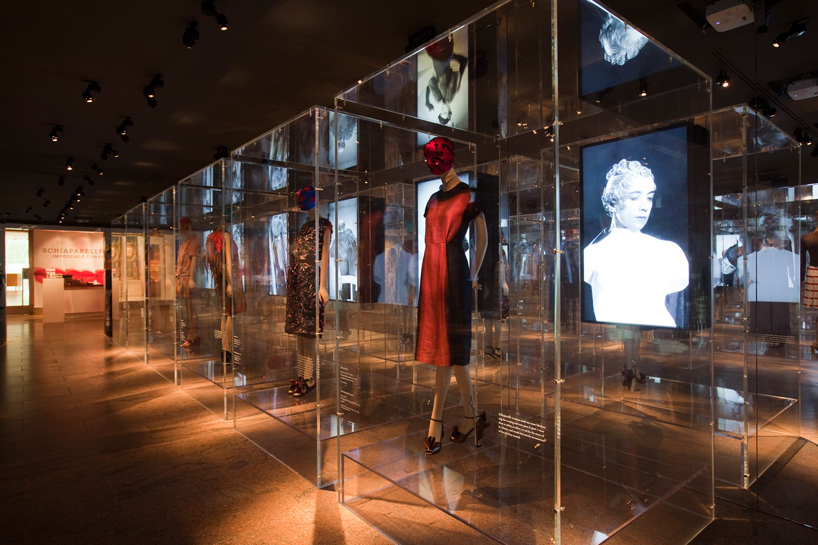
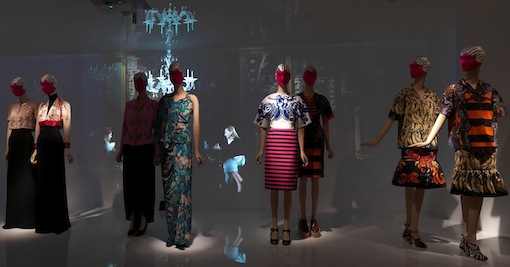
Although they were born six decades apart and never met, Italian fashion designers Elsa Schiaparelli and Miuccia Prada, come together at the Metropolitan Museum of Art for a conversation that any fashionista would not want to miss. As a part of the exhibit, Schiaparelli and Prada: Impossible Conversations, both designers’ work is on display including video conversations between the two, despite Schiaparelli’s death in 1973. Using video imaging technology, Actress Judy Davis portraying Schiaparelli converses with Miuccia Prada as they agree to disagree on their perspectives and approaches to fashion.

Inspired by Miguel Covarrubia’s satirical Impossible Interviews for Vanity Fair in the 1930s, the exhibit features over 100 designers and 40 accessories by Schiaparelli and Prada. Schiaparelli’s designs, from the 1920s to 1950s, showcase many aspects of the surrealist movement and the etiquette norms of women of that time. While Prada’s designs, from the 1980s to present, reflects a postmodernist approach to fashion.

The exhibit includes seven themes that both designers so eloquently share opinions as seen throughout their work. Each collection of pieces feature garments from Schiaparelli and Prada with visual conversations between the designers.

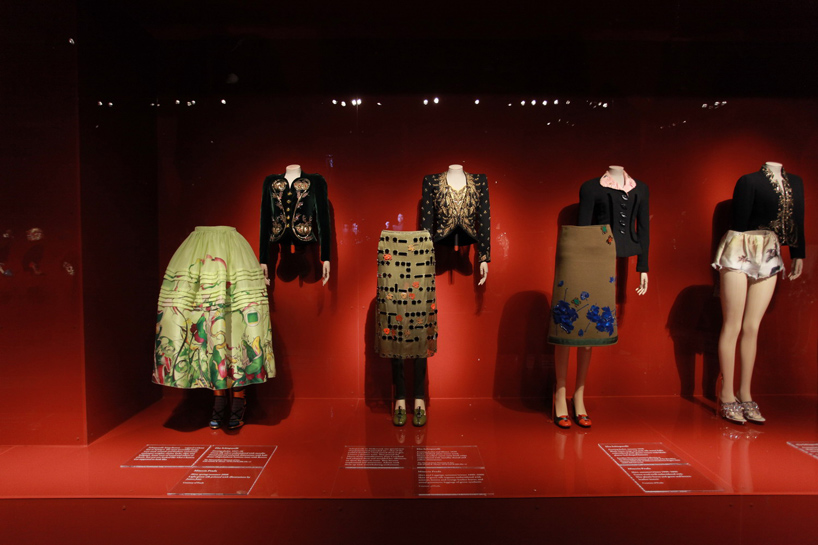
The collection Waist Up/Waist Down embodies Schiaparelli’s concept of the waist up being important to the café society set of the 1930s, including her infamous shoe hat. Prada on the other hand, showcases the importance of waist down and modern feminity through skirts, an extension of Prada’s predilection and popularity with shoe fashion.

The Exotic Body collection resembles the influence eastern cultures had on both Schiaparelli and Prada evidenced in both designers use of saris, sarongs, and variations on the wrap dress aesthetic. Some other collections include Ugly Chic, Hard Chic, Nair Chic, and Classical Body. The final collection of the exhibit, Surreal Body, accentuates the blurring of boundaries in beauty between reality and illusion. Both Schiaparelli and Prada use different fabrics and textures that successfully juxtaposes natural against artificial.

Although both designers came to the fore in in a time of heated social and politically charged thought, their views on fashion are conceptually different, but relative to the times they came to prominence. Schiaparelli appeals to fashion dressmaking as an art, Prada does not fell the same way. “Fashion designers make clothes and they have to sell them… we have less creative freedom than artists,” explains Prada to Schiaparelli.

Despite the recreated conversation between Prada and Schiaparelli, the true conversation pieces are the garments that provoke thought and conversation and evoke a bygone era.

The exhibit will run through August 19th.

–Cory Orlando

The Midas Touch of Lee Stafford

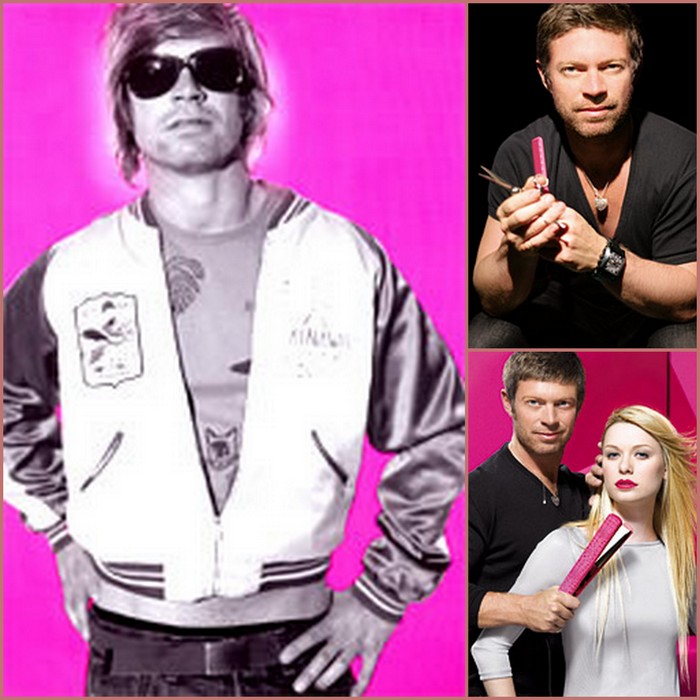
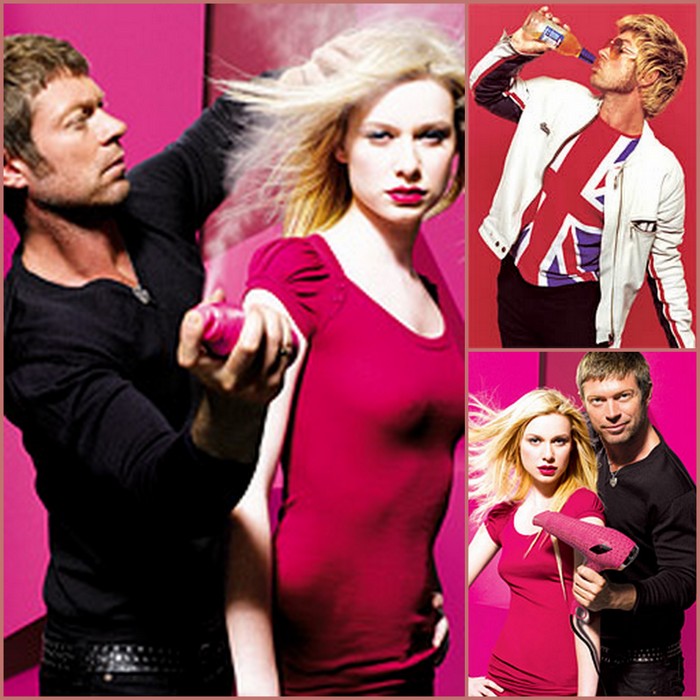
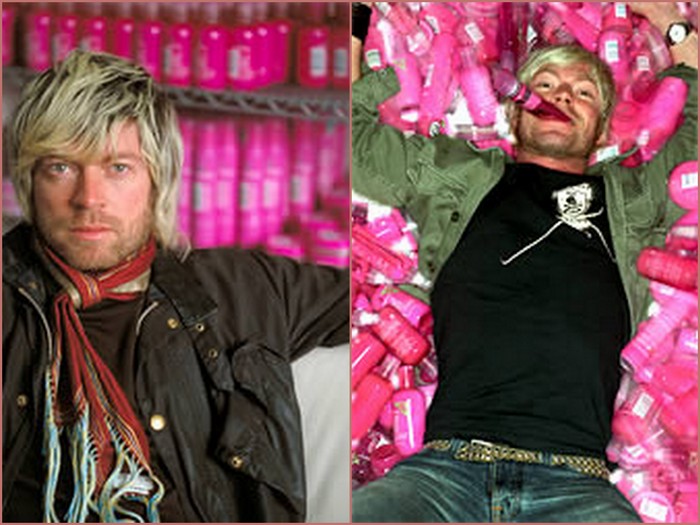
British hairstyling celebrity Lee Stafford is charming, witty and full of focus. Come to any of his demonstration and Stafford can make something as unseemly as getting a great haircut in five minutes seem like a shared, fun adventure that renders a fine result. Entertaining demonstrations aside, unlike the current crop of celebrity hairstylists that have flooded the airwaves and red carpets thanks to the plethora of reality television, Lee Stafford is truly committed to his craft and the beauty industry. And though hairstyling was an unlikely career for Stafford, once he picked up his first pair of styling shears, he knew he had found his true calling. “Being a hairstylist was never a burning desire of mine. I do remember when I was young sitting in the hair salon with my mother, my mother suggested I become a hairdresser because I hated getting my hands dirty and I loved fashion. It was kind of an offhanded remark from her, but once I pursued it, I fell in love with it,” explains Stafford.

And that love has given Stafford an international following and a hair care line that is sold in over 35 countries. But like all great artists, Stafford realized early on that in order for him to be successful at his chosen profession he had to work hard and acquire the requisite skillset. “I really fumbled my way cutting hair at first until I went to the Vidal Sassoon Academy. I didn’t have much money, nor did I have a lot of extra time because I was cutting hair full time. So, I knew I had to be frugal and spend my money and time wisely. And I wisely chose the Vidal Sassoon Academy to acquire the precision and fine tuning.  The training there had a massive impact on my career,” confides Stafford.

Though Stafford’s signature cuts are sometimes compared to the late Vidal Sassoon, Stafford has forged his own unique path. And unlike Sassoon, Stafford has used the media and new technologies to advance his career and create new opportunities. From winning the British Men’s Hairdresser Award to his regular appearances on the British morning magazine show This Morning to creating the 5-minute cut, Stafford takes the proverbial bull by the horns and has learned how to turn even the smallest opportunities into gold. “In the UK, I became the resident hairdresser on This Morning, one of the morning magazines shows. Usually if the show had five extra minutes to fill a segment they would come to me and ask me to do something. So I came up with the 5-minute haircut to fill in live time on This Morning. It started out as a bit of fun, but I discovered that cut always comes out fine because you are using the shape of the head to the cut the hair, so the hair always falls right to frame the face. I now use the 5-minute cut as an entertaining element of demonstrations I do globally,” details Stafford.

With all his success, Lee Stafford has not forgotten his humble beginnings and is striving to pass on his knowledge and love of his craft to others. “I am very passionate about proper training for our youth. Unfortunately, most of the government-sponsored beauty and hair training schools in Britain are subpar, so I’ve started my own hair academies in the UK,” confides Lee Stafford.

With his hair care products now in the US market and his chain of hair academies in the UK, Stafford has come full circle. Still, Stafford projects toward the future. ”The next hair trend is going to be matte hair. Shine and healthy-looking hair will always be in fashion. However, many young people want the opposite and don’t want to look like their parents, they are leaning toward the way people wore their hair in the 18th century, you know almost dusty.”

Dusty hair, well I don’t know. But, who would have thought that a boy from the seaside town of Essex would become an international hairstyling celebrity. Prove me wrong, Lee!!

For more information, about Lee Stafford and his products, go to leestafford.com.


—William S. Gooch


Scottish Designers Part 2: Eribé Knitwear Uses Color and Technology to Make Something Old New Again


How many times have you watched a Merchant Ivory film and marveled at the glorious Victorian tweeds and wools worn by the English aristocracy, as well as other characters in those films.  These films have helped us Yanks fall in love with comfy wool sweaters and scarves with Nordic designs and fisherman patterns.

Well, that British tradition of great wools and knitwear has carried over into the 21st Century.  For over two decades, Scottish knitwear brand Eribé has advanced the art of Scottish knitwear by infusing new technologies and a wide palette of colors and hues not normally seen in traditional Scottish patterns and shapes. “We have been inspired by the British heritage of patterns that have been used in knitwear and sweaters in the British Isles for centuries. We’ve looked at all these traditional patterns and symbolic images that are indigenous to our culture and found a way to modernize these looks and stay on trend,” says founder and creative director Rosemary Eribé. “We do carry over traditional herringbone and fisherman patterns, but we have added explosions of color that you wouldn’t normally see with these patterns. By incorporating these new colors, we been able to add a youthful appeal to these traditional looks that hadn’t existed before.”

Rosemary Eribé’s love for Scotland and her campaign for the preservation of authentic Scottish products have caused her to make significant inroads in fashion communities in Japan and Germany that love traditional Scottish knitwear. “Germany and Japan are some of our biggest buyers. They love the feel of the wool and they love all the color that we have added. The Japanese in particular love our traditional designs and patterns and the luxuriousness of our cashmere,” details Rosemary.

While Eribé is a beloved brand in Great Britain, Japan and Germany, the brand has had to come up with some new strategies for the American market. “We have had to work closely with our markets because each market has a specific taste and point of view. Japan is more traditional, while the American market is much more commercial, so we’ve had to use more color and not as many patterns weaved together,” explains Rosemary.

Another one of those strategies is incorporating new technologies into their textile design. “We have carefully examined the use of technology and how necessary it is to fuse fashion with how people work and coexist.  That said; we have come up with gloves that you can wear while you are working on your I-Pad or laptop. I-Pads and laptops are sensitive to human touch and the resistance between gloves and these devices prevents the user from working properly. Through our research we have weaved tiny fragments of metal in the tips of the gloves, so that you can work on your IPad or laptop while you have your gloves on.”

Eribé has also been involved in sustaining local communities in and around Scotland by employing local herdsmen to supply the raw material for its products. “We have eliminated a lot of the middle men and started to buy directly from the Scottish farmers and sheepherders, so that the locals get more of the profit. We are trying to get more involved in supporting economies and spreading the wealth, so to speak,” explains Rosemary.

Images courtesy of Eribe

Marketing strategies and advancements in technologies aside, the real proof of the brand is in the quality and market viability of the product. In its fall/winter 2012 capsule collection, Eribe has married style, authenticity and functionality as seen through the prism of elegant silhouettes and lavish textures.

Proof confirmed!!

—William Gooch


Model/Actress Analeigh Tipton Has Two Loves

The mega-hit reality show America’s Next Top Model (ANTM) strives to turn model aspirants into model superstars. And though the show is currently shooting its 18th cycle, very few models from the show have become breakout fashion stars. With the exception of Jaslene Gonzales (winner of Cycle 8 and a regular on Mercedes-Benz Fashion Week catwalks) Fatima Said (a successful model stateside and abroad from Cycle 10), and Dani Evans (winner of Cycle 6), and a few others, most of the ANTM contestants main claim to fame is having appeared on ANTM.

Model/Actress Analeigh Tipton is one former ANTM contestant that has used her fame from ANTM to knock on doors other than the revered doors of fashion designers and casting agents. While a contestant on the show, ANTM judge Paulina Porizkova suggested that an acting career might be a better choice for Analeigh. Well, those words of wisdom did not go unheeded. Though Tipton still models, her sights are clearly focused on the silver screen. And with a breakout role in last year’s Crazy, Stupid, Love and a recurring role on HBO’s Hung, Analeigh Tipton is poised for the big time.

“Damsels in Distress” image courtesy of Sony Pictures Classics

Analeigh Tipton’s current star turn as Lily, a college transfer student befriended by an odd trio of girls from a self-help clique, in the soon-to-be released Sony Pictures Classics’ Damsels in Distress, promises to be another demonstration of Tipton’s affinity for celluloid.  To put it more bluntly, the camera loves her. “I approached my character Lily [in Damsels in Distress] and her relationship with “the damsels” who have a philosophy of life that she doesn’t quite accept the same way I approach that same dichotomy with my real friends … Lily’s character is very skeptical about this self-help clique, but she is also searching for her own identity after being in a failed relationship. I think the element of self-searching brought a dimension to the character that I was able to connect with and gave the character a certain kind of depth,” details Tipton.

Tipton is correct. The combination of introspection and fresh-faced honesty are key ingredients to Tipton’s appeal. And she is oh so good to look at on screen, never leaving the model behind. With an upcoming role in Jonathan Levine’s Warm Bodies with John Malkovich, Analeigh Tipton has made that transition that so few models are able to make.

See, it is possible, you can have two loves. Ask Analeigh!!

—William Gooch


Emerging Designer Nicki Cozzolino Gets It Right

Emerging designer Nicki Cozzolino seems to have the Midas touch when it comes to creating chic, sophisticated garments that easily transition from day to night that are not overwhelmed by, but do acknowledge current trends. It takes a special genius to meld your signature look with current trends, and also satisfy customers who wants clothes they can wear at every jointure of their day. “My spring collection is really about lightness, fluidity and ease but carrying that lightness of being in and urban setting; clothes that can transition from day to night, still always looking fabulous. There is a big range in my clothes; there is always something playful, and some quirkiness. Overall there is an optimism to my garments; a lightheartedness,” explains Cozzolino.

Cozzolino’s spring 2012 capsule collection contains a wide range of separates and prints in fabrics that range from silk charmeuse and crepe to chine to double georgette and textured leather. “Ultimately, I design from the point of view that I am my customer. So I am designing pieces that I would want to wear at any point in my day. I might want to be casual on the weekend and wear shorts, but how does that translate into what I would wear at night. So I am always trying to answer these questions in my clothes,” details Cozzolino.

Cozzolino looked to the 1970s for inspiration for her spring 2012 capsule collection mixed in with clothes that have a fluidity of movement. “I wanted retro 70s [for this collection], but updated and always chic and sexy … I played on the high-waisted pants from the 70s with ribbon belts,” detailed Cozzolino. “I am a creature of comfort and that translates into my design aesthetic and fabric choices. One of the responses I get when people try on my clothes is the ease and comfort of the pieces.”

Images courtesy of Nicki Cozzolino

From extended crotch, yogi-inspired pants to great sophisticated, yet easy, tops, with this spring collection, Nicki Cozzolino has tapped into the needs of the modern women’s thirst for chic clothes that matches her contemporary lifestyle.

—William Gooch


Copyright © 2012-2025 | Fashion Reverie Publications, LLC - All Rights Reserved