Mercedes-Benz Fashion Week Fall/Winter 2013 Pre-Coverage

Mercedes-Benz-Fashion-Week_06It seemed that only a few short months ago, Mercedes-Benz Fashion Week gave industry professionals an insider’s purview into the spring/summer collections from designers who use New York City as their platform to present their evolving narrative to the American market. Press, buyers, and other industry professionals were awed by the spring/summer collections of Chado Ralph Rucci, Monique Lhuillier, Falguni and Shane Peacock, Prabal Gurung, Nina Skarra, Rafael Cennamo, Angelo Galasso, and a host of others. And Fashion Reverie was front and center giving its readers up-to-date coverage from the front row to backstage to street coverage on the plaza at Lincoln Center.
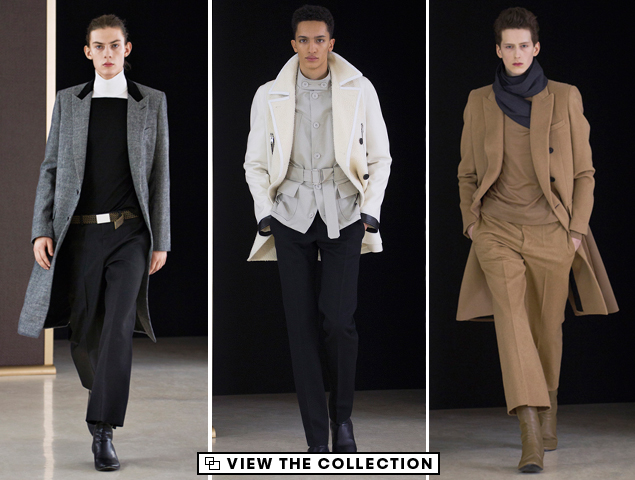
Mercedes-Benz-Fashion-Week_03Well, that time has arrived again. From February 7 to February 14, Mercedes-Benz Fashion Week will present more than 90 international designers fall/winter 2013 collections. Presenting for the first time at Lincoln Center includes, but is not limited to, Trina Turk, Hernan Lander, Todd Snyder, J. Crew, Steven Alan, Nautica, Dave Tlale, KaufmanFranco, ICB by Prabal Gurung, and others.
Mercedes-Benz-Fashion-Week_02For fall/winter 2013, Fashion Reverie will continue its expansive coverage, bringing viewers all the glamour and excitement from the front row to backstage interviews, to emerging model profiles, to the sometimes wacky fashions seen in the Lincoln Center Plaza to coverage from an array of events and parties. Stay tuned, as Fashion Reverie provides daily coverage and exciting news, taking you from the front lines of fashion to the front row!!

—Staff

Project Runway Tries a New Format

Downloads287Project Runway is shaking things up as it struts down the fashion catwalk into its 11th season. When the new season debuts on Jan. 24 at 9 p.m. fans will see a whole new Project Runway with a new team format as well as a new main judge, Zac Posen, who replaces the legendary master of fashion snark, designer Michael Kors. Kors will return as a guest judge for this season’s finale.
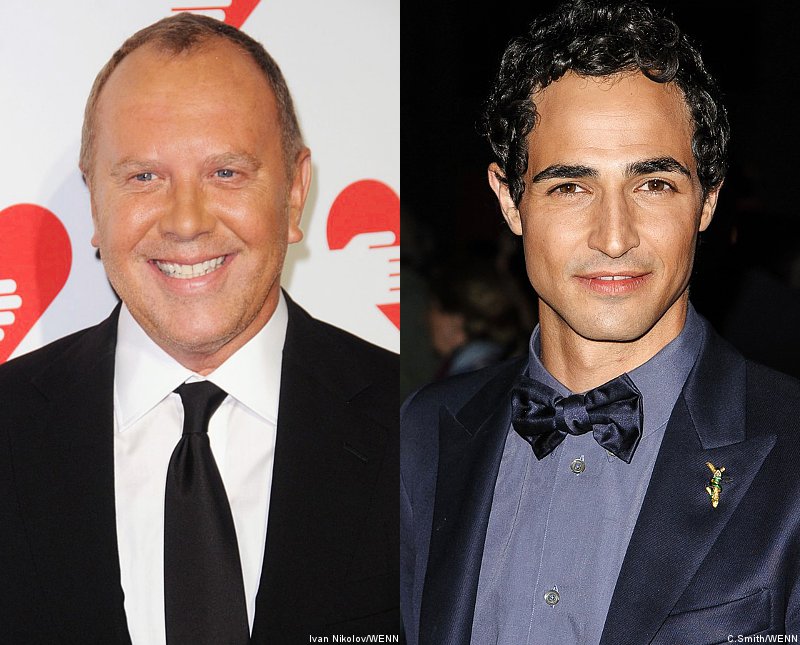
The new team format will see the designers competing each week against each other as part of two teams rather than strictly as individuals.

In past seasons, Project Runway had utilized team formats only for one of the weekly challenges. The new format is a virtual copycat of The Fashion Show: Ultimate Collection, the fashion design replacement series the Bravo cable network had presented twice after Project Runway moved to the competing Lifetime cable network.

While online blogs and fan chat rooms were rife with speculation that the move was a gimmick introduced for ratings, Project Runway executive producer Sara Rea said the team format was an attempt to come up with something new that also reflected the realities most designers face in the fashion industry.

“We expected some fan complaints but it’s not like this was done for the reasons people are guessing,” Rea said. “The team format is really very reflective of the real world. This is a very collaborative industry. In the real world, designers work as part of a team.”

“So it’s not just some gimmick we pulled out of the hat.”

Rea said producers were happy with the results, especially the collaborative environment established and the ensuing discussions and behind-the-scenes critiques between team members before their work was presented to the judges.

“Here’s a great example of how it works. If I have a great garment, maybe the best garment out there, if my team kind of sucks overall then I can’t win that challenge because my team failed,” Rea said, explaining the dynamics behind the new format. “I care about what everybody else is doing because my garment is attached to everyone else’s. We’re judged on how we collectively put together whatever the looks are for that challenge.”

Despite the team format, Rea confirmed that as in past seasons there will ultimately be only one winner this season.

The winning designer’s prize includes $100,000 from L’Oreal Paris to start a line, a fashion spread in Marie Claire, a new Lexus, a $50,000 “technology suite” from HP and Intel, and a chance to design and sell an exclusive collection at Lord & Taylor.

Rea said no decision has been made on if the new format will be retained in future seasons.

Image courtesy of Lifetime

Image courtesy of Lifetime

The new format isn’t the only change for this season. Designer Zac Posen has replaced designer Michael Kors on the regular panel of featured judges, joining Marie Claire creative director Nina Garcia and supermodel and Project Runway executive producer Heidi Klum. Tim Gunn returns as the workroom mentor for the designers.

Rea said Kors will be the guest judge for this season’s finale but was unable to commit to the entire season because of business commitments. The change did provide an interesting element to the season, Rea noted.

“There are a lot of things Zac brings to the table. He brings that younger element but also, he’s closer to the point of starting his business and knowing what that’s like,” Rea said. “He’s very much into the details and construction. He brings an interesting perspective. He’s also closer to that hands on level of being a designer where you’re actually sewing things yourself.”

Image courtesy of Lifetime

Image courtesy of Lifetime

As always, the crop of 16 designers reflects a variety of backgrounds and experience levels. “Every group, every season has a personality collectively that identifies them. This group is hungry. I think this group really wants it. You feel that,” Rea said. “In a very sort of endearing way there are a lot of people to root for, who are very likeable. And they’re fun to listen to and fun to watch.”

Rea added that this season’s designers were also an especially diverse group in terms of backgrounds and styles. “They all have a different aesthetic which is cool. Of course that happens every season but this season you really have a lot of unique points of view and the ages go from 22 to 59,” she said. “It’s a very diverse group aesthetically and in terms of personalities and point of view.”

Images courtesy of Lifetime

Images courtesy of Lifetime

So who are the 16 designers on season 11 of Project Runway?

The group includes regional design stars like Amanda Valentine from Nashville; James Martinez from Dallas; Joseph Aaron Segal from Rhode Island and Kate Pankoke from Chicago. Designers with impressive backgrounds like Stanley Hudson, who worked with Bob Mackie; Benjamin Mach, former senior designer for London-based luxury menswear label WINTLE; and Samantha Black, who heads her own Sammy B line and was head designer for Aeropostale’s Jimmyz women’s denim line. Wild cards like Daniel Esquivel, a self-taught freelance designer from Austin; Cindy Marlatt, a former funeral home director and UPS truck driver who graduated just last year from the Art Institute of Seattle; Patricia Michaels, a New Mexico-based designer and former gallery owner, whose aesthetic is rooted in her Native American heritage. Other designers this season are Emily Pollard, who lives in Falls Church, VA; Layana Aguilar, who lives in New York City; Mat Arthur of New Orleans; Michelle Lesniak Franklin of Portland; Richard Hallmarq of Sacramento, and  Tu Suthiwat Nakchat who had recently moved from Thailand to  Springfield, VA before Project Runway.

—Karyn D. Collins

The Human Cost of Cheap Labor

Photo courtesy of The Wall Street Journal

Whew!!, the holidays are over. And true to form, immediately after the festivities, shoppers scamper to exchange well-meaning gifts for something more to their individual taste. With the rush and frantic shuffle to return holiday gifts, rarely a thought or consideration is given to the working conditions in off-shore garment factories that produce so many of the clothes that American consumers covet every holiday season.

Though a fire killed over 112 workers in Bangladesh factory a little over a month ago, the devastation and lost of life is far from the minds of consumers as they crowd megastores exchanging holiday gifts. The Bangladesh factory, Tazreen Fashions, produced clothes for Walmart Stores Inc., which is distributed worldwide through Walmart stores. The fire disaster which killed 112 workers, was the catalyst that severed Walmart’s retail business with the garment supplier.

And this fire disaster was one of several in 16 months that has killed workers and destroyed inventory in factories in Bangladesh and Pakistan. Unlike domestic factories that require adherence to child labor and OSHA regulations, most offshore garment factories require very little child labor or safety practices. And the low cost of labor is almost too sweet to resist for megabrand companies whose high profits are the direct result of high volume and low costs.

$37 a month. That is the average monthly wage of a garment worker in Bangladesh. While many American consumers are out trampling and sprinting for the last 42-inch screen television or trying to get the best deal on winter apparel, garment workers in Bangladesh are paid a fraction of the cost of just one of those items.

Photo courtesy of bbc.co.uk

The high demands for items during the holiday season, especially for Black Friday, makes many retailers crack down on suppliers to meet the demands of their consumers. While many of these suppliers produce the demand, safety can be comprised unknowingly to the average American consumer.

Tazreen Fashions is currently being investigated for fire safety codes not being up to date, which could have prevented the fire.

“The fire safety certification expired on June 30, but the department did not renew it because fire safety provisions had not been put in place,” states Abu Nayeem Mohammad Shahidullah, director general of Fire Service and Civil Defense.

While many believe it was an accident, the incidents reported are less then surprising. According to survivors exit doors were partially blocked by stacks of yarn and clothes and while workers were trying to flee the building, managers told workers to go back to work.

“Everyone was screaming for help. Total chaos, panic and screaming. Everyone was trying to escape and come out. I was pulling the shirt of a man. I fainted and when I woke up I found myself lying on the road outside the factory. I don’t know how I survived,” stated factory worker Nasima, only going by one name.

A pair of pants with the label Faded Glory tag, a brand sold in Walmart stores. Photo courtesy of Ashraful Alam Tito, AP

The garment industry in the United States is home to about 100,000 retail clothing stores that reap an annual revenue of $150 billion. Of those 100,000 retail stores only 5% of the total garments produced are made in the United States. All other garments are produced and shipped from overseas.

While in the United States the holiday season can be stressful, keep in mind the risks many overseas laborers take on to produce the discounted deals everyone loves. Is a cheap pair of jeans or a discounted winter coat worth the lost of one human life? Hmm, something to think about?

—Cory Orlando

The Adoni Factory Group: The Promise and Fulfillment of Made in the U.S.A.

It is now 2013 and there is no more room for excuses. President Barack Obama won re-election by a handsome percentage. Our economic recovery has some momentum, and it seems that we may have averted an economic backslide by approving an economic package that begins to spread economic and social responsibility more equitably. So, again there is no time for excuses. There is no reason to not carefully and responsibly examine the possibility of creating manufacturing opportunities in the US.

The fashion industry for several years has sponsored forums and symposiums on this subject. Revered industry professionals such as Nanette Lepore, Yeohlee, and even the CFDA, have been at the forefront of this charge. Yet, as much as this is a particular need of the fashion industry, few companies and/or brands have turned their rallying cries into manufacturing action on the ground.

Still, 2013 is a new year with unbounded opportunities and hope. And with the Adoni Factory Group hope not only springs eternal, but manifests results.

In 2012, the Adoni Factory Group opened the first full-production shoe factory in New York City in over 60 years. Starting with their acquisition of Klingbiel, a professional ice skating boot company located in Jamaica, Queens, Adoni Factory Group set out to change the manufacturing landscape in the US by demonstrating that homegrown manufacturing is not only possible, but potentially profitable.

“When the Adoni Group decided to create a factory in the Garment District one of their primary goals was to promote manufacturing in the US,” states Mikaila Koenig, public relations manager for the Adoni Group. “Due to the state of manufacturing in this country, the factory that produces Klingbiel was about to close down. Jay Adoni and his two sons, Jordan and Jensen, stepped in and relocated the entire factory to the Garment District in 2012. We make the [Klingbiel] boot and the sole of the skate now in Manhattan, as well as three other shoe brands, Modern Vice Collection, Giraffe Walk, and the Jay Adoni Line,” continues Koenig.

But, the Adoni Factory Group does more than just manufacture ice skating boots and affordable shoe brands. Their shoe collections are fashion forward with a modern sensibility, tapping into uncharted territory and the new direction of global shoe design. From cow skin boots and other exotic skin shoes to hidden-wedge, high-fashion sneakers and shoes, the Adoni Factory Group is on the cutting edge of shoe design with their unique point of view and price-point accessibility. “We are forwarding the technology and trend of hidden wedges in our spring/summer 2013 collection,” details Jordan Adoni. “A lot of women want to appear taller without obviously wearing high heels. So, [at the Modern Vice Collection and Jay Adoni Line] we have inserted a hidden wedge into some of our flats and sneakers that facilitate that effect.”

Creativity and nativism aside, the names of the game are still market viability, brand proliferation and costs accessibility; marketing concepts that the Adoni Factory Group has taken into consideration. “There is a lot of incorrect information about the costs of manufacturing in the US,” explains David Siskin, co-founder of Giraffe Walk. “When you examine pricing of imported shoes, about 20% of the price goes into the shipping, the oil it cost to ship, in other words, the carbon footprint. And the price is only going up … By making product in the US, manufacturers are taking all those extraneous costs out of the equation.”

Giraffe Walk images courtesy of Adoni Factory Group

And the business model of being able to fill smaller orders is a key component to the Adoni Factory Group’s early success. “The other big plus for manufacturing in the US is that retailers can put in smaller orders from homegrown manufacturers than from manufacturers abroad.  So, if a retailer places a smaller order and needs more products, that retailer can receive additional product more quickly than waiting for a larger shipment from overseas. And you can also catch trends faster and test them out,” contends Siskin.

All images courtesy of the Adoni Factory Group

The Adoni Factory Group is proving that homegrown manufacturing is not only possible, but that it is a viable, creative, cost-effective alternative to outsourcing. Other fashion brands should stand up and take notice!!

—William S. Gooch

STORY, an Innovative Holiday Shopping Experience

Fashion, like technology is ever evolving. We have the ability to purchase and sell clothing online with unlimited options at our fingertips. However, online shopping has managed to strip away a priceless luxury…the shopping experience. Although most people dread waiting in line, there is a marvelous feeling that an elaborately decorated store provides during the holiday season.

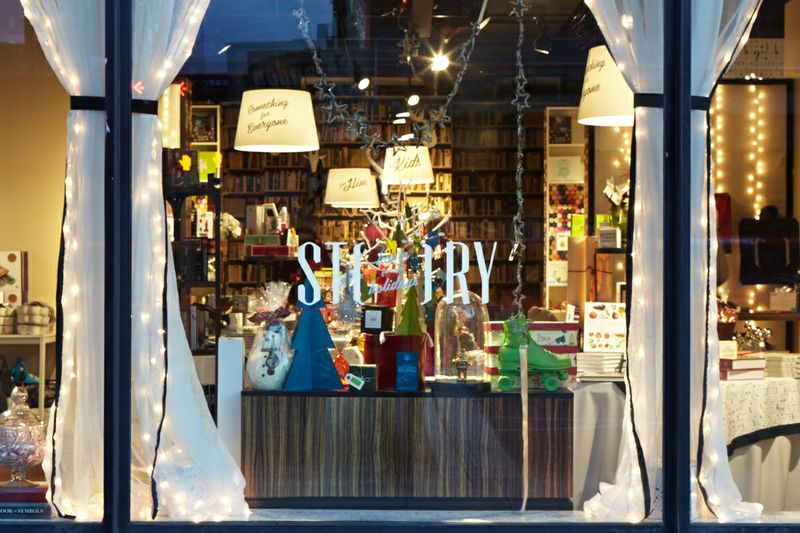
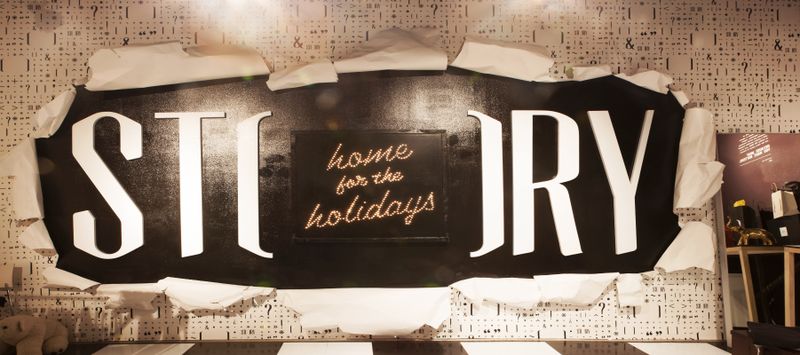
Fashion Reverie recently had the pleasure of visiting the innovative retail media space STORY. We were immediately intrigued by a concept shop that takes the point of view of a magazine, changes like a gallery and sells product like most retail stores. For its seventh issue, STORY comes Home for the Holidays!

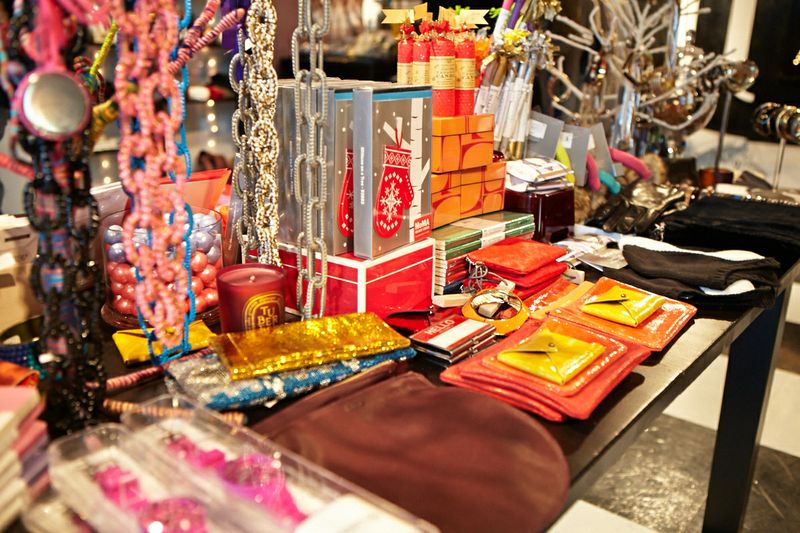
Upon entering STORY, visitors are transported to a beautiful holiday living room with captivating colors that instantly compete for your attention. Hologram fashion book covers, knitted bags, solar-paneled backpacks, and other extraordinary pieces were situated throughout the living room as perfect gifts “For Her.” Ironically, like a book, the 2000 square foot space in Chelsea revealed new parts of the story with every step.

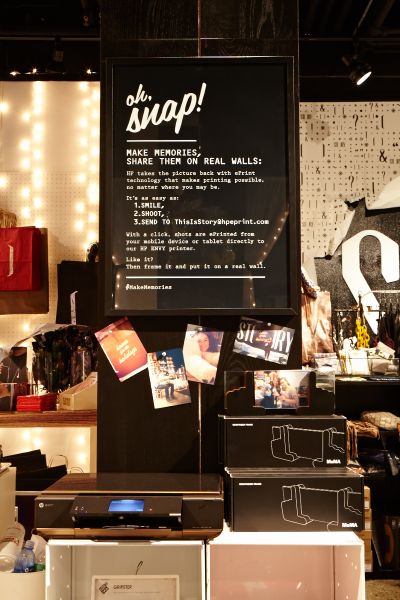
In life it’s important to treasure memorable experiences and what better way than taking photos to encapsulate the moment forever. Visitors to STORY are able to take photographs in store, ePrint their snapshots to a HP printing station, and walk away with a memory. Excited onlookers stood patiently waiting for an opportunity to print stunningly clear images that would make perfect mantle pieces or thoughtful holiday gifts for grandparents. HP’s commitment to creativity and personal expression is further experienced through custom-created wrapping paper, designed exclusively for STORY by Xavi Garcia and produced in-store using the HP printing suite.

After exploring the magnificent space that also included a study for the contemporary gentlemen to a gumball lined children’s playroom, Fashion Reverie had questions about this innovative space and sat down for an interview with the founder Rachel Shechtman.

Fashion Reverie: What inspires the themes for STORY?

Rachel: It’s a combination that’s both proactive and reactive. I have two rules when conceiving a STORY, the stores design and experience has to be able to appeal to anyone from five to eighty years old, and we have to be able to sell something from $5 to $5,000.

FR: I read that a store is edited like a magazine in regards to the selection of the products. How many products are used to create a story?

Rachel: There is no set number. I look at it like experience per square foot instead of sales per square foot.  I hand pick every item that goes into the store and now designers are approaching us to feature their products. I call what we do retail media because we are like a living magazine, our editorial is the merchandise that we curate around a STORY and the events that we host, and the publishing side is our sponsorship. So each issue has corporate partners and this holiday STORY is brought to you by Hewlett Packard (HP). We have this COOL HP printer that visitors use to print pictures that they take home for free!

FR: How did you partner up with HP?                             

Rachel: They approached me about this new in store concept and I’ve always been obsessed with the creative and the business. I feel like more than ever when content, community and commerce are trying to coexist, there is a real yearning for retail experience.

FR: What’s your favorite STORY?

Rachel: I don’t have one favorite STORY but I take the most pride in the store being used as a “community center.” We’ve had neighbors bake us cakes and sometimes people come into the store four times a week. Sometimes they buy something or sometimes they come to just hang out … it’s pretty amazing.

Images courtesy of John Tiffany Associates

Visitors to STORY are invited to escape the holiday hustle and bustle, make merry with some of the city’s brightest folks, and still accomplish their shopping. Without a doubt STORY is filling a customer’s deeper desire for an enriching retail experience.

The “Home for the Holiday” issue will be showcased at STORY through December 30.

—Chandia Brennen

The Rockettes, 85 Years of Bedazzled Costumes

The Radio City Christmas Spectacular is a holiday season tradition. And this year’s show, which celebrates the 85th anniversary of the world famous kick line, the Rockettes, also focuses on the costumes in all their bedazzled lycra and shimmering stretch velvet splendor.

Consider that the 36-member Rockettes appear in eight different numbers (and there are two separate casts, each with her own costume, plus separate for the eight swing performers who fill in whenever needed). And that’s not counting the singing and dancing ensemble’s outfits which range from dancing bears to dancing Santa’s (the Rockettes also wear these), to robes and caftans for the “Living Nativity” procession.

As if all that weren’t enough, this year’s New York show, which runs through Dec. 30, also features a special retrospective of Rockette costumes from the past. The six featured costumes, plucked from the archives, include:

– Sailor Costume from 1940, designed by Marco Montedoro and Willa Van. The Rockettes wore this costume to the Times Square ceremony celebrating the 1941 launch of the USO.

Sailor costume image courtesy of MSG Entertainment

– Astronaut Costume from 1965, designed by Frank Spencer. The costume, a body suit decorated with mammoth pearls was part of the Music Hall’s “Star Bright” show.

Rocket costume image courtesy of MSG Entertainment

– Candy Cane “Bizazz” Costume from 1999, designed by Pete Menefee. This costume was worn when the Music Hall reopened in 1999.

Candy Cane costume image courtesy of MSG Entertainment

– Dancing in Diamonds Costume from 1982, designed by Bob Mackie. Mackie designed for the Rockettes for several years. The Dancing in Diamonds Costume was created for the Music Hall’s 50th Anniversary celebration called “Encore.”

Diamond Bob Mackie costume image courtesy of MSG Entertainment


Rockette Sierra King, one of the Christmas show’s resident costume authorities, shared some other fun costume facts with Fashion Reverie:

Fashion Reverie: What’s the scene like backstage when it comes to the costumes?

King: Our backstage is just as choreographed as what you see onstage. Some of our changes are just over a minute. We have one costume change that is only about 78 seconds long. There are designated areas once we exit the stage where we do our quick changes. For every three Rockettes there are about 12 to 15 women assigned to change them.

Our wardrobe department is also very large. We have people who just do laundering although some of the costumes, because of how delicate they are, have to be dry cleaned. Then there are people who just do alterations and sewing although most of the alterations are done before the season even begins; that all starts with fittings in the summer before rehearsals start.

FR: We know that costumes are constantly being introduced and old ones retired, but what are the oldest costume designs in the show?

King: The ‘Living Nativity’ and ‘March of the Wooden Soldiers’ have been in the show since 1933 and those costumes have been pretty much the same. The ‘March of the Wooden Soldiers’ costume was designed by Vincente Minnelli. That’s an iconic number.

Wooden soldiers image courtesy of MSG Entertainment

Fashion Reverie:  What happened to the Empire State building motif costume designed by Christopher Palu during the recently completed season 10 of Project Runway?

King:  It’s not in the Christmas show, but that costume will be worn by the Rockettes. The challenge happened this summer so it was too late to get it produced for this year’s Christmas show. But it will be worn.

“Project Runway” Rockette image courtesy of Lifetime Entertainment

FR: What’s your favorite costume in the show?

King: One of my favorites is for our final number which is “Let Christmas Shine.” This costume is really gorgeous. Each costume is covered with 3,000 Swarovski crystals and once the light hits those costumes it’s pretty spectacular to see.

— Karyn D. Collins


America’s Next Top Model: The Fashion Reality Show that Keeps Coming Back

Images courtesy of fashionmodeldirectory.com

As word leaked out over a week ago that America’s Next Top Model is being picked up for yet another season, fashion pundits in disdain and amazement pondered the decade-long appeal of the sometime over-hyped model reality show. After further examination, America’s Next Top Model (ANTM) has had a major impact on the American fashion landscape, if not so much for the contestants who’ve participated on the show season after season.

Surprisingly, the accomplishments of ANTM alums Jaslene Gonzales (Cycle 8), Chantal Jones and Lisa Jackson (Cycle 9), Fatima Siad (Cycle 10) and Aminat Ayinde, Celia Ammmerman and Teyona Anderson (Cycle 12), who regularly grace the runways during Mercedes-Benz Fashion Week, have been overshadowed by the success of models who have participated in Next Top Model franchises in other countries. Next Top Model contestants from spinoffs in France, Holland, Germany, Russia, Australia, and Great Britain have reaped the true rewards of the Next Top Model empire by booking campaigns for Louis Vuitton, Balenciaga, Burberry, Sonia Rykiel, D&G, Bergdorf Goodman, the oh-so commercial Macy’s, and a host of other international brands, as well as appearing on the covers of Vogue, Harper’s Bazaar, and Elle.

Fatima Siad images courtesy of fashionmodeldirectory.com

Fatima Siad has quietly become ANTM’s breakout top model.  In the past year Siad has walked in the ready-to-wear shows of Hermes, Dries van Noten, Chadwick Bell, Tracy Reese, Moncler Gamme Rouge, Andrew Gn, St. John, Thierry Colson, and Kevork Kiledjian, as well as the couture shows of Alexandre Vauthier and Didit Hediprasetyo.  Siad has also appeared in ad campaigns for Herve Leger, Arbonne, Covergirl, and Avon.

In 2011 Fatima Siad spoke to nymag.com about her post-ANTM model career. “I didn’t really work [much] my first year. My agency wanted to strip the whole Top Model off me and basically sell me as a model, and not a reality TV model. I did jobs here and there, but I think what was going on was that my agency wanted to build me from scratch. I was learning through it all,” explained Siad.

Teyona Anderson images courtesy of Manny Roman and fmd.com

Like Fatima Siad, other ANTM alums have had to build from scratch and re-evaluate their ANTM association. (I personally worked on an editorial shoot with season 12 winner Teyona Anderson a year after her win. During the shoot Anderson detailed that she was switching agencies due to a lack of work and had minimized her association with the show to ensure more success.) After her career re-vamp and name modification (Asia Anderson), Anderson has walked in shows for Issey Miyake, Gant by Michael Bastian, Imitation of Christ, Project Runway, and Miguel Adrover.

Alice Burdeu images courtesy of fashionmodeldirectory.com

Still, when you look at former contestants and winners from other Next Top Model shows the results have been anything short of phenomenal. Alice Burdeu, winner of Australia’s Next Top Model  cycle 3, has walked in shows for Chado Ralph Rucci, Marc Jacobs, Marchesa, Proenza Schuler, Alexander McQueen,  Dolce & Gabbana, Sonia Rykiel, Christian Lacroix, Lanvin, Lacoste,  and Jill Sander, just to name a few. She has also appeared in campaigns for D&G, Blumarine, Sonia Rykiel, Napolean Perdis and Mimco.

Patricia van der Vliet images courtesy of fashionmodeldirectory.com

Patricia van der Vliet who participated in Holland’s Next Top Model cycle 4 has had a very successful and lucrative career although she did not win the competition. Patricia has walked in runway shows for Balenciaga, Givenchy, Burberry Prosum, Chanel, Prada, Calvin Klein, Alexander McQueen, Yves Saint Laurent, Valentino, Dolce & Gabbana, Marc Jacobs, Louis Vuitton, Hermes, and many more. In 2010 van der Vliet walked in a total of 41 shows and in fall 2011 despite being sick van der Vliet walked in 31 shows. Particia van der Vliet has appeared on the covers of Vogue France, Vogue China, and Elle France. She has appeared in campaigns for Balenciaga, Burberry, Sonia Rykiel, H&M, Alexander McQueen, Nicole Farhi and Bergdorf Goodman.

Ksenia Kahnovich won the Russian adaptation of ANTM when she was 17. Since her win, Kahnovich has walked for Versace, Dior, Louis Vuitton, Hermes, Dolce & Gabbana, Elie Saab, Badley Mischka, Gucci and Christian Lacroix. She has also appeared on the covers of Harper’s Bazaar, Madame Figaro and Cosmopolitan.

With ANTM and all of its global incarnations, Tyra Banks has created pop a fashion phenomenon that is going into its 20th cycle and still has market appeal. And though fashion purists contend that the fashion reality show is a far cry from the real fashion industry, Banks has made an indelible mark in fashion history and has helped launch the careers of several aspiring models. Fatima Siad sums it up best, “I ran into her [Tyra Banks] in the Lower East Side and she hopped out of her car yelling, “Fatima, girl! I’m so proud of you!” She shows me love. I feel like she’s always tried to coach me, but I was never there yet to understand. I always thought she was really tough on me, but now I see, I think she saw potential.”

—William S. Gooch

James Belzer: Putting the Stories We Care About on Film

With the 2012 presidential election on the very near horizon, the electorate has less than two weeks to decide which candidate has the appropriate platform and point of view that is aligned with this country’s fiscal and economic needs, as well as the needs of the citizenry. Between the Democratic and Republican conventions, topped off by the political rhetoric bandied about during the presidential debates, one issue that has demanded attention by both candidates is offshore manufacturing, and how Barack Obama or Mitt Romney chooses to solve America’s need for homegrown manufacturing.

Fashion Reverie, in late August tackled this issue with its The Demise of Made in the U.S.A feature article. And though this article was good fodder for some provocative conversation among fashion industry professionals, documentary filmmaker James Belzer is approaching this heated, but time-sensitive issue in a more in-depth arch in his upcoming documentary Make It in Manhattan and the USA.

Most fashion insiders know James Belzer from his much lauded 2011 documentary The Tents. The Tents gave an insider purview into the pop culture phenomenon now known has Mercedes-Benz Fashion Week. In The Tents, Belzer tracked the last season Mercedes-Benz Fashion Week was held at Bryant Park and its move to Lincoln Center, as well as stunning footage and interviews with such esteemed industry professionals as Fern Mallis, Stan Herman, Donna Karan, Hal Rubenstein, Tommy Hilfiger, Isaac Mizrahi, Carolina Herrera, Betsey Johnson, Suzy Menkes and others.

“When we [my production team] learned that Fashion Week was moving from Bryant Park to Lincoln Center we realized that we needed to capture this,” explains Belzer.”  “I was still at Harper’s Bazaar at the time of the announcement, but I had developed a relationship with Fern Mallis over the years. I was approached about doing a documentary about Fashion Week … so I contacted Fern Mallis about this, linked up with Marcus K. Jones, my cinematographer and moved forward.”

Belzer’s segue into documentary films came out of his desire to combine his creative point of view with advertising and marketing skills acquired while working at Harper’s Bazaar. “Working on the advertising side of fashion publishing I learned lots of business fundamentals, but I never gave up my creative self. As a filmmaker I have synthesized business fundamentals from fashion advertising with my creative side.  Documentaries are great place to objectively observe the subject in question and creatively produce those points of view,” details Belzer.

The Tents provided fertile ground for Belzer to capture and crystallize his particular type of narrative storytelling; a narrative form that includes engaging film footage and interviews with some fashion personalities outside of the public domain. “There are so many personalities that attend New York Fashion Week that we were able to get a lot of footage just shooting at Bryant Park. We wanted to cover a cross section of the players and not just the high profile ones. In a film you have a certain amount of time to tell a story so we realized we had to get key voices,” purports Belzer. “The bulk of the interviews and film footage took place during the fall of 2009 at Bryant Park. There was lots of discussion about how the landscape of New York City changed as the fashion industry in the US became a more prominent fashion player globally.  Helmut Lang led the charge in moving NYC in the front of the fashion calendar before London, Milan and Paris … There was such much design talent coming out of NYC that was influencing fashion that Lang and others felt that it was an injustice for NYC to be last on the Fashion Week calendar.”

With Make It in Manhattan and the USA, Belzer has teamed up with handbag designer and Garment District advocate Michelle Vale to explore the issues and trajectory of domestic garment manufacturing. “I met Michelle Vale at the preview of The Tents and we spoke about working on a documentary about domestic manufacturing. Just coming off the heels of The Tents, and interviewing and meeting so many designers that were having manufacturing issues, the subject of the struggles around domestic manufacturing was a subject I wanted to tackle,” details Belzer.

Belzer also realized that though the subject matter for this documentary is timely, the documentary’s narrative had to appeal to American consumers. “We are attempting to propose a shifting of energy of why homegrown manufacturing is good all around. And in this political year the conversation around homegrown manufacturing is growing.  And within the fashion industry there is more energy and stimulated conversation around homegrown manufacturing; so the time seems to be right for this type of documentary. In Make It in Manhattan and the USA we have also touched on the business cycle of manufacturing textiles … The reality of this film is getting a story out that is going to resonate with the consumer. If consumers understand how this is good for our economy, this becomes a good business story.” contends Belzer.

Documentary filmmaking, Belzer’s current brand of storytelling, has brought Belzer’s life full circle and formed a synergy of creativity, passion and process that fits Belzer like a glove. “My ambition for the future is for audiences to have an emotional experience from the narratives I tell on film. The fashion industry is in my mind and my heart and has given me the narratives that I want to see put to life on screen.”

And at this time and place, Belzer is talking about subjects we care about and filming stories we want to see. Belzer has his captive audience!!

Make It in Manhattan and the USA is scheduled for released in 2013.

—William Gooch


Designers Return to “Project Runway: All Stars” with Something to Prove

Redemption, pride, personal challenge, curiosity.

Thirteen designers from previous seasons of the hit reality fashion design show Project Runway have returned to compete in Project Runway: All Stars. The All Stars edition of Project Runway debuts on October 25 at 9 p.m. EST on Lifetime. And the reasons behind each designer’s return are as varied as their design aesthetics and backgrounds in the industry.

This latest edition of Project Runway: All Stars (the second full season version not counting a truncated All Stars special), comes just weeks after Project Runway finished its 10th anniversary regular season.

While fans will see familiar faces at the sewing machines, the quartet of judges and advisors are a different crew from the Project Runway regular personalities of Heidi Klum, Michael Kors, Nina Garcia and Tim Gunn. Instead, Project Runway: All Stars features a judging panel of supermodel Carolyn Murphy and designers Issac Mizrahi and Marchesa’s Georgina Chapman. Joanna Coles, formerly of Elle and now editor-in-chief at Cosmopolitan, fills the workroom advisor role.

An interesting wrinkle to this season of Project Runway: All Stars is that this season features a lot of runners-up, all with something to prove.

The runners-up looking for a shot at redemption in this edition of Project Runway: All Stars are:

  • Wendy Pepper (Middleburg, VA) – Season One, Second Runner-up
  • Uli Herzner (Miami, FL) – Season Three, First Runner-up
  • Althea Harper (New Haven, CT) – Season Six, First Runner-up
  • Emilio Sosa (New York, NY) – Season Seven, First Runner-up
  • Joshua McKinley (New York, NY) – Season Nine, First Runner-up

Other designers returning are:

  • Andrae Gonzalo (New York, NY) – Season Two
  • Kayne Gillaspie (Oklahoma City, OK) – Season Three
  • Suede (Barryville, NY) – Season Five
  • Peach Carr (Lake Forest, IL) – Season Eight
  • Casanova (New York, NY) – Season Eight.
  • Ivy Higa (New York, NY) – Season Eight.
  • Anthony Ryan Auld (Baton Rouge, LA) – Season Nine.
  • Laura Kathleen (St. Louis, MO) – Season Nine.

Fashion Reverie talked to three returning designers of this season of Project Runway: All Stars to find out why they returned and how the Project Runway: All Stars experience compared to their original experience on Project Runway.

Wendy Pepper

It’s been eight years since America met the mom who became known as the villain of the first season of Project Runway for her often sarcastic and acerbic comments about her fellow contestants. Since then Pepper, 48, has kept busy designing for her boutique in Middleburg, VA.

Fashion Reverie: What do you think of how you were shown in Season One?

Wendy Pepper: It’s TV and you throw your hat in the ring and do what you can. I really thought it was a pretty amazing experience. I thought all in all it’s been a wonderful experience for me. I think that editing is  a miraculous thing. I really don’t know that person they created on Season 1 but they managed to create it and kudos to them for that. But never once for a minute have I confused it with who I am.

FR: How was the Project Runway experience for you this time and working with designers who grew up watching you on television?

Wendy Pepper: I definitely felt it took me back to eight years ago. It reminded me of the craziness. I can tell you my job does not include challenges like that. It actually made me grateful to come back to my real job. My main observation was it was an extraordinary opportunityto spend some real time with people that are entering the industry in a different way than I did. To me that was invaluable to have a meal with them, and talk with them, and talk strategy. I learned a lot.

Kayne Gillaspie

Since being introduced to “Project Runway” audiences as the pageant gown king of Season 3 and finishing in the top 5, Gillaspie, 33, has been busy building his fashion business. His Jonathan Kayne brand, based in his hometown of Nashville, includes dresses, intimates and shoe lines.

FR: Given your heavy work commitments with your three lines, why did you decide to participate on Project Runway All Stars?

Kayne Gillaspie: I think all of us love the creative process so when else do you get a chance to leave your cell phone behind, and the whole outside world behind and all you do is focus on creating. You get to just zone out and take a challenge at hand and really concentrate on showing what you can do,  perfecting your craft and getting into a creative zone to do what you love to do. On top of that, it’s great exposure for young designers. There’s so much competition out there to get your brand out there. And for so many people to get to see your creative process and talent, it’s pretty awesome. It’s a no brainer. As long as I can make it work with my schedule and my business I will do that. This is another great opportunity for me. I couldn’t pay for a single commercial for my brand on Lifetime. So that type of exposure with television is awesome. For me it was a business move more than anything else.

FR:  Almost half of the designers are from seasons eight and nine. What was it like being with them?

Kayne Gillaspie: They grew up watching us. These kids come in wearing only their product and promoting their product. And even just how [they approached the show], they always had things they might want to say or do. For me it’s just spontaneous. I do what I do. There were a lot of egos I felt from some of the younger crowd. I pretty much get along with anyone but I was a little surprised by how much ego was there without much work that’s been put in before. I just grew up where hard work was number one and everything would come after that. But good for them. Maybe it works for them.

Peach Carr

Peach Carr has been busy since she appeared in 2010 on Season 8 of Project Runway. The 52-year-old mom from Lake Forest, IL.—she hopped on a plane to tape this All Stars season literally hours after watching her daughter graduate from high school—has also been busy with her line of tennis togs and daywear.

All images courtesy of lifetime.com

FR: Why did you decide to do Project Runway All Stars?

Peach Carr: I said no about four times. I think the reason why I finally said yes was because I thought I had really grown so much in two years as a designer since my time on Season 8. I really wanted to show everybody not only how much growth but what Lifetime gave to me because I had no voice before Project Runway. Project Runway really channeled me to where I was supposed to go. I wanted to show everybody what this opportunity did for me.

FR: What was the experience like this time around?

Peach Carr: My daughter graduated from high school and hours later I was on a plane to New York to film so by the time I met everybody I was thinking ‘What did I do?’ It was very weird at first. But I was so star struck by some of the people there that I almost didn’t feel I was on Project Runway at first. I am still star struck with Uli and Kayne. Season 3 is [when] I first got hooked on Project Runway. I am just like everybody else; you feel like you know these people and you want to get to know them.”

—Karyn D. Collins

Loris Diran’s Next Chapter

The only constant in life is change. And while change can be uncomfortable, one thing that is assured, nothing ever stays the same. Loris Diran understands that, and in his new career trajectory Loris Diran is learning from the successes of his past, while projecting toward a promising future.

“After four successful years with our NY Bowery boutique we are confident we understand who our customer is … My main intention was to present my vision of the Bowery boutique in such a unique manner, that it would open doors for us with many of our target luxury retailers and it did just that. The big retailers were able to see the full breadth of my vision and they embraced it. It was a mission accomplished for us and I am so grateful to all those that supported us throughout those four wonderful years. Now it’s time to grow those relationships and a great deal of that will involve totally focusing all our efforts on wholesale distribution,” details Diran.

In February 2009, Loris Diran took a major risk and opened his boutique in the Bowery, a downtown area historically known for rock clubs, art galleries and sleazy flophouses for indigent, down-on-their-luck New Yorkers. As this neighborhood went through a gentrification process, introducing luxury high rises, the continued expansion of NYU, and tony eateries, the Bowery was quickly identified as the next, burgeoning shopping district. Patrica Fields, John Varvatos, Oak, and Mario Cornejo quickly took up residence. Billy Reid, Carlos Campos and others followed later.

Loris Diran was one of the first established fashion designers to venture into the chartered waters of the Bowery. “In the beginning we had missed opportunities in other upcoming shopping districts. When we entered the market, the Meatpacking District was out of our range financially. We looked at Bleecker Street, but by the time we were ready, Ralph Lauren and Marc Jacobs had assumed multiple lofts, driving up the price of real estate, which made Bleecker[Street] out of our price range. The Bowery was going to be the next burgeoning shopping district, and reminded me of unique shopping areas in Spain, Portugal, and Italy. I knew the Bowery was the last frontier in Manhattan, so I went for it,” explained Diran.

Though the world economy was about to collapse, Diran went ahead with his plans to open his boutique. “When we started to plan the boutique there was no recession.  We broke ground right before the global recession was announced … When we opened in February of 2009, which was the deepest part of the recession, the reaction to our store opening was so positive and enthusiastic that we felt we could ride the recession out,” continues Diran.

“Though we got really great press, there were some holdouts. There were those we felt opening a high-end boutique at the height of the recession was antithetical to what was happening in this country financially. There were a lot of people that were reticent to highlight expensive stores and luxury goods at the time.”

Loris Diran’s fall/winter 2011 collection. Images courtesy of joonbug.com

In spite of a recessed economy, Loris Diran held his ground and accomplished some first for his brand and boutique.  As a direct result of his Bowery boutique, Loris Diran opened a popup boutique in Saks West Palm Beach.  And 2010 also saw the debut of Loris Diran’s collections in Milan as a guest of Vogue Italia and Milano Unica. In 2011, Diran won the Fashion Group International’s Rising Star Award for best menswear designer.

Still, one of the duties of talented designers is to know and understand where their brands should be heading and what’s next in terms of consumer’s developing fashion palette. With those considerations in mind, Loris Diran on September 28 chose to close his boutique in service to the evolution and expansion of his brand. “My decision to shutter the store was based on focusing the attention of the brand on our wholesale presence. This takes a great deal of energy and concentration. I want to expand the brand across the US and globally. And that is extremely hard to do while you are dealing with the daily challenges of running a boutique,” concedes Diran.

Image courtesy of johnsimondaily.com

That said; Diran looks back on his Bowery boutique with fond memories and as a great place to test out and refine marketing and sales techniques. “What this boutique brought me was the ability to test all my ideas on the street. I was able to take my ideas out of their theoretical form and put them into practice. I was able to create a less expensive menswear capsule collection within my menswear sector, and it worked … Through the Bowery boutique I learned that a broader range of products within the brand is the best way to merchandize your ideas and your collections.”

And Loris Diran is taking these marketing truths and putting them to good use. Recently, Diran showed his collections at Uzbekistan Fashion Week and is developing strategies to expand his brand to a larger European audience.

Nothing ventured, nothing gained. And for Loris Diran it has all been a win win!!

—William S. Gooch


Copyright © 2012-2025 | Fashion Reverie Publications, LLC - All Rights Reserved