Fashion Tea with Kristopher: Month of July 2019


The Fourth of July signifies rising temperatures on the East Coast. And true to form, a few weeks later New York City was hit with a devastating heatwave with sporadic blackouts to boot. Hopefully, you had some nice cold iced tea. If not, Fashion Reverie is here to quench your thirst, and we are serving you extra sweet, Georgia tea, grandmother style.

A prominent lifestyle publication in New York City may be on the skids. The publication, which is known for not even paying their contributors, appears poised to go out of business soon. It’s a tough time for fashion publishing.

Vendors are pulling out of New York’s trade shows. With physical stores closing and everyone making a shift to e-commerce, trade shows are having a tough time keeping up with the times. What were once rows of brands have turned into seating for attendees at the trade shows. It’s a crying shame!!
The Fashion Calendar for the spring 2020 New York shows has been released and it is looking SPARSE. While many are complaining about how light it is, some are saying this is a smart way to bring international editors back. Even top designers, like Vera Wang, have returned to the calendar.

Tiffany & Co. is in a heated legal battle with Costco over the latter selling diamonds they claimed to be associated with the world-renowned jewelry brand. Tiffany & Co. did not take kindly to this misleading marketing ploy and is now suing Costco for what is in layman’s terms, false advertising.

Kristopher Fraser

Great Summer 2019 Reads

The lazy, hazy days of summer is a great time to get in some good reading. Fashion Reverie has curated a list of great summer reads from fashion books to gossip tomes to life evaluation books. Curl in the cool A/C with a refreshing drink or lull time away on the beach with these great reads.

Remember, a mind is a terrible thing to waste. Keep those brain cells active with these summer 2019 selects!!

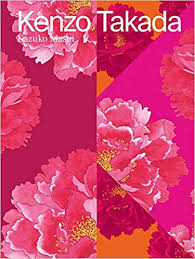
Kenzo Book    

Kenzō Takada, the Japanese French fashion designer and the founder of Kenzo, a worldwide brand of perfumes, skincare products and clothes, has been a force in fashion for over four decades. He is currently the acting Honorary President of the Asian Couture Federation. This extraordinary collection complied by Kazuko Masui features an exclusive look-book of hand-colored sketches and personal photographs from the archives of the designer.  You’ll get lost in this breathtakingly beautiful book.

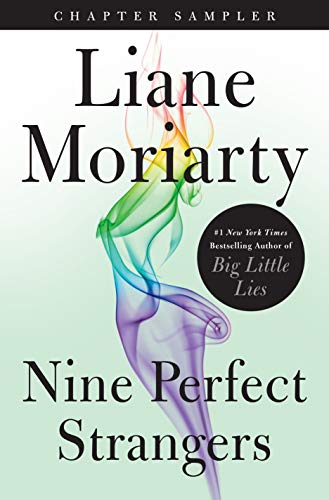
Nine Perfect Strangers by Liane Moriarty

When Big Little Lies exploded two years ago, people were eager to snap up more books from author Liane Mortiaty. She does not disappoint with this dishy tale of women who meet at exclusive spa.  Nine participants have astonishingly similar positive reactions to their regimen at Tranquillum House … at least until they discover why. This soapy tale is a real page turner and the perfect beach read.

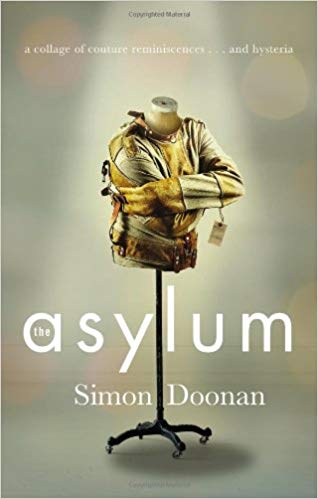
The Asylum: A collage of couture reminiscences … and hysteria by Simon Doonan

It’s time for Fashion Reverie to tell you a little secret; the people who work in the fashion industry are CRAZY! Simon Doonan has witnessed this first-hand and is ready to spill the tea on wacky designers, unhinged models, and unflappable editors in all their glamorous madness.

With his dry wit and love of eccentricity. Doonan’s personal and professional tales of deranged fabulousness with have you laughing out loud. You’ll be ticked by Doonan’s creative brain, elephant like memory, and almost encyclopedic knowledge of fashion and merchandising.

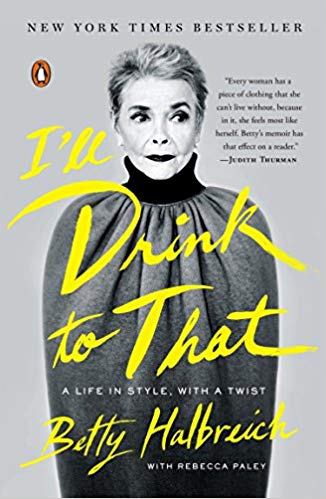
I’ll drink to that by Betty Halbreich

When the film “Scatter My Ashes at Bergdorf’s” was released, the world fell in love with Betty Halbreich and demanded more!  A personal shopper and legend, she is known for her keen eye and sugar-free advice, trusted by everyone from top Hollywood stylists to discriminating New York socialites to tell them what truly looks good. Lena Dunham, the Emmy-winning writer of HBO’s “GIRLS” is developing a series inspired by her life. Don’t wait, learn about her fascinating life now!

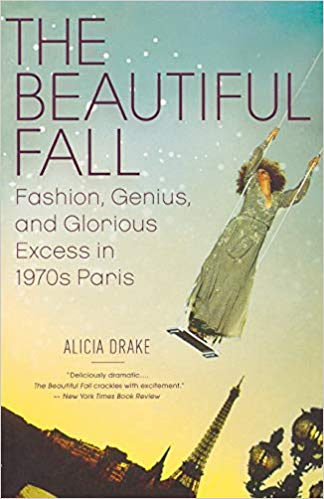
The Beautiful Fall: Fashion, Genius, and Glorious Excess in 1970s Paris by Alicia Drake

In 1970’s Paris, Karl Lagerfeld and Yves Saint Laurent smashed into each other like two champagne bottles in an explosion of sequins, celebrity, money and naked ambition. Together they split Paris in two and created fashion history setting the stage for the modern clothing industry. Their bitter rivalry is recorded in this story of magical enchantment and wretched excess that you won’t be able to put down.

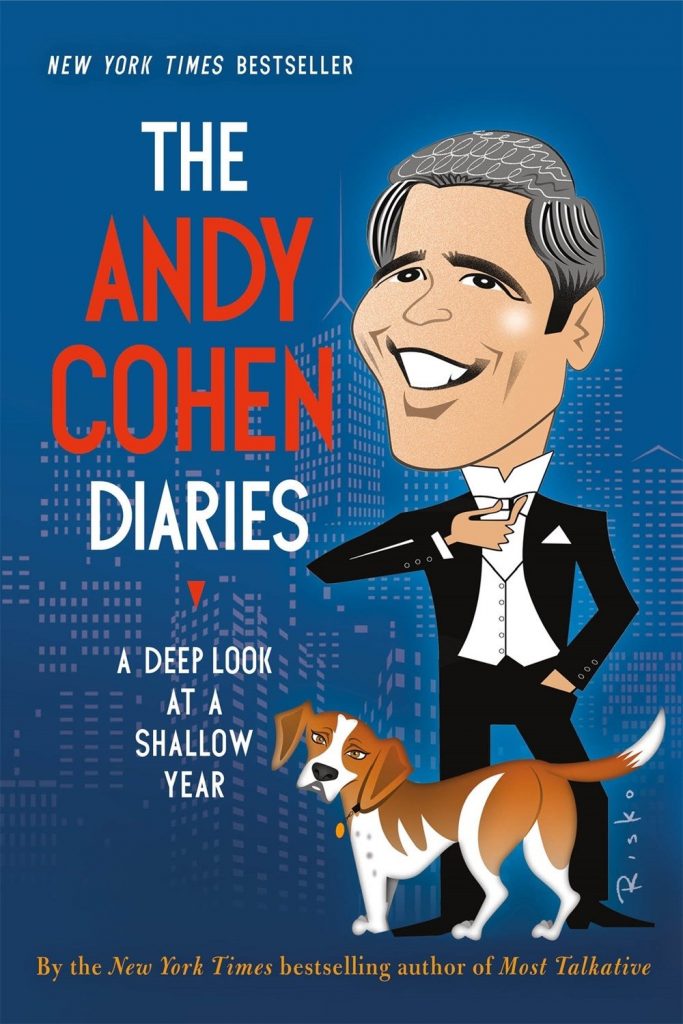
The Andy Cohen Diaries: A Deep Look at a Shallow Year by Andy Cohen

Mega producer Andy Cohen has built an empire and is ready to spill the tea. It’s time for some hot gossip about the Housewives! And Madonna! There are so many crazy tales this fun book reads like an issue of US magazine. You’ll feel like a fly on the wall to Andy Cohen’s wild life. And what a crazy ride it is! You’ll find out how and why Cohen came to possess a bottle of perfume made from Lady Gaga’s urine.

All images courtesy of amazon.com

The Bucolic Plague: How Two Manhattanites Became Gentlemen Farmers: An Unconventional Memoir by Josh Kilmer-Purcell

Do you every want to chuck your city life and buy a farm in Upstate New York? You will reconsider that dream after you read Josh Kilmer Purcell’s tale of doing just that with then boyfriend now husband Dr. Brent Ridge (Formerly Dr Brent of the Martha Stewart show). After a wrong turn on an apple picking trip, two diehard Manhattan dwellers, purchase a farm in a town of 400 people. Dealing with the painful lows and dizzying highs of these dramatic changes the question looms; will anyone make it out alive?  If you are a fan of their brand Beekman 1802 lifestyle, you’ll love hearing the hilarious tale of how it all began.

—Cameron Rose

Fashion Tea with Kristopher: Month of June 2019

Image courtesy of teatimepartyservice.com

If you live in New York City or the East Coast, you are probably feeling the hot, humid temperatures. That said; Fashion Reverie is prepared to serve you iced tea for the rest of the summer season, sweetened of course. Get your nice, tall summer glass of tea ready as Fashion Reverie keeps you refreshed and in the know.

The sale of W magazine is not looking too promising as the editorial staff is expressing dissatisfaction with the owner of Surface Media, who was in talks to acquire the magazine. Surface Media is known for a high staff turnover, and if W editor-in-chief Stefano Tonchi isn’t willing to follow the magazine wherever it goes things won’t be looking good. Tonchi is key to W retaining its top advertisers and contributors.

One of America’s most beloved LGBT publications is in distress. Out magazine is facing controversies over unpaid freelancers, and their editor-in-chief Phillip Picardi has threatened to quit.  Out magazine is expecting an injection of capital to handle these things, but if that falls through, Out could be out; no pun intended.

Image courtesy of pinterest.com

NYFW: Men’s (NYFWM) has become old, tired, and dusty. But with plans to move NYFWM to The Shed at Hudson Yards, this could change. Tongues are wagging that once the CFDA manages to lock in The Shed as the main venue for fashion week, they may want to hit the reboot button on NYFWM, giving it a second life.

A top model management company in New York might have some new job opportunities. Many of this agency’s bookers have moves to another top agency, and some models have jumped ship with them. This model management company better find some new booker talent and fast before their client base dries up.


Kristopher Fraser

Should NYFW: Men’s Be Aligned with New York Fashion Week: The Shows?

Image courtesy of fashionista.com

Men’s Fashion Month spring 2020 season is about to end, and while London, Milan, and Paris saw their celebrated slate of shows, New York Fashion Week: Men’s (NYFWM) spring 2020 season was lackluster collection of mostly emerging designers. As the NYFWM’s calendar gets slimmer and slimmer, many in the industry are asking if there is still a need, more importantly, a desire for NYFWM, and if NYFWM should be aligned with New York Fashion Week: The Shows [NYFWS]. This recent NYFWM season was moved by the CFDA to align with the women’s resort calendar in attempt to add more credibility. Didn’t work!! It appears that NYFWM is fallen off the fashion radar.

When NYFW: Men’s began it didn’t have the gravitas of some of the more distinguished international men’s Fashion Week’s—Milan, Paris, and even London. Still, NYFWM’s was a great way for independent and emerging designers to showcase their collection, and there was a small bevy of headlining menswear brands—John Varvatos, Todd Snyder, Tommy Hilfiger, Nautica, and Polo Ralph Lauren that added a level of prestige to the event.

Todd Synder fall 2018

This past NYFWM saw less than 20 shows, most of which were presentations featured at the annual New York Men’s Day. There was virtually no presence of international editors or buyers, and compared to past seasons, there was very little press coverage aside from WWD. Most of the mainstream American menswear brands have jumped ship, so to speak, leaving just a few unimpressive brands, mainly of whom, over a short period, fade into oblivion.

Fashion writer Alex Blynn believes that NYFW: Men’s is no longer necessary because, “gender in clothing is really going out of style and having a [Fashion Week] that’s specifically [men’s fashion] seems behind the times in some ways.”  Blynn added, “I think we’re all brave enough now in 2019 to have our fashion fully integrated, and to stop compartmentalizing everyone all the time …”

Image courtesy of nystyleguide.com

Blynn pointed to the growing popularity of genderless brands, like Palomo Spain, who use mostly cisgender male models, but have many pieces that could be easily categorized in the traditional womenswear category. Blynn isn’t for completely ending NYFW: Men’s though, contending, “I think it still has a place for a core audience and consumers and is still an important event that shows incredibly talent and artistry.” However, like many, he isn’t so hopeful for its future.  

Vincent Lane, editor-in-chief of The Garnette Report, believes that NYFW: Men’s should “Just be combined with women’s because it hardly gets any recognition or press, they have very few limited days, and in addition they don’t put too much effort into the shows. People mostly fly out for [the women’s shows]. Menswear would be helped by mixing it with [the women’s shows].”

There are some fashion industry professionals on the opposite side of the coin who see NYFWM’s as a necessity for emerging menswear designers and that it should be a standalone as a fashion week. Style consultant Zoey Cross says, “We still need [NYFWM]. The interest has built around men’s fashion and the many different lanes of men’s fashion. [NYFWS] alone doesn’t give that opportunity for men’s designer. Menswear designers need an opportunity to show off their talents standalone and truly be appreciated.”

Custom wear designer and stylist Jevin Kinard also believes that NYFW: Men’s is still necessary but, “It needs more sponsorship and presence.” “If it continues under the lack luster disorganized course it’s on, I would say just end it overall.”

When NYFWM’s began it had a slate of impressive sponsors including Amazon and Cadillac, in addition to a main venue at Skylight Clarkson Square. Once it lost Amazon as a sponsor, as well as the main venue of Skylight Clarkson Square, it was all downhill from there.

Image courtesy of hypebeast.com

NYFWM’s is not without an audience. and for emerging US designers looking for a boost for their brands, it is a good place to present collections. Still, with NYFWS recently reducing its calendar to five days and five nights, as proposed by CFDA’s incoming chairman Tom Ford, incorporating NYFWM into NYFWS might not be a bad idea.  That is the way it was for several decades.

The future of NYFWM hangs in the balance as fashion continues to change. But as the late, great Diana Vreeland famously imbibed, “fashion is both now and next.” What’s next for NYFWM? Time will tell.

—Kristopher Fraser

Rafi Anteby Turns Tragedy into a Fashion Legacy

Photo courtesy of hauteliving.com

Rapper Nipsey Hussle, murdered in a barrage of bullets on a Los Angeles street in March of this year, will be posthumously awarded the 2019 “BET Awards” Humanitarian Award. ” As a prolific artist and leader, Nipsey Hussle was zealous about driving change for the betterment of his community, empowering and employing those in need and being an influential and highly respected leader,” said Connie Orlando, Executive Vice-President, head of programming at BET. 

The awards show which airs this Sunday will include a star-studded tribute to Hussle known lovingly as “Neighborhood Nip” featuring DJ Khaled, YG, and John Legend.  But there will be a silent sparkling tribute in the audience by A-List celebrities, sporting bullets emblazoned with peace signs, prayers and symbols of strength, with some studded with Swarovski crystals. The necklaces, created by Jewelry Designer Rafi Anteby, are a plea to raise awareness of gun violence in the African American community.

Photos courtesy of the Anderson Group

“A bullet does not only impact one person,” says Anteby, who lost his best friend to a bullet 12 years ago. “It has a ripple effect, and many, many others whole lives are affected.” Rafael Anteby, affectionately known as “Rafi,” created ” the jewelry line called “Bullets4Peace” aimed at creating a crusade for change. When he brought Bullets4Peace to BET, he was targeting the African American community, as a crucial arena in his personal war against gun violence. “BET supported my brand. They supported my mission. They understood it very deeply.”

More than 85 percent of black homicide victims are shot and killed with guns, according to recent statistics gathered by Violence Policy Center (VPC). “The devastating and disproportionate impact homicide, almost always involving a gun, has on black men, boys, women, and girls in America is a national shame,” states Executive Director Josh Sugarmann. “These deaths devastate families, traumatize communities, and should provoke an outcry for change.”

Photo courtesy of hautelving.com

Rafi agrees.  His work to help end this crisis has been through creating a unique celebrity gifting lounge experience to build an army of front-line entertainers, from Beyoncé to Justin Bieber, to win a victory of increasing awareness. “I understood the entertainment world is the megaphone,” Rafi says. In his celebrity gift lounges, Rafi finds his best recruits. A celebrity can walk out of a gift lounge with more than $50,000 in products and gift certificates. 

Rafi’s vision for change is embodied on a bullet engraved with “Army for Peace” with a bald eagle, with wide-spread wings.  His foot soldiers for Bullets4Peace include Rihanna, who is an avid collector of the jewelry line, Eva Longoria, Jamie Fox, Justin Timberlake and Drake, Bruno Mars, and others.

Photos courtesy of the Anderson Group

“The African American community,” Rafi says, “are major trendsetters in the world of fashion.  But many people don’t want to see that! I brought Bullets4Peace to BET and by understanding exactly what I was talking about, they created that fashion movement that I have today,” he says.

Over the past decade Rafi has created 13 collections with a stunning array of bullet-centered jewelry, working with gold and silver plating, rose gold, sterling silver, gold and Swarovski crystals. His creations reflect his multi-faceted personality and wide range of life experiences. Rafi is a three-time martial arts champion, so strength is a key quality which he crafts into his jewelry using intricately designed lions, panthers, dragons and other animal images.

Photo courtesy of the Anderson Group

His experience as a monk in China, inspired him to incorporate spiritual tools for meditation into his jewelry line using the OM sign, mandalas, Hebrew prayers and other sacred symbols. Learning the power of semiprecious stones for healing in China, he created a line of jewelry featuring amethyst, jade, tiger’s eye and moonstone. The beautiful delicacy of his pieces combines a plea for peace with the necessity for balance and beauty in life. His spiritual training enables him to imbue each creation with vitality and energy, that he hopes will have a positive effect on the consciousness of whoever wears them.

Born and growing up in war-torn Israel, Rafi witnessed firsthand the devastation that bullets and bombs cause to families and communities. As a solider, he was shot several times, without major medical consequences. But it was the death of his childhood friend 12 years ago, that really impacted his life and started his anti-gun violence campaign. “It had a bigger effect on me than even the death of my father,” he says.  “You expect your father to die —but not your friend.”

Going back into the monastery to pray, contemplate and meditate about his life was a process of serious self-reflection. ” It made me rethink everything,” he says, “what I am and what I really believe in! I had to see where my next 60 years were going to be spent. I thought ‘I’ve got to make a statement!'”

Photo courtesy of fashiontribe.com

Since he was an artist, images were his major method of communication. “I sketched a bullet with a peace sign on it,”. I called my mother and asked her what she thought of it. I didn’t even know if it could be done.  But my mother said “Yes! And you should call your jewelry Bullets4Peace.  My mother sealed the deal for me!”

Rafi says “every bullet has more than one life span. The bullet gets shot, its casing falls to the floor, it is then collected by the manufacturers and reused, saving the manufacturers money, a process we call – reloading.” Bullets 4 Peace collects those used bullet casings from around the world,” Rafi explains “before they become a fully functioning bullet again, giving them a new purpose. That breaks the cycle.” Excited about his new artistic vison he walked around with sketches.  “But the more I showed people my drawings, the more I got negative reactions. That’s when I said, ‘you’re on the right track!'”

He made two of each design he had imagined and carried them around in a suitcase showing people. “A lot of people got really, really excited.” He went on TV shows getting positive responses.  “Typically, they would say, ‘I would love to have one.'”  Bullets4Peace hit the mainstream when T-Pain wore his bullet necklace in Jamie Fox’s “Blame It on the Alcohol” video in 2009.  “Jamie Fox loved it and wanted one too,” says Rafi. “They invited me again for the video “Digital Girl”—then it became like a wildfire.”

Photo courtesy of the Anderson Group

He decided he wanted to integrate the philanthropic world, fashion vision to include his spiritual knowledge garnered from his studies of martial arts. His inner experiences as a monk inspired him to give gifts that would contribute to the inner development of the celebrities, who could help broadcast the message of Bullets4Peace.

His extensive travels to study art in Nepal and Tibet, his experiences as a monk, plus his trips to remote locations to do wildlife photography, reflect his inner journey that he wanted to introduce to celebrities. “This is my world, which is different from other people’s world, so I wanted to bring them what I really believe in. The celebrities got really drawn into my lifestyle.  It is the lifestyle that everybody really wants but cannot get.”

 “Traveling to remote places, to connect them to nature and connect them to the simplicity of life,” Rafi says he thought could “bring them inner joy.”  Traveling to destinations deep in nature like Hawaii, Costa Rica, and Nepal, he says, provides celebrities with “a holiday they will never forget. It raises the self-consciousness to a level that was higher than before.  They will have a life-changing experience. “I always want to give them something they can give back.

Rafi’s three-pronged philosophy of compassionate communication, love of nature and charitable giving is the core of who he is. “I am doing this in every aspect of my life, in every aspect of my businesses.  When I travel, I try to show people that you first ask what you can give.  Then you receive much more, than if you just think ‘what can I get from these people. There is a need, Rafi says, for more celebrities like Nipsey Hussle, who was not only community philanthropist, but a role model. “In every community there are people who try to make a difference.  But there are some people who really don’t care. They only think about the music and the bottom dollar. They don’t care about what message they put out there. But I’m trying to align with those who really care about the message in the music. Beyoncé cares. Rihanna cares. Jamie Fox cares. Those are the people I’m trying to align with.”

“I’ve become very aggressive in business. It is easy for me to create business. ” The main takeaway for me is to get all the megaphones—all the celebrities —that are have loud voice and to funnel them all in my charity and get the awareness out there, so that people will listen to it.” To that end Rafi established Tao Social Media, which offers consultation to brands. And he is creating a venture that will focus on film production and talent management. “We’re already invested in three films,” he says. He also has plans to launch a new line of jewelry and announce the establishment a new charity foundation.

Photo courtesy of the Anderson Group

These ventures, says Rafi, are a means to an end. “Bullets4Peace is a way. The award shows are a way. Investing in movies is a way. Anything that I do is a way for me to be loud and clear that something needs to be changed.”

Bullets4Peace can be purchased online at bullets4peace.com.

—Francesca C. Simon

In “Legendary Artists and the Clothes They Wore,” Terry Newman Examines the Sartorial Style of Great Artists

Image courtesy of HarperCollins

Is fashion art? Some believe that fashion is too self-indulgent to be considered art, while others contend that fashion should be equally ranked with classical music, ballet, and the great masterpieces of Reubens, Renoir, Chagall, and O’Keefe.  And though fashion at one time was viewed as the province of a select group of designers that made garments for very wealthy women, in recent years with the proliferation of fashion exhibitions in major international capitals that celebrate the brilliance and integrity of some of the industry most esteemed designers, fashion is beginning to take its rightful place as in artform.

Terry Newman, in her book Legendary Artists and the Clothes They Wore highlights and celebrates many great artists’ sartorial style. In this book, Newman presents more than forty-five fully illustrated profiles of great artists whose personal style gives a purview into who they were as great artists.

From the great Cecil Beaton to the minimal style of Cindy Sherman to the highly undervalued Leigh Bowery, Terry Newman provides a detailed look at the style of many great artists of the last century as expressed in studio portraits, humorous quips, and archival photographs.

Terry Newman image courtesy of HarperCollins

Fashion Reverie: Why a book that examines the sartorial style of great artists?

Terry Newman: There is this conversation that has been bubbling up for some time about art and fashion. For me, the way to get a bird’s eye view into any cultural phenomenon or cultural movement is through what people wear.  Acknowledging that, it made sense to me to look at art through the clothes that the artists wore. Then I could take the conversation on how fashion has appropriated art, and how artists appropriate, sometimes fueled by fashion.

There is this convergence of the two mediums that I find interesting. And the main interest for me is through the clothes. However, we are at this moment in time where we are having this conversation.

FR: How did you come up with the concept of the book? Because this book is not about great fashion worn by artists, but how fashion was infused into these artists’ lives.

Terry Newman: If you take an artist like Frida Kahlo who was the prism of what I wanted to present in the book. The clothes that people wear is very much a part of their identity. A way into understanding an artist’s work would be not only their biography, but also the clothes they wore. The two are intertwined.

I find it fascinating what people are wearing, not in a judgmental way, but clothes say something about who you are, your likes and dislikes, and it really speaks to your moods. The element of personal style really speaks to me. Fashion is finally broadening and becoming more inclusive. Knowing and resonating in an artist’s work goes hand in hand with what they choose to wear and how they choose to present themselves to the world.

FR: Fashion designers now have art exhibitions. That wouldn’t have happened 50 years ago. That said; could you comment on this current era of fashion as art?

Terry Newman: Global, blockbuster fashion exhibitions in iconic museums is really elevating fashion in the art world.  Fashion is now open to academic and critical analysis. Fashion in museums as exhibitions is not very new. What is different this time around is how these museums are attempting to engage the public around these fashion exhibitions. 

Alexander McQueen’s exhibition is the biggest fashion exhibition that we had here in London and that exhibition also traveled globally. Only when fashion industry professionals start elevating fashion to that kind of critical analysis will fashion be platformed more as an artform.

The art world today, more than in any other time, bases success on sales. When you see the commodification of art, as it is happening now, these mass exhibits are all about sales, and that does change the genre. So, there is a movement that says if art can be commodified to increase sales, why can’t fashion as art be commodified the same way?

Photograph of Marina Abramovic by Dusan Reljin. ©Dusan Reljin. From Legendary Artists and What They Wore, published by HarperCollinsPublishers, 2019.

FR: How did you choose your subjects for the book?

Terry Newman: It was a difficult process. I chose mostly artists from the 20th and 21st century because in a book like this you must have photographs. You want to see what artists are wearing and that becomes more difficult when you step out of the 20th century. I also didn’t have enough room in this book for every artist I wanted to include.

FR: How did you choose the artwork that accompanies each artist in this book?

Terry Newman: It is so important to make sure that images in the book pair up to give the effect I was trying to get across. It took me about year to write the book, and a year to come up with the images. It was really a labor of love. I have thousands of images that I’ve sourced. There was the practicality of getting the right resolution for the images I wanted to use and if I could get permission to use the images. Then I also wanted to present to readers images they may not have ever seen.

One of my favorite images in the book is of Keith Haring painting Grace Jones. Haring was very egalitarian and very generous with his work, putting his signature on so many things so his friends could have something with his name on it. There are photographers that have massive archives of images of Keith Haring that are just sitting around and have never been published.

FR: You also put runway images in the book. Why that inclusion?

Terry Newman:  I wanted to show a little bit more of the conversation that goes on between fashion and art. In the Stephen Sprouse collection, he used Andy Warhol prints. They had a friendship and a communication between the two of them, and Warhol allowed Sprouse to use his imagery on his garments. And how those two things crosspollinate is very important.

I also thought it was very important to demonstrate in the book how fashion designers are inspired by art and how they translate that onto the runway. Yves St. Laurent was always inspired by art; you can’t really do a book like this and not reference Yves St. Laurent. Including runway images was a bit of a step away from the general subject of this book. However, I wanted show how the worlds of art and fashion are linked.

Image of Bruce Nauman by Francois La Diascorn. ©Francois La Diascorn. From Legendary Artists and What They Wore, published by HarperCollinsPublishers, 2019.

FR: You divide the book between hats, glasses, suits, and hairstyles. Could you explain why you chose to order your book this way?

Terry Newman:  Well, it was kind of a cheeky way to put the book together, because fashion should be fun. Sometimes, artists are recognized by distinctive things that they wear. Rene Magritte was known for wearing bowler hats. I am not saying that these artists are all about their glasses, hats, and suits. But what they consistently wore says a little bit about their personality, their eccentricities, and a little bit of who they are as artists.

So, you have Bruce Nauman with his cowboy hats, Magritte with his bowler hats, and Grayson Perry’s alter ego always wearing these bonnets.

FR: Why did you choose performance artist Leigh Bowery for this book?

Terry Newman:  I am particularly in love with Leigh Bowery. But, why put him in the book when so many people have no idea who he is? Particularly, alongside Picasso, Dali, and Pollock.

First, let’s be very clear, Bowery was an outstanding artist. The clothes he wore were pieces of art and he made most of the garments he wore. He didn’t care if he sold his clothes or not. When you think about fashion, you know it is successful if it is selling. However, with art the artist feels he has achieved success if the work expresses what he or she was trying to say.

With Leigh Bowery, he really didn’t care about selling his clothes, he made them for himself as an expression of who he was and what he wanted to express. And in that respect, what he made was art. I feel people need to know who Leigh Bowery was and because it is my book, I get to choose the artists in the book.

I teach a couple of days at an art school in London, and my students are all in their late teens and early 20s. There is a whole world that is pre-digital that they don’t know much about. So, I wanted to include Leigh Bowery so that my students would know who he was because he was pre-digital. I know that he is an odd entry in this book, but he was too wonderful leave out.

Cecil Beaton image by Norman Parkinson. © Iconic Images/Norman Parkinson. From Legendary Artists and What They Wore, published by HarperCollinsPublishers, 2019.

FR: What’s next for you?

Terry Newman:  I don’t know really. I would like to continue to talk about clothes, and personal style, and keep doing what I am doing. I am interested in personalities in fashion and wherever that takes me, that is where I will go next.

Terry Newman has worked in the fashion industry for more than twenty-five years, both as an editor at i-D, Attitude, and Self Service and as a contributing writer for newspapers including the Guardian, the Independent, the Times, and the Sunday Times. She has also written and presented fashion programs in the United Kingdom for Channel 4 (She’s Gotta Have It and Slave). The author of Legendary Authors and the Clothes They Wore (Harper Design), she has contributed to books including i-D’s Fashion Now, Fashion Now 2, and Soul i-D. She currently lectures at the University for the Creative Arts in Epsom, England and lives in London with her husband and two children.

Legendary Authors and the Clothes They Wore is published by HarperCollins.

—William S. Gooch


New York Fashion Week: Men’s Spring 2020 Pre-coverage

Image courtesy of precious7

New York Fashion Week: Men’s (NYFWM) is here again; however, this time around it is five weeks early. NYFWM usually takes place the second week of July, but this time the CFDA has positioned NYFWM’s alongside the resort collections.

As has been noted in previous articles on this site, NYFWM’s has been struggling for the past two years. Since the exit of Amazon Fashion and Cadillac as major sponsors, as well as the defection of major menswear brands Tommy Hilfiger, Ralph Lauren, Calvin Klein, John Varvatos, Nautica, Perry Ellis and a hot of other menswear designers to Paris and other fashion capitals, NYFWM is not a shadow of what is it once was when it launched in 2015.

Image courtesy of nymag.com

For the spring 2020 season there are so few menswear designers presenting collection that NYFWM’s season like an odd patchwork of disparate designers, mostly emerging, that are using to opportunity to attempt to get some traction in the New York fashion market. A traction that is quickly diminishing, particularly as European luxury menswear designers have overwhelming embraced streetwear.

That said; New York Men’s Day (NYMD) will kick off NYFWM on Monday, June 3 as they have for past 12 seasons, holding court this time at the newly anointed Hudson Yards. New York Men’s Day will present spring 2020 collections by a returning Timo Weiland, David Hart, Amirok, Feign, Abysm, Ka Wa Key, Tanaka, Vasilis, Todd Hessert, Tanaka, and the NYMD All-Star Designers including Private Policy, Lucio Castro, Krammer & Stoudt, Woodhouse Army, and Descendant of Thieves.

Image courtesy of pittimagazine.com

Unfortunately, other menswear designers presenting is kind of up for grabs. There are some NYFWM’s stalwarts that have not totally abandoned this event, namely Grungy Gentlemen, Linder, Nihl, and Freemans Sporting Club. Not showing this season are regulars Carlos Campos, Todd SnFeng Chen Wang, Landlord, Palomo Spain, Bode, Dune, Willy Chiavarria, and others.

New York Fashion Week: Men’s will take place on June 3 to June 6.

—William S. Gooch

Fashion Tea with Kristopher: Month of May 2019


Fashion Reverie hopes you are enjoying the mostly warm days of May, but now it’s teatime. Grab a chair and a plate of scones as Fashion Reverie pours some delicious tea for you.

Scandalous Tea

The news of Topshop going out of business has hit every major news headline by now, but not enough fingers are being pointed at Philip Green. While some are pointing to Topshop’s declining sales or less than stellar financial management, behind the scenes many are saying it was Green’s sexual picadilloes and cover ups that hurt the company.  Green and Harvey Weinstein could make very compatible bedfellows!!

Influential Tea

A prominent fashion non-profit has many in the industry scowling after a new president without the approval of the board of directors. This new president non-elect now has one of the most coveted positions in the fashion industry. Apparently, he was pushed to the top post by another top fashion figure. Wield your power!!

Fancy Tea

Things are looking tough for this French luxury brand as they are struggling to keep up with other French luxury brands. Their minimalist approach to style in an era where everyone is doing maximalism, streetwear, or tailoring in contributing to lagging sales. You can’t get by on a name recognition alone, consumer habits change too quickly.

Yesterday’s Tea

New York Fashion Week: Men’s (NYFWM) summer edition is practically dead. The event which has now aligned itself with the women’s resort calendar is already expecting record low attendance. Few international press and buyers are expected to attend, and even those editors on the domestic front are shocked by the bare bones list of shows and presentations. Unlike the winter shows, which follow right into the main NYFW, summer NYFWM’s doesn’t have that luxury, and most industry professionals are bowing out.

Kristopher Fraser

From Clicks Back to Bricks: The Re-emergence of Brick and Mortars

Image courtesy of nssmagazine.com

Wondering what Serena Williams will wear when she steps onto the tennis court for the 2019 Paris Open Queen on Sunday, May 26th? Her black Nike catsuit caused some controversy at the 2018 Paris Open. But no matter what she wears, Nike will share the spotlight with her on the court, online and at Nike Champs-Elysees store. A Serena Williams–inspired flowing cape-jacket designed by Virgil Abloh, in collaboration with Nike, will be on sale. Abloh and Nike have also created a limited-edition T-shirt and hat, which will be released on nike.com in Europe, North America and P75 store in Paris once Serena takes the court.  Talk about timing!

This is a winning marketing trio integrating retail, ecommerce, and entertainment. Nike has always been ahead of the game in providing experiential retail, which is considered the game-changer of the future, since it opened its first flagship store in New York 25 years ago. As the great American humorist Mark Twain once told a reporter, “The reports of my death are greatly exaggerated.” This can be said of “retail is dead” rumor set off by the battle between e-commerce and retail.

The “who’s beating who” wrestling match between ecommerce and retailers got verbal in April when CNBC reported that in February “online US retail sales was higher than general merchandise sales for the first time in history”—or in other words, online shopping had brick-and-mortar sales down on the mat in a stronghold. Greg Maloney, President & CEO, Jones Lang LaSalle (JLL) and a frequent contributor to Forbes.com delivered a smack-down with an article that made CNBC cry “Uncle” and change its’ story within 24 hours.

Image courtesy of rangeme.com

“Look, I’ve long taken issue with some of the ways the topic has been covered and I think it’s clear which side of the fence I am on when it comes to the future viability of physical retail, but I’m also not the Pollyanna you might think,” Maloney wrote pointing out specific errors in the CNBC story. “There have certainly been challenges for the sector and online retail has made its impact felt to be sure, but it’s just not the death-blow that some people want to make it out to be.”

Granted this week Nordstrom, JC Penney, Macy’s, and Kohls reported disappointing first quarter profits for 2019, the retailers are revving up for the future with a marketing strategy whose time has come. Maloney says a “concept of convergence” is occurring, where there is “a realization from retailers that to properly compete they need to have a presence everywhere, online and off.” And the same goes for e-commerce. Nike’s Serena Williams–centered strategy for the 2019 Paris Open is an excellent example of covering all the bases.

Image courtesy of cityreality.com

Fifth Avenue in New York City is a “must shop” spot for tourist visiting the Big Apple. Since the coming of the age of e-commerce in 1991, Generation Z shoppers, don’t need a luxury allowance to spend money on the “Millionaire’s Mile” anymore.  Now they can step into Nike’s Fifth Avenue flagship store and try on new shoes and customize them to fit. 

Big brands had traditionally been dependent on independent retail stores and chains, like Macy’s, to be the frontline for customer interaction. Believing that e-commerce was the key to expanding their customer base, they invested in online virtual marketing where the computer mouse was king, and every heart’s desire was just a click away. But not anymore—the game has changed. 

Both retailers and e-commerce brands realize that a consumer revolution is afoot.  E-commerce is rushing to recapture their customer base, that has been returning merchandise at a high rate, and not transitioning into return buyers. As a result, e-commerce businesses are building more stores, which offer more assistance, services, and an ambience created to inspire spending. Maloney says that a report by JLL, revealed the fact that the top 100 “digital-native brands” (previously exclusive online stores) have announced plans to open a combined 850 stores over the next five years.

Image courtesy of nycgo.com

“’The clicks-to-bricks’ retailers’ expansion plans, demonstrate the value these brands place on having a physical presence with which to engage shoppers,” the JLL report states. Apparel and accessory brands account for almost three-quarters of ‘clicks-to-bricks’ retailers. New York remains the top city for both pop-ups and first permanent locations, according to the report, but other “marquee markets” like Los Angeles, San Francisco, and Chicago, are also popular.

One of the largest ‘clicks to bricks’ expansion across the country will be from Adore Me, the women’s intimates’ company—that has stolen much of Victoria’s Secret’s thunder, plans to open up to 300 additional stores in the next five years. “Allbirds, the wool sneaker company, opened a 4,800-square-foot New York flagship in SoHo, with plans for more stores in four cities in the next year”, the JLL report states. “The ‘clicks-to-bricks’ retailers’ expansion plans demonstrate the value these brands place on having a physical presence with which to engage shoppers.”

When Nike opened a new flagship store on Fifth Avenue in November 2018, Heidi O’Neill, president of Nike Direct, was enthusiastic about loving her role in ushering a new age of “retailtainment.”  “I get to think about the evolution of retail every day, as we craft our vision of a modern, digitally transformed store. It was just three or four years ago that the industry declared brick-and-mortar retail dead. If you believed the whispers then, we wouldn’t have any physical stores—just a grim landscape of empty storefronts as far as the eye can see. But a funny thing happened on the way to the death of retail. It turns out, when you actually talk to consumers, they still want to shop by touching and trying on. They still want to connect, to step into a space and feel something.”

STORY brick and mortar image courtesy of dnsindustries.com

The term “retailtainment” was coined in 1999 by George Ritzer, an American sociologist, defined as “the use of sound, ambience, emotion and activity to get customers interested in the merchandise and in the mood to buy.”  New York has always been a popular location for digital brand pop-up shops and already the city’s retail landscape is changing as exclusively digital stores are leaving the virtual realm and manifesting their presence in the physical world. Soho continues to be the best testing ground for brands to try out their foray into retail. Both ecommerce businesses and retailers have caught onto the idea of “retailtainment” to “catch and convert” new customers and keep loyal customers coming back.

Dr. Elinor Greenberg loves shopping—period—whether online or in a brick or mortar store. She came of age in the 60s, when life was rooted in the experiences of the physical senses. For the Baby Boomer generation, shopping was a sensual experience. Shoppers could touch and try on garments, getting an immediate sense of the fit and feel and then the instant gratification of “cash and carry” leaving with purchase in hand.

Shopify image courtesy of shopify.com

Elinor, a psychologist and seasoned catalog shopper, is now an avid online shopper. Like any busy 21st century professional, the convenience of clicking a mouse, with delivery of your heart’s desires within 24 hours or two days, is ever tempting. But these days many online shoppers, whether Gen X, Millennials, Gen Y or Gen Z are clicking less and walking more, due to disappointment in online garments. Dissatisfaction with the feel of the fabrics, fit of the garments, and in some cases inferior construction, is causing consumers to hit the bricks and shop in stores.

“Instant gratification is one of the major reason’s consumers prefer in-store shopping. Being able to try on and test the merchandise is great, but shoppers also like leaving the store … bags in tow,” says Mahoney. “This is really just the beginning as online has the ability to be one of the greatest incubators for physical store retailers to date.”

Image courtesy of  Erik Pendzich/REX/Shutterstock 

Both online and brick-and-mortar stores are seeking to expand their universe of marketing, but the question is should there be one strategy or channel “to rule them all” or a blending of different channels.  In the end it’s all about money and resources, so companies will choose either multi-channel marketing or an omni-channel strategy.

Retailers are trying out these new ideas, in hopes of boosting their profits. Nordstrom is building a new women’s flagship store in the heart of Manhattan, which will open in October 2019. Macy’s is developing a relationship with Story, an in-store concept that changes every month.  “We are truly seeing a blending of the channels,” says Maloney. “It is clear that at this point it should be a significantly more evolved conversation. I for one yearn for the day that we can just talk about retailing.”

—Francesca C. Simon

Matthew Jordan Smith: Giving Back and Moving Forward

Establishing a career in fashion is a very challenging endeavor, especially when so many aspirants want their piece of the pie in an industry that is seen as glamorous, exciting, and extremely profitable. Competition, if you want to call it that, is fierce and unforgiving.
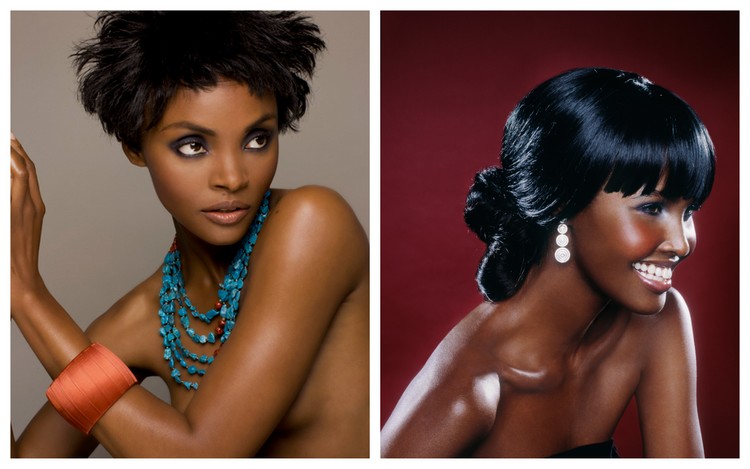
Still, despite the irregularities and changing vicissitudes of this peripatetic industry, fashion has produced some of the greatest curations of moving art of the 20th and 21st centuries. And though many folks struggle to get a foothold in fashion, for those we succeed, the glory far outweighs the sacrifices.

Matthew Jordan-Smith is one of those fashion industry professionals who has succeeded. For those who are familiar with Jordan-Smith’s work from “America’s Next Top Model” and his books on photography, there is no doubt that the man has craft and skill. But, Matthew Jordan-Smith is so much more than the artist behind the camera. His recent interview with Fashion Reverie illuminates his depth of character and his photographic brilliance.

Fashion Reverie: How did you become interested in photography?

Matthew Jordan Smith: My father should take all the credit for that. My father gave me a camera when I was twelve. He not only taught me how to take pictures, but how to process my own pictures. That is when I was bit by the photography bug, and I have been going ever since. 

In the beginning, photography was a hobby, then I began reading books by Gordon Parks, James Vander Zee and I discovered that African American photographers were making a living out of photography. That changed everything for me. Later I went to art school and majored in photography. I moved to New York City, working as a photographer’s assistant, and I have been working at my craft ever since.

FR: How did fashion photography enter your career path?
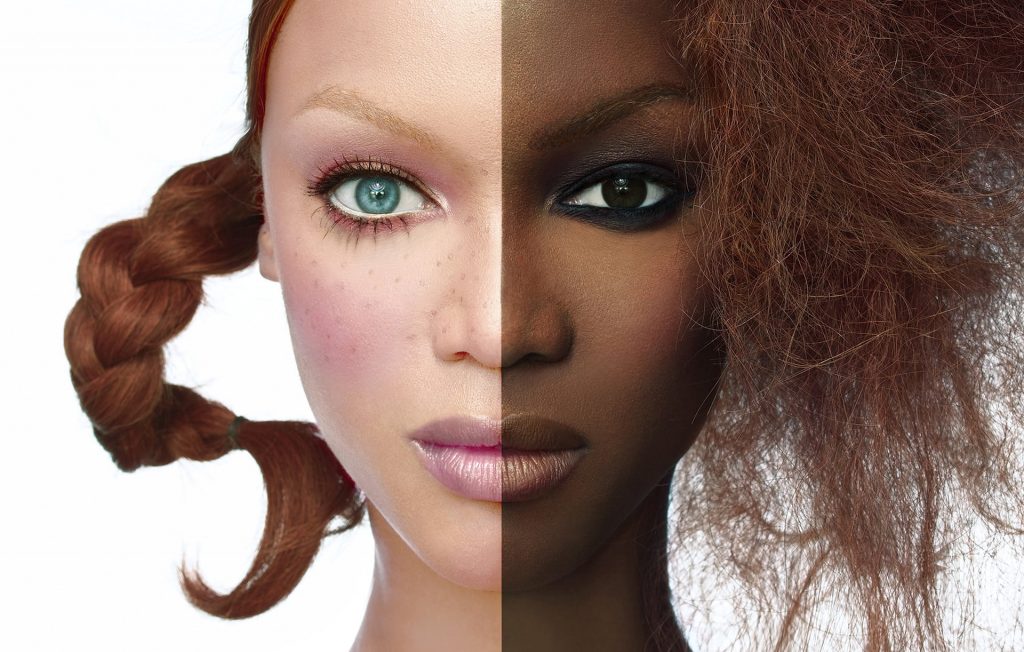
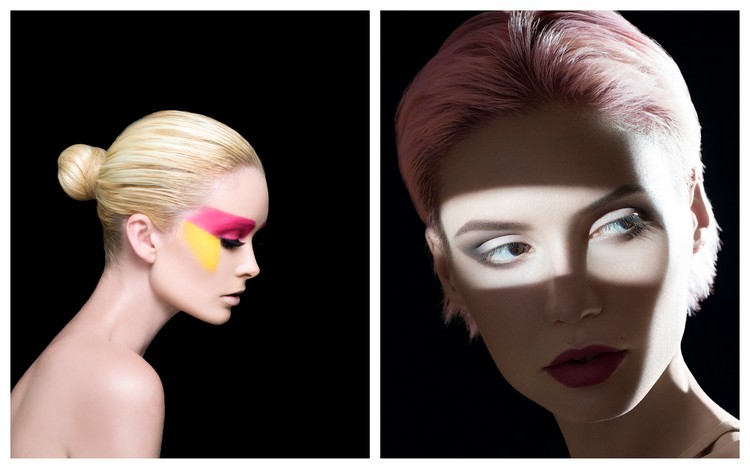
Matthew Jordan Smith: Fashion came into my sphere as a student at art school. I had this one photographer that was always talking about Vogue, Zoom and other fashion publications. Because of this professor I fell in love with fashion because it was fantasy and you are creating every aspect of the image, as opposed to shooting sports where you are documenting exactly what is happening.

FR: What was the one big job that really opened the doors and helped advance your career?

Matthew Jordan Smith: There were lots of big breaks for sure; however, the first big opportunity came from Susan Taylor, the former Essence magazine editor-in-chief. She gave me an eight-page spread on business women. The next assignment at Essence magazine was shooting Anita Hill—that was in the early 90s—and the assignments keep coming from there.

FR: Many people may know your appearances on “America’s Next Top Model.” That said; when did you begin to work with Tyra Banks?

Matthew Jordan Smith: I started doing test shots with Tyra Banks when she first moved to New York City as a young model. This was also early in my career. I was still working as a photographer’s assistant back then and I would work with Tyra at the end of my day and at the end of her day and we would go back to my Brooklyn apartment and do test shots.

FR: You have worked in a lot of different genres, fashion, commercial photography, celebrity photography, etc. Which genre do you like best, and why?

Matthew Jordan Smith: My favorite genre is the world of fashion and beauty because it is really where you are creating. You are a visionary and taking that inspiration and turning that into an image.

One of my favorite fashion magazines is Vogue Italia. I love the work of Stephen Meisel because his photography speaks to what is going on in society and he infuses those contemporary moments with fashion and beauty. Fashion takes on a stronger role when you infuse fashion with social issues and cultural trends.

I love fashion as social and cultural commentary. It would be almost a sin to experience all the things that are going on in the world and not show that through your art. And what can make that special is mixing in the fantasy of fashion.

FR: What is most favorite fashion editorial that you have photographed?

Matthew Jordan Smith: You always think you last editorial was the best. However, I did just shoot in editorial in Japan that I absolutely adore. It is something brand new with a perspective I had never attempted before. It is bold, beautiful and it was my favorite thing right now. It has not been published now. It is based on a designer in Japan. Their work is very electric, and I shot it that way.

Other than the current editorial, my favorite fashion editorial was my first editorial I shot for Essence magazine in the Caribbean. We shot in St. Lucia, we had two different stories coming on at the same time. And I oversaw the production and crew. That memory will last me a lifetime.

FR: Who is your favorite celebrity that you’ve photographed?
Matthew Jordan Smith: My favorite would be Aretha Franklin. I have photographed her over a 13-year period, and we had a great relationship. And looking back over all the images, the images say so much and speak volumes to me about who Aretha Franklin was and the many things that we didn’t know about her.

When she passed away, we had been trying to do another shoot for eight months. It would have been for an album she was attempting to put together. However, because of her illness, we were not able to shoot the cover of her next album. Still, in the last eight months of her life we talked to each other a lot, probably more than we had talked in all the thirteen years I had worked with her. I cherish those conversations now more than ever.

FR: Could you talk about your book, “Future American President”?

Matthew Jordan Smith: The birth of that book, believe it or not, was the birth of my photography. When I was just starting out as a photographer I was given books about Gordon Parks and James Vander Zee. Those books showed me what was possible. Before I got those books, I didn’t realize that photography could be a career and you could go around the world doing your craft. I thought of fashion as a hobby. If you don’t see people who look like you accomplishing what you are passionate about, you may bit think it is not possible for you.

That idea was the petrie dish, so to speak of Future American President. I got the idea to go around the country to every state in America and photograph young children that I didn’t know and try to inspire them that anything is possible. I would ask families about their children, have conversations, and then I would photograph them.

FR: Were people willing participants?

Matthew Jordan Smith: The idea that people might turn me down, kept me from doing this for a long time. I knew that folks would feel funny about someone, a stranger, walking up to them asking if they could take pictures of their children.

With that in mind, I took my two previous books, Sepia Dreams and Lost Found, on the road with me so folks would have a reference point about my work and see that I was legitimate. That changed everything around and very few people said no.

FR: Did anyone know you from “America’s Next Top Model”?

Matthew Jordan Smith: When I started this project, I had just met Zendaya’s father. So, asked her if I could photograph her and would she write the introduction to this book. She agreed.

Now, many of my subjects, which were young children, didn’t know me or even Tyra Banks, but they know Zendaya because she was on a Disney TV show at that time. With my books and Zendaya writing the introduction, that was my in.

FR: You are now an ambassador for Nikon. Could you speak about that?

Matthew Jordan Smith: I am honored to be the first African American ambassador for Nikon. I have been sponsored by quite a few companies in my career. The first one was Microsoft, who sponsored me for eight years. And from that other companies followed suit. Nikon approached me and it has turned into a great opportunity, facilitating some wonderful things.

FR: Did this ambassadorship with Nikon prompt your residency in Japan?

Matthew Jordan Smith: No. I first went to Japan in 1999 and continued working and visiting Japan about 20 times before taking up a residency there. The more I went back, the more I loved it.

Tokyo is like New York City on steroids. And so, I decided to make Tokyo my base.

All photos courtesy of Matthew Jordan-Smith

FR: Why do you call Tokyo, New York City on steroids?

Matthew Jordan Smith: Tokyo is way more crowded than NYC. It is all things you love about NYC minus the things you don’t like about NYC. Tokyo is extremely clean, and everyone is extremely polite. There is a sense of pride about every aspect of life that takes away the stresses of life. All the things that could be stressful about living in a big, urban city, you are not stressed out about in Japan.  It is not perfect, but I love the quality of life I have there.

That said; I come back to The States a lot. In fact, I have been back four times already in 2019.

FR: What’s next for you?

Matthew Jordan Smith: I am working two projects right now that are personal projects. The personal projects go beyond commissioned work. Personal projects like an exhibit or books have a much longer life than a campaign or editorial.

I am now pitching book on Aretha Franklin. I photographed her for 13 years and I have all these amazing photos that no one has seen. I hope to get a book deal with about these Aretha Franklin photos.

—William S. Gooch


Copyright © 2012-2025 | Fashion Reverie Publications, LLC - All Rights Reserved