Les Ballets de Monte-Carlo Revisits Swan Lake

LAC_01It is very difficult to perform classical ballet repertoire extremely well. There are the technical demands, as well as a precise understanding of the style and nuance of these revered classics. Yet, season after season international ballet companies tackle these pyrotechnical warhorses to critical acclaim or to lukewarm results.

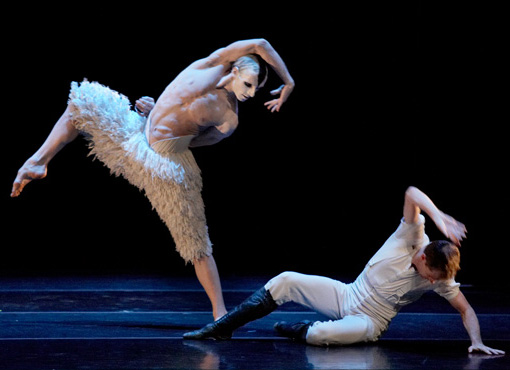
Les Ballets de Monte-Carlo has taken a somewhat different approach to Swan Lake, one of the most well known ballets from the Ivanov/Petipa repertoire. Though other companies have updated Swan Lake in the past—from National Ballet of Canada’s Freudian version to Matthew Bourne’s modern dance–based, homoerotic incarnation—Les Ballets de Monte-Carlo’s LAC after Swan Lake incorporates mixed media, movement from a variety of dance styles, as well as a modern sensibility evidenced in narrative, costume, and corps de ballet configuration.

LAC_05Though the narrative in LAC defers somewhat from the original Swan Lake that is based on a German folktale, some story elements remain consistent. The Prince must marry an eligible young aristocrat, there are evil forces afoot, and the Swan fluctuates between human form and a hybrid of bird and humanoid. The resemblance to the original storyline ends there. Instead of the evil magician Rothbart, there is a maniacal malicious Majesty of the Night in league with the Prince’s King Father, the Prince has a mother and a father in this version, and the Prince is the protagonist of the ballet instead of the Swan.

“Of course as a dancer, and being fascinated with Tchaikovsky’s music, I had to face Swan Lake at some point. For me, it is about trying to see if it’s possible to bring some contemporary code into those traditional ballets,” details Les Ballets de Monte-Carlo artistic director Jean-Christophe Maillot in a phone interview with Playbill.

Enter novelist/scriptwriter/lyricist Jean Rouaud who Maillot met at the Monaco Dance Forum.  “We discussed the mythology of those big classical ballets and tried to see if, by telling the story in a very precise way, we could bring something different to it that would be more connected to the reality of today, for the dancers,” explains Maillot.

he cast of Jean-Christophe Maillot’s LAC (After Swan Lake).  Photo by Laurent Philippe

he cast of Jean-Christophe Maillot’s LAC (After Swan Lake). Photo by Laurent Philippe

It appears that this revised, modern adaptation works choreographically for this company. Gone are the stylized swan arms and undulations—well, most of it—and the imperial approach to Tchaikovsky’s swelling score. Maillot’s naturalistic movement style, which includes Graham-like contractions, lyrical steps in the style of Lester Horton, combined with Maillot’s hybrid ballet vocabulary has created a lexicon of movement styles that gives LAC modern accessibility and buoyancy. The dancers soft, pliant pointe work was also a welcome relief from the staccato rat a tat tats of noisy pointe shoes.

Also, in Maillot’s LAC, the movement styles and stagecraft support the music in ways that don’t encroach on Tchaikovsky’s magnificent score. At times, it was like hearing Swan Lake for the first time without too many stage distractions.

Jean-Christophe Maillot’s LAC (After Swan Lake).  Shown: Anjara Ballesteros as The White Swan, Lucien Postlewaite as The Prince.  Photo by Alice Blangero.

Jean-Christophe Maillot’s LAC (After Swan Lake). Shown: Anjara Ballesteros as The White Swan, Lucien Postlewaite as The Prince. Photo by Alice Blangero.

One of the other elements that stood out most dramatically in LAC was Philippe Guillotel’s costumes. Guillotel’s costumes for this production were on trend, incorporating asymmetrical cuts, combinations of layered diaphanous fabrics, metallic fibers, and juxtaposing hard and soft fabrications. Though Guillotel’s creations were modern in scope and facilitated ease of movement for the dancers, there was a nod to some of the traditional ballet costumes seen in Swan Lake. The standouts among Guillotel’s costumes were the feathered, sequined gloves that conjured up images of flapping swan wings and the Majesty of the Night’s peplum/short tutu black sequined tunic.

The dancers in this company are all brilliant; however, there were some standouts.  Les Ballets de Monte-Carlo principal dancer April Ball was equally menacing and deliciously sensual as the Majesty of the Night. Noelani Pantastico as the Black Swan/Odile had the right combination of muscular urgency and lyrical elegance. And Anjara Bellesteros as the White Swan/Odette is graceful classicism at its best.

Image courtesy of Les Ballets de Monte-Carlo

Image courtesy of Les Ballets de Monte-Carlo

Still, the corps de ballet in this work is worth taking note of. Though the swans were a little “Swan Lake on Quaaludes” at times, the beauty and uniformity of the corps was not the point of Maillot’s LAC. This production uses the incredible acting/dancing ability of Maillot’s artists in ways that more traditional versions of Swan Lake don’t.

Though LAC may cause Swan Lake purists to cringe at times, there is much good to be said about Maillot’s reworking of this great classic. And those feathered, sequined gloves would look great on a runway!!

—William S. Gooch

Jessica Lang’s Unusual Dance Trajectory

lang6In the dance world, some of the biggest stories have been about choreographers leaving their companies to return to their previous lives as freelance choreographers. Choreographer Jessica Lang has made news by doing the opposite. After 12 years as a successful freelance choreographer with more than 80 commissions and counting, Lang formed her own company.

Audiences will be able to see the two-year-old Jessica Lang Dance perform this week at the Joyce Theater.  The company performs through Jan. 23.

“I love it. It’s great having a company. It’s a good balance between my freelance work and building the company,” Lang said.

Lang said she enjoys the consistency of working with the same group of dancers.

Jessica Lang

Jessica Lang

“The bulk of my life has been about walking in with a plan, but not knowing anyone and them not knowing me. But by the second day I have to have a cast selected. That’s the reality when you’re a freelance choreographer,” Lang said. “With my company, I can come in and I know who’s in front of me. They dance my movement the way I want it to be done and their commitment allows me to have the freedom to keep growing myself artistically.”

“With my company it’s more about my work. When I go to another company it’s about that company’s experience in my work and how my work or my voice can be useful for them. I have a responsibility to give them something useful.”

Lang noted that she thinks of choreographer Mark Morris as a model for the career she’s forging.

lang3“He has his own company, his own voice, his own place to create and call home and yet he still does take outside commissions from various dance companies and operas. He also has a school,” she said. “All of that is really interesting and inspiring for me.”

Lang added that she’s also finding that with her own company, she can branch out more with some of the company members setting her works on one company while she travels to create a ballet with another company. “I can’t do it all so it’s great to have that kind of help,” she added.

lang5Another benefit for Lang (and for audiences)is that she has been able to surround herself with a cadre of seasoned, accomplished dancers whose credits include the Mark Morris Dance Group, Suzanne Farrell Ballet, the Merce Cunningham Dance Company, and the Metropolitan Opera.  And one of the most interesting additions to the Lang company has been former Alvin Ailey star Clifton Brown, who in addition to performing with the Lang Company also serves as the company’s rehearsal director. Brown, who left Ailey in 2012 after 12 years—the last as a guest artist, now works as a freelancer with, among others, Lang and Lar Lubovitch.

“I think (Lang) is an artist who I feel has a very clear vision and I think that’s kind of rare these days,” Brown said. “When I look at people’s work I would like to do or people I would like to work with, that’s very important.”

Photos by Takao Komaru, courtesy of Jessica Lang Dance and CAMI

Photos by Takao Komaru, courtesy of Jessica Lang Dance and CAMI

“I like the range in her work. There are some pieces that have a vocabulary that’s a little more classical ballet in terms of the movement vocabulary. But then there are other pieces that are much more grounded and modern in their aesthetic. But her voice is very clear throughout. That, in a nutshell, is what draws me to working with her.”

For tickets and performance information go online at www.joyce.org.

—Karyn D. Collins


Rennie Harris Sets the Record Straight about Hip Hop Dance

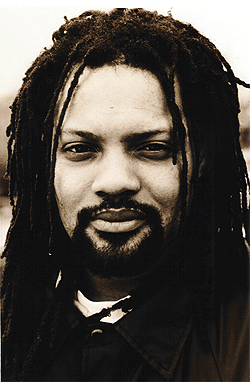
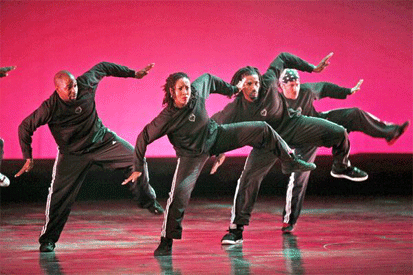
Rennie_Harris_01Rennie Harris knows that he doesn’t always say what people expect to hear when he’s asked about his dance company, Puremovement, and its groundbreaking work bringing hip hop to the concert dance world. He knows that he doesn’t always create what people expect to see either. But, after almost 24 years of being immersed in the concert dance world Harris feels that now more than ever it’s important for him to continue to represent what he believes is the truth about hip hop dance.

“I feel like we’re in a state of fighting the image of what presenters think is hip hop. I feel like I’m fighting for what’s authentic,” he said.

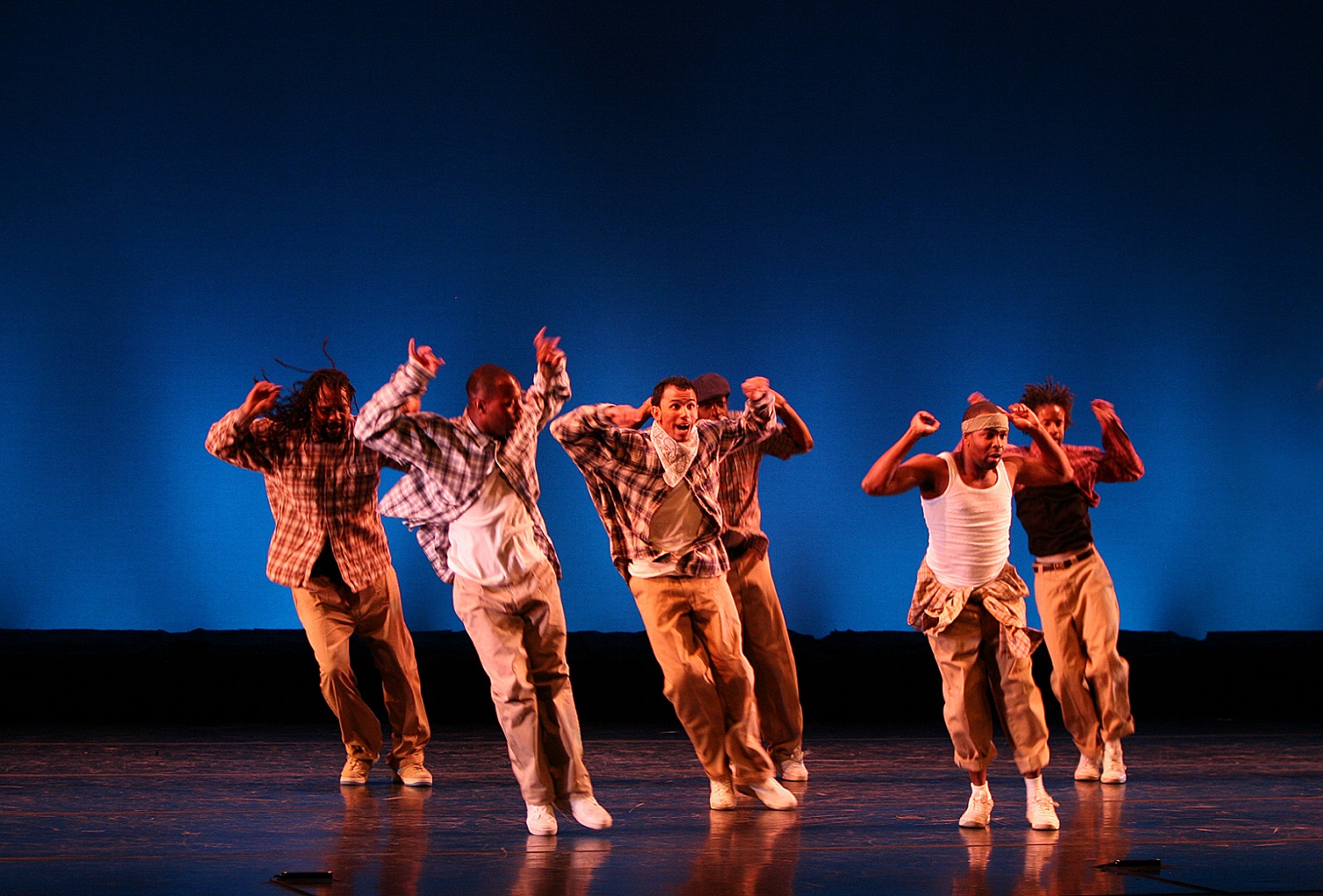
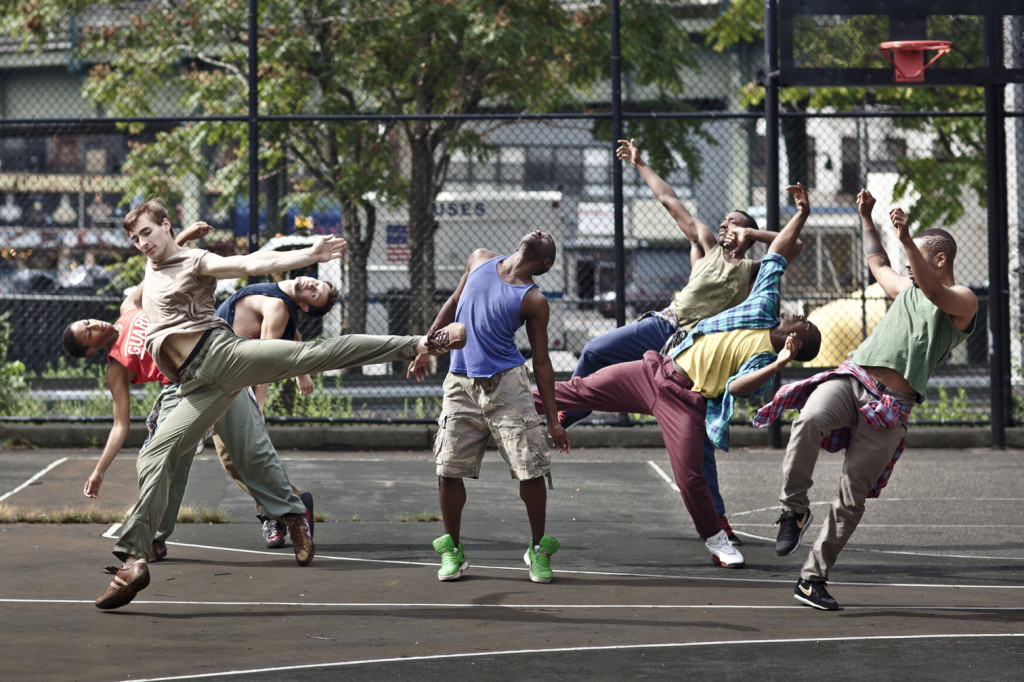
The Philadelphia-based Puremovement will present Harris’s definition of authentic hip hop when it performs Januay 28–Feb. 2 at the Joyce Theater. The Joyce programs will include highlights from the Puremovement repertoire: excerpts from his “Romeo and Juliet” inspired work “Rome & Jewels,” “Continuum,” “P-Funk,” “March of the Antman,” and “Students of the Asphalt Jungle.”

Rennie_Harris_05

Rennie Harris

Harris, who divides his time between Philadelphia and Los Angeles where he is a dance professor at UCLA, said a big part of the challenge in presenting hip hop in the concert dance world is that expectations are skewed. Presenters and audiences, he said, are either looking for what they see on television in shows like “So You Think You Can Dance,” or they expect to see works that fit the model of more traditional dance works.

“I think artistically there’s a long way to go when it comes to hip hop or street dance. I don’t think enough time has gone by for people to really understand what they’re watching with regards to the movement,” he said. “You have a lot of presenters who are still judging it through a European lens.”

“At the same time, a lot of what is being called hip hop is just a mixture of jazz or modern dance and they call it hip hop and think ‘Oh, this is amazing work.’ When you watch a video and see all this choreography, it’s really just jazz dance with the gestures of rappers.”

Rennie_Harris_03

The real hip hop, Harris said, has a rawness to it and less of a concern with things like the placement of the arms or complicated spins.

“Hip hop dance comes from the hips down and it’s supported by the arms. The arms don’t necessarily dominate. It’s not about grabbing your crotch and all that,” he said. “If you watch hip hop from the early ‘80s like in a Dougie Fresh or Queen Latifah video you’ll see real hip hop. That’s the real thing.

“What you see today is okay. Some of it is actually dope. Some of it looks good. I’m not saying it’s not good dance, but it’s just not hip hop. It’s a hybrid.”

RHPM company picAt the same time though, Harris said he tries to be careful not to criticize the work of his fellow artists. Asked, for example, what he thinks of Lil’ Buck, who has become the new darling of the concert dance world with his performances combining the hip hop style known as Jookin with classical music, Harris gives a cautious critique.

“I don’t call it hip hop. It’s street dance. It’s interesting. He’s doing some gliding and some waves. It’s not really new. But it’s sort of like a new wave of juxtaposition,” Harris said. “That’s not to disrespect him or say he’s not a good dancer.”

Images courtesy of Rhennie Harris Puremovement

Images courtesy of Rennie Harris Puremovement

Harris, understandably, is more comfortable talking about what he’s doing and how that fits into furthering the conversation about what hip hop dance is really about. “My art is not about being dynamic all the time even though that’s what presenters and some people expect,” Harris said. “My art is about using this movement that started as social dance and using it as a base. It’s about being introverted and intelligent and thought-provoking.”

For more information or for tickets go online at www.joyce.org.

—Karyn D. Collins

Company XIV’s Nutcracker Rouge Has Crackle, Pop, and Lots of Sizzle

 Cast of "Nutcracker Rouge." Image courtesy of Phillip Van Nostrand Cast of “Nutcracker Rouge.” Image courtesy of Phillip Van Nostrand

What if the Sugar Plum Fairy was a delectable striptease artist, the Waltz of the Flowers a titillating swirl of T and A, and the Land of the Sweets the domain of burlesque divas, sexy sirens and buxom beauties?  No Russian Cossacks masterfully performing barrel turns and double tours; instead, there are gender bending S &M dilettantes giving it to you front and center. As unconventional as this re-imagined Nutcracker sounds, and as far away as this vision of the Casse Noisette is from toy soldiers, the creamy boureès of the Sugar Plum Fairy, and swirling ballerina snowflakes, Company XIV’s Nutcracker Rouge is a delicious adult option to more traditional Nutcrackers.

Company XIV since its inception has gained a reputation for re-imagining ballet classics, fairy tales and a variety of well-known stories and myths. Take for example their version of Adam and Eve (Le Serpent Rouge), re-conceptualized as man’s inner battle with the dual nature of women as realized in the personages of Eve and Lilith.

Shelly Watson as Madame Drosselmeyer (singing in center) and cast  members of "Nutcracker Rouge." Image courtesy or Robert Zash

Shelly Watson as Madame Drosselmeyer (singing in center) and cast members of “Nutcracker Rouge.” Image courtesy of Robert Zash

In Company XIV’s version of the Nutcracker, Marie-Claire (Laura Careless) gets lost in the forest and stumbles upon the Kingdom of Sweets. Invited into the kingdom by the King of the Sweets (Jeff Takacs), Marie-Claire transitions from an innocent girl on the brink of womanhood to the saucy adult Sugar Plum Fairy resplendent in bedazzled corset and pasties.

Image courtesy of Robert Zash. Laura Careless as Marie-Claire and Cassady Rose Bonjo as Nutcracker  Doll

Laura Careless as Marie-Claire and Cassady Rose Bonjo as Nutcracker Doll. Image courtesy of Robert Zash

Many of the elements from the original Casse Noisette are still present in Nutcracker Rouge. In typical Company XIV fashion, artistic director Austin McCormick has blended stylistic elements from Baroque dance, modern, classical ballet, burlesque, and circus acrobatics, as well as spoken dialogue, torch songs, and a few selections from Duke Ellington’s jazzy The Nutcracker Suite.

Re-interpretations of ballet classics for the most part fall short of the original due in part to audience’s familiarity with the original work.  And the reworking of this holiday favorite is no exception and a hard nut to crack, at best.  From Ballet Bejart Lausanne’s revised Nutcracker and the Australian Ballet’s recent version to Matthew Bourne’s version and Mark Morris’ Hard Nut, re-workings of this beloved classic, with the possible exception Morris’ Hard Nut, languish and fail to find wide audience appeal.

Katrina Cunningham (singing) and Jeff Takacs as Monsieur  Drosselmeyer (seated), Image courtesy of Phillip Van Nostrand

Katrina Cunningham (singing) and Jeff Takacs as Monsieur
Drosselmeyer (seated), Image courtesy of Phillip Van Nostrand

For the most part, the assemblage of dance styles and multi-media elements of Company XIV’s Nutcracker production works, although at times the story was hard to follow. The stage at the Minetta Lane Theatre is problematic and depending on where you are sitting, most of the intricate parterre work that Company XIV has come to be known for is lost because of sightline issues. There is also at times too much going on on-stage. Where Austin McCormick has become a master at melding movement styles, in this production some elements that muddied the story and crowd the stage need to be edited out. And some of the Cirque du Soleil elements that work in the current Broadway production of Pippin, in this production sometimes fall flat and don’t push the narrative forward. However, this re-imagined Nutcracker does have lots of merit, and McCormick’s titillating approach to this well-known ballet classic is innovative and choreographically sound as a dance theatre work.

Standouts in this production are Laura Careless as Marie-Claire.  Her Sugar Plum Fairy had just the right combination of frothy decadence and saucy allure. Davon Rainey’s “Candied Violets” dance was a dissertation in kittenish androgyny.  And Zane Philstrom’s costumes captured both the combined rococo and burlesque aesthetic of this production. (Pasties, illusions, and cutouts have never looked this good!!)

Kana Kimura and Davon Rainey. Image courtesy of Robert Zash

Kana Kimura and Davon Rainey. Image courtesy of Robert Zash

Still, if you are looking for an alternative Nutcracker that incorporates innovative choreography, interesting stagecraft, and a reworked story seen though the lens of a burlesque dance hall, this might be the production for you. Bump and grind has never been this much fun!!

Nutcracker Rouge runs at the Minetta Lane Theatre through January 12. For more information, go to companyxiv.com.

—William S. Gooch

Ballet Hispanico at The Apollo

Downloads58

Images courtesy of Michelle Tabnick Communications

The Metropolitan Opera House, New York City Center, The David Koch Center for the Performing Arts, and even the Brooklyn Academy of Music are all concert venues that are associated with dance. The Apollo Theater is rarely thought of as a performance space for grand jetés, pointe shoes and diaphanous tulle tutus. With a new perspective on presenting an expansive palette for its ever-widening audience, The Apollo has now added concert dance as a must-see event on its annual calendar.

In recent years such esteemed dance companies as American Ballet Theatre, the Dance Theatre of Harlem, and Taylor 2 have kicked of their proverbial heels on the stage that has presented such greats as Duke Ellington, Bills “Bojangles” Robinson, the Nicholas Brothers, Moms Mabley, Ella Fitzgerald, the Staple Singers, Aretha Franklin, Stevie Wonder, Michael Jackson, and Patti LaBelle. Add Ballet Hispanico to the list.

"Sombrerisimo" image courtesy of Paula Lobo

“Sombrerisimo” image courtesy of Paula Lobo

For their third, one-night only appearance at the Apollo Theater, Ballet Hispanico presented three works. As a company rich in the tradition of Hispanic culture, artistic director Eduardo Vilaro is taking Ballet Hispanico in a different direction than former founder and artistic director Tina Ramirez. Though the nod to Hispanico culture is still the integral focus of the company, Vilaro is directing the company to include dance works that celebrate the depth and width of the entire Latin traditions, not just Euro-Western Latino culture.  The dance triptych presented on Saturday expresses Ballet Hispanico’s more expansive point of view.

From Umbral, inspired by the Mexican celebration Día de los Muertos (Day of the Dead), to the male bravura piece Sombrerisimo, to Vilaro’s Hogar, Ballet Hispanico has set its focus on finding that delicate balance between finding dance works that expertly combine ballet and modern dance techniques, as well as have audience appeal. The program presented on Saturday almost accomplished that goal.

Image courtesy of Michelle Tabnick Communications. Ballet Hispanico in "Sombriesmo."

Images courtesy of Michelle Tabnick Communications. Ballet Hispanico in “Sombriesmo.”

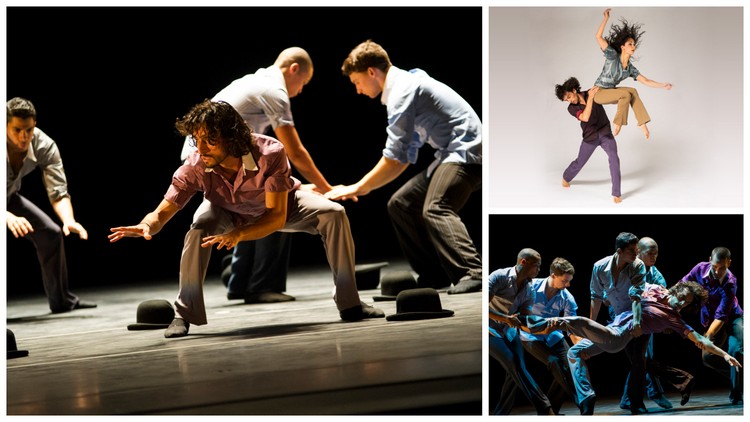
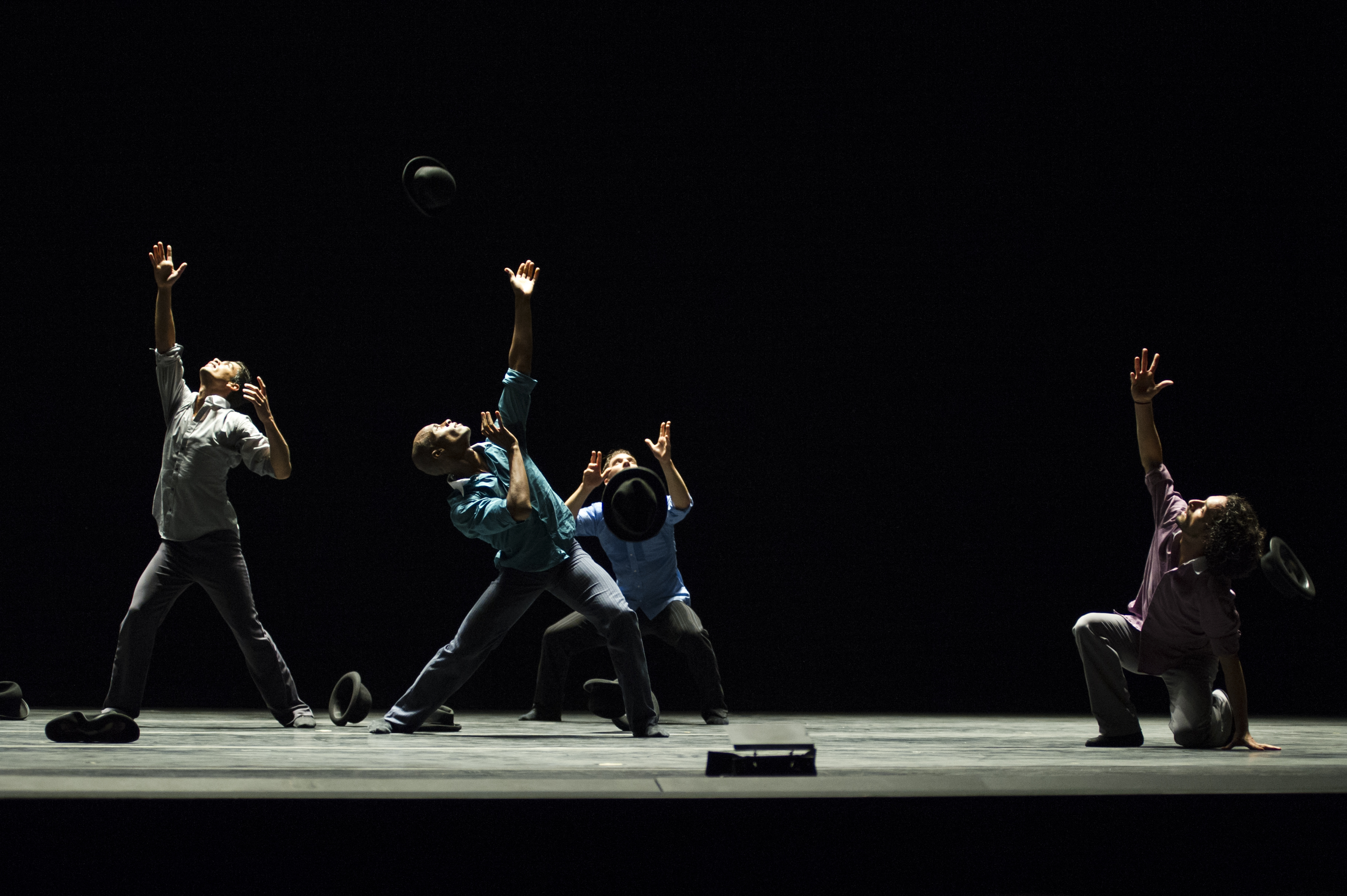
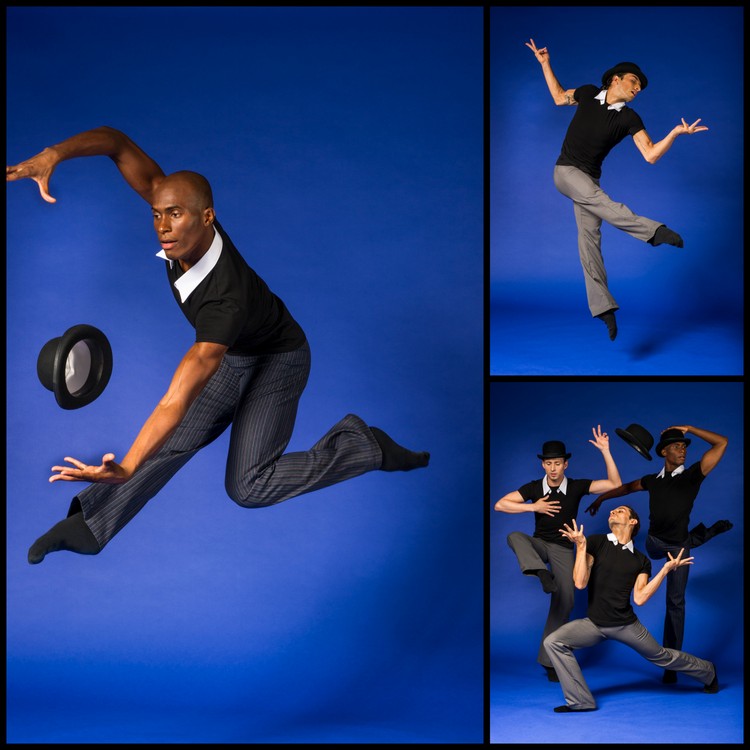
The ballet that came closest to having audience appeal while blending a variety of dance styles was Annabelle Lopez Ochoa’s Sombrerisimo. Using a derby hat as a prop has been done on countless occasion. (Bob Fosse was a genius at winding unique ways to incorporate hats, canes, and gloves into choreography without allowing the prop to be the main focus of the work.)

 Ochoa’s utilizes great partnering for the men in this male tour de force. Ochoa also infuses technique from modern dance, ballet, flamenco and lyrical jazz, all while several derby hats are passed back and forth, caught in the air, ricocheted and used as a centerpiece of the choreography.  Though Sombrerisimo highlights the versatility and technical acumen of Ballet Hispanico’s men, the work is not without humor or lyricism. Jamal Callendar and Mario Espinosa are the standouts in this work with Callendar setting himself apart as the premier danseur of the company

"Umbral" in rehearsal. Image courtesy of Michelle Tabnick Communications.

“Umbral” in rehearsal. Image courtesy of Michelle Tabnick Communications

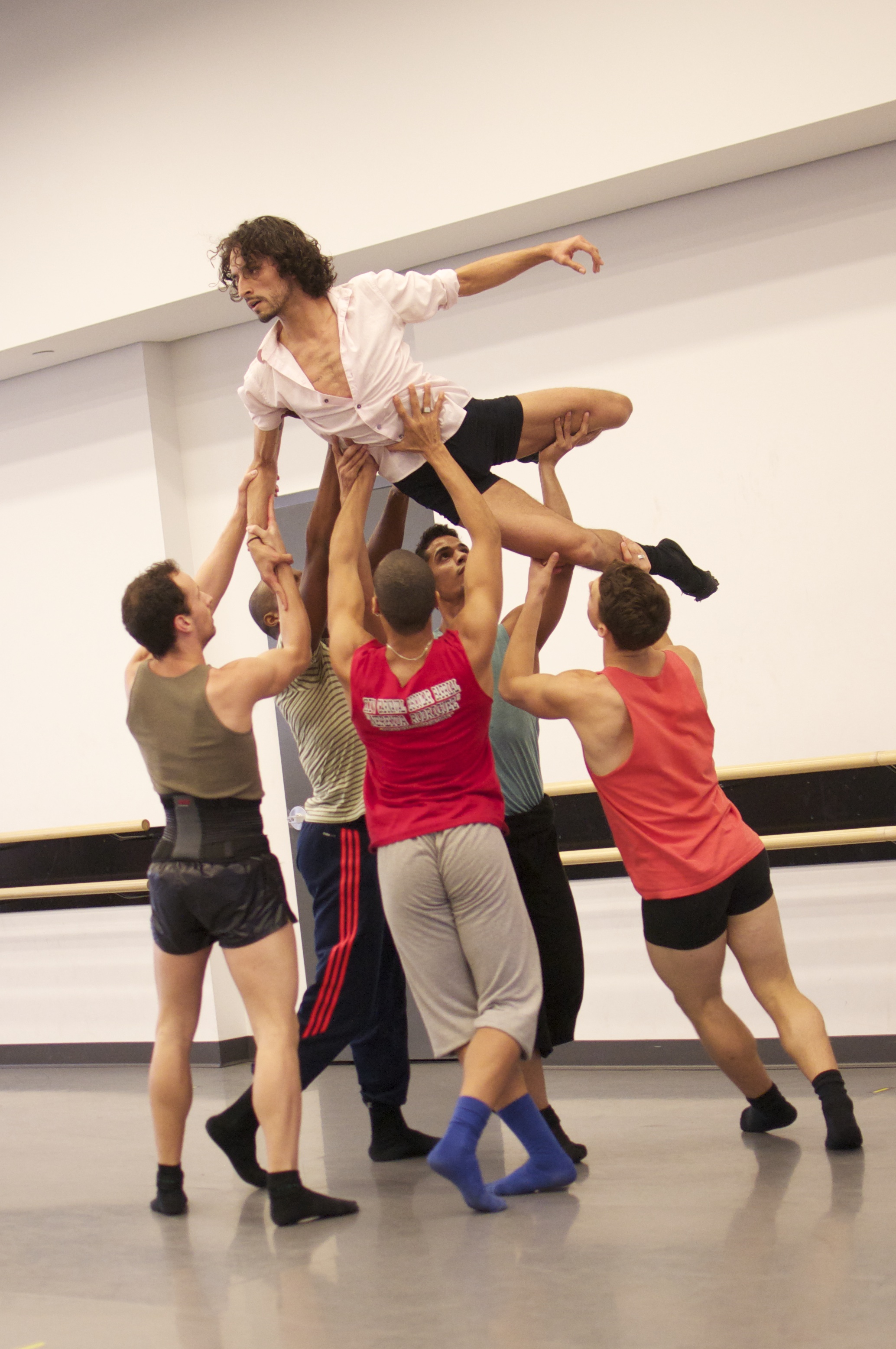
While Sombrerisimo had audience appeal on many levels, Edgar Zendejas’ Umbral was mostly cerebral work. Inspired by the Mexican celebration of the Day of the Dead, Espinosa in a red leotard and white skeletal make-up was easily identifiable as the death specter. Other than that literal reference, all other references to the Day of the Dead were hard to decipher. Still, there was some good choreography with inventive partnering in Umbral.  One of the most effective sections was sequence were the Ballet Hispanico women danced topless with their backs to the audience.  Zendejas ingeniously devised movement that spoke to the futility of life and the stark bareness of death without being too literal or kitschy.

"Hogar" in rehearsal. Image courtesy of Michelle Tabnick Communications

“Hogar” in rehearsal. Image courtesy of Michelle Tabnick Communications

Vilaro’s Hogar is a dance work that projects Ballet Hispanico into its new vision of itself; a company that references Hispanic culture while incorporating movement styles that go beyond culture and specificity.  There was lots of inventive partnering with Vilaro pulling everything suitable from the pyrotechnical lexicon. There was even one section where the men kept one female dancer airborne for an extended period of time that was reminiscent of a similar section in Balanchine’s Unanswered Question. If there was one drawback to this debut work were the costumes which though appropriate for the male dancers, had a frumpy effect of their female counterparts.

Overall, this one-day only performance at the historic Apollo Theater was a success. And though Ballet Hispanico is still finding its new voice, with Eduardo Vilaro at its helm and its fine casts of dancers, they will get there!!

—William S. Gooch

The Joyce Theater Breaks New Ground with Ballet v6.0 Festival

Whim  W'Him image courtesy of Bamberg Fine Art

Whim W’Him image courtesy of Bamberg Fine Art

There’s more to the ballet world than American Ballet Theatre and the New York City Ballet or regional ballet companies like the Joffrey Ballet Chicago, Miami City Ballet, the Philadelphia-based Pennsylvania Ballet, and Salt Lake City’s Ballet West. Those companies are built on the traditional model that ballet companies in particular have followed for centuries with a single artistic director at the top who dictates everything from the style of the company to the repertoire and the dancers themselves. Dancers who are unhappy or want more freedom to try things out their way usually just leave or seek employment at another dance company.

But increasingly, there is another model being adapted in the ballet world, one that resembles closely in approach and sensibility to how more established companies in the modern dance world have spawned smaller companies. What does that look like in the ballet world? Dance lovers will be able to see for themselves with the debut of the Joyce Theater’s Ballet v6.0 Festival, which begins Tuesday and runs through Aug. 17 at the Joyce, 175 Eight Avenue in New York City (www.joyce.org).

Ballet X image courtesy of Alexander Isiliaev

Ballet X image courtesy of Alexander Isiliaev

The festival features six small companies which are considered leaders of this new wave in the ballet world. “I noticed that there’s been a trend. Ballet dancers and choreographers are leaving the traditional large company structure to form their own, smaller scale groups, in order to take control of their careers,” said Martin Wechsler, director of programming for the Joyce Theater. “When they form their own groups, they can decide for themselves what they want to dance or choreograph rather than answering to the artistic director, or in some cases artistic directors. It basically gives them more control over their careers.”

Examples of this modern dance trend are numerous. Martha Graham left the company of choreographer Ruth St. Denis to form her own company. Paul Taylor left Graham’s company to form his own. Stephen Petronio left Trisha Brown’s company to form his own.

Morphoses image courtesy of robertonthearts.com

Morphoses image courtesy of robertonthearts.com

The most well-known example of this trend in the ballet world was Morphoses, the ballet company started by choreographer Christopher Wheeldon while Wheeldon, a former dancer with the New York City Ballet (NYCB), was still a resident choreographer with NYCB. Morphoses is currently inactive; Wheeldon severed ties in 2010 and the company’s co-founder and executive director, Lourdes Lopez, left last fall to become artistic director of the much larger Miami City Ballet.

Dominic Walsh image courtesy of Gabriella Nissen

Dominic Walsh Dance Theater image courtesy of Gabriella Nissen

The schedule and companies performing as part of the Ballet v6.0 Festival this month are:

  • Aug. 6-7:  Ballet X, founded by Pennsylvania Ballet’s choreographer –in-residence Matthew Neenan and former Pennsylvania Ballet dancer Christine Cox.
  • Aug. 8-10: Dominic Walsh Dance Theater, founded by Walsh, a former Houston Ballet member.
  • Aug. 9-10: Company C Contemporary Ballet, founded by NYCB alumnus Charles Anderson.
  • Aug. 12-13: Whim W’Him, founded by Pacific Northwest Ballet principal Oliver Wevers two years before he left PNB.
  • Aug. 14-15: BalletCollective, founded by Troy Schumacher who is still a dancer with NYCB.
  • Aug. 16-17: Jessica Lang Dance, founded by Lang, who has forged a busy career as a choreographer since dancing with Twyla Tharp.
Image courtesy of BalletCollective

Image courtesy of BalletCollective

The uncertain future of Morphoses highlights the challenges that may lie ahead for these companies. Securing funding and bookings while retaining one’s artistic focus and inspiration are challenges that have bedeviled companies of all sizes and spelled the demise of many.

Said Wechsler, “I think we just have to see how these companies develop in the future. I can’t speak for them about their goals, their desires or how formally they want to exist in the future or even if they’re hoping to grow into a larger scale company. But these types of companies are definitely a trend to watch.”

— Karyn D. Collins


Kronos Quartet Celebrates 40-Year Anniversary at Lincoln Center Out of Doors Festival


lincolndamroschatnight

Lincoln Center Damrosch Park Bandshell photo by Kevin Yatarola

Free outdoor performances featuring world-class artists have been a perfect summer recipe for the Lincoln Center Out of Doors Festival for 43 years now. But this year’s festival, which begins Wednesday and runs through Aug. 11, is promising a little something extra: five days of programming marking the 40th anniversary of the renowned Kronos Quartet.

Bill Bragin, Lincoln Center’s director of public programming, said the Kronos at 40 celebration was a happy meeting of artistic minds. “The Kronos Quartet has accomplished so much at so many different levels. We wanted to do something really special for the 40th anniversary here,” Bragin said. “One thing we had never done before was to turn over part of our season to a co-curator. But based on our personal rapport as well as the artistic product we knew we were in sync and would collaborate really well. “The important thing for (Lincoln Center) was that it not feel like Kronos would just be here as resident performers but that they really be curators and that the programming would reflect their sensibility and their role as commissioners and collaborators.”

Mark Dendy Dance & Theater Projectsphoto by Amelia Barksdale-Patterson

Mark Dendy Dance & Theater Projects
photo by Amelia Barksdale-Patterson

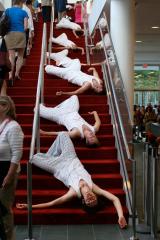
The celebration begins Wednesday with “Ritual Cyclical,” a work by choreographer Mark Dendy that will feature 80 dancers performing to classic recordings by the Kronos Quartet. The piece, which will be performed at 6 p.m. Wednesday and Thursday, will use the main plaza space as well as surrounding areas on the Lincoln Center campus.  The Kronos Quartet will actually perform live at several of the celebration’s events including a celebration of Afrobeat king Fela Anikulapo Kuti Wednesday evening and collaboration with Ukrainian singer Mariana Sadovska on Thursday evening, both at 7:30 p.m.

Kyle Abraham/Abraham.in.Motion: PavementPhoto: Carrie Schneider

Image courtesy of Carrie Schneider

The festival isn’t all about Kronos Quartet. Other performers scheduled during the rest of the festival include choreographer Kyle Abraham (Aug. 1), “A Tale of Two Nations”—featuring percussionists and dancers from the Northeastern Brazil Carnaval champions and their New York counterparts (July 30, Aug. 1 and 2), and the Rockin’ Rockabilly Revue (Aug. 10). Times and locations vary although most of the evening performances will be held at the Damrosch Park Bandshell off West 62nd and Columbus Avenue. All performances are free and open to the public.

For Kronos, the Lincoln Center collaboration was a special artistic opportunity, said Kronos artistic director and co-founder David Harrington. “From my standpoint and the standpoint of Kronos and the work we do, the opportunity to cast five shows in New York City at Lincoln Center that we curate and program, and where we get to invite our favorite musicians from all over the place, was all just too good to be true,” Harrington said. “As a way of beginning the 40th year of Kronos I can’t think of a better way to do it.”

Rudolph, Adam_ photo by Daniel Dawson

Adam Rudolph image courtesy of Daniel Dawson

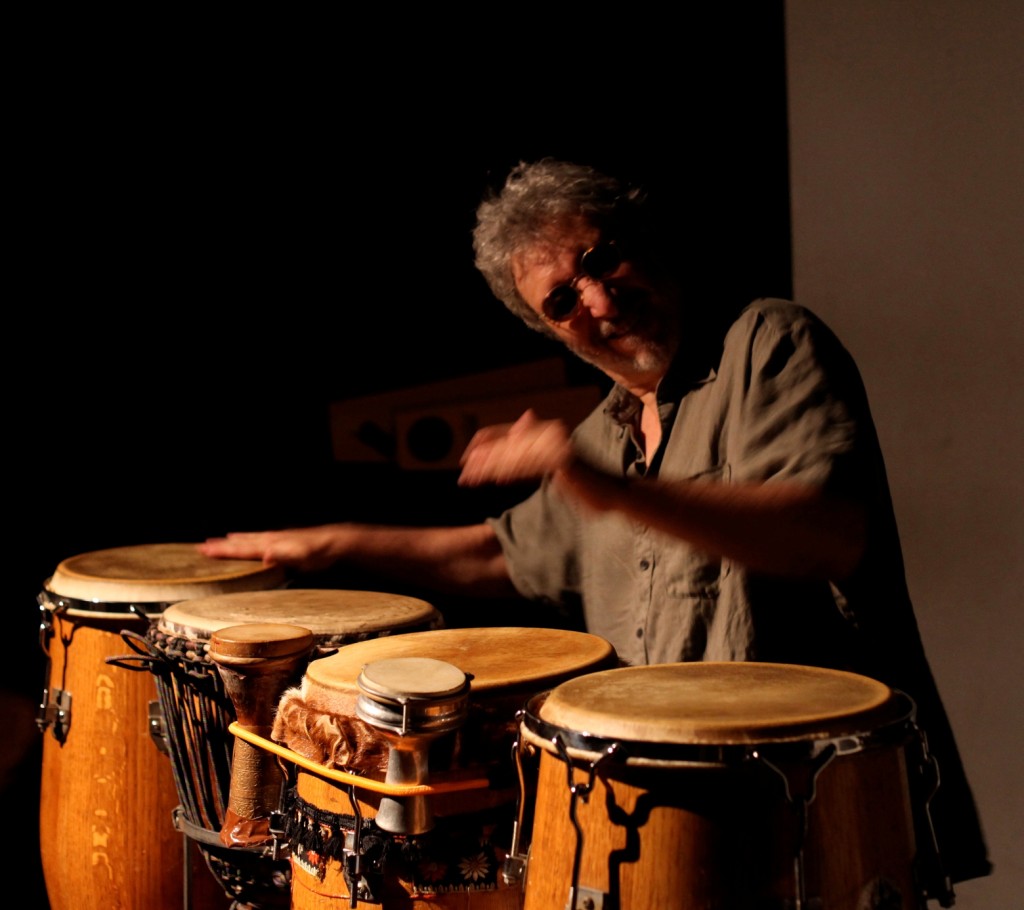
Harrington said each day’s performances has special meaning to the group. The Fela concert, for example, will not only provide something of a preview of a forthcoming Kronos album but involves an AIDS awareness charity that is a Kronos favorite. On Saturday afternoon, the quartet will participate in a special Play-Along Concert with educator and musician Craig Woodson during which the audience will be invited to play their own homemade instruments with Kronos.

“I’m really looking forward to (the Play-Along Concert) so much. Craig is someone Kronos has worked with for over 20 years,” Harrington said. “There may be lots of kids joining us and playing with us on instruments they’ve made. It’s so much fun and empowering. It’s important to know that music can be made from all sorts of objects.”

BANG ON A CAN

Asphalt Orchestra image courtesy of Kevin Yatarola

Projects like that show one way in which Kronos has succeeded at its original mission to celebrate music from other cultures and traditions.  “From the beginning we tried to perform all sorts of things to bring more of the modern world into the realm of string quartets. Basically I’ve spent every day for the last 40 years trying to do that,” Harrington said. “We’ve done more than 800 pieces from men and women, from many different cultures and backgrounds and religions, all sorts of languages, by many different instruments. Culturally we’ve brought some of the world into this realm of string quartet music.”

But he noted that another Kronos goal has not yet been reached. “I was hoping we could create a kind of music that was so powerful that was so powerful and so strong that it could actually protect people from harm, from violence and wars,” Harrington said. “We have not been successful in that yet. But I believe that the best note has not been written yet and I don’t think the best note has been played yet.”

For information and a full schedule for the Lincoln Center Out of Doors Festival, which runs July 24-Aug. 11, go online at LCOutOfDoors.org.

— Karyn D. Collins


21 Club Hosts Women’s Luncheon to Benefit American Friends of Rabin Center

Downloads399Do you remember that classic scene from All About Eve when smartly dressed Margo Channing (Bette Davis) and her nemesis Eve Harrington (Anne Baxter) meet at 21’s as Eve tries to blackmail Margo’s friend (Celeste Holm) in the ladies’ room? Well, if  you don’t recall the scene or have never seen the movie, no worries; this time around the meeting in the ladies’ room and the adjourning dining area had nothing to with corruption, blackmail or deceit.

This gathering at Club 21 of concerned women and friends was a luncheon to benefit American Friends of the Rabin Center to raise awareness and support for breast cancer early detection and development of new technologies and equipment.  “Our goal is for awareness of the need for better equipment for breast cancer and earlier detection,” says Executive Director, Joshua Eli Plaut, PhD.

Executive Director, Joshua Eli Plaut,

Executive Director, Joshua Eli Plaut,

American Friends of the Rabin Medical Center works with the particular needs of Israeli women in order to bring a decline in their currently higher rate of breast cancer, especially among women under the age of 50. Proceeds from this luncheon benefit the Rabin Fellows Medical Exchange Program and the partial funding of a Digital Tomosynthesis Mammography and research to fight breast cancer at Israel’s Rabin Medical Center—home to the Davidoff Cancer Center—a world class facility whose sole focus is on the treatment and prevention of cancer.

Images courtesy of edentpr

Images courtesy of Edentpr

Pre-luncheon activities included a silent auction with from Eric Javits, Dr. Z Paul Lorenc, Executive Chef Chris Coleman from Petaluma, Edward Tricomi from Warren Tricomi of the Plaza Hotel and more. While guests feasted on divine snapper with a tomato and cream gravy coupled with roasted asparagus and pepper salad,  actress Tovah Feldshuh introduced guest speaker author, playwright and screenwriter Delia Ephron. Ephron spoke about her life and how it important it is for women to find and follow their bliss and be in touch with that positive inner voice that always directs you toward your passion. Ephron also spoke about her new novel, The Lion Is In, which explores three women at various crossroads in their lives and their journey to self-acceptance funneled through the lens of a road trip through rural North Carolina.

American Friends of Rabin Medical Center is committed to helping Israel’s Rabin Medical Center of Petah Tikvah fulfill its mission; sustain and expand its facilities with the most advanced technology and equipment by encouraging individual, family, corporate and institutional commitment to the hospital; publicly promoting the hospital; educating the public; encouraging visitation; creating joint ventures with other medical establishments; and by raising funds through a variety of programmatic efforts throughout the United States.

—Staff


Ballet Hispanico Celebrates 30th Anniversary at the Joyce

Ballet_Hispanico_A vueltas_ Paula_Lobo_02Under the aegis and direction of Tina Ramirez, Ballet Hispanico has introduced contemporary Hispanic concert dance to audiences around the world.  From works by Vicente Nebrada, and Graciela Daniele to ballets by Anna Sokolow and Talley Beatty, Ballet Hispanico has set a standard for having performance pieces that not only speaks to the Hispanic experience but also explores great innovators in contemporary movement.  Since Ramirez’s retirement in 2009, former Ballet Hispanico dancer Eduardo Vilaro has continued the tradition and vision of Tina Ramirez.

Ballet Hispanico under the helm of artistic director Eduardo Vilaro, though still in the vein and vision of founder Tina Ramirez, has expanded its scope and repertoire to include works that stretch the company in new directions. Its current season at the Joyce Theatre exemplifies this expansive direction.

Ballet Hispanico in Nacho Duarto's "Jardi Tancat." Image courtesy of Jeux McCormick

Ballet Hispanico in Nacho Duarto’s “Jardi Tancat.” Image courtesy of Jeaux McCormick

Nacho Duarto’s first choreographic work, Jardi Tancat, was an interesting choice to celebrate Ballet Hispanico’s 30th anniversary. This iconic work helped launch Duarto’s career as a choreographic talent that intuitively understood how to draw from his cultural experiences and express those experiences through a mix of movement styles and techniques.

"Jardi Tancat" image courtesy of Jeaux McCormick

“Jardi Tancat” image courtesy of Jeaux McCormick

Jardi Tancat evokes the patient yearnings or Spanish peasants who are living through drought and hope for rain on their sunbaked, barren land. Duarto utilizes modern contractions and fall and recovery movements that are so endemic of the Graham technique. These movement qualities expertly express the inner unction of his countrymen whose lives are ravaged by hardship and poverty, but still hope for salvation. Beyond the inventiveness of the choreography and the obvious assemblage of modern dance techniques, there are some wonderful, exultant lifts and partnering in this work. And Min-Tzu Li, in her sixth season with the company, continues to inject an integrity and honesty paired with a deep understanding of Duarto’s choreographic style.

"Sortijas" images courtesy of Paula Lobo

“Sortijas” image courtesy of Paula Lobo

Choosing Cayetano Soto’s Sotijas for its 30th anniversary was an expert choice for Ballet Hispanico in that this piece demonstrates Ballet Hispanico’s dancer’s mastery of a variety of movement styles. Nowadays, few concert dance companies contract performers who are only proficient in one dance idiom. Dance audiences expect to see a mixed repertoire that incorporates a wide range of dance idioms and styles. Sotijas is just that kind of work. Though Sortijas is a pas de deux that relies on intricate partnering, the individual dancers get to show off their unique individual strengths.

Though Princess Grace Foundation recipient Jamal Callender takes on the traditional role of dance porteur in Sortijas, Callender is not just another male dancer showing off his female partner; his mastery of movement styles and comfortable stage presence shine through.  Lauren Alzamora is a wonder in this pas de deux. From her controlled flexibility to her ability to evoke pathos and a quiet intensity, Alzamora used this ballet to demonstrate her ability to balance between the polarities of the undertone of reverberating rhythms and measured muscular control.

"A vueltas con los ochenta" images courtesy of Paula Lobo

“A vueltas con los ochenta” image courtesy of Paula Lobo

A Vueltas con Los Ochenta is a light work that evokes the mood of 1980s underground nightclub scene. Inma Garcia and Meritxell Barbera have done a fine job of mixing stagecraft, innovative lightning techniques with choreography that conjures up images of night creature that haunt the underground club scene. However, when it comes to choreography, Garcia and Barbera leave much to be desired. And the fine Ballet Hispanico dancers are not given much to dance other than look like extras an 80s music video. As music video fare, A Vueltas con Los Ochenta, works out just fine, but in the concert dance arena, this performance piece is milquetoast compared to the other fine works in Ballet Hispanico’s rich, ever-expanding repertoire.

—William S. Gooch
.

Ballet Hispanico’s Thirtieth Anniversary Season at the Joyce

Ballet_Hispanico_A vueltas_ Paula_Lobo_02

Ballet Hispanico in “A vueltas con los ochenta”. Image courtesy of Paula Lobo

Under the aegis and direction of Tina Ramirez, Ballet Hispanico has introduced contemporary Hispanic concert dance to audiences around the world.  From works by Vicente Nebrada, and Graciela Daniele to ballets by Anna Sokolow and Talley Beatty, Ballet Hispanico has set a standard for having performance pieces that not only speaks to the Hispanic experience but also explores great innovators in contemporary movement.  Since Ramirez’s retirement in 2009, former Ballet Hispanico dancer Eduardo Vilaro has continued the tradition and vision of Tina Ramirez.

Ballet Hispanico under the helm of artistic director Eduardo Vilaro, though still in the vein and vision of founder Tina Ramirez, has expanded its scope and repertoire to include works that stretch the company in new directions. Its current season at the Joyce Theatre exemplifies this expansive direction.

Ballet Hispanico in Nacho Duarto's "Jardi Tancat." Image courtesy of Jeux McCormick

Ballet Hispanico in Nacho Duarto’s “Jardi Tancat.” Image courtesy of Jeaux McCormick

Nacho Duarto’s first choreographic work, Jardi Tancat, was an interesting choice to celebrate Ballet Hispanico’s 30th anniversary. This iconic work helped launch Duarto’s career as a choreographic talent that intuitively understood how to draw from his cultural experiences and express those experiences through a mix of movement styles and techniques.

Jardi Tancat image courtesy of Jeaux McCormick

“Jardi Tancat” image courtesy of Jeaux McCormick

Jardi Tancat evokes the patient yearnings of Spanish peasants who are living through drought and hope for rain on their sunbaked, barren land. Duarto utilizes modern contractions and fall and recovery movements that are so endemic of the Graham technique. These movement qualities expertly express the inner unction of his countrymen whose lives are ravaged by hardship and poverty, but still hope for salvation. Beyond the inventiveness of the choreography and the obvious assemblage of modern dance techniques, there are some wonderful, exultant lifts and partnering in this work. And Min-Tzu Li, in her sixth season with the company, continues to inject an integrity and honesty paired with a deep understanding of Duarto’s choreographic style.

Ballet_Hispanico_Sortijas_01

Lauren Alzamora and Jamal Callender in “Sortijas.” Image courtesy of Paula Lobo

Choosing Cayetano Soto’s Sortijas for its 30th anniversary was an expert choice for Ballet Hispanico in that this piece demonstrates Ballet Hispanico’s dancer’s mastery of a variety of movement styles. Nowadays, few concert dance companies contract performers who are only proficient in one dance idiom. Dance audiences expect to see a mixed repertoire that incorporates a wide range of dance idioms and styles. Sortijas is just that kind of work. Though Sortijas is a pas de deux that relies on intricate partnering, the individual dancers get to show off their unique individual strengths in this piece.

Though Princess Grace Foundation recipient Jamal Callender takes on the traditional role of dance porteur in Sortijas, Callender is not just another male dancer showing off his female partner; his mastery of movement styles and comfortable stage presence shine through.  Lauren Alzamora is a wonder in this pas de deux. From her controlled flexibility to her ability to evoke pathos and a quiet intensity, Alzamora used this ballet to show off her ability to balance between the polarities of the undertone of reverberating rhythms and measured muscular control.

Ballet_Hispanico_A vueltas_ Paula_Lobo

Ballet Hispanico in “A vueltas con los ochenta”. Image courtesy of Paula Lobo

A vueltas con los ochenta is a light work that evokes the mood of 1980s underground nightclub scene. Inma Garcia and Meritxell Barbera have done a fine job of mixing stagecraft, innovative lightning techniques with choreography that conjures up images of night creature that haunt the underground club scene. However, when it comes to choreography, Garcia and Barbera leave much to be desired. And the fine Ballet Hispanico dancers are not given much to dance than look like extras in a 1980’s music video. As music video fare, A vueltas con los ochenta works out just fine, but in the  tradition of Ballet Hispanico, this performance piece is milquetoast compared to the other fine works in Ballet Hispanico’s rich, ever-expanding repertoire.

—William S. Gooch
.

Copyright © 2012-2025 | Fashion Reverie Publications, LLC - All Rights Reserved