 Is it possible to recreate a classic from the Ballets Russes’ repertoire and make it palatable for contemporary audiences? It is an arduous task, but on more than a few occasions ballet historians and dance archivists have aided dance companies in this endeavor and the success of their collaborations is easily measured by the box office success of these programs.
Founded in 1909 by the Russian impresario Sergei Diaghilev, the Ballets Russes presented dance works of incredible beauty and innovation, merging the worlds of dance, music, art and fashion. Diaghilev collaborated with such great artists, musicians and designers as Chagall, Stravinsky, Ravel, Prokofiev, Rimsky-Korsakov, Coco Chanel, Pablo Picasso, Rimbaud, and many others. And the dance works that came out of these collaborations—“Petrouchka,” “Rite of Spring”, “Firebird,” “Les Biches,” “Apollon Musagete,”L’Apres Midi d’un Faune,” “Prince Igor,” and “Les Sylphide”—are legendary.
 In the 1980s the Joffrey Ballet had a very successful program of works from the Ballets Russes with its resurrection of Nijinsky’s “Rite of Spring” in 1987. Earlier the Joffrey performed a series of programs with Rudolf Nureyev performing lead roles in the Ballets Russes’ “Petrouchka” and “L’Apres Midi d’un Faune.” American Ballet Theatre has kept some classic Ballets Russes ballets in its repertoire in every recent decade, namely “Les Sylphide,” “The Prodigal Son,” and “Firebird.”
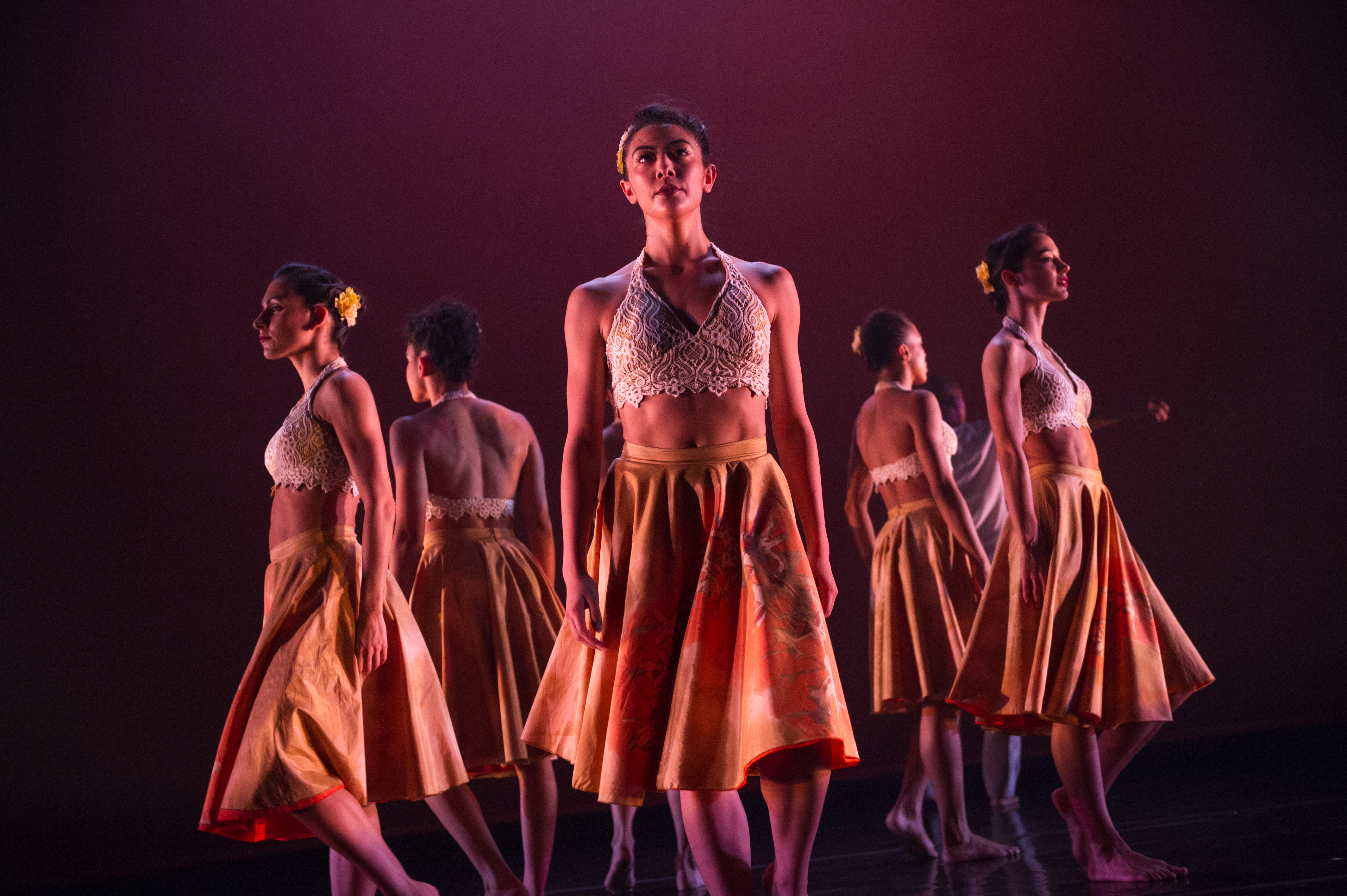
In collaboration with NYU’s The Institute for the Study of the Ancient World (ISAW), Works & Process at the Guggenheim Museum presented Hymn to Apollo: The Ancient World and the Ballets Russes, the first exhibition to focus specifically on the role of ancient world and the Ballets Russes, with costume designers Reid Bartelme and Harriet Jung using original Ballets Russes costumes and designs as their point of departure for this Works & Process costume and dance commission featuring Maurice Ravel’s “Daphnis and Chloe.”
That said; this Works & Process commission is not a remounting of the Ballets Russes’ original “Daphnis and Chloe.” This “Daphnis and Chloe” is a working and re-imagining of the classic dance work, seen through the choreography of Christopher Williams and Netta Yerulshamy.
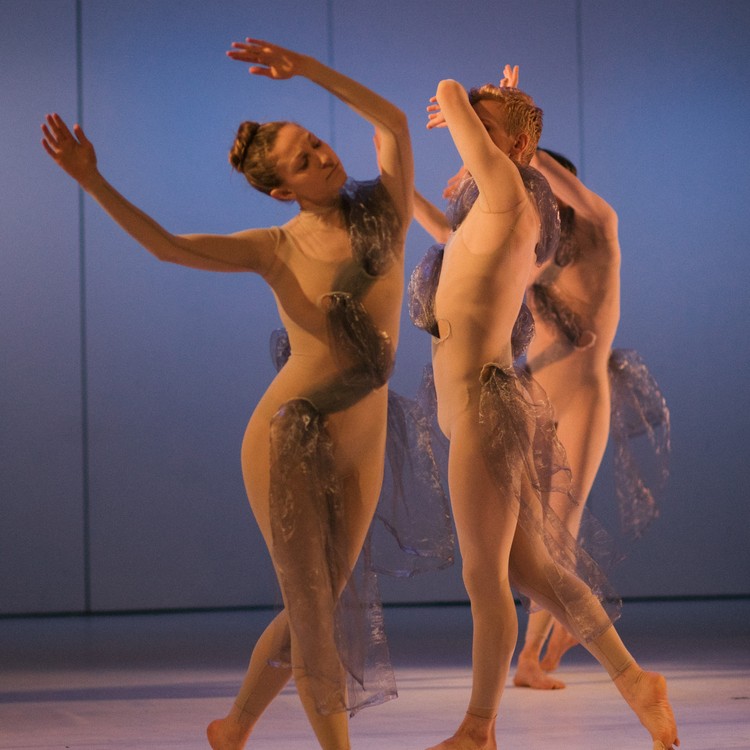
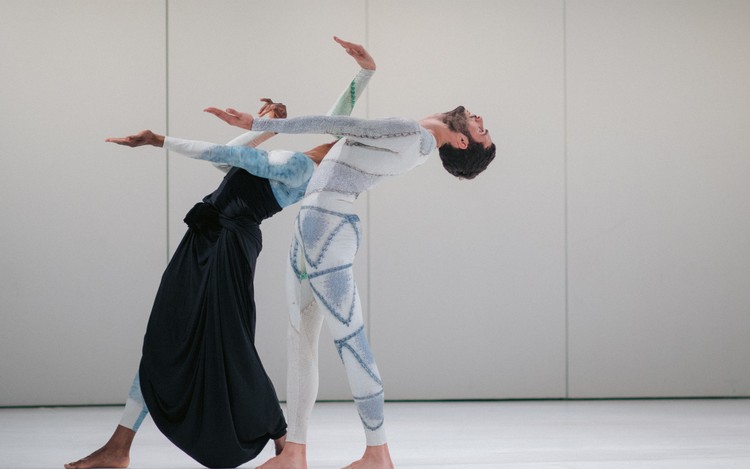
Though both choreographers use excerpts from Ravel’s original score, their approach is quite different from each other and from the original Michel Fokine choreography. Yerulshamy’s choreography is steeped in modern athleticism with occasional references to plastique motifs found in the choreographic movement style of Isadora Duncan. And though Yerulshamy’s work is an abstract interpretation of Ravel’s “Daphnis and Chloe,” you can see the references to Isadora Duncan’s influence of Michel Fokine. Additionally, Harriet Jung’s utilitarian costumes are both versatile, beautiful, as well as free flowing, perfectly aligned and relative to Yerulshamy’s interpretation of the Ravel score.
Christopher Williams chose to focus on the pirate scene from the “Daphnis and Chloe” ballet. Williams’ choreography demonstrated his deft ability to create unencumbered group choreography. Williams has the daunting tasks of creating movement for not only Chloe and the pirates, but nymphs and creatures of Pan.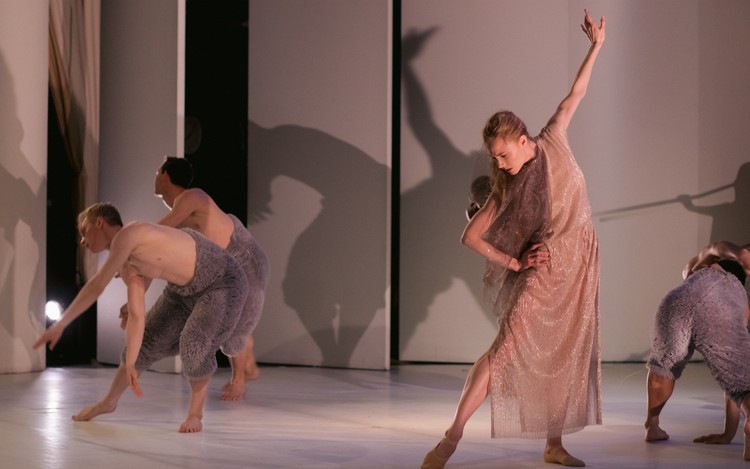 Perhaps, the most interesting part of Williams’ choreography is the parts he created for New York City Ballet principal Sara Mearns. For those not familiar with Mearns celebrated career with the New York City Ballet, Mearns has been given accolades for mastery of most of Balanchine repertoire, and particularly in Balanchine ballets that require virtuosic brilliance.
Christopher Williams’ choreography is a departure from what Sara Mearns gets to perform at the New York City Ballet, even from New York City Ballet’s more modern choreographers that use a hybrid of dance styles. With that in mind, Mearns triumphed in Williams’ choreography, exhibiting and understanding of William’s movement style that was both illuminating and provocative.

Images courtesy of Michelle Tabnick Communications
What stood out most about these two dance works that pay homage to the Ballets Russes’ “Daphnis and Chloe” was how choreographers of the 21st century can draw inspiration from a ballet that is over a hundred years old and rework the dance work in a way that’s palatable to modern audiences while evoking a movement style of the past. The Guggenheim’s Works & Process program should be commended for facilitating such dance scholarship.—William S. Gooch


 FR: What is next for you?
 It’s a huge challenge to produce and mount plays that tackle the difficult subjects of slavery and/or race relations. There is always the problem of theatrical voice, sensitivity, and racial currency. Race relations and slavery are very sensitive subjects for the theatre to take on. And even though slavery in the US ended over 150 years ago, racial discrimination and inequity continues for African Americans.
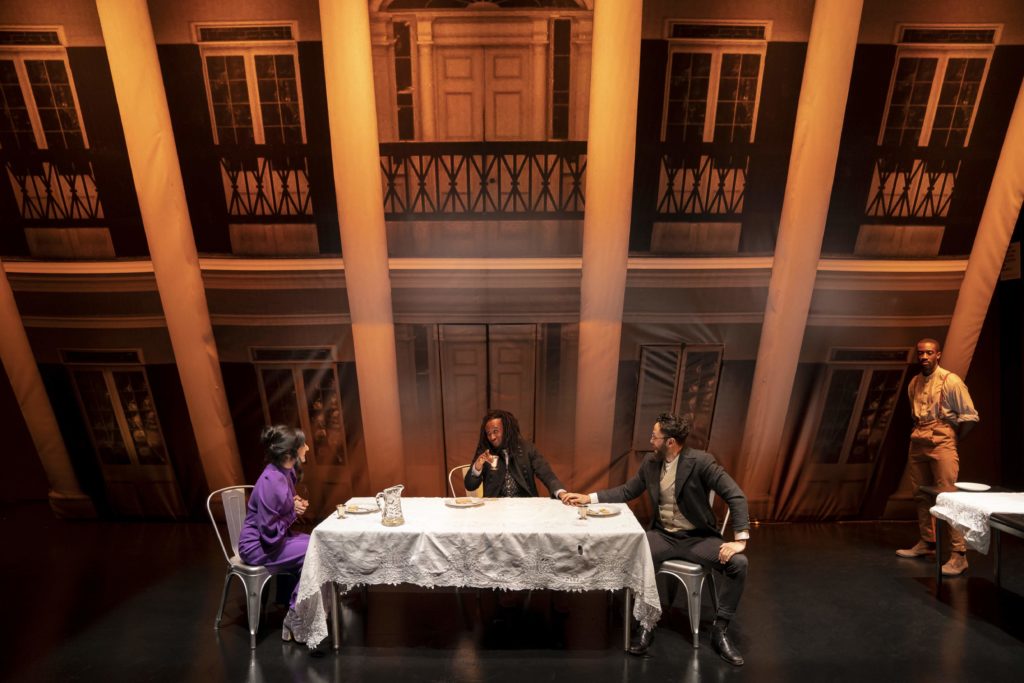 “Southern Promises” centers on a promise made by the dying plantation owner that his slaves be set free after his death. Though the plantation owner wills manumission of his slaves in his will, the patriarch’s wife goes against his will, literally, and keeps the slaves in bondage, contributing her dead husband’s desire for manumission to his fevered dementia at the end of his life.
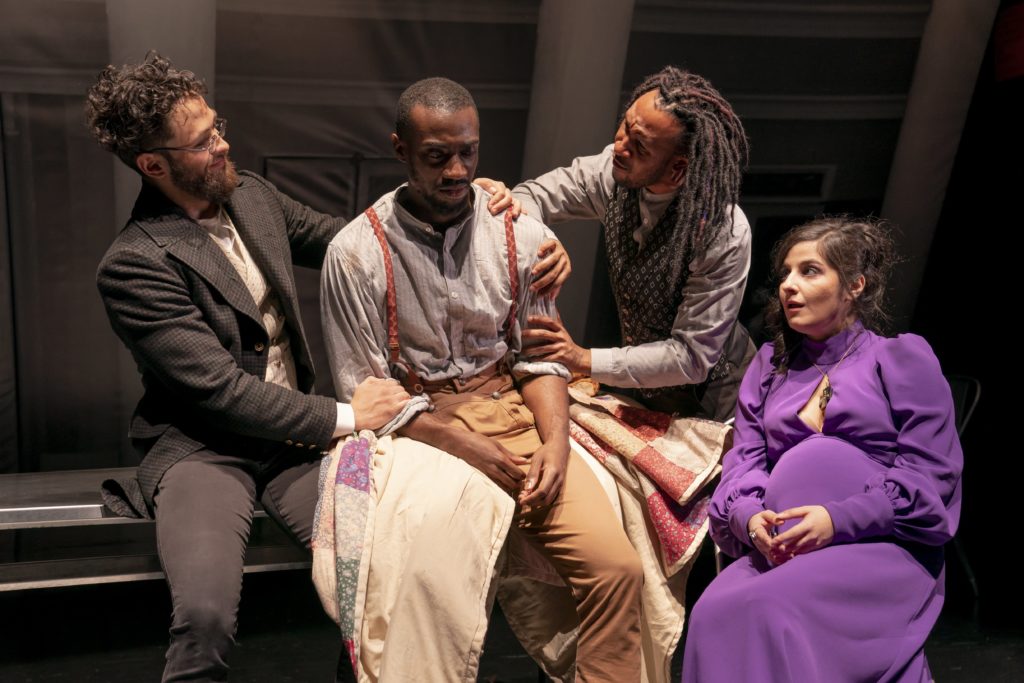 If Bradshaw’s goal in “Southern Promises” was to demonstrate the historical legacy of slavery, Bradshaw skillfully proved that the remnants of slavery are still with us. Consider the white’s description of slaves as childlike, sexually immoral, and intellectually inferior. Black folks are still described as having these character flaws. Bradshaw also brilliantly inserted biblical scripture and references in the script, demonstrating how slave owners used the Bible to justify slavery and their white privilege. Hmm, doesn’t too far removed from what some white supremicists currently do.

 Most ballet stories are quite simple in structure and tone. Complicated story lines don’t often lend themselves well to an art form where movement progresses the story. Consider Sleeping Beauty where a young princess plucks her finger, goes into a deep sleep and awakened by a kiss from a handsome prince. Or Raymonda where a Hungarian princess’ love is coveted by a dark Saracen, who is eventually defeated by the knight Jean de Brienne, leading to a marriage between the Hungarian princess and the heroic knight.


 Are we in a post-racial era? Of course we are not. When Barack Obama was elected as the 44th President of the United States, many hoped and some cultural pundits projected that a post-racial society had arrived.


 We are living in very in challenging times. Times that are dividing us because of disparate political sentiment and life challenges that are causing us to tune out because there are just too many tragedies to digest. Everything seems to be collapsing around us with many of cultural and social institutions failing to give the support and stability we need.