Fashion Reverie Exclusive: Peter Fletcher

Peter_Fletcher_02Getting young people in the seats for a Peter Fletcher concert has never been a real challenge for his management team. Though the New York Times recently commented on declining youth at what they described as the ‘gray-haired ‘ arts, Fletcher has always had a sizable audience on young people. And its growing.

And they are coming to  luxuriate the ear to the strains of Bach, Grieg, Satie, Ravel,  Mompou, and a host of composers that are sometime not associated with classical guitar. How does he do it? Well, if you have to ask that question, you probably have never been to a Fletcher concert.

Peter Fletcher through his passion and mastery of classical guitar knows how to entertain. He doesn’t use cheap tricks and gimmicks. Fletcher enchants ears and quickens heartbeats with his impeccable technique and his special way of emoting through his instrument.

On April 6, Fletcher will again quicken pulses and rapture spirits at New York City’s Weill Hall. With a program that includes Bach, a rarely heard piece by Frederico Mompou, and the world premiere of Jeremy Gill’s “Diary of a Camino,” Fletcher will demonstrate that great music has no cultural, ethnic or age boundaries.

Fashion Reverie: How did you get started in classical guitar?

Peter Fletcher:  I started playing on a ukulele when I was a young child. I got first guitar as a pre-teen and my instructor John Sutherland told me that if I started with the classical style other styles would come easily to me. And as you can see I have stuck with classical guitar all this time.

 FR: Who are some of your favorite composers?

 Peter Fletcher:  I love Johann Sebastian Bach, Wagner, and Beethoven for classical listening. And for the classical guitar I love Manuel Ponce, Frederico Mompou who I am playing at Weill Hall.

FR: Now, when I interviewed you about five years ago, you stated that the audience for classical guitar was growing to include some younger listeners, is that still true?

Peter Fletcher:  As I am touring I am noticing a younger audience. I contribute my appeal to a younger audience to my publicist sending press releases to high school band directors and increasing music awareness that way. We also make sure there are affordable student tickets. We are competing with pop concerts that young people will spend a lot of money on. So, we have to bridge the gap between what will be spent on popular music by making the program classically diverse and making ticket prices more affordable.

Peter_Fletcher_03JPGFR: There was in article in the NY Times that spoke about the decline of young audiences for what they called ‘The gray-haired arts.’  How are you reaching out to younger audiences?

 Peter Fletcher:  Our main strategy is to formulate the idea that this is something that young people will enjoy; that it is not highbrow, but very entertaining. Our repertoire is chosen for its accessibility. Music is something that you feel. We don’t pander to our audiences. We try to present our musical point of view in a very sophisticated, dynamic, well-constructed, but always relevant way.

FR: Do you think classical music is something that people respond to naturally or can it be an acquired taste?

Peter Fletcher:   I would say both. Music can be an acquired taste. Music that I found boring when I was younger over time I have come to love and appreciate. One of the pieces I always play by Bach is “Jesu, Joy of Man’s Desiring.” It is a beautiful guitar transcription that allows the guitarist to play the entire melodic bass line. I play this piece because I know everyone will recognize the piece and I don’t think you need an acquired taste to love this particular work.

FR: Have you ever included pop pieces for the guitar in your repertoire?

 Peter Fletcher:  A long time ago I played some good arrangements of Beatle’s songs for the guitar. The Beatle’s “If I Fell” made a beautiful piece for the guitar. I do play the theme song from “Deerhunter” occasionally in my concerts. Most of what I play is categorized as classical music for the guitar. Second to that, I love good rock n’ roll and R&B—Pink Floyd, Motown, Jefferson Airship— and a well-constructed pop song.

 FR: Let’s talk about your choice of selections for your concert at Weill Hall. Some of the movements in the Bach Partita and Michael Praetorius’ Terpsichore mirror Baroque court dances, the pavane, the courant, etc. Why is that?

 Peter Fletcher:  Most partitas and suites are generally comprised of dance movements because they are loosely derived from court dances. You usually start with a prelude, then an allemande, a courante, a sarabande, a bouree, and a gigue. That is how that genre of music was organized during the Baroque period.

The movement I am playing for my concert at Weill Hall is the chaconne from the Bach Partita in D Minor No. 2 for Solo Violin arranged for the guitar. I am only performing the chaconne because this Bach Partita is a rather long piece. The chaconne is a slow dance from Spain. Musically, the chaconne is a theme and variations type of music with four measures of harmony that repeats itself. George Bernard Shaw wrote that the Bach Chaconne is the greatest piece every written for a symphony orchestra.

Praetorius’ Terpsichore has a lot of court dances in it. Terpsichore is the Greek muse of dance and Praetorius had compiled over 300 dances collected throughout Europe. I have included three pieces in this concert, the courante, ballet, and the volta.

 FR: Now, you have recorded the Mompou before, why did you go back to it?

 Peter Fletcher:  I recorded Mompou in 2002 for Centaur Records. That album enabled me to set up a concert career. First, I like the composer, also this year is the 120th anniversary of Mompou’s birth. There are some minor Mompou celebrations going on this year in different countries. There is a Mompou foundation in Barcelona that encouraged me to  reach back and perform this rarely heard Mompou piece to celebrate the 120th anniversary. The piece that I am performing, “Suite Compostelana,” at Weill Hall was written for Andres Segovia, dedicated to the holy city of Santiago de Compostela.

Peter_Fletcher_01FR: Let’s talk about your world premiere “Diary of a Camino” by Jeremy Gill.

 Peter Fletcher:  Jeremy Gill is a friend of mine from my graduate studies at Eastman School of Music.  He wrote this piece for me last January and this work dovetails with Mompou. Jeremy did the El Camino pilgrimage in Spain that ends in the holy city of Santiago de Compostela and the Mompou piece I am performing is dedicated to that holy city.

 ”Diary of a Camino” describes musically Gill’s travels while he was doing the pilgrimage. There is bells, chanting, fog and thunder and clock ticks. He conjures up all these experiences in the piece.

FR: How many concerts do you perform a year?

Peter Fletcher:  I perform about 150 concerts a year, mostly in the US, for about five months out of the year. But, I am living my dream, doing what I want to do.

FR: What is one of your oddest experiences on stage?

Peter Fletcher:  There was a kind of morbid occurrence in 2005. I nicked my finger on a razor blade preparing for the concert, and as I was performing my finger started to bleed profusely on stage. I looked down and my shirt was covered with blood and there was blood on the guitar and the floor. I did have to end the concert. Oddly, the finger healed by the next morning. I realized that as I was playing, the guitar string had opened up the nick on the finger.

FR: You are always look sharp on stage.  That said; who are your favorite designers on stage and off?

 Peter Fletcher:  I love Ralph Lauren, Brooks Brothers, and Armani. Onstage I like to wear a black suit and a white shirt and tie on stage. I don’t want to distract the audience from the music by dressing flashy. Sometimes, I do like to wear bowties onstage like Horowitz.

FR: What’s next for you?

 Peter Fletcher:  My Edvard Grieg album comes out in the fall of 2013. I will be performing an all Bach program at Carnegie Hall in 2015.


—William S. Gooch


Parsons Dance’s New York Premiere Explores New Territory

Downloads281For almost three decades Parsons Dance has been the feel-good modern dance company where organic movement meets an everyman’s approach to concert dance. Season after season artistic director David Parsons has come up with new and innovative ways to distill his choreographic point of view, attracting audiences from a wide demographic.

For its current New York season at the Joyce Theater, David Parsons chose to present two new works that expands the company’s repertoire beyond feel-good, cozy popular works.  Parsons’ “Dawn to Dusk” and former company member Katarzyna Skarpetowska’s “Black Flowers” demonstrates that Parsons Dance is now poised to delve into more conceptual pieces.

Images courtesy of Eric Bandiero

“Dawn to Dusk” images courtesy of Eric Bandiero

David Parsons’ “Dawn to Dusk,” a work commissioned by the Wolf Trap Foundation, explores the beauty of South Florida’s national parks of which the Everglades is an integral land mass. The background video of this multimedia work was filmed in Florida’s Everglades with dancers performing among the bulrushes and watery areas of the Everglades.  While dancers moved, glided and sometimes mimicked the movements on screen, what is most striking about this multimedia work was the terpsichorean journey facilitated by Parsons.  Parsons’ takes us from crawling, crouched, primordial movements to bird-like steps reminiscent of Everglade cranes, to flashy, sensual salsa, merengue mélanges of Miami club life. And not unlike Gerald Arpino’s iconic, multimedia, psychedelic  trip of the 1960s, “Astarte,” which also used multimedia to forward the narrative, Parsons’ “Dawn to Dusk” multimedia elements add nuance and texture, and gives audiences an almost tactical connection to Key Biscayne’s flora and fauna.

Image courtesy of Eric Bandiero

“Black Flowers” image courtesy of Eric Bandiero

Katarzyna Skarpetowska’s “Black Flowers,” using music of Frederic Chopin, reflected on her Polish roots through this Polish mourning ritual. What stood out most about this work was the different approach to mourning by the sexes. While both groups expressed their grief through devouring space with driving, dramatic lunges, inward pirouettes, and weighted extensions, the male dancers were motivated more by individualistic, didactic expressions of remorse and sorrow, while the female dancers’ languor was evidenced in movement that was communal and group centered.

Image courtesy of Angelo Redaelli

“In the End” image courtesy of Angelo Redaelli

While “Wolfang” is Parsons’ foray into the classical modern dance vocabulary with a strong emphasis on form, structure and stagecraft, “In the End” reflects Parsons” continued predilection for movement styles that are deceptively pedestrian and free flowing. After closer examination works like “In the End” are highly technical and aerobic, requiring dancers that can evoke mood and nuance while making pyrotechnical fireworks look like another day at the dance party. And the easy, sometimes languid music of the Dave Matthews Band helps forward the feel-good movement style of “In the End.”

In its now 28th season David Parsons is not content to rest on his company’s laurels but continues to challenge his roster of artists with new works that stretches their dance vocabulary and stage craft, but also expands the company’s audience base. Never just satisfied with the tried and true, David Parsons uniquely understands that change is not only inevitable, but a necessary component of growth.

For more information about Parsons Dance’s season at the Joyce Theater, go to joyce.org.

—William S. Gooch


Parsons Dance: Behind the Scenes

Couple image Christina Ilisijeand Steven Vaughn

Couple image Christina Ilisije and Steven Vaughn

Fashion Reverie had the unique opportunity to attend a dress rehearsal of Parsons Dance’s “In the End” with music by the Dave Matthews Band prior to their 2013 New York season at the Joyce Theater. Without the benefit of costumes, theatrical lighting and the proscenium arch, Fashion Reverie witnessed the sweat, focus and stamina needed to turn all the hard work in the studio into magic on stage. And true to form, Parsons Dance did  just that on their opening night.

—Staff

Center couple Elena D'Amario and Jason Macdonald

Center couple Elena D’Amario and Jason Macdonald

Solo dancer Eric Bourne. All images courtesy of Ernest Green

Solo dancer Eric Bourne

Parsons Dance Company. All images courtesy of Ernest Green

Parsons Dance Company. All images courtesy of Ernest Green


For David Parsons, Continuity Breeds Excellence

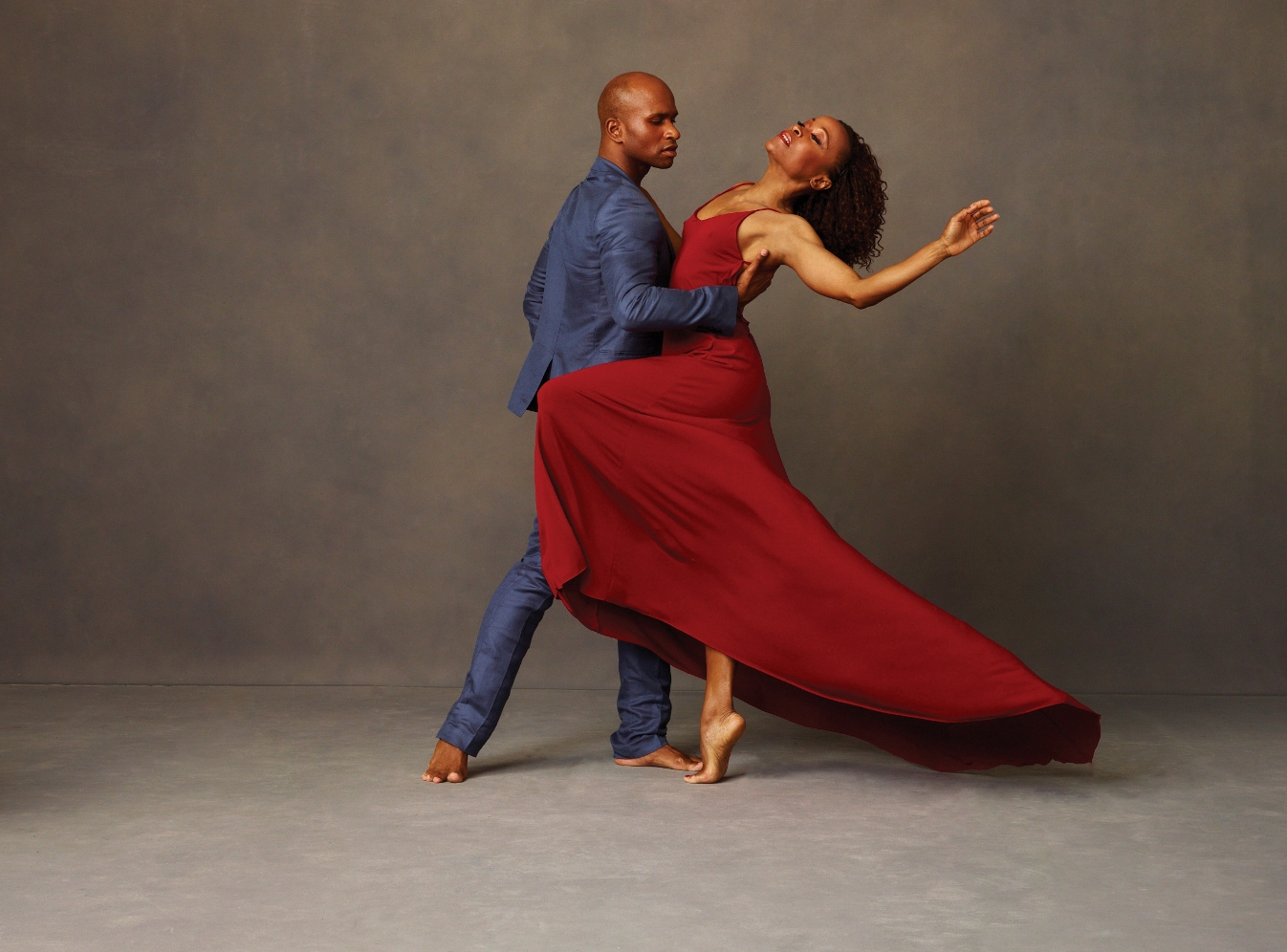
Parsons_Dance_01Fall, recover, contract, release, center, pivot, swing, tilt; are all movements that are a part of the modern dance lexicon. And any seasoned dance aficionado can identify these types of movement in the choreography of modern dance icons, Martha Graham, Pina Bausch, Erik Hawkins, Doris Humphrey, and a slew of other modern dance greats.

Though David Parsons includes all the standard step sequences from modern dance’s ever-expanding lexicon, Parsons’ approach and movement style over the decades has evolved to a more natural response to music, going beyond and expanding modern dance’s movement vocabulary. Parsons’ 2013 season at the Joyce Theater is a testament to his company’s, Parsons Dance, growing repertoire of works that not only celebrate the human experience but continue to evolve and test the limits of movement invention.

Parson Dance's "In the End"

Parson Dance’s “In the End”

With works that range from audience favorites “Caught” and “In the End” with music by the Dave Matthews Band to world premieres, “Dawn to Dusk” and “Black Flowers,” David Parsons continues to delight and expand his audience with ballets that go beyond pyrotechnical feats. “Parsons Dance’s style is based on changing the movement category for each piece within our basic movement style, which is hard to do. We try to start with a new movement vocabulary so audiences are not seeing the same thing all the time. Now, I don’t do that in every new work, but it is a general goal of mine. The difference between a piece like “Mozart” set to the music of Wolfgang Amadeus Mozart and the Dave Matthews piece is that you can sense that there is a lot of movement invention,” explains Parsons.

Not surprisingly, David Parsons’ profundity extends beyond concert dance. For many years Parsons Dance has had a relationship with the Missoni family. Luca Missoni was on the board of Parsons Dance for years and Missoni designed the costumes for “Step into my Dream” with music by Dr. Billy Taylor. Parsons has also collaborated with Donna Karan, Roberto Cavalli, and Zegna.

Parsons_Dance_06Never resting on his laurels, Parsons assiduously searches for movement styles and innovative choreography that speaks to the human condition and the environment. “There are not a lot of huge leg extensions in my work. My work is more about a connection to the earth and the suppleness of the spine which gives my work a more pedestrian feel, making my movement style seem a natural response to music. Although a lot of my ballets are very aerobic, there is a connection to the audience because there is a natural look to my choreography, causing nuanced pieces to seem deceptively streamlined and simple,” details Parsons.

This quest to marry artistic integrity with environmental concerns serves as the reference point for Parsons’ multimedia work, “Dawn to Dusk.” “We were commissioned to create [“Dawn to Dusk”] by the Wolf Trap Foundation.  We went down to Florida and shot video of the dancers dancing in the swamps of Key Biscayne and the Everglades and then we used clips from the video as a part of a multimedia approach to this ballet … We wanted to show the beauty of the national parks and also show that some of the national parks are well kept, while others are in disrepair,” explains Parsons.

Parson Dance's "Caught"

Parson Dance’s “Caught”

And unlike some other modern dance companies’ whose roster of dancers is like a revolving door of talented, strong technicians, Parsons Dance maintains a committed group of performers who continue to work with the company for several seasons. “There is a certain stability that you have to give dancers. While I was with Paul Taylor I really observed and learned the business side of dance, and from him I learned that providing financial stability for your company improves performance on stage … Parsons Dance also has a reputation for building dancers. You come in as one dancer and leave a more enriched artist,” continues Parsons.

Though the size of Parsons Dance fluctuates between 12 to the now ten-member company, a couple of things are a constant in the company, Parsons’ love of movement and his ability to stay current. “It has been a part of my vision to have young and more mature audiences in the theater at the same time and both enjoy my work,” says Parsons.  “This season has works using the music of Andrew Berg, Dave Matthews, and Mozart. With this diverse array of music and movement styles, there is something in our program for everyone.”

All images courtesy of parsonsdance.org

All images courtesy of parsonsdance.org

And David Parsons is right!! Every season audiences keep coming back for another meal of diverse, thought-provoking ballets.  “I believe we are in an upswing because we have been able to successfully navigate this downturn in the economy. We have a worldwide audience that stretches from South America to Europe to the Far East … And I am continually looking for interesting collaborations and more sophistication through movement.”

Parsons Dance New York season at the Joyce Theater runs from January 15 through January 27.

—William S. Gooch


For Renee Robinson, Life at Ailey Has Been a Crystal Stair

It’s hard to imagine the Alvin Ailey American Dance Theater without Renee Robinson. After all, for 31 years —through three directors, through literally hundreds of ballets and special moments in the Ailey Company’s history—Robinson has been there, most often front and center as one of the company’s leading ladies.

But after December 9, all that will change. Robinson, the last dancer in the company to have been selected by Ailey himself and the only dancer to work with all three of the company’s directors, will end her illustrious career on December 9 during the Ailey Company’s annual month-long season at New York’s City Center Theater.

“It was not an easy decision. I am still having a good time in the company and I did recognize that the dance gods were still blessing me to be able to get out on the stage and be a part of this generation’s voice and not look too bad doing it,” Robinson said. “But I know that with the company I work for the ballets don’t get any easier. There are times when they’re tougher than other times, when the costumes come in smaller and tighter. You ask yourself ‘do I still look good?’ It’s all of those things and none of those things at the same time.”

Renee Robinson in Alvin Ailey’s “Cry.” Photo courtesy of Christoper Duggan

Of course the Ailey season, which opens on November 28 and runs through December 30 promises many highlights: the world premiere of “Another Night” by up and coming choreographer Kyle Abraham, the company premieres of Jiri Kylian’s “Petite Mort,” Garth Fagan’s “From Before” and Battle’s “Strange Humors”; and a revival of Ronald K. Brown’s “Grace.”  Favorite repertory pieces including Ailey classics like “Revelations” and “Memoria” are also featured throughout the season.

But the Robinson farewell will be a major focus of the first part of the season as the company and the dance world pays homage. Indeed, Robinson will receive a prestigious Dance Magazine Award on December 3 for her years of artistry.

For Robinson, the close of her Ailey career has meant time for introspection. Hers has been a career that she admits she never imagined she’d have when she first left New York University (she was a dance major and economics minor) to try life as a scholarship student at the Ailey school. “When I was younger, being a professional dancer wasn’t really on my radar,” she noted. “I wasn’t closed to the idea but I was thinking I was going to become an attorney.”

The December 9 farewell program—an evening of Ailey classic works—will undoubtedly feature Robinson in the company’s signature piece “Revelations.” The dancer admitted that the legendary piece, set to a score of spirituals, was one of her favorites, but she was reluctant to name just one favorite among the hundreds she’s performed over the years.

“They have all become the favorite. Without the ones that were a little more struggle for me I would not have built that other muscle. I would not have had the experience of stepping outside my comfort zone and being chosen to do a work that was challenging for me,” she said. “Even the works I wasn’t chosen for, I had a chance to watch others in them and watch them grow and learn from watching and informing me about how I move or how I’m doing another ballet even though the ballets could be totally opposite from one another.”

Renee Robinson in Alvin Ailey’s “Cry” and “Revelations.” Images courtesy of ailey.org

Similarly, Robinson declined to select a favorite era during her years at Ailey, saying that she’d thoroughly enjoyed the experience of working for three very different artistic directors during her tenure at Ailey.

“With Mr. Ailey, I was much younger. My focus was very different just because my experience as a performing artist in this kind of demanding environment was new. I had a lot to learn and basically my early years in the company with Mr. Ailey and around all those great dancers … was about listening, learning, watching, and making sure that I paid attention,” she said. Robinson noted that at that time, newer dancers, no matter how talented, were expected to spend more time in the corps before taking on lead roles.

“I’m glad I came into the company when I did,” she said. “You had a chance to find yourself. You had time to watch the seasoned dancers. I had a chance to listen to Mr. Ailey speak to the seasoned dancers in a way that he did not speak to us and I learned from that as well.”

Renee Robinson in Francesca Harper’s “Apex”

By the time Ailey died in 1989, Robinson was on her way to becoming one of the company’s leading ladies. The ensuing years under Ailey’s successor, Judith Jamison, saw Robinson continue her ascent to principal dancer status.

“With Ms. Jamison I was always performing leading roles. I was looked at as one of the strong dancers who she could continue to push in certain ways. I was depended upon to also represent the company in a way whether it was to teach or to speak,” Robinson said. “With Miss Jamison, you had to be on your game 24-7. If you went into a studio with her and she was building a work or another choreographer was coming in, you had to bring your excellent game form from day one, every minute of every hour of every day of that rehearsal period.”

Robinson noted that was a particular challenge for her at times she has a tendency to be, “a little bit clunky when I’m learning. I kind of like stumble around. It’s just my process.”Jamison, she said with a laugh, preferred her not to be so, as Robinson put it, “clunky.” But, Robinson said she was grateful that Jamison and others were patient with her as she worked to become more comfortable with various choreographic challenges.

Renee Robinson and Glenn Sims image courtesy of Andrew Eccles

Jamison retired in 2011, handing over the reins to choreographer Robert Battle.

“With Robert Battle, I’m in a different place personally. I’m a much more mature individual which enables me to bring something else to the stage,” Robinson said.

Robinson laughed as she talked about how Battle was surprised by her habit of watching rehearsals, even of ballets she wasn’t in, and asking lots of questions. “I told him I just want to sit in on rehearsals. I just want to listen to what it is about the ballet and I wanted the chance to ask him questions,” she said. “With him, it’s just been great to get to know him and to hear up close what his vision is for the company, hear his excitement, talk to him when he turns around and says ‘What do you think?”

Renee Robinson in Ailey’s “Witness.” Image courtesy of Paul Kolnik

While it’s obvious Robinson’s wisdom is valued at Ailey and in the dance world, Robinson insisted she has no immediate plans to step into a leadership role at Ailey or anywhere else. She recently completed her master’s degree in dance through a special intensive program for seasoned dancers through Hollins University in Virginia developed with the American Dance Festival.

“I don’t have a definite something I can put on paper so to speak about what’s next for me. I know I want to continue to have the opportunity to revisit places I visited as a dancer. I know I want to continue to try and make my Spanish and French better because I’m super interested in being able to speak more than one language. I like to be able to communicate wherever I go,” she said. “My focus for now is on the work. I don’t want to be distracted with my other inner voice saying ‘where are we going next?’ So what I know is that I’ll be dancing until the early part of December and after that I’m open to the universe.”

—Karyn D. Collins


Fashion 4 Development: Fashion with a Global Purpose

Franca Sozzani, Evie Evangelou, and Livia Firth at the 2nd Annual Fashion 4 Development Ladies’ Luncheon

In this election year there is much chatter about the need for sustainable economic growth through homegrown manufacturing. And while our two presidential candidates are still debating about this country’s need for further development of homegrown industries, there are organizations that already have their hands on the pulse of this growing economic challenge. Fashion 4 Development is one such organization.

Runway images from F4D’s 2nd Annual First Ladies’ Luncheon

As a private sector global initiative in direct cooperation with the Office of the United Nations Secretary-General H.E. Ban Ki Moon, Fashion 4 Development (“F4D”) seeks to harness the power of the fashion and beauty industries to implement creative strategies for sustainable economic growth and independence for communities worldwide. Originally founded in 1996 by supermodel Bibi Russell, F4D developed a sustainable economic model that now employs 150,000 textile workers in Russell’s native Bangladesh.

Under the leadership of Evie Evangelou, F4D has launched the F4D media platform on South South News, an official media partner of the United Nations. Also, under Evangelou’s watch F4D is involved in sustainable economic initiatives in Kenya, Rwanda, Uganda, Nigeria, Ghana, Bostwana, South Africa, Guatemala, Bangladesh, Colombian, Indonesia, and Haiti. “I thought was creating something new until I found out about Bibi Russell’s efforts with F4D online. I was interviewing designers at a F4D show for South South News and there was such a huge positive response from that effort that it gathered inertia on its own. We have worked very hard and the United Nations has been a huge supporter of our efforts,” details Evangelou.

Franca Sozzani attending the 2nd Annual F4D First Ladies’ Luncheon

Franca Sozzani, editor-in-chief of Vogue Italia, is also lending her support to F4D. “When F4D originally asked me to be their premier goodwill ambassador I was shocked. But they felt I brought a unique experience because as editor-in-chief of Vogue Italia I am always looking for and encouraging young designers and new talent,” explained Sozzani. “F4D felt that Africa was primed and ready for the type of help I could bring to craftsmen and young designers. So our outreach was to bring the incredible talent on the African continent into the forefront and help develop more sustainable growth through these discoveries. We are helping these designers and craftsmen with distribution in Europe and America.” With Italian designer Roberto Cavalli, Sozzani has visited several African countries and with the assistance of F4D has facilitated the distribution of African goods and fashion products in several European boutiques and on QVC. Franca Sozzani in this past May/June L’Uomo Vogue spearheaded in entire issue dedicated to Africa.

Pat Cleveland attending the 2nd Annual F4D First Ladies’ Luncheon. Images courtesy of Ernest Green

“F4D is about getting down to the nitty gritty of elevating the lives of people in developing countries, especially the lives of women. Look, sometimes you have to get down and dirty and make sacrifices in your own life to make life better for other people … Fashion is sometimes seen as the window dressing of our lives, but the reality is you have do two things every day, you have to eat and you have to wear something and F4D is tapping into one of those daily necessities and finding ways to develop sustainable economies through something that is a part of our daily lives” concedes supermodel Pat Cleveland.

Fashion 4 Development is sending out the clarion call that  giving back is truly the new luxury.

—William S.  Gooch


Fashion Reverie’s Summer Artists Series: Jan Staller—More than a Passing Glance

Sims Recycling Center, New Jersey 2010


Summer is when the city blossom—colors flourish in the form of flowery sundresses, tank tops, and sandals against gotham’s icy glass towers, while grey streets mushroom with green awnings and blue umbrellas as outdoor cafes sprout.  New York’s summer traditions include the outdoor Midsummer Swing Festival at Lincoln Center, The Public Theater’s Shakespeare in the Park, and a range of free concerts throughout the city’s five boroughs.  One of New York City’s unique treats is the array of art exhibits, many of which are free and open to the public.  Fashion Reverie is delighted to keep you “in the know” with our Summer Artists Series.

We begin with our discussion with Jan Staller, whose work is currently on exhibit at the Art and Picture Collection of the Mid-Town New York Public Library.

The exhibit, More than a Passing Glance, showcases some of Jan Staller’s photographs of construction sites, parking lots, boat yards, scrap metal yards, and other man-made settings. Arézoo Moseni curates the exhibit by the well-known photographer whose work, over the past thirty years, has captured vestiges of the industrial age and man-made fragments, both large and small, rendering them into otherworldly landscapes and unexpected yet lyrical abstractions.

Published in 1988, Jan Staller’s first book, “Frontiers New York,” captures images of the city’s barren streetcorners, subways cars, toll booths and the once desolate Westside Highway with the quizzical eye of an alien who had ventured from outer space to record    life in gotham for the first time, but had landed in the wee hours of the night. The images, somewhat apolocalyptical, echo scenes from the “Bladerunner”—portends of human existence, great structures, engineering, and beauty, amid wreckage, unfinished work and abandonment.  In Staller’s second book, “On Planet Earth” published in 1997 (with an intro by Luc Sante), the alien visits again, but this time across the US and the world to find odd works of art in the form of abandoned factories, military test sites, and power plants.

Shipping Container in Snow, New Jersey 2011 by Jan Staller

Fashion Reverie: Jan, let’s trace back to the beginning.  How did the two of you meet, that is, you and the camera?

 Jan Staller: My father was a serious photo hobbyist back in the 1950s and 60s and he had sophisticated cameras and a darkroom. This was quite unusual in those days, as most consumers would be using simple box cameras and having their photographs processed at a drugstore or camera store. So I was introduced to the technical side of the medium at an early age. In addition, my father subscribed to numerous photography magazines and purchased books about the practice and art of photography.

 FR: As a young artist, who were your early inspirations?

Jan Staller: Photographers such as Lewis Baltz, Richard Misrach, Joel Meyerowitz and Rheinhart Wolf were inspirational to me.

FR: Curators and followers often allude to the shift in your work toward greater abstraction. Why the shift?

Jan Staller: In more than 30 years of working, I feel that my work has followed a trajectory. I wouldn’t be satisfied making similar photographs of similar subjects. The kind of subjects I am drawn to have a clear connection because it is the same mind following its own interest, but over time my interest evolves and I am led through my work to make new discoveries about the medium.  I simply follow my interests and curiosity and by doing that, my work keeps developing.

Photo by Jan Staller from “Frontiers New York,” published by Hudson Hills Press, Inc., 1988

FR: Why landscapes—large, small, some natural, but most often man-made?

Jan Staller: Construction sites and industrial objects have always attracted me. Beyond the intense inspiration that things and places can bring to me, I am at a loss to explain the interest.

FR: Color and light are very distinctive in your work.  In the past, you’ve worked with large stadium lights.  Your recent pictures have involved more flat, white daytime light.  Would you explain how and why this evolution has come about?

Jan Staller: For many years I was interested in massive industrial forms which had often been rendered in my images with a bold prominence in the surrounding landscape. I preferred an uncluttered look to the backgrounds. In my earlier work, it had been my custom to photograph my subjects with a mixture of artificial and natural light.  Initially, I used available lighting- the street lights of NYC. Later, I used two large metal halide lights- the kind found at sports stadiums to illuminate my subjects at twilight.  In more recent times, I tend to photograph in natural light, particularly overcast and rainy days when the light quality is even and shadowless. I have also moved my camera closer to my subjects in effect distilling their essence into a more pure formal statement.

Photo by Jan Staller from “On Planet Earth,” published by Aperture Foundation, 1997

FR: What challenges to see you ahead for yourself?

Jan Staller: The challenges have long been the same. Keep looking and stay curious about the world.

FR:  What do you think of change, that is, change in technology in relation to photography?

The changes in photography have more to do with quantity than quality. Always a machine driven medium, the photographic apparatus, when used by someone with a modicum of technical ability could make images which previously were only made by someone with the ability to paint or draw. From its inception the photographic processes have become ever easier and ever cheaper with greater numbers of images generated with each new simpler device. Today, anyone can make pictures and they are seen everywhere.  The digital age has had similar effects on music and writing: it’s much easier to produce and distribute works in these media. Alas, the challenges of making great art are unchanged and for all the work produced today the proportions of good art to bad are probably the same.

Digital processes have added a plasticity to the medium allowing greater control over how images can be rendered. On occasion I make use of digital tools in producing my work.

FR: Do you have words you’d like to share with aspiring photographers out there?

Jan Staller: Keep looking and stay curious about the world. Regularly look at other artists’ work at the galleries. Try not to directly repeat the work of others.

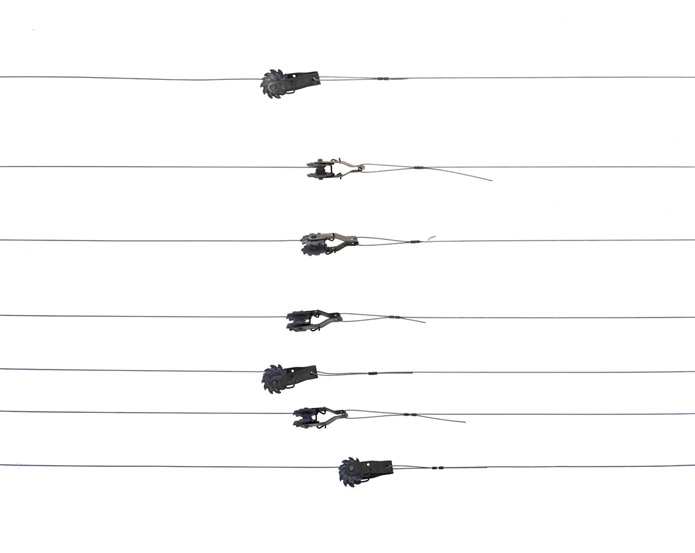
Ratchet Fence, New Jersey 2011 by Jan Staller

More than a Passing Glance will be on exhibit until August 22, 2012 at The Art Collection on the 3rd floor Mid-Manhattan Library, 40th Street @ 5th Avenue, New York, NY 10016, 212-340-0871. The Art Wall on Third Exhibition series at the library is curated by Arézoo Moseni.  Jan Staller’s work has been exhibited at the Museum of Modern Art in NYC, Whitney Museum of American Art, New Museum in NYC, Brooklyn Museum, International Center of Photography, New York Historical Society, Corcoran Gallery in DC, Basel Art Fair, National Museum of Art of South Korea, among others. To learn more about Jan Staller, please visit janstaller.net.

— Jeanine Jeo-Hi Kim


Stars Gather to celebrate 66th Annual Tony Awards Tonight

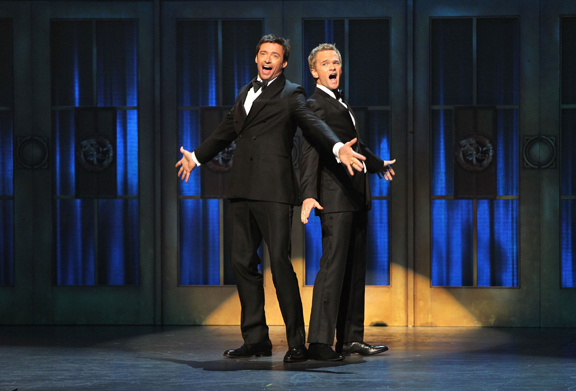
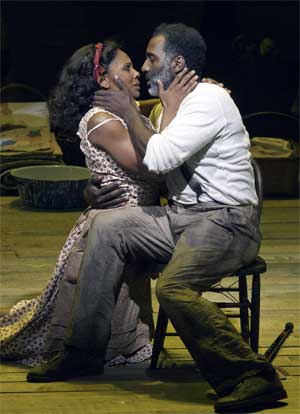
Tonight, the 66th Annual Tony Awards will air live on CBS at 8 p.m. ET/7 p.m. CT (with delayed telecast at 8:00 p.m. PT for West Coast fans).  Neil Patrick Harris will host the star-packed show, which will feature more performances than ever including scenes from 2012 Tony-nominated musicals Evita by Ricky Martin and Elena Roger, The Gershwins’ Porgy and Bess by Tony nominees Audra McDonald, Norm Lewis and David Alan Grier, Leap of Faith by Raúl Esparza, and Nice Work If You Can Get It by Matthew Broderick and Tony nominee Kelli O’Hara.

Ricky Marin and Elena Roger in “Evita”

Presenters for the 2012 Tony Awards will include Ellen Barkin, Candice Bergen, Jessica Chastain, Sheryl Crow, Nick Jonas, Angela Lansbury, James Marsden, Jim Parsons, Mandy Patinkin, Tyler Perry, Bernadette Peters, Christopher Plummer, Paul Rudd, Amanda Seyfried, Matthew Morrison, James Marsden, Trey Parker, Matt Stone, and Josh Groban.  Additionally, Tony Award winner Hugh Jackman, who appeared on Broadway earlier this season in a concert show called Hugh Jackman: Back on Broadway, will receive a Special Tony Award this year.  Other special honorees include Bernadette Peters, producer Emanuel Azenberg, and Actors’ Equity Association.

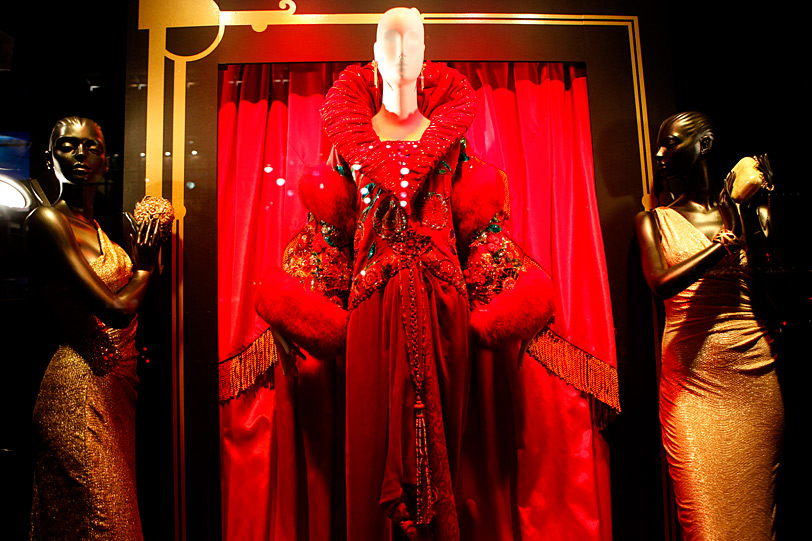
Arrivals at the Beacon Theatre on the Audemars Piguet Red Carpet (courtesy NY1) will be featured live on TonyAwards.com, beginning at 6:00 p.m. ET.  A free outdoor screening of the Tonys will be held in Times Square (in Duffy Square at the northern end of Times Square on Broadway between 46-47th Streets) from 6:00 p.m. to 11:00 p.m., rain or shine.  Additionally, Bloomingdale’s in New York City (4th floor of Bloomingdale’s flagship 59th Street location) is featuring a Tony Award Costume Exhibit, which includes costumes from past Tony Award-winning, to run through Monday, June 18th.

‒Jeanine Jeo-Hi Kim


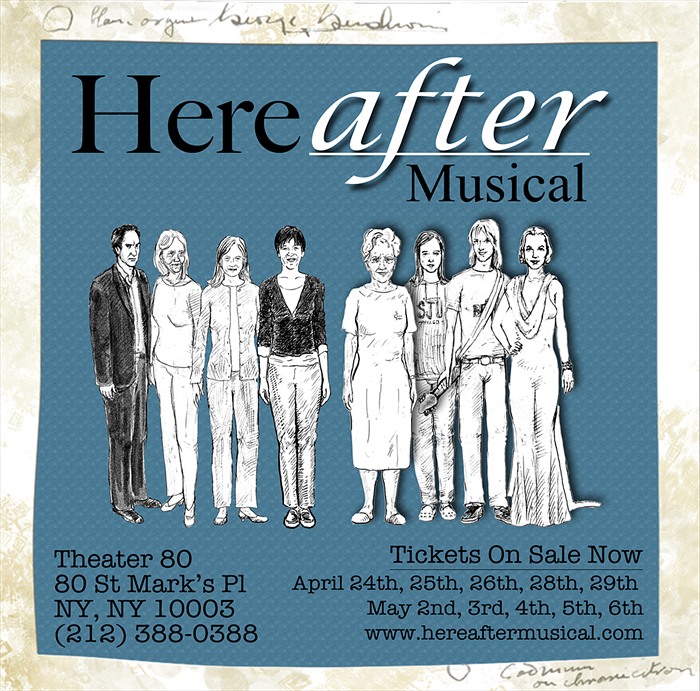
Hereafter Musical: Death by Any Other Name

Is any person truly ready for death? And the bigger question is how prepared are loved ones for a family member’s final demise? In Hereafter Musical Vinnie Favale and Frankie Keane examine three women who’ve lost loved ones unexpectedly and/or way too early. Their sorrow continues over a period of time until they decide to visit a medium that can get them resolve some issues as he communicates with the deceased.

Favale and Keane had done a reasonably good job with the dialogue and music in Hereafter Musical. Though many of the musical motifs and arrangements are similar, in this particular musical, the sameness works because of the fine libretto and orchestration. And the cherry on the top musically is the “Hereafter Choir,” composed of Cicily Daniels, Tanesha Gary, and Emily Jenda. Reminiscent of the girl group trio in Little Shop of Horrors, the “Hereafter Choir,” as a modern-day Greek chorus, gives this musical a bit more nuance and flourish.

Among the spirits, the standout is Deborah Tranelli. As a Jewish mensch, Tranelli understands when to punctuate with humor and when to commiserate with the bereaved and the other spirits. Though her character is reaped in Jewish stereotypes, Tranelli finds a way to elevate the material above just another archetypal depiction of the Jewish mother.

As the B-movie actress spirit Anita, Frankie Keane is given the opportunity to show off the pyrotechnical feats of her fine gospel mezzo voice. Unfortunately, the script does not convincingly clarify her role as the middle woman—so to speak—between the spirits and the medium, played by Paul Blankenship.

With better sets and bit more finetuneing, Hereafter Musical —think of Nunsense, the Fantastiks, and Little Shop of Horrors—could become one of those Off-Broadway standards that delights audiences from all walks of life for years to come. After all it’s not so easy to find humor and write toe-tapping tunes about death and the hereafter. Well, the Hereafter Musical has done just that!!

Hereafter Musical runs  through May 6 at Theater 80 in St Mark Place, New York City. For more information, visit: www.hereaftermusical.com.

—William S. Gooch

Copyright © 2012-2025 | Fashion Reverie Publications, LLC - All Rights Reserved