Fashion Flashback: Social Protests Through the Lens of Fashion

Image courtesy of irishnews.com

It is a hard to consider in these uncertain times of social protests and a health pandemic flaunting your personal style and any new fashion trends. Uncertain times causes most folks to hunker down and hope for the best. Fashion is not on the menu. Or is it?

If you carefully consider some of the social movements over the past 60 years, fashion and social movements are often compatible bed fellows.  You cannot think of the tumultuous 1960s without reflecting on bell bottoms, tie-dyed shirts, flower power, frayed jeans, granny skirts, long hair on men, and even miniskirts. Most of the 60s fashion evolved out of a growing youth movement and protesting the establishment. Remember, fashion often reflects the times we are living in!!

Fashion Reverie looks back at how fashion over the last six decades has been influenced by political protests and cultural upheaval. You may be surprised to discover that some social protest-induced fashion survives to present time!!

Image courtesy of CBS News

The Black Power Movement Style

“We want the power for the people
That’s all we ask in our country, dear
The sick and the hungry are unable
Protect them and those who may live in fear”

—Curtis Mayfield

No other 60s social movement organization represented power to the people more than the Black Panther Party. With their black berets and leather jackets, the Black Panther Party not only fought against a corrupt racist, capitalistic system, the Black Panther Party also instilled a sense a pride and the virtues of black empowerment.

While some Americans were terrified of empowered African Americans boldly brandishing firearms—which was their constitutional right—others were inspired by the Panthers’ militancy and incredible sense of style. Young African Americans who never joined the ranks of the Black Panther Party adopted the Panthers bold, big naturals, black berets, and black leather jackets. This defiant look also carried over to films of the late 60s and early 1970s.   

In the blaxploitation films of the early 1970s, black anti-heroes were militant, defiant, and kick-ass.  You have the character of John Shaft from the 1970 movie “Shaft” in his hip-level black jacket with black turtleneck. Tamara Dobson in “Cleopatra Jones,” though glamorous, was a badass brandishing firearms and karate kicks in sexy militant garb. And who can forget “Sweet Sweetback’s Baadasssss Song” starring Melvin Van Peebles as a black vigilante out to get corrupt cops; also in black jacket with black hat tipped to the side!! The dude had serious ‘Power to the People’ swag.

Image courtesy of medium.com

Flower Power Style

“War, huh, good god
What is it good for
Absolutely nothing, listen to me”

—Edwin Starr

The 1960s was a hotbed of social change.  Vietnam War protests and an anti-establishment cultural shift prompted a re-examination of cultural norms, political points of view, and racial injustice. All these cultural and political shifts were not only reflected in political marches on the ground but also in music, film, theatre, and fashion. Remember, the 1960s produced such counterculture watershed theatrical and musical experiences like the musicals “Hair,” “Tommy,” and “Godspell,” and such rock n’ roll acts as Sly and the Family Stone, The Rolling Stones, Jefferson Airship, The Doors, The Velvet Underground, and Janis Joplin.

All this political unrest and cultural shifts were fodder for a youth culture that was set against making war and America’s imperial aspirations. Instead of strength through the military industrial complex, youth culture wanted to make love, not war. Flower power and a peaceful existence replaced macho expansion.

Many fashion designers of that era took up the clarion call. Betsey Johnson, Paco Rabanne, Mary Quant, and Barbara Hulanicki tapped into this anti-establishment thrust and created garments that reflected the love and peace mood of the hippies and drew inspiration from musical groups of that time, even dressing many of them.

Punks hanging out on the Kings Road, London 1983

“When they kick at your front door
How you gonna come?
With your hands on your head
Or on the trigger of your gun?”

—The Clash

The Punk Revolution

If you are old enough, you probably remember The Sex Pistols, The Ramones, Blondie, Patti Smith, The Clash, The New York Dolls, and The Damned. What you may not know is that Punk music developed out a British music scene and in many ways was an anti-establishment response to the austerity of Margaret Thatcher’s government.

When Margaret Thatcher came to power in the late 1970s as Great Britain’s first female prime minister, one of the first things she did was open Great Britain to free markets. She also marginalized trade unions, cut taxes for corporations and the wealthy, and cut government spending. These measures hurt the working class in Great Britain and helped fuel the existing Punk movement. (One of the themes of the musical and movie Billy Elliot was Britain’s coalminer’s strike of the early 80s.)

The Punk movement expressed itself in loud, cacophonous music and clothes that were anti-establishment. Instead of buttoned-down shirts and smart suits, punk rockers donned torn tee shirts safety pin-embellished clothing, tartan kilts, combat boots, tight leather clothes, mohawks, shaved heads or hair dyed in bright colors.

British fashion designers Vivienne Westwood and Zandra Rhodes were early Punk devotees with Jean-Paul Gaultier and Versace making Punk fashion more commercially viable. And you could not watch any MTV videos in the 80s without seeing Madonna, Cyndi Lauper, The Bangles, the Go-Go’s, Adam Ant, and Billy Idol in Punk garb.

Image courtesy of uproxx.com

“Don’t push me cause I’m close to the edge
I’m trying not to lose my head
It’s like a jungle sometimes it makes me wonder how I keep from goin’ under”

—Grand Master Flash and the Furious Five

Rap, in-your-face swag

Though more of a cultural phenomenon than a political expression, rap and later hip-hop music does have its roots in political unrest. If you lived in most US urban cities in the mid to late 1970s, you were surrounded by poverty and a failing political infrastructure. There were failing public schools, high unemployment, burned-out buildings, and New York City was flat broke.

This almost-dystopian culture caused many young MCs to write about the failing infrastructure of American urban cities. While some early rap gave voice to partying and feeling good—the Sugar Hill Gang, Kurtis Blow, and DJ Kool Herc—other rappers like KRS One, Kool Moe Dee, and Grandmaster Flash rapped about urban decay and self-empowerment. And as with all political and cultural shifts, fashion soon appropriated the swag style associated with rap music.

Early fashion designers that capitalized on rap music’s urban swag were Dapper Dan, Cross Colors, Joanne Berman, and Karl Kani. In the 1990s Tommy Hilfiger, Ralph Lauren, Sean John followed suit, making rap and later hip-hop fashion a commercial success.

Now you see rap/hip hop fashion everywhere. From Timbaland boots to oversized jeans to doorknocker earrings to graffiti-painted jackets; all still done with great swag and style.

—William S. Gooch

Fashion Flashback: Supermodel Suzy Parker

Images courtesy of geeksoncoffee.com

The downtime facilitated by the COVID-19 pandemic has caused many of us to reflect on and be nostalgic for times that were less challenging and uncertain. With global fashion industry in a state of unparalleled disruption and turmoil, it is difficult to imagine what the outcome of this shakeup will produce.

That said; one thing is certain. The fashion industry will never be the same. And this unexpected evolution causes one to look back at an era in the fashion industry where photographers like Helmut Newton, Richard Avedon, Irving Penn where changing the way fashion was marketed to a post-WWII consumer.

Images courtesy of pinterest.com

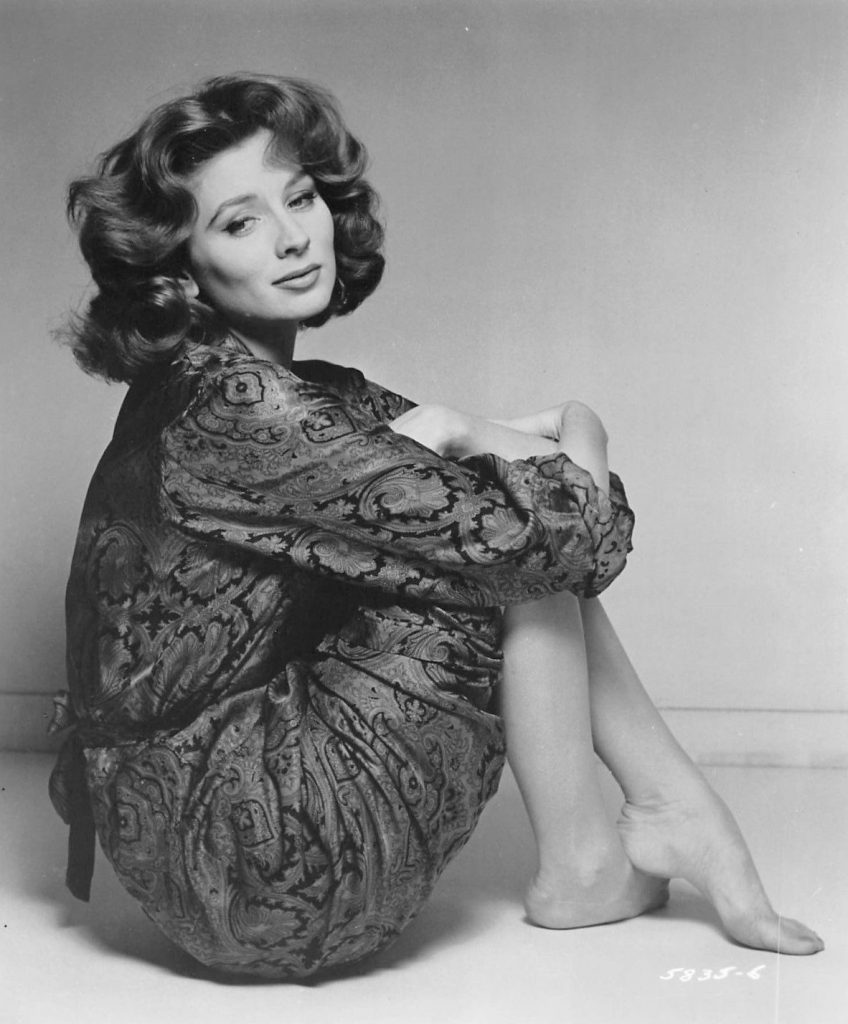
The moldable piece of clay that wholeheartedly expressed this post-WWII global fashion was Suzy Parker. As the American consumer emerged out of a wartime economy, female consumers were looking for an image that expressed their desire for glamour, luxury,and style. Susie Parker was that image. 

Parker became Richard Avedon’s first muse and in the 1950s became the face of Chanel, counting the legendary Coco Chanel as a close friend.

Parker’s older sister, Dorian Leigh, also an iconic fashion model, realized her sister model potential—at the tender age of 15—and sent her sister to Eileen Ford at the Ford Modeling Agency. Unlike her sister Dorian, Suzy Parker was 5`10 inches tall and big boned—Dorian was 5`5 and delicate looking. Suzy, over time, became more famous than her sister Dorian.

Images courtesy of condenaststore.com

Suzy Parker was first photographed for Life magazine. And later that year she became the face of Delarosa Jewelry. Soon after, Suzy was introduced to esteemed fashion photographers John Rawlings, Horst P. Horst, Irving Penn, and a young Richard Avedon by her sister Dorian. Later, Suzy became one of Avedon’s favorite models and a great inspiration for him. “The only joy I ever got out of modeling was working with Dick Avedon,” detailed Suzy Parker.

Declared the face of post-WWII confident American woman by Vogue magazine, Parker was the first model to earn $200 an hour and $100,000 a year. Suzy Parker graced the cover of over 70 magazine including Vogue, Elle, Life, Look, McCall’s, Redbook, and Paris Match.

Images courtesy of pinterest.com

In the late 1950s, Parker sequed into acting, appearing in several Hollywood films—“Funny Face,” “Ten North Frederick,”, “The Best of Everything,” “A Circle of Deception,” and “Chamber of Horrors.” The Beatles even penned a song “Suzy Parker” after her.

Parker married three times, first as a teenager to Ronald Stanton. Here second husband was French fashion photographer Pierre de la Salle. In 1963, Suzy Parker married her third and last husband, actor Bradford Dillman. She had three children with Dillman.

Image courtesy of wikifeet.com

In 2003 Suzy Parker died from complications due to diabetes. She was survived by her husband Bradford Dillman and her children.

—William S. Gooch

Fashion Flashback: Sergio Rossi

Image courtesy of laconceria.com

Deaths from the COVID-19 virus is beginning to hit home in the fashion industry. On Thursday, the coronavirus claimed the life of Italian shoe designer Sergio Rossi. Rossi died at the Maurizio Bufalini Hospital in Cesena, in northern Italy due to complications from the novel coronavirus. He was 84 years old. In early March, Rossi announced he would be donating $108,000 to fight the coronavirus. Little did he know that complications from COVID-19 infection would take his life

In a statement on Instagram, Riccardo Sciutto, CEO of Sergio Rossi Group said, “Sergio Rossi was a master, and it is my great honor to have met him and gotten to present him the archive earlier this year. His vision and approach will remain our guide in the growth of the brand and the business.”

“He loved women and was able to capture a woman’s femininity in a unique way, creating the perfect extension of a woman’s leg through his shoes. Our long and glorious history started from his incredible vision and we’ll remember his creativity forever,” Sciutto continued.

Sergio Rossi’s eponymous brand was founded in 1951 which was only natural in that Rossi came from a family of shoemakers. His footwear and accessories line would become of the renowned and celebrated accessory brands in Italy.

Rossi first plied his trade be selling footwear to boutiques and his sandals on Italian beaches. And by the 1960’s Sergio Rossi footwear according to Vogue, “quickly became synonymous with Italian quality and classic feminine designs.”

By the 1970s Sergio Rossi had developed a design aesthetic that focused on bold color and geometric shapes. While the 1970s was a turnaround period for Sergio Rossi, what really made the Italian footwear brand a household name was the brand’s collaborations with Versace, Dolce & Gabbana, and Azzedine Alaia.

Image courtesy of thebusinessoffashion.com

Sergio Rossi’s fashion shows became a mainstay of Milan Fashion Week in the 1980s. And during the 80s the brand opened stores in Turin, Florence, Rome, Brussels, New York City, Los Angeles, and London. Inspired by iconic photographer Helmut Newton, early Sergio Rossi campaigns used low-angled shots to highlight the length of the legs and body, focusing on the height and shape of the heel.

PPR Luxury Division, formerly the Gucci Group, bought a 70 % interest in the company in 1999, and in 2005 bought the remaining 30%. In 2015, Sergio Rossi was bought by Investindustrial, a private equity firm that also owned Aston Martin.

Image courtesy of wonderlandmagazine.com

The brand over the decades has been a favorite of Suzy Menkes, Olivia Palermo, Rihanna, Adriana Lima, Paris Hilton, Nicole Kidman, Ariana Grande, Taylor Swift, Priyanka Chopra, and Scarlett Johansson. Sergio Rossi is survived by his son Gianvito Rossi.

William S. Gooch

Fashion Flashback: Jacques Fath

Image courtesy of wikipedia.com

Considered to be one of most important French designers of the post-war period who designed for the modern, cosmopolitan woman. Jacques Fath, along with Christian Dior and Pierre Balmain, made in an indelible stamp on post-war haute couture. Fashion Reverie looks back at his short, but illustrious career.

Born to fashion illustrators and writers, Jacques Fath was self-taught and learned his trade by studying fashion books and going to museum exhibitions after first trying his hand at business law and bookkeeping. Fath presented his first fashion collection in 1937 out his two-room atelier on the Rue de la Boetie.

Image courtesy of agnacouture.com

In the beginning his success was modest, but he became a breakout fashion personality after he married the very chic socialite Genevieve Boucher de la Bruyere, and dressing her in an asymmetrical drape dress and fluttery cape which caused a sensation at the Grande Nuit de Longchamps, a horse race society event. Society women started coming to his modest atelier to commission garments. Among his early assistants were Hubert de Givenchy, Guy Laroche, and Valentino Garavani.

Later, Fath become known for dressing the chic, well-heeled young French woman, to be more exact, la jeune Parisienne. Fath pioneered some important fashion elements, lace-top hosiery and glove-fitting daywear ensembles.


Image courtesy of Gordon Parks

Fath rise to fame came during the German occupation of Paris WW II when he used yards of tartan to mock the occupiers, designing tunic dresses and peasant skirts, suitable for women riding bicycles. This collection was both sporty and feminine at the same time. Ond of the first of its kind. Fath, at times, used unconventional fabrics—hemp-sacking fabric and sequins made of walnut and almond shells. (This use of unconventional fabrics was made reference to in an episode of “I Love Lucy,” when Lucy coveted one of Jacques Fath’s so-called ‘sack dresses.’)

Image courtesy of flickr.com

Early in his career, Fath had a substantial celebrity clientele which included Rita Hayworth‚—she wore a Jacques Fath dress for her wedding to Prince Aly Khan—, Greta Garbo, Ava Gardner, and most famously Eva Peron. Fath also designed several of Moira Shearer’s costumes in “The Red Shoes.” Additionally, some iconic models of the 1940s and 50sexpanded their modeling careers modeling Jacques Fath’s clothes, namely Lucie Daouphars, Rose Marie Reid, Dovima, Ivy Nicholson, and Fiona Campbell Walter.

Image courtesy of crfashionbook.com

After Fath’s untimely death from leukemia in 1954, his wife Genevieve run the company for two years until garment-making was totally abandoned. The House of Fath officially closed its couture business in 1957, but re-emerged as a producer of gloves, hosiery, fragrances and other accessories.

Image courtesy of perfumeposse.com

The company has produced a number of fragrances, namely Jacques Fath L”Homme (1998), Yin (1999), Yang (1999), Fath de Fath (1953, reformulated and relaunched in 1993), Chasuble (1945), Expression (1977), Canasta (1950), Iris Gris (1946), Fath’s Love (1968), and Green Water (1947 but reformulated and re-released in 1993). The fragrance license was held by L’Oréal until 1992.


Fashion Flashback: Max Azria

Image courtesy of thenewyorktimes.com

If you not familiar with the bandage dress, you should pull your head out the sand!! The late, great Max Azria acquired Herve Leger, the company that created the bandage dress/bodycon dress in 1988. And though Max didn’t create the bandage dress, he is credited with his acquisition of Herve Leger of bringing new attention to and popularizing the bandage dress.

Image courtesy of fashiongonerogue.com

Interestingly, Max Azria and Herve Leger died within two years of each other. And it almost impossible to separate one from the other; particularly if you are a consumer.

Image courtesy of retaildetail.com

The Tunisian-born Max Azria moved to Paris with his family in 1963, working with his brother on women’s clothing lines, Joie, Equipment, and Current/Elliot. In 1981 Max Azria moved to California and opened Jess, a chain of fashion boutiques with the concept of quality, luxury fabrics at affordable prices.

Max Azria carried this concept into his groundbreaking women’s wear brand BCBG Max Azria, which was launched in Los Angeles in 1989. BCBG stands for bon chic, bon genre which French translates to mean good style, good attitude. “I was wondering why designers were selling products at $1,000 that we can make a good profit and good living by selling at $500,” Mr. Azria told The Los Angeles Times in 2014. “I wanted to give fashion to more people.”

And that is just what he did. Though celebrities have worn BCBG Max Azria, the bulk of sales have been with everyday consumers. By the late 90s, Max Azria had opened hundreds of stores in Europe and the US, at its peak 550 stores globally with retail sales exceeding $1 billion.

Additionally, Max Azria was a consistent presenter during New York Fashion (NYFW), presenting since 1996. Max Azria is given little credit for being one the first commercial brands to present during NYFW, opening the doors for other commercial brands to present.

Images courtesy of red-carpetfashion.com

After acquiring Herve Leger in 1998, Max Azria launched BCBGenerations and Max Azria Atelier in the 2000s. Even doing a collaboration with Miley Cyrus for H&M in 2009.

With the advent of fast fashion stores like Zara and H&M crowding and saturating the market, by the 2010s, Max Azria’s company found itself $400 million in debt. The many acquisitions of the company helped facilitate this debt. The company filed for bankruptcy in 2017, closing 120 stores. Marquee Brands bought the company in late 2017 for $100 million dollars.

Image courtesy of zimbio.com

Max Azria died from lung cancer on May 6 in Houston, Texas. He is survived by his wife Lubov and their daughter.

Staff

Fashion Flashback: Karl Lagerfeld

Image courtesy of themirror.com

When a fashion icon dies, not only does the fashion community morn the loss, the entire global community experiences the loss and separation. Everyone reflects on the genius and great collections of the fashion designer, and immediately following their death retrospectives are organized as the fashion community gathers to remember the designer’s contributions.With Karl Lagerfeld’s transition, the fashion industry has lost a fashion designer that helped to redefine luxury fashion and the luxury’s transition from couture to ready-to-wear. When Lagerfeld took over the helm of Chanel in 1983, he singlehandedly transformed Chanel from its former glory to a relevant brand that could appeal to a younger consumer. Lagerfeld went against the grain, not focusing his first collection for Chanel on the brand’s historic comeback in the 1950s but conjuring up images of the brand’s heyday in the 1920s and 30s.

“A very static image has emerged based on Chanel’s last years,” Lagerfeld explains as detailed in a wwd.com article, “so I’ve looked over her whole career and found something much more interesting.” This was a huge risk for the brand and Lagerfeld was heavily criticized for this direction. Still, Lagerfeld, over time, managed to harness a group of influential fashion industry professionals who grew to admire his work.

When Lagerfeld first came to the House of Chanel, he was already the creative director of Chloe and Fendi. Before his directorships at Chanel, Lagerfeld had worked as a design assistant at Balmain, served as creative director at Jean Patou, and freelanced at Krizia, Valentino, Charles Jourdan, and Chloe, as well as doing private label work at a slew of German department stores.

Image courtesy of everythingzoomer.com

In 1984, Lagerfeld established his own eponymous line, Karl Lagerfeld. Lagerfeld said that his own brand would bring “intellectual sexiness” back to fashion. In 2002, Renzo Russo of Diesel said, “I am honored to have met this fashion icon of our time. Karl represents creativity, tradition and challenge, and the fact that he thought of Diesel for this collaboration is a great gift and acknowledgement of our reputation as the prêt-à-porter of casual wear.”What many may not realize about Lagerfeld is that he instituted the fashion industry’s obsession with collaborations. Back in 2004, Lagerfeld was the first fashion designer to collaborate with H&M which turned into a popular collaboration series. Since that first collaboration, Lagerfeld has collaborated with Moschino, Stella McCartney, Comme des Garcons, and Kenzo. At the time of his death, Lagerfeld had continued to collaborate with Fossil watches, the department store Macy’s, makeup brand Shu Uemura and even drinks giant Coca Cola.

Lagerfeld slender frame was recognized by his powder white hair, shades, fingerless gloves, and highly starched, detachable collars, However, earlier in Lagerfeld’s life he had been quite large. Lagerfeld lost over 93 lbs over a thirteen-month period in 2001. He explained: “I suddenly wanted to dress differently, to wear clothes designed by Hedi Slimane … But these fashions, modeled by very, very slim boys—and not men my age—required me to lose at least 40 kg. It took me exactly 13 months.”

Over his lifespan, Karl Lagerfeld was the focus of several controversies. Lagerfeld has been accused of being racist, homophobic, fatphobic, Islamophobic, and critical of the Me Too movement. His biggest controversy involved the misuse of a verse from the Qur’an in Chanel’s spring 1994 couture collection. The Indonesian Muslim Scholars of Jakarta called for a boycott. Lagerfeld explained the misuse of the Qur’an verse, thinking it was a poem from the Taj Mahal and not from the holy Muslim text.

Lagerfeld has been critical of many feminine icons, calling supermodel Heidi Klum to fat to be a supermodel, criticizing Pippa Middleton’s looks, and calling pop sensation Adele fat. Critical of PETA, Lagerfeld had always been a fan of natural pelts; however, Lagerfeld used fake fur in Chanel’s 2010 collection.

In 2007, a full-length documentary, “Lagerfeld Confidential” was made by Vogue. In 2013, he directed the short film “Once Upon a Time…” in the Cité du Cinéma, Saint-Denis, by Luc Besson, featuring Keira Knightley in the role of Coco Chanel and Clotilde Hesme as her aunt Adrienne Chanel.

Karl Lagerfeld died from complications to pancreatic cancer on February 19, 2019. He asked to be cremated and buried next to his mother and his late partner, Jacques de Bascher. Karl Lagerfeld was 85 years old.

—William S. Gooch

Fashion Flashback: Barbara Karinska

Image courtesy of flickr.com

As we move into Nutcracker season, Fashion Reverie looks back at costume designer Barbara Karinska, known for creating iconic stage costumes for the New York City Ballet, the Ballet Russe de Monte Carlo and Hollywood films of the 1940s and 1950s.

Born Varvara Andreevna Jmoudsky in Krakhov, Ukraine to a successful textile family, Barbara Karinska as a child was exposed to the arts and a wealth of beautiful Ukrainian embroidery; however, she opted not to follow in her father’s footsteps, studying law at the University of Kharkov. After her first husband, industrialist Alexander Moissenko died in 1909, Karinska married Nicholas Karinsky, a successful lawyer whose law practice was in Moscow, prompting Karinska and her children from her previous marriage to move to Moscow in 1916. Karinska also practiced law during this time in addition to hosting salon nights in the family’s spacious apartment after nights of theater and ballet.

Karinska’s salon became very popular and she began exhibiting her paintings of ballet scenes in a Moscow exhibit  with her painting gaining critical and financial success. After Czar Nicholas abdicated in 1917, Karinska’s husband was appointed Attorney General and Presiding Justice of the Court of Appeals of the District of St. Petersburg. After the Bolshevik Revolution, Karinska’s husband became a marked man by the Red forces, causing him to flee to Russia, eventually settling in New York City.

After her husband escaped to the US, Karinska maintained a successful embroidery school in Russia during the reign of Lenin. After Lenin’s death and the Stalinists began to come to power, Karinska escaped Russia with the family jewels hidden in her daughter’s chapeau.

Marlene Dietrich in “Kismet” and Alicia Markova in “The Nutcracker”

First settling in Paris, Karinska after exhausting the family fortune found work creating costumes for the Ballet Russe de Monte Carlo. This is where Karinska first worked with George Balanchine. Karinska quickly became a sought-after costume designer for in Paris, collaborating with Jean Cocteau, Berard, Derain, Cassandre, Balthus, Miro, Balanchine and others.After moving to London, Karinska began a long collaborative relationship with Cecil Beaton while costuming ballet, cinema, and musical revues. She also began experimenting with new fabrics and materials never before used in theatre.

Karinska with Lincoln Kirstein image courtesy of pinterest.com and Gypsy Rose Lee image courtesy of Louise Dahl-Wolfe

Karinska finally settled in New York City in 1939 before World War II broke out in Europe, reconnecting with Balanchine who had founded the School of American in New York City. Karinska immediately began costuming with the Ballet Russe de Monte Carlo. Comfortably settled in New York City, Karinska established her company KARINSKA Stage and Art Inc. where Karinska created costumes for film, stage, theater, ballet, and Sonja Henie’s ice shows.Karinska along with Dorothy Jeakins won an Oscar for the 1948 “Joan of Arc” and was nominated for an Oscar for “Hans Christian Anderson.” Other Hollywood films include “The Pirate,” and “Blue Skies.”

Karinska costumes for the New York City Ballet’s courtesy of pinterest.com

Perhaps, Karinska was important contribution to stage costumes was her ‘powder puff’ tutu. Before Karinska, tutus traditionally looked like pie plates and in ballets that had a large female corps de ballet these pie plate tutus inhibited large-scale movement with female dancers’ tutus bobbing up and down after the dancing had stopped. Karinska came up with the shorter tutu skirt composed of six or seven layers of gathered net, each layer a half inch longer than the preceding layer. The layers were tacked together for a fluffier, looser appearance.Karinska’s ‘powder puff’ tutu was first used in Balanchine’s “Symphony in C,” and became popular in Balanchine’s 1954 “Nutcracker.” “ I attribute to [Karinska] fifty percent of the success of my ballets to those that she dressed,” explained Balanchine. The ‘powder puff’ tutu prototype is now commonly used in most ballet companies around the world.

Karinska’s costumes for George Balanchine’s “Jewels”

Karinska collaborated with Balanchine in over 75 ballets. The last ballet costumes that Karinska designed for the New York City Ballet were the costumes used in Balanchine’s 1977 “Vienna Waltzes.”Barbara Karinska died in 1983, months after Balanchine’s death. In 1999 she was posthumously inducted into the National Museum of Dance’s Mr. & Mrs. Cornelius Vanderbilt Whitney Hall of Fame.

—William S. Gooch

Fashion Flashback: Heidi Morawetz

The fashion industry mourns the death of famed makeup artist Heidi Morawetz. Heidi Morawetz conceived some of Chanel’s best-known beauty products—The Rouge Blanc and Le Blanc de Chanel—directing Chanel’s makeup division with Dominique Moncourtois for over two decades. Morawetz retired from Chanel in January 2008.“Besides being an amazing makeup artist and makeup creator, she was the most beautiful person inside and out … when I did my first steps in makeup creation, she took me under her wings and I couldn’t have wished for a better mentor,” said Peter Philips, Chanel’s makeup director in a wwd.com interview.

                 Heid Morawetz’s Chanel iconic campaigns

Morawetz was a graduate of the School of Art and Design and the School of Fashion Design in Vienna. After graduation, Morawetz worked for such iconic fashion photographers as Helmut Newton, Guy Bourdin, and Patrick Demarchelier as a makeup artist on fashion and beauty campaigns. Before being employed at Chanel, Morawetz worked with Yves Saint Laurent, helping to create YSL’s first makeup line. This led to working with Chanel in 1980 with Chanel’s international beauty director, Dominique Moncourtois. Quickly, Morawetz became the director of Chanel’s makeup creation studio.In an Interview magazine article, Philips detailed that Morawetz, “pioneered the idea that cosmetics could be just as fashionable as clothes.” “In the process, they masterminded some of Chanel’s most memorable products, among them Rouge Noir, released in the [US] as Vamp, which was invented on the fly backstage before the 1994 autumn ready-to-wear collection, a story that has become the stuff of love.”

                   Images courtesy of twitter.com

In a 1992 New York Times article, Heidi Morawetz in response to the beauty trend at the time of a dark, red stained vampy mouth, smoky eyes, and plucked arched eyebrows concedes, “Fashion is one thing, but personality is quite another. A woman must always adapt makeup and trends to her own personality and use them to be more herself.”Heidi Morawetz passed away on August 9. A private funeral will take place on August 21.

—William S. Gooch

Fashion Flashback: Brigitte Bardot and the Modern Bikini

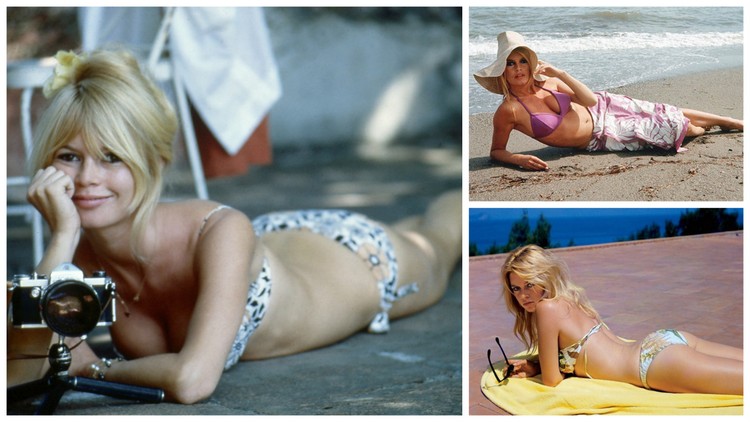
                  Images courtesy of nyform.au, captial.com, and popsugar.com, respectively

If you are of a certain age, Brigitte Bardot and the modern bikini goes hand and hand. If you are not of a certain age and knowledge, you probably do not know that Bardot freed the modern bikini from being a symbol of carnal lust and societal degradation.Created in 1946 by designer Louis Reard and modeled by a dancer from the Casino de Paris—no runway model would wear it—the modern bikini was named after the Bikini Atoll, where the first public test of a nuclear bomb had taken place. The bikini was slow to gain acceptance because it exposed a woman’s midriff, and particularly after Pope XII banned the bikini in 1951 after Kiki Hakansson was crowned Miss World while wearing a modern bikini.

  Brigitte Bardot in Cannes image courtesy of vintageeveryday.com

In 1952, young French film actress Brigitte Bardot wore a modern bikini in the film, “Manina, the Girl in a Bikini.” (Bardot was 17-years old at the time of the film’s release.) This was one of the first times a bikini was worn by an actress in a film. Bardot also wore a bikini at the 1953 Cannes International Film Festival, and also donned a bikini in the 1956 film “And God Created Woman.” Taking advantage of the bikini controversy, Marilyn Monroe, Elizabeth Taylor, Rita Hayworth, Tina Louise, Betty Grable, Ava Gardner, and Esther Williams and other actresses wore modern bikinis in photographs and pin-ups.

                                          Images courtesy of pinterest.com

Brigitte Bardot alone helped make the modern bikini popular and acceptable in Europe. The US slowly caught on with the help of Ursula Andress and Raquel Welch wearing bikinis in 1960s films “Dr. No.” and “One Million Years B.C.,” respectively. Still, it was Bardot, with her unique beauty and brave spirit, which set the course for the bikinis ultimate popularity.—William S. Gooch

Fashion Flashback: Judith Leiber

                             Image courtesy of huffingtonpost.com

If anyone conjures up images of handbags as objets d’art, Judith Leiber does. Judith Leiber’s Hungarian parents never imagined that their daughter, Judith Marianne Peto, would become an iconic handbag designer. Wanting their daughter to become a chemist, like a successful relative who had invented a complexion cream, Judith was sent to England to pursue a scientific career. However, WWII happened and Judith moved back to Budapest and enrolled in an artisan guild. Leiber often said,“Hitler put me in the handbag business.” After her guild training, Leiber started making handbags for family and friends from whatever materials she could find, later selling handbags to American soldiers stationed in Hungary. After marrying Gerson Leiber, an American Army Signals Corp sergeant stationed in Hungary, the couple moved to the New York City in 1947.

After working in New York City for a number of handbag brands, Leiber launched her own handbag line in 1963. Leiber’s handbags were so unique that initially department stores were reluctant to sell her bags. Over time, Leiber would have pop-up stores and her own boutiques in department stores after celebrities and first ladies starting flaunting her bags. First ladies Nancy Reagan, Barbara Bush and Hilary Clinton have work Judith Leiber bags, as well as, Queen Elizabeth II, Diana Ross, Greta Garbo, Raisa Gorbachev, opera diva Joan Sutherland, Claudette Colbert, Jennifer Lopez, Viola Davis, and many others. Ms. Leiber would create five collections a year, creating over 100 bags in the process. Leiber’s glittering evening bags were created to hold a small amount of things, mostly lipstick, a handkerchief, and some large bills. And her bag come in the shape of almost anything, due to the fact that Leiber was inspired by nature, paintings, museum pieces, and a variety of objects.

         Images courtesy of bagbliss.com, popsugar.com and vogue.com, respectively

After selling her business in the late 90s, Leiber and her husband dedicated their time to hosting exhibitions of her handbags at museums and their own museum in the Hamptons. Leiber’s handbag exhibitions have been held at the Metropolitan Museum of Art, the Smithsonian Institution and the Chicago Historical Society. Stella Blum, former curator of the Costume Institute at the Metropolitan Museum of Art called Leiber as “a little like calling Louis Comfort Tiffany a designer of lighting fixtures.”Judith Leiber and her husband Gerson Leiber, a painter, lithographer, and sculptor, died within hours of each other of heart attacks at their home in East Hampton on Saturday. Judith Leiber was 97 years old.

—Staff


Copyright © 2012-2025 | Fashion Reverie Publications, LLC - All Rights Reserved